The assessment index system of emergency maintenance guarantee capability at vehicle equipments of armed police force is set up and the principles are put forward. The weight of every index is determined by applying AHP method. Finally, depending on fuzzy mathematics, a comprehensive assessment model of emergency maintenance guarantee capability at vehicle equipments for armed police force is built as well.
Notice of Retraction After careful and considered review of the content of this paper by a duly constituted expert committee, this paper has been found to be in violation of IEEE's Publication Principles. We hereby retract the content of this paper. Reasonable effort should be made to remove all past references to this paper. The presenting author of this paper has the option to appeal this decision by contacting TPII@ieee.org. The overall constitute of welding robot visual tracking system is described. The vision process method for welding beam position search with visual tracking system is analyzed. The robot motion tracks real beam through superposition of errors input by vision system and programmed teaching tracking. Finally, using Matlab software, an articulated robot motion path of searching welding beam in a plane is simulated.
The overall constitute of welding robot visual tracking system is described. The vision process method for welding beam position search with visual tracking system is analyzed. The robot motion tracks real beam through superposition of errors input by vision system and programmed teaching tracking. Finally, using Matlab software, an articulated robot motion path of searching welding beam in a plane is simulated.
The penetration lengths of a jet issuing from upward and downward injection nozzles were measured in a dense fluidized bed of Geldart A to Geldart B particles, operated at superficial velocity well beyond the minimum bubbling velocity. Nozzle orientation, injection velocity and injected gas density were found to be the parameters having the most influence on the jet penetration lengths. Three distinct jet penetration lengths were determined for the upward nozzle: Lmin, Lmax and Lb, in accordance with Knowlton and Hirsan's (1980) definition [1], while for the downward nozzle, only Lmin and Lmax were observed. The jet penetration lengths were correlated with respect to dimensionless groups in a systematic approach in an effort to identify the most important terms. For each nozzle orientation, the analysis yielded unique correlation format which could be applied to each characteristic jet length by changing the correlation parameters. Fundamental distinctions between the upward and downward nozzles were uncovered. The mechanism responsible for the jet momentum dissipation was found to be gravitational forces acting on the jet volume for the upward nozzle and drag forces exerted on the entrained particles for the downward nozzle. Five new correlations were derived for the prediction of the characteristic jet lengths for upward and downward nozzles. The correlations retained for the upward nozzle were also found to be in good agreement with data from a high pressure fluidized bed.
Interest in biomass fuels is increasing worldwide to produce heat, power, liquid fuels and hydrogen with reduced greenhouse gas emissions. Thermochemical biomass processes are relatively well developed, e.g. for direct combustion, gasification and pyrolysis. However, critical problems often arise when attempting to feed biomass into reactors, preventing continuous operation of the entire system. Although biomass feeding has received some attention in the past and several novel feeders have been patented, most feeders are fuel-specific and unable to provide reliable, efficient and economical feeding, especially for herbaceous fuels and reactors operating at elevated pressure. The most common feeding problems are bridging, rathole formation, blockage, seal failure and reactions in the feed line.
A new experimental approach is proposed to investigate the gas–solid structure in the vicinity of a sparger nozzle in a fluidized bed. The approach consists in performing an injection velocity sweep with a fiber-optic probe located at a fixed distance downstream the sparger nozzle. Following this approach, the local gas–solid structure was investigated for different nozzle orientations (downward, horizontal and upward) and measurement distances. For a given fluidized media (FCC catalyst, Geldart A) and superficial gas velocity (0.9m/s), the local gas–solid structure depended upon the measurement distance, sparger nozzle orientation and injection velocity. Four distinct impact zones were identified from the average local solid holdup, with the boundaries corresponding to the characteristic jet lengths (Lmin, Lmax and Lb). Locally, the major hydrodynamic parameters of the gas–solid structure (e.g. average holdup, phase holdup, phase fraction, and phase changeover frequency) showed nearly linear dependence with the injection velocity, allowing for an easy estimation of the gas–solid structure. Dynamic aspects of the gas–solid structure were investigated. A simple analysis suggests that the frequency of the pulsating jet (between Lmin and Lmax) was in the order of 1 and 1.5Hz. Comparison of the collected data with existing correlations indicated that none of the correlations are capable of adequately predicting the penetration lengths, under the present test conditions. This is especially true for the upward and horizontal sparger nozzles, for which correlations have mostly been developed using Geldart B and D particles and operated at superficial velocities at or near the minimum fluidization velocity.
Processes involving biomass are of growing interest, but handling and conveying biomass particles are challenging due to the unusual physical properties of biomass particles. This paper reviews recent work on pneumatic conveying of biomass particles, especially agricultural particles and pulp fibres. Experimental work has been mainly carried out to determine a range of parameters, such as pressure drop, particle velocity, flow regime and electrostatic charging for both horizontal and vertical conveying. Models ranging from empirical to CFD models are also being developed. Difficulties in representing turbulence and interactions among biomass particles and between the particles and fluid have so far limited the success of advanced modeling. Further work is needed to improve understanding of multiphase biomass pneumatic conveying and to assist in the development of biomass energy and conversion processes.
This paper reviews recent experimental and modeling work on biomass multiphase flow of suspensions and slurries. Problems associated with fibre flows (e.g., fibre flocculation, velocity profiles, flow regimes) have received considerable attention for these processes, involving both liquid–solid and gas–liquid–solid systems. Advanced experimental techniques have been employed in efforts to understand the flows. However, each of these experimental techniques is somewhat limited in its application. In the modelling work, mechanistic models, including those based on CFD, are being developed, but turbulence and interactions among particles and between the particles and fluid have so far limited the success of such models. Future work is needed to improve biomass energy and materials conversion processes.
Biomass is important in energy conversion processes due to their favourable status with respect to greenhouse gas emissions. However, biomass particles have unusual properties which make them difficult to fluidize and handle. This paper reviews recent research on the hydrodynamics and mixing of biomass particles in fluidized beds. Whereas there has been considerable effort to develop new biomass gasification, combustion, pyrolysis and bio-conversion processes, relatively few authors have characterized the relevant flow characteristics of biomass particles in fluidized beds or investigated measures that could assist in resolving flow issues. The limited work that has been reported on biomass fluidization primarily treats means of achieving fluidization, mixing and segregation. Most of the work has been in low-velocity fluidized beds, although circulating fluidized beds are also important. Further research is needed to provide general understanding of interactions among heterogeneous particles and guidance on conditions that can lead to viable and sustainable processes.
When a single-phase fluid splits, passes through identical paths in parallel, and then recombines, the flow distributes itself uniformly among the multiple paths. However, when multi-phase suspensions travel through identical parallel paths, the flow distribution can be significantly nonuniform. Although the uniform distribution is a solution of the governing equations, this solution may be an unstable steady-state solution between two or more stable solutions, or one of an array of possible steady-state solutions. This multiplicity has arisen in practice for multiple vertical channels within fluidized beds, for cyclones in parallel, and for distributed feed suspension flows. Simple theories are employed to explain the principles involved for two cyclones and for a pair of risers in parallel.
Gas mixing and solids mixing were studied in a geometrically and dynamically scaled cold model fluid coker stripper. Tracer gas (helium) was first injected into the stripper standpipe to quantify total gas entrainment into the underflow stream. Tracer gas was then injected into the upper reactor and lower stripper separately to investigate gas mixing in the stripper. The stripping efficiency was found to depend strongly on operating conditions (solids circulation rate, stripping gas velocity) as well as on the baffle configuration in the stripper. Unsteady state measurements were also obtained in an effort to understand gas dispersion in the stripper. The results show that gas mixing is most intensive in the stripper core. To study solids mixing and residence time distribution in the stripper, solid tracer particles impregnated with salt were injected into the reactor and detected at the top of the stripper and standpipe. The results indicate that axial dispersion of solids in the presence of the baffles could be represented by axially dispersed plug flow.
The effects of steam injection on stripping efficiency were studied in an effort to improve operation of a fluidized bed stripper. Experiments extend earlier measurements in a geometrically and dynamically scaled half-column [I. Rose, H. Cui, T. Zhang, C. McKnight, J.R. Grace, X.T. Bi, C.J. Lim, Toward an ultimate fluidized stripper, Powder Technol. 158 (1–3) (2005) 124–132]. In the present work, different jet/steam configurations were tested in a stripper equipped with mega-sheds, in an effort to greatly reduce stripper fouling while providing little or no reduction in stripping efficiency. Results indicate that a combination of spargers, jets sweeping across the top of the sheds and additional staggered jets provides a promising configuration, giving stripping efficiencies similar to those of the original commercial design while being much more tolerant to accumulation of foulant.
Preliminary work was carried out to explore a novel process for high-efficiency high-capacity remediation of acid rock drainage. Zn and other metal ions were adsorbed and desorbed in a laboratory Plexiglas slurry bubble column with natural clinoptilolite particles as sorbent. The results indicate that both adsorption and desorption in this medium have considerable advantages over those in the packed beds and rotating columns, leading to faster batch adsorption and desorption, as well as greater uptake of zinc. The adsorption order of clinoptilolite particles to different metal ions appeared to be Fe>Al>Cu>Zn>Mg>Mn on the basis of normalized concentrations. Smaller particles had significantly higher capacity and rates of the adsorption than larger particles for the same operating conditions.
The instantaneous solids flux and transient distributions of voidage in a riser of 0.2 in diameter were simultaneously monitored during unsteady state operation after the solids flow was abruptly terminated while the gas flow continued unchanged. The experiments began with steady state net solids fluxes up to 292 kg/m(2)s and superficial gas velocities from 2.8 to 7.1 m/s. Instantaneous axial voidage profiles and decay curves of solids circulation flux were recorded after abruptly closing a valve on the standpipe feeding the riser until the entire riser was empty. When the instantaneous pressure drop across the riser during the emptying process is plotted against the instantaneous solids flux in a operating map of Delta P-G(s)-U-g, different modes of variation of solids concentration during unsteady state operation were found, corresponding to different flow regimes.
Experiments were conducted in the geometrically- and dynamically-scaled UBC half-column to test different configurations that might significantly reduce stripper shed fouling and increase run length, while providing little or no decrease in stripping efficiency in two commercial fluid cokers. The results showed that a series of horizontal gas jets, without baffles, constrained to use no more steam than in the existing commercial operations, were unable to fully match the stripping efficiency of the strippers with shed internals. Wall baffles were also of little assistance. However, relatively large crossed-sheds, called “mega-sheds,” combined with a limited number of staggered gas jets, provide a promising geometry, with more tolerance to fouling and stripping efficiency equivalent to that of the existing commercial units.
Previous reports and current studies show that fluidization of some Geldart A particles is enhanced by increasing bed temperature. Both the averaged local particle concentration and the particle concentration in the dense phase decrease with increasing bed temperature, at constant superficial gas velocities. However, conventional models fail to predict these changes, because the role of interparticle forces is usually neglected at different bed temperatures. Here, the interparticle forces are analyzed to explore the mechanism of gas-solid fluidization at high temperatures. Indeed, as the temperature increases, the interparticle attractive forces decrease while the interparticle repulsive forces increase. Consequently, fluidization behaviors of some Geldart A particles seem to increasingly shift from typical Geldart A towards B with increasing temperature.
A novel high temperature optical fiber probe has been developed to study the effects of bed temperature on the local two-phase flow structure in a pilot scale fluidized bed of the FCC particles with bed temperatures ranging from 25°C to 420°C, covering both the bubbling and turbulent fluidization regimes. The results show that fluidization is enhanced and fluctuations of the local two-phase flow structure become more intense with increasing bed temperature. At constant superficial gas velocities, the averaged local particle concentration, the dense phase fraction and particle concentration in the dense phase decrease with increasing bed temperature, whereas both the frequency of the dilute/dense phase cycle and the ratio of the dilute phase duration to the dense phase duration increase. In addition, the effects of temperature on the dilute phase depend on superficial gas velocity. The conventional two-phase models fail to predict these changes of the local flow structure with temperature, which may be explained by the fact that the role of interparticle forces is neglected at different bed temperatures. Indeed, fluidization behaviors of the FCC particles tested increasingly shift from typical Geldart A towards B with increasing temperature due to a decrease of the interparticle attractive forces and a simultaneous increase of interparticle repulsive forces.
Flooding experiments were carried out in a semicircular pilot-scale cold model of Syncrude's two fluid cokers. This unit circulates solids downward through a stripper zone and externally back to the top of the vessel, facilitating countercurrent gas/solid contacting. The onset of flooding for FCC particles was determined by analysis of differential pressure signals, supported by visual observations. The solids circulation flux at flooding increased with decreasing superficial gas velocity, with increasing fractional open area, with increasing slot width between adjacent baffles, and with decreasing baffle top included angle. A semiempirical model gives predictions of the onset of flooding that are in good agreement with both cold-flow model results and available commercial data.
This paper was made possible through the development of a novel high temperature optical fiber probe to study the hydrodynamics of a high temperature fluidized bed reactor. The experimental results show that the hydrodynamic parameters considerably change with bed temperature when fluidizing FCC particles. For a given superficial gas velocity, the average local particle concentration, the dense phase fraction and the particle concentration in the dense phase decrease with increasing bed temperature. As a result of an increase in temperature, the fluidized behavior of the FCC particles progressively shifts from typical Geldart A towards B. Consequently, a modified two-phase model, based on the simple two-phase model, integrating the effects of temperature and superficial gas velocity on the hydrodynamics, is proposed. Simulation of a reactive catalytic system using a conventional simple two-phase model and the modified model is achieved. The predicted reactor performances strongly differ for each model. In the present case, the simple two-phase model underestimates the reactor performance by inadequately accounting for the solid fractions in the bubble and dense phases and their dependence on temperature and superficial gas velocity. This suggests that the hydrodynamic models should take into account the effects of temperature and superficial gas velocity when simulating the performance of a high temperature fluidized bed reactor.
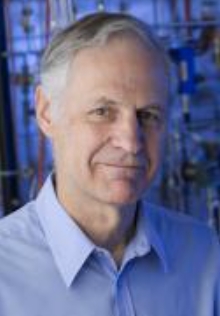 John R. Grace合作论文数Department of Chemical and Biological Engineering, University of British Columbia12
 Chaouki, Jamal合作论文数Department of Chemical Engineering, Polytechnique Montreal8
 C. Jim Lim合作论文数Department of Chemical and Biological Engineering, Faculty of Applied Science, The University of British Columbia5
 Craig A. Mcknight合作论文数Syncrude Canada Ltd.4Junjie Dong合作论文数3
 Jinghai Li (李静海)合作论文数Institute of Process Engineering, Chinese Academy of Sciences3Pierre Sauriol合作论文数3
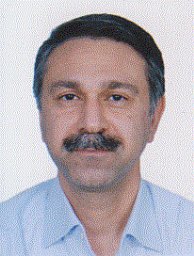 Navid Mostoufi合作论文数Process Design and Simulation Research Centre, University of Tehran3Ian Rose合作论文数2mooson kwauk合作论文数2Zhining Zhao合作论文数2Caiyuan Han合作论文数2guojiang hou合作论文数2Zhenhua Xiao合作论文数2Tianzhu Zhang合作论文数2
 Hongzhi An (安鸿志)合作论文数University of Chinese Academy of Sciences;Academy of Mathematics and Systems Science, Chinese Academy of Sciences2
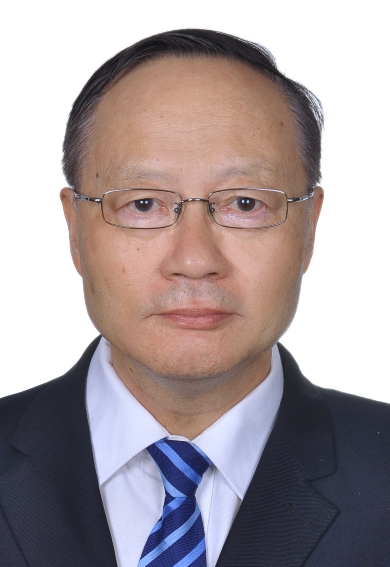 Zhiming Ma (马志明)合作论文数University of Chinese Academy of Sciences;School of Mathematical Sciences, University of Science and Technology of China;Institute of Applied Mathematics, Academy of Mathematics and Systems Science, Chinese Academy of Sciences2
 Xiaotao Bi合作论文数Clean Energy Research Centre, University of British Columbia;Faculty of Applied Science, University of British Columbia2Hsiaotao T. Bi合作论文数Department of Chemical and Biological Engineering, University of British Columbia - Vancouver2
 Lixiong Wen (文利雄)合作论文数College of Chemical Engineering, Beijing University of Chemical Technology2Yayun Chen合作论文数2Ran Tan合作论文数1
 Hong Chen合作论文数1Xi Li合作论文数1
 Loretta Li合作论文数Department of Civil Engineering, Faculty of Applied Science, The University of British Columbia1
 Jianjun Dai (代建军)合作论文数College of Chemical Engineering, Beijing University of Chemical Technology1
 Jaap C. Schouten合作论文数Department of Chemical Engineering and Chemistry, Eindhoven University of Technology1
 Min Chen (陈敏)合作论文数Academy of Mathematics and Systems Science, Chinese Academy of Sciences1
 Wei Ge (葛蔚)合作论文数Institute of Process Engineering, Chinese Academy of Sciences1C.J. Lim合作论文数1Xuqi Song合作论文数1Guihua Qian合作论文数1
 Andreas Kern合作论文数Institute of Physiological Chemistry and Pathobiochemistry, Johannes Gutenberg-University Mainz1D. Rusnell合作论文数1Hsiaotao T Bi合作论文数1Darren Burgardt合作论文数1Cor M. Van Den Bleek合作论文数Department of Chemical Engineering, Delft University of Technology1
 Said Salah Eldin Hamed Elnashaie合作论文数Department of Chemical Engineering, University of Waterloo/Department of Chemical and Biological Engineering, University of British Columbia/Department of Engineering, Quentin Berg University/Pennsylvania State University at Harrisburg1
 Changdong Sheng (盛昌栋)合作论文数School of Energy and Environment, Southeast University1D. Bulbuc合作论文数1Xuexin Sun合作论文数1
 Alaa-Eldin Adris合作论文数Department of Research and Technology Support, SABIC R & D1Jianwei Yuan合作论文数1
 Minghou Xu (徐明厚)合作论文数School of Energy and Power Engineering, Huazhong University of Science and Technology1Guofu Wu合作论文数1




