We present an all-electron, periodic G(0)W(0) implementation within the numerical atomic orbital (NAO) basis framework. A localized variant of the resolution-of-the-identity (RI) approximation is employed to significantly reduce the computational cost of evaluating and storing the two-electron Coulomb repulsion integrals. We demonstrate that the error arising from localized RI approximation can be reduced to an insignificant level by enhancing the set of auxiliary basis functions, used to expand the products of two single-particle NAOs. An efficient algorithm is introduced to deal with the Coulomb singularity in the Brillouin zone sampling that is suitable for the NAO framework. We perform systematic convergence tests and identify a set of computational parameters, which can serve as the default choice for most practical purposes. Benchmark calculations are carried out for a set of prototypical semiconductors and insulators, and compared to independent reference values obtained from an independent G(0)W(0) implementation based on linearized augmented plane waves (LAPWs) plus high-energy localized orbitals (HLOs) basis set, as well as experimental results. With a moderate (FHI-aims tier 2) NAO basis set, our G(0)W(0) calculations produce band gaps that typically lie in between the standard LAPW and the LAPW + HLO results. Complementing tier 2 with highly localized Slater-type orbitals (STOs), we find that the obtained band gaps show an overall convergence towards the LAPW + HLO results. The algorithms and techniques developed in this work pave the way for efficient implementations of correlated methods within the NAO framework.
The solution of eigenproblems is often a key computational bottleneck that limits the tractable system size of numerical algorithms, among them electronic structure theory in chemistry and in condensed matter physics. Large eigenproblems can easily exceed the capacity of a single compute node, thus must be solved on distributed-memory parallel computers. We here present GPU-oriented optimizations of the ELPA two-stage tridiagonalization eigensolver (ELPA2). On top of cuBLAS-based GPU offloading, we add a CUDA kernel to speed up the back-transformation of eigenvectors, which can be the computationally most expensive part of the two-stage tridiagonalization algorithm. We benchmark the performance of this GPU-accelerated eigensolver on two hybrid CPU–GPU architectures, namely a compute cluster based on Intel Xeon Gold CPUs and NVIDIA Volta GPUs, and the Summit supercomputer based on IBM POWER9 CPUs and NVIDIA Volta GPUs. Consistent with previous benchmarks on CPU-only architectures, the GPU-accelerated two-stage solver exhibits a parallel performance superior to the one-stage counterpart. Finally, we demonstrate the performance of the GPU-accelerated eigensolver developed in this work for routine semi-local KS-DFT calculations comprising thousands of atoms.
For symmetric (hermitian) (dense or banded) matrices the computation of eigenvalues and eigenvectors Ax = lambda Bx is an important task, e.g. in electronic structure calculations. If a larger number of eigenvectors are needed, often direct solvers are applied. On parallel architectures the ELPA implementation has proven to be very efficient, also compared to other parallel solvers like EigenExa or MAGMA. The main improvement that allows better parallel efficiency in ELPA is the two-step transformation of dense to band to tridiagonal form. This was the achievement of the ELPA project. The continuation of this project has been targeting at additional improvements like allowing monitoring and autotuning of the ELPA code, optimizing the code for different architectures, developing curtailed algorithms for banded A and B, and applying the improved code to solve typical examples in electronic structure calculations. In this paper we will present the outcome of this project.
We first briefly report on the status and recent achievements of the ELPA-AEO (Eigen value Solvers for Petaflop ApplicationsAlgorithmic Extensions and Optimizations) and ESSEXII (Equipping Sparse Solvers for Exascale) projects. In both collaboratory efforts, scientists from the application areas, mathematicians, and computer scientists work together to develop and make available efficient highly parallel methods for the solution of eigenvalue problems. Then we focus on a topic addressed in both projects, the use of mixed precision computations to enhance efficiency. We give a more detailed description of our approaches for benefiting from either lower or higher precision in three selected contexts and of the results thus obtained.
The solution of (generalized) eigenvalue problems for symmetric or Hermitian matrices is a common subtask of many numerical calculations in electronic structure theory or materials science. Solving the eigenvalue problem can easily amount to a sizeable fraction of the whole numerical calculation. For researchers in the field of computational materials science, an efficient and scalable solution of the eigenvalue problem is thus of major importance. The ELPA-library is a well-established dense direct eigenvalue solver library, which has proven to be very efficient and scalable up to very large core counts. In this paper, we describe the latest optimizations of the ELPA-library for new HPC architectures of the Intel Skylake processor family with an AVX-512 SIMD instruction set, or for HPC systems accelerated with recent GPUs. We also describe a complete redesign of the API in a modern modular way, which, apart from a much simpler and more flexible usability, leads to a new path to access system-specific performance optimizations. In order to ensure optimal performance for a particular scientific setting or a specific HPC system, the new API allows the user to influence in straightforward way the internal details of the algorithms and of performance-critical parameters used in the ELPA-library. On top of that, we introduced an autotuning functionality, which allows for finding the best settings in a self-contained automated way. In situations where many eigenvalue problems with similar settings have to be solved consecutively, the autotuning process of the ELPA-library can be done "on-the-fly". Practical applications from materials science which rely on so-called self-consistency iterations can profit from the autotuning. On some examples of scientific interest, simulated with the FHI-aims application, the advantages of the latest optimizations of the ELPA-library are demonstrated.
We present a GPU implementation of a large-scale eigenvalue solver as a part of the ELPA library. We describe the methodology of utilizing the GPU accelerators within an already well optimized MPI-based code. We present numerical results using two different HPC systems equipped with modern GPU accelerators and show the performance benefits of the GPU version.
Obtaining the eigenvalues and eigenvectors of large matrices is a key problem in electronic structure theory and many other areas of computational science. The computational effort formally scales as O(N3) with the size of the investigated problem, N (e.g. the electron count in electronic structure theory), and thus often defines the system size limit that practical calculations cannot overcome. In many cases, more than just a small fraction of the possible eigenvalue/eigenvector pairs is needed, so that iterative solution strategies that focus only on a few eigenvalues become ineffective. Likewise, it is not always desirable or practical to circumvent the eigenvalue solution entirely. We here review some current developments regarding dense eigenvalue solvers and then focus on the Eigenvalue soLvers for Petascale Applications (ELPA) library, which facilitates the efficient algebraic solution of symmetric and Hermitian eigenvalue problems for dense matrices that have real-valued and complex-valued matrix entries, respectively, on parallel computer platforms. ELPA addresses standard as well as generalized eigenvalue problems, relying on the well documented matrix layout of the Scalable Linear Algebra PACKage (ScaLAPACK) library but replacing all actual parallel solution steps with subroutines of its own. For these steps, ELPA significantly outperforms the corresponding ScaLAPACK routines and proprietary libraries that implement the ScaLAPACK interface (e.g. Intel's MKL). The most time-critical step is the reduction of the matrix to tridiagonal form and the corresponding backtransformation of the eigenvectors. ELPA offers both a one-step tridiagonalization (successive Householder transformations) and a two-step transformation that is more efficient especially towards larger matrices and larger numbers of CPU cores. ELPA is based on the MPI standard, with an early hybrid MPI-OpenMPI implementation available as well. Scalability beyond 10 000 CPU cores for problem sizes arising in the field of electronic structure theory is demonstrated for current high-performance computer architectures such as Cray or Intel/Infiniband. For a matrix of dimension 260 000, scalability up to 295 000 CPU cores has been shown on BlueGene/P.
The computation of selected eigenvalues and eigenvectors of a symmetric (Hermitian) matrix is an important subtask in many contexts, for example in electronic structure calculations. If a significant portion of the eigensystem is required then typically direct eigensolvers are used. The central three steps are: reduce the matrix to tridiagonal form, compute the eigenpairs of the tridiagonal matrix, and transform the eigenvectors back. To better utilize memory hierarchies, the reduction may be effected in two stages: full to banded, and banded to tridiagonal. Then the back transformation of the eigenvectors also involves two stages. For large problems, the eigensystem calculations can be the computational bottleneck, in particular with large numbers of processors. In this paper we discuss variants of the tridiagonal-to-banded back transformation, improving the parallel efficiency for large numbers of processors as well as the per-processor utilization. We also modify the divide-and-conquer algorithm for symmetric tridiagonal matrices such that it can compute a subset of the eigenpairs at reduced cost. The effectiveness of our modifications is demonstrated with numerical experiments.
The paper presents an overview of the current research and achievements of the DEISA project, with a focus on the general concept of the infrastructure, the operational model, application projects and science communities, the DEISA Extreme Computing Initiative, user and application support, operations and technology, services, collaborations and interoperability, and the use of standards and policies. The paper concludes with a discussion about the long-term sustainability of the DEISA infrastructure.
The DEISA Consortium continues its work in the DEISA2 project with EU FP7 support from 2008 to 2011. DEISA2 focuses on the provisioning and operation of infrastructure services which allow its users to work efficiently within a distributed high performance computing environment. DEISA supports both single projects (via DECI) and Virtual Communities.
 Andreas Marek合作论文数Max-Planck-Institute for Astrophysics9
 Volker Blum合作论文数Department of Chemistry, Trinity College of Arts & Sciences, Duke University;Thomas Lord Department of Mechanical Engineering & Materials Science, Pratt School of Engineering, Duke University8
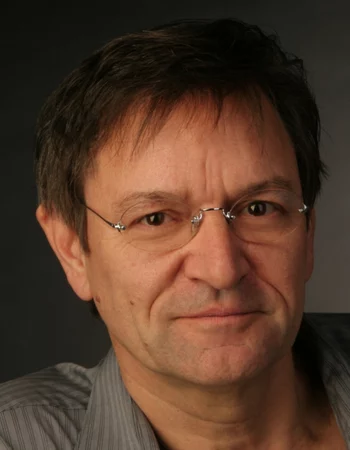 Matthias Scheffler合作论文数Fritz Haber Institute of the Max Planck Society, Max-Planck-Gesellschaft;Technical University Berlin;Free University Berlin7
 Pavel Kus合作论文数6G Baer合作论文数5Rainer Johanni合作论文数5
 Hans Joachim Bungartz合作论文数Fakultat fur Informatik, Technische Universitat Munchen5
 Wolfgang Gentzsch合作论文数5Roland P. May合作论文数5Alison Kennedy合作论文数4
 Christian Carbogno合作论文数4
 Bruno Lang合作论文数Wuppertal
Fachbereich C - Mathematik und Naturwissenschaften
Angewandte Informatik - Algorithmik
Bergische Universit?t4
Bruno Lang合作论文数Wuppertal
Fachbereich C - Mathematik und Naturwissenschaften
Angewandte Informatik - Algorithmik
Bergische Universit?t4 Karsten Reuter合作论文数Theory Department, Fritz-Haber-Institut, Max-Planck-Gesellschaft;Technische Universität München;BasCat Unicat-BASF Joint Lab3
 Ville Havu合作论文数3Henry L. Crespi合作论文数3
 Thomas Huckle合作论文数Technische Universität München3
 Thomas Auckenthaler合作论文数3Roman Hatzky合作论文数3Markus Rampp合作论文数Max-Planck-Institut fur Astrophysik3Valeriy Manin合作论文数2Yu Victor Wen-zhe合作论文数2
 Simone Swantje Kocher合作论文数2R MAY合作论文数2Michael Rippl合作论文数2
 Frank Jenko合作论文数Max Planck Institute for Plasma Physics2Thomas Soddemann合作论文数2
 Jonathan Moussa合作论文数Molecular Sciences Software Institute2
 Mina Yoon合作论文数Materials Science and Technology Division, Oak Ridge National Laboratory;Department of Physics and Astronomy, The University of Tennessee2
 Jørgen Kjems合作论文数Department of Molecular Biology and Genetics, Aarhus University;Interdisciplinary Nanoscience Center, Aarhus University;Danish National Research Council Centre of Excellence, Aarhus University;Centre for Cellular Signal Patterns, Aarhus University2
 Wolfgang Hillen合作论文数Institute of Biology, Friedrich-Alexander University2
 Peter Messmer合作论文数2Reinhard Tisma合作论文数2
 Phil Andrews合作论文数San Diego Supercomputer Center, UCSD2
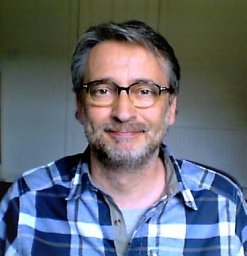 Gavin J. Pringle合作论文数EPCC, University of Edinburgh2Denis Girou合作论文数2H. L. Crespi合作论文数2Mark Ballico合作论文数2Willi Metzger合作论文数2Martin Galgon合作论文数2Paul R. Willems合作论文数2
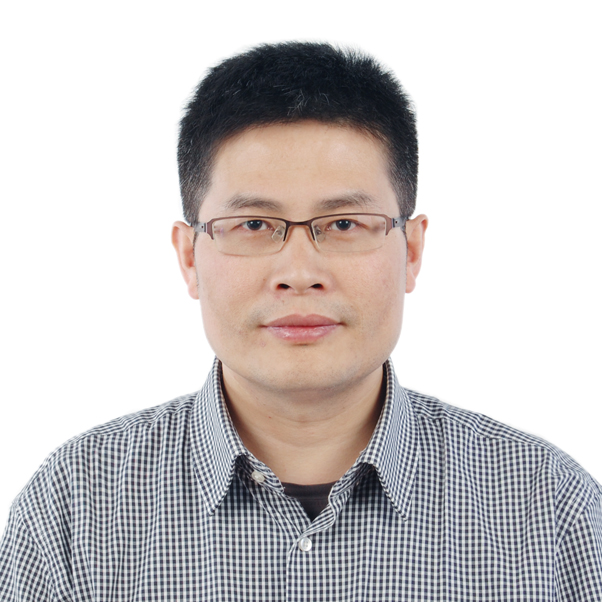 Xinguo Ren (任新国)合作论文数Key Lab of Condensed Matter Theory & Materials Computation, Institute of Physics, Chinese Academy of Sciences2
 Alberto Bottino合作论文数Max Planck Institute for Plasma Physics2B Linke合作论文数1Christopher T. Jordan合作论文数1Guenter Raddatz合作论文数1Florian Merz合作论文数1Hermann Heumann合作论文数1
 Morris Riedel合作论文数1muenchen generalverwaltung maxplanckgesellschaft zur foerderung der wissenschaften e v合作论文数1




