Traditional social science research often requires designing complex experiments across vast methodological spaces and depends on real human participants, making it labor-intensive, costly, and difficult to scale. Here we present S-Researcher, an LLM-agent-based platform that assists researchers in conducting social science research more efficiently and at greater scale by "siliconizing" both the research process and the participant pool. To build S-Researcher, we first develop YuLan-OneSim, a large-scale social simulation system designed around three core requirements: generality via auto-programming from natural language to executable scenarios, scalability via a distributed architecture supporting up to 100,000 concurrent agents, and reliability via feedback-driven LLM fine-tuning. Leveraging this system, S-Researcher supports researchers in designing social experiments, simulating human behavior with LLM agents, analyzing results, and generating reports, forming a complete human-AI collaborative research loop in which researchers retain oversight and intervention at every stage. We operationalize LLM simulation research paradigms into three canonical reasoning modes (induction, deduction, and abduction) and validate S-Researcher through systematic case studies: inductive reproduction of cultural dynamics consistent with Axelrod's theory, deductive testing of competing hypotheses on teacher attention validated against survey data, and abductive identification of a cooperation mechanism in public goods games confirmed by human experiments. S-Researcher establishes a new human–AI collaborative paradigm for social science, in which computational simulation augments human researchers to accelerate discovery across the full spectrum of social inquiry.
Leveraging large language model (LLM) based agents to simulate human social behaviors has recently gained significant attention. In this paper, we introduce a novel social simulator called YuLan-OneSim. Compared to previous works, YuLan-OneSim distinguishes itself in five key aspects: (1) Code-free scenario construction: Users can simply describe and refine their simulation scenarios through natural language interactions with our simulator. All simulation code is automatically generated, significantly reducing the need for programming expertise. (2) Comprehensive default scenarios: We implement 50 default simulation scenarios spanning 8 domains, including economics, sociology, politics, psychology, organization, demographics, law, and communication, broadening access for a diverse range of social researchers. (3) Evolvable simulation: Our simulator is capable of receiving external feedback and automatically fine-tuning the backbone LLMs, significantly enhancing the simulation quality. (4) Large-scale simulation: By developing a fully responsive agent framework and a distributed simulation architecture, our simulator can handle up to 100,000 agents, ensuring more stable and reliable simulation results. (5) AI social researcher: Leveraging the above features, we develop an AI social researcher. Users only need to propose a research topic, and the AI researcher will automatically analyze the input, construct simulation environments, summarize results, generate technical reports, review and refine the reports–completing the social science research loop. To demonstrate the advantages of YuLan-OneSim, we conduct experiments to evaluate the quality of the automatically generated scenarios, the reliability, efficiency, and scalability of the simulation process, as well as the performance of the AI social researcher.
With the rapid advancement of large language models (LLMs), recent years have witnessed many promising studies on leveraging LLM-based agents to simulate human social behavior. While prior work has demonstrated significant potential across various domains, much of it has focused on specific scenarios involving a limited number of agents and has lacked the ability to adapt when errors occur during simulation. To overcome these limitations, we propose a novel LLM-agent-based simulation platform called GenSim, which: (1) Abstracts a set of general functions to simplify the simulation of customized social scenarios; (2) Supports one hundred thousand agents to better simulate large-scale populations in real-world contexts; (3) Incorporates error-correction mechanisms to ensure more reliable and long-term simulations. To evaluate our platform, we assess both the efficiency of large-scale agent simulations and the effectiveness of the error-correction mechanisms. To our knowledge, GenSim represents an initial step toward a general, largescale, and correctable social simulation platform based on LLM agents, promising to further advance the field of social science. The relevant code and project are open-sourced on https://github.com/TangJiakai/GenSim.
Causal discovery with observational and interventional data plays an important role in numerous fields. Due to the costly and potentially risky nature of intervention experiments, selecting informative interventions is critical in real-world situations. Several recent works introduce Bayesian active learning to select interventions that maximize the expected information gain about the underlying causal relationship at each optimization step. However, there are still some limitations within these methods: (1) Local optimality. With multiple intervention experiments, selecting optimal intervention myopically at each step may drop into the local optimal point. (2) Expensive time cost. Optimizing the most informative intervention at each step is time-consuming and not suitable for adaptive experiments with strict inference speed requirements. In this study, we propose a novel method called Reinforcement Learning-based Causal Bayesian Experimental Design (RL-CBED) to reduce the risk of local optimality and accelerate intervention selection inference. Specifically, we formulate the active causal discovery problem as a partially observable Markov decision process (POMDP). We design an information gain-based sparse reward function and then improve it to a dense reward function, providing fine-grained feedback to help the RL policy learn more quickly in complex environments. Moreover, we theoretically prove that the Q-function estimator can be learned using only trajectories sampled from the prior, which can significantly reduce the time cost of training process, enabling the real-world application of our method. Extensive experiments on both synthetic and real world-inspired semi-synthetic datasets demonstrate the effectiveness of our proposed method.
Most cross-domain recommenders require samples on target domains or source-target overlaps to carry out domain adaptation. However, in many real-world situations, target domains are lack of such knowledge. Few works discuss this problem, whose essence is domain generalization recommendation. In this paper, we figure out domain generalization recommendation with a clear symbolized definition and propose corresponding models. Moreover, we illustrate its strong connection with zero-shot recommendation, pretrained recommendation and cold-start recommendation, distinguishing it from content-based recommendation. By analyzing its properties, we propose HIRL^+ and a series of heuristic methods to solve this problem. We propose hierarchical invariant learning to expel the specific patterns in both domain-level and environment-level, and find the common patterns in generalization space. To make the division of environments flexible, fine-grained and balanced, we put forward a learnable environment assignment method. To improve the robustness against distribution shifts inside domain generalization, we present an adversarial environment refinement method. In addition, we conduct experiments on real-word datasets to verify the effectiveness of our models, and carry out further studies on the domain distance and domain diversity. To benefit the research community and promote this direction, we discuss the future of this field.
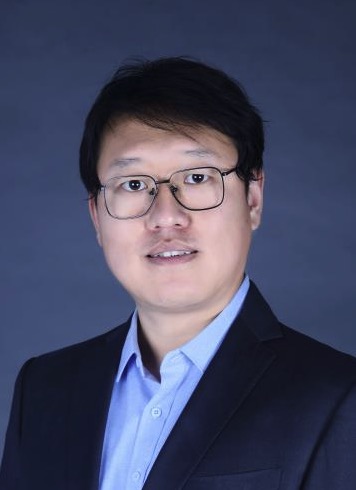 Xu Chen (陈旭)合作论文数Gaoling School of Artificial Intelligence, Renmin University of China3
 Jiakai Tang合作论文数AI Engine Lab, Gaoling School of Artificial Intelligence, Renmin University of China1
 Hao Yang合作论文数1
 Zexu Sun合作论文数Gaoling School of Artificial Intelligence, Renmin University of China1
 Xuchen Pan合作论文数1
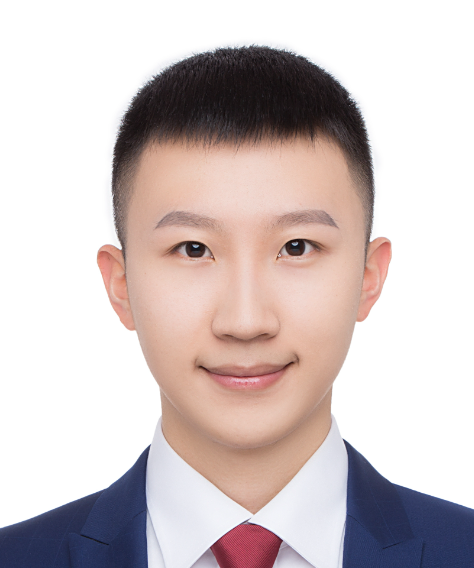 Zeyu Zhang合作论文数AI Engine Lab, Gaoling School of Artificial Intelligence, Renmin University of China;NExT++ Research Center, National University of Singapore1Yushuo Chen合作论文数1
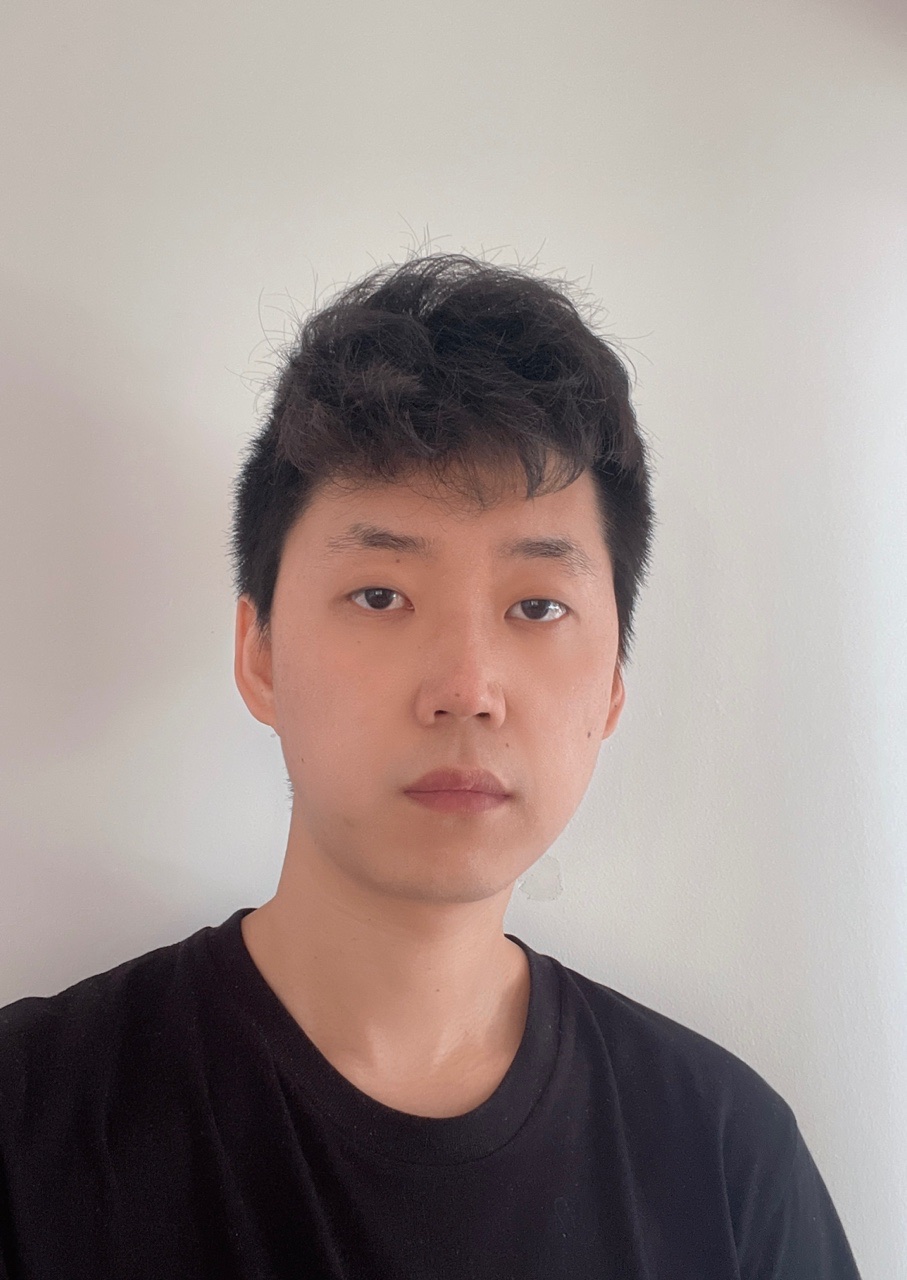 Dawei Gao合作论文数Data Analytics and Intelligence Lab, Alibaba DAMO Academy1
 Yankai Lin (林衍凯)合作论文数Gaoling School of Artificial Intelligence, Renmin University of China1
 Yaliang Li合作论文数Tongyi Lab, Alibaba Group1
 Lei (Demo) Wang合作论文数School of Information Systems, Singapore Management University1
 Jingren Zhou合作论文数Alibaba Group1
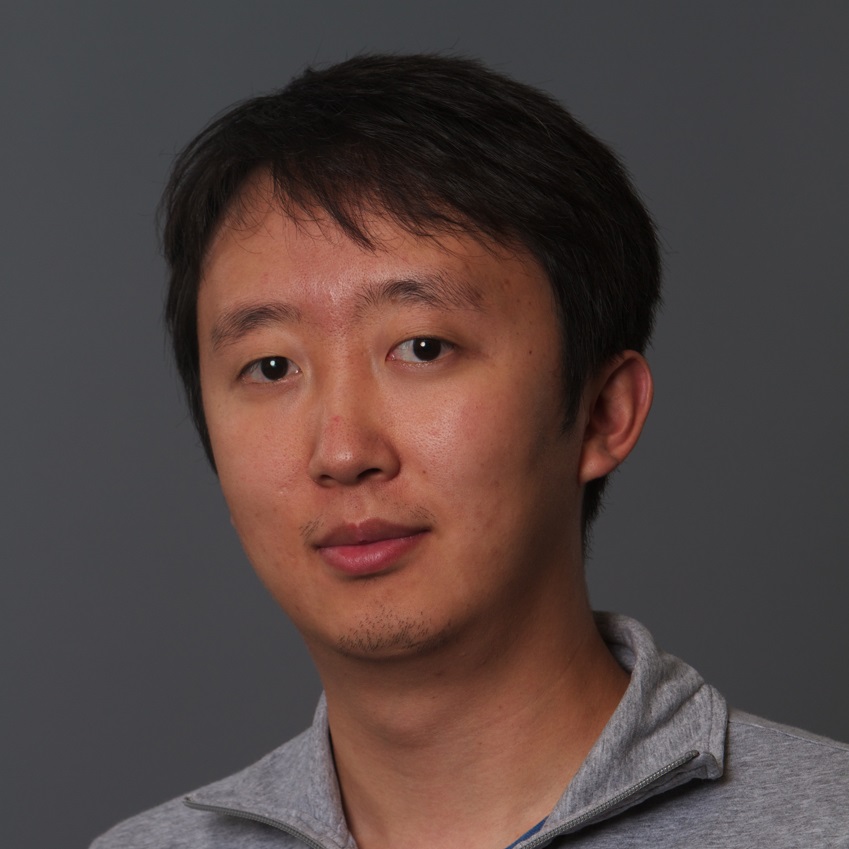 Bolin Ding合作论文数Data Analytics and Intelligence Lab, Alibaba Group1
 Ji-Rong Wen (文继荣)合作论文数Gaoling School of Artificial Intelligence, Renmin University of China1
 Jun Wang (汪军)合作论文数Department of Computer Science, University College London;MediaGamma Limited1




