In this paper the authors review the activities of Singapore-based research institutions and business players in the field of fuel cells and associated hydrogen technologies undertaken till date. The scope of this paper spans almost 15 years of accomplishments and focuses on highlighting the acquired capabilities and achievements. The review shows slow, but consistently growing research activities, demonstration undertakings and business endeavours of local and overseas companies.
Due to increasing oil and gas demand, the depletion of fossil resources, serious global warming, efficient energy systems and new energy conversion processes are urgently needed. Fuel cells and hybrid systems have emerged as advanced thermodynamic systems with great promise in achieving high energy/power efficiency with reduced environmental loads. In particular, due to the synergistic effect of using integrated solid oxide fuel cell (SOFC) and classical thermodynamic cycle technologies, the efficiency of the integrated system can be significantly improved. This paper reviews different concepts/strategies for SOFC-based integration systems, which are timely transformational energy-related technologies available to overcome the threats posed by climate change and energy security.
As a nonlinear power generation device, the solid oxide fuel cell (SOFC) often operates under small window of operating conditions due to the constraints stemming from the environmental and safety considerations. The nonlinear model predictive control (NMPC) appears to be well suited control algorithm for this application. NMPC is a closed-loop feedback control scheme that predicts the open-loop optimal input based on the measurements and the setting trajectory. This work aims to develop a closed-loop feedback control strategy based on the NMPC controller for a planar SOFC. The current density, fuel and air molar flow rates are chosen as manipulated variables to control the output power, fuel utilization and temperature. The mole fraction and temperature of the exit gases are set as state variables, which can be estimated from the moving horizon estimation (MHE) method. The validation here is referred to robustness and stability of the controller, a typical case study has been conducted with the power output changes under constant fuel utilization and temperature. Simulation results show that the noise of the output is successfully filtered by the MHE. The NMPC controller works satisfactorily following the setting output trajectory.
Singapore is one of the most industrialised and urbanised economies in South-East Asia. Power supply is an important sub-system in its economy and heavily reliant on imported oil and natural gas. Due to its geographical area, clean/renewable energy sources for power generation are limited. At the same time, in its deregulated electricity market, the adoption of clean/renewable based power generation technology may be hindered by a market pricing mechanism that does not reflect externality costs. For a sustainable power supply, there is a need to change the conventional appraisal techniques. Life cycle assessment (LCA) and life cycle cost analysis (LCCA) are good tools to quantify environmental impacts and economic implications. LCA and LCCA are performed for centralised and distributed power generation technologies in Singapore, namely, oil and Orimulsion-fired steam turbines, natural gas-fired combined cycle plant, solar PV and fuel cell systems. A life cycle energy, emission and cost inventory is established. The results are discussed from the perspectives of fuel security, environmental protection and cost effectiveness of future power generation strategies for Singapore.
In life cycle assessment (LCA) of solar PV systems, energy pay back time (EPBT) is the commonly used indicator to justify its primary energy use. However, EPBT is a function of competing energy sources with which electricity from solar PV is compared, and amount of electricity generated from the solar PV system which varies with local irradiation and ambient conditions. Therefore, it is more appropriate to use site-specific EPBT for major decision-making in power generation planning. LCA and life cycle cost analysis are performed for a distributed 2.7kWp grid-connected mono-crystalline solar PV system operating in Singapore. This paper presents various EPBT analyses of the solar PV system with reference to a fuel oil-fired steam turbine and their greenhouse gas (GHG) emissions and costs are also compared. The study reveals that GHG emission from electricity generation from the solar PV system is less than one-fourth that from an oil-fired steam turbine plant and one-half that from a gas-fired combined cycle plant. However, the cost of electricity is about five to seven times higher than that from the oil or gas fired power plant. The environmental uncertainties of the solar PV system are also critically reviewed and presented.
A simple solid oxide fuel cell plant is analysed based on the first law of thermodynamics approach. This system consists of a solid oxide fuel cell stack, a steam reformer, a mixer, a vaporiser, an afterburner, and two pre‐heaters. To simplify the study, the enthalpy at each node of the system is normalized with the lower heating value of the inlet fuel. A gas dynamic model for calculating the flow in the pipes connecting the system components is considered and can be used to estimate the flow velocity and friction‐induced pressure drop in the piping. Though the effect of a friction‐induced pressure drop can be significant in a sizeable integrated solid oxide fuel cell‐gas turbine power plant, it does not significantly affect the plant efficiency in this study, due to rather short piping used in this simple power system. A steady flow energy equation and the Rayleigh line flow assumption are applied to the afterburner to calculate the exit flow temperature, velocity and pressure.
A life cycle assessment was performed to quantify the non-renewable (fossil) energy use and global warming potential (GWP) in electricity generation from a typical gas fired combined cycle power plant in Singapore. The cost of electricity generation was estimated using a life cycle cost analysis (LCCA) tool. The life cycle assessment (LCA) of a 367.5MW gas fired combined cycle power plant operating in Singapore revealed that hidden processes consume about 8% additional energy in addition to the fuel embedded energy, and the hidden GWP is about 18%. The natural gas consumed during the operational phase accounted for 82% of the life cycle cost of electricity generation. An empirical relation between plant efficiency and life cycle energy use and GWP in addition to a scenario for electricity cost with varying gas prices and plant efficiency have been established.
A life cycle assessment (LCA) was conducted to quantify the non-renewable energy use and global warming potential in electricity generation from a typical oil fired steam turbine plant in Singapore. As the conventional LCA does not include any cost analysis, which is a major criterion in decision making, the cost of power generation is estimated using a life cycle cost analysis (LCCA) tool. It is estimated that the hidden processes consumed about 9% additional energy on top of the fuel embedded energy, while the hidden GHG emission is about 12%. A correlation is established to estimate the life cycle energy use and GHG emissions directly from the power plant net efficiency. The study methodology, results and the empirical relations are presented, together with a brief overview of the Singapore power sector. It also highlights the need for consideration of the reserves availability in the pricing mechanism and how such cost indices could be developed based on the LCA–LCCA.
This paper presents the work on part-load operation of a power generation system composed of a solid oxide fuel cell and a gas turbine (SOFC–GT) which operate on natural gas. The system consists of an internal reforming SOFC (IRSOFC) stack, an external combustor, two turbines, two compressors, two recuperators and one heat-recovery steam generator (HRSG). Based on experience in different levels of modelling of the fuel cell, fuel cell stack and integrated system and the inherent characteristics of a IRSOFC–GT hybrid power plant, a practical approach for simplifying part-load operation of the system is proposed. Simulation results show that an IRSOFC–GT hybrid system could achieve a net electrical efficiency and system efficiency (including waste heat recovery for steam generation) of greater than 60 and 80%, respectively, under full-load operation. Due to the complexity of the interaction of the components and safety requirements, the part-load performance of a IRSOFC–GT hybrid power plant is poorer than that under full-load operation.
This paper presents the work on a natural gas-fed integrated internal-reforming solid oxide fuel cell–gas turbine (IRSOFC–GT) power generation system. It was assumed that only hydrogen participated in the electrochemical reaction, while the non-reacted raw gases and reformed gases are fully oxidized in the combustor downstream of the fuel cell stack. The system consists of an integrated reformer, a SOFC stack, a combustor, a gas turbine and a power turbine, a fuel compressor and an air compressor, two recuperates and a heat recovery steam generator (HRSG). Different levels of modeling work for the fuel cell, fuel cell stack, and integrated system were conducted, which provide a means for sizing up the power system in the developmental stage. Simulation results show that the IRSOFC–GT power system could achieve a net electrical efficiency of better than 60% and a system efficiency (including waste heat recovery for steam generation) of better than 80%.
This paper presents the work on a simple, natural gas-fed, hybrid solid oxide fuel cell–gas turbine (SOFC–GT) power-generation system. The system consists of an internal-reforming SOFC (IRSOFC) stack, a combustor, a GT, two compressors and three recuperators. Two case studies are conducted with particular attention on the effects of operating pressure and fuel flow-rate on the performance of the components and overall system. Results show that an internal-reforming hybrid SOFC–GT system can achieve an electrical efficiency of more than 60% and a system efficiency (including waste heat recovery for co-generation) of more than 80%. It is also found that increasing the operating pressure will improve the system efficiency, whereas increasing the fuel flow-rate (while keeping the fuel utilisation rate unchanged) causes the system efficiency to decrease. In the latter case, the increase in system fuel consumption is relatively higher which removes the benefit of increase in SOFC stack and turbine power output.
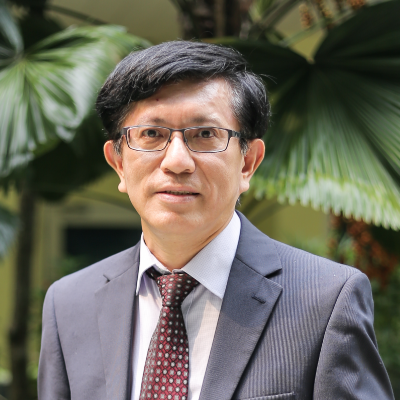 Siew Hwa Chan (曾少华)合作论文数School of Mechanical & Aerospace Engineering, Nanyang Technological University;Energy Research Institute, Nanyang Technological University;China-Singapore International Joint Research Institute;Maz Energy Pte Ltd7
 Kai Choong Leong合作论文数School of Mechanical and Aerospace Engineering, College of Engineering, Nanyang Technological University3
 R. Kannan合作论文数3Y. Tian合作论文数3
 Chih Ping Tso合作论文数Faculty of Engineering and Technology, Multimedia University3
 Jun Li (李军)合作论文数School of Materials Science and Engineering, Shanghai Jiao Tong University2
 O.L. Ding合作论文数2
 Pei-Chen Su合作论文数School of Mechanical and Aerospace Engineering, College of Engineering, Nanyang Technological University1
 Jan Stempien合作论文数Nanyang Technological University, Nanyang Technological Univ1
 Guojun Li (李国君)合作论文数School of Energy and Power Engineering, Xi'an Jiaotong University1Rajgopal Kannan合作论文数Department of Computer Science, Louisiana State University1Ramli Bin Osman合作论文数1
 Zhenping Feng (丰镇平)合作论文数School of Energy and Power Engineering, Xi'an Jiaotong University1




