HiCCL (Hierarchical Collective Communication Library) addresses the growing complexity and diversity in high-performance network architectures. As GPU systems have envolved into networks of GPUs with different multilevel communication hierarchies, optimizing each collective function for a specific system has become a challenging task. Consequently, many collective libraries struggle to adapt to different hardware and software, especially across systems from different vendors. HiCCL's library design decouples the collective communication logic from network-specific optimizations through a compositional API. The communication logic is composed using multicast, reduction, and fence primitives, which are then factorized for a specified network hieararchy using only point-to-point operations within a level. Finally, striping and pipelining optimizations applied as specified for streamlining the execution. Performance evaluation of HiCCL across four different machines$\unicode{x2014}$two with Nvidia GPUs, one with AMD GPUs, and one with Intel GPUs$\unicode{x2014}$demonstrates an average 17$\times$ higher throughput than the collectives of highly specialized GPU-aware MPI implementations, and competitive throughput with those of vendor-specific libraries (NCCL, RCCL, and OneCCL), while providing portability across all four machines.
The growth rate of the GPU memory capacity has not been able to keep up with that of the size of large language models (LLMs), hindering the model training process. In particular, activations-the intermediate tensors produced during forward propagation and reused in backward propagation-dominate the GPU memory use. This leads to high training overheads such as expensive weight update costs due to the small micro-batch size. To address this challenge, we propose SSDTrain, an adaptive activation offloading framework to high-capacity NVMe SSDs. SSDTrain reduces GPU memory usage without impacting performance by fully overlapping data transfers with computation. SSDTrain is compatible with popular deep learning frameworks like PyTorch, Megatron, and DeepSpeed, and it employs techniques such as tensor deduplication and forwarding to further enhance efficiency. We extensively experimented with popular LLMs like GPT, BERT, and T5. Results demonstrate that SSDTrain reduces 47% of the activation peak memory usage. At the same time, SSDTrain perfectly overlaps the I/O with the computation and incurs negligible overhead. Compared with keeping activations in GPU memory and layerwise full recomputation, SSDTrain achieves the best memory savings with negligible throughput loss. We further analyze how the reduced activation memory use may be leveraged to increase throughput by increasing micro-batch size and reducing pipeline parallelism bubbles.
Modern high-performance computing systems have multiple GPUs and network interface cards (NICs) per node. The resulting network architectures have multilevel hierarchies of subnetworks with different interconnect and software technologies. These systems offer multiple vendor-provided communication capabilities and library implementations (IPC, MPI, NCCL, RCCL, OneCCL) with APIs providing varying levels of performance across the different levels. Understanding this performance is currently difficult because of the wide range of architectures and programming models (CUDA, HIP, OneAPI). We present CommBench, a library with cross-system portability and a high-level API that enables developers to easily build microbenchmarks relevant to their use cases and gain insight into the performance (bandwidth & latency) of multiple implementation libraries on different networks. We demonstrate CommBench with three sets of microbenchmarks that profile the performance of six systems. Our experimental results reveal the effect of multiple NICs on optimizing the bandwidth across nodes and also present the performance characteristics of four available communication libraries within and across nodes of NVIDIA, AMD, and Intel GPU networks.
Relational graph neural networks (RGNNs) are graph neural networks with dedicated structures for modeling the different types of nodes and edges in heterogeneous graphs. While RGNNs have been increasingly adopted in many real-world applications due to their versatility and accuracy, they pose performance and system design challenges: inherent memory-intensive computation patterns, the gap between the programming interface and kernel APIs, and heavy programming effort in optimizing kernels caused by their coupling with data layout and heterogeneity. To systematically address these challenges, we propose Hector, a novel two-level intermediate representation and its code generator framework, that (a) captures the key properties of RGNN models, and opportunities to reduce memory accesses in inter-operator scheduling and materialization, (b) generates code with flexible data access scheme to eliminate redundant data copies, (c) decouples model semantics, data layout, and operators-specific optimization from each other to reduce programming effort. By building on one general matrix multiply (GEMM) template and a node/edge traversal template, Hector achieves up to 9.9x speed-up in inference and 43.7x speed-up in training compared with the state-of-the-art public systems on select models, i.e., RGCN, RGAT and HGT, when running heterogeneous graphs provided by Deep Graph Library (DGL) and Open Graph Benchmark (OGB). In addition, Hector does not trigger any out-of-memory (OOM) exception in these tests. We also propose the linear operator reorder and compact materialization to further accelerate the system by up to 3.8x. As an indicator of programming effort reduction, Hector takes in 51 lines of code expressing the three models and generates a total of 8K lines of CUDA and C++ code.
Relational graph neural networks (RGNNs) are graph neural networks with dedicated structures for modeling the different types of nodes and edges in heterogeneous graphs. While RGNNs have been increasingly adopted in many real-world applications due to their versatility and accuracy, they pose performance and system design challenges: inherent memory-intensive computation patterns, the gap between the programming interface and kernel APIs, and heavy programming effort in optimizing kernels caused by their coupling with data layout and heterogeneity. To systematically address these challenges, we propose Hector, a novel two-level intermediate representation and its code generator framework, that (a) captures the key properties of RGNN models, and opportunities to reduce memory accesses in inter-operator scheduling and materialization, (b) generates code with flexible data access scheme to eliminate redundant data copies, (c) decouples model semantics, data layout, and operators-specific optimization from each other to reduce programming effort. By building on one general matrix multiply (GEMM) template and a node/edge traversal template, Hector achieves up to 9.9x speed-up in inference and 43.7x speed-up in training compared with the state-of-the-art public systems on select models, i.e., RGCN, RGAT and HGT, when running heterogeneous graphs provided by Deep Graph Library (DGL) and Open Graph Benchmark (OGB). In addition, Hector does not trigger any out-of-memory (OOM) exception in these tests. We also propose the linear operator reorder and compact materialization to further accelerate the system by up to 3.8x. As an indicator of programming effort reduction, Hector takes in 51 lines of code expressing the three models and generates a total of 8K lines of CUDA and C++ code.
This work extends our previous research entitled “MemXCT: Memory-centric X-ray CT Reconstruction with Massive Parallelization” that was originally published at SC19 conference (Hidayetoğlu et al. , 2019) with reproducibility of the computational imaging performance. X-ray computed tomography (XCT) is regularly used at synchrotron light sources to study the internal morphology of materials at high resolution. However, experimental constraints, such as radiation sensitivity, can result in noisy or undersampled measurements. Further, depending on the resolution, sample size and data acquisition rates, the resulting noisy dataset can be in the order of terabytes. Advanced iterative reconstruction techniques can produce high-quality images from noisy measurements, but their computational requirements have made their use an exception rather than the rule. We propose a novel memory-centric approach that avoids redundant computations at the expense of additional memory complexity. We develop a memory-centric iterative reconstruction system, MemXCT, that uses an optimized SpMV implementation with two-level pseudo-Hilbert ordering and multi-stage input buffering. We evaluate MemXCT on various supercomputer architectures involving KNL and GPU. MemXCT can reconstruct a large (11K×11K) mouse brain tomogram in 10 seconds using 4096 KNL nodes (256K cores). The results presented in our original article at the SC19 were based on large-scale supercomputing resources. The MemXCT application was selected for the Student Cluster Competition (SCC) Reproducibility Challenge and evaluated on a variety of cloud computing resources by universities around the world in the SC20 conference. We summarize the results of the top-ranked SCC Reproducibility Challenge teams and identify the most pertinent measures for ensuring the reproducibility of our experiments in this article.
Graph Neural Networks (GNNs) have shown success in learning from graph-structured data, with applications to fraud detection, recommendation, and knowledge graph reasoning. However, training GNN efficiently is challenging because: 1) GPU memory capacity is limited and can be insufficient for large datasets, and 2) the graph-based data structure causes irregular data access patterns. In this work, we provide a method to statistically analyze and identify more frequently accessed data ahead of GNN training. Our data tiering method not only utilizes the structure of input graph, but also an insight gained from actual GNN training process to achieve a higher prediction result. With our data tiering method, we additionally provide a new data placement and access strategy to further minimize the CPU-GPU communication overhead. We also take into account of multi-GPU GNN training as well and we demonstrate the effectiveness of our strategy in a multi-GPU system. The evaluation results show that our work reduces CPU-GPU traffic by 87-95% and improves the training speed of GNN over the existing solutions by 1.6-2.1x on graphs with hundreds of millions of nodes and billions of edges.
Inverse scattering involving microwave and ultrasound waves require numerical solution of nonlinear optimization problem. To alleviate the computational burden of a full three-dimensional (3-D) inverse problem, it is a common practice to approximate the object as two-dimensional (2-D) and treat the transmitter and receiver sensors as 3-D, through a Fourier integration of 2-D modes of scattering. The resulting integral is singular, and hence requires a prohibitively large number of integration points, where each point corresponds to a 2-D solution. To reduce the computational complexity, this paper proposes fast integration approaches by a set of transformations. We model the object in 2-D but the transmit and receiver pairs as 3-D; hence, we term the solution as a 2.5-D inverse problem. Convergence results indicate that the proposed integration techniques have exponential convergence and hence have a reduces the computational complexity to compute 2.5-D Green's function to solve inverse scattering problems.
With the increasing adoption of graph neural networks (GNNs) in the machine learning community, GPUs have become an essential tool to accelerate GNN training. However, training GNNs on very large graphs that do not fit in GPU memory is still a challenging task. Unlike conventional neural networks, mini-batching input samples in GNNs requires complicated tasks such as traversing neighboring nodes and gathering their feature values. While this process accounts for a significant portion of the training time, we find existing GNN implementations using popular deep neural network (DNN) libraries such as PyTorch are limited to a CPU-centric approach for the entire data preparation step. This "all-in-CPU" approach has negative impact on the overall GNN training performance as it over-utilizes CPU resources and hinders GPU acceleration of GNN training. To overcome such limitations, we introduce PyTorch-Direct, which enables a GPU-centric data accessing paradigm for GNN training. In PyTorch-Direct, GPUs are capable of efficiently accessing complicated data structures in host memory directly without CPU intervention. Our microbenchmark and end-to-end GNN training results show that PyTorch-Direct reduces data transfer time by 47.1% on average and speeds up GNN training by up to 1.6x. Furthermore, by reducing CPU utilization, PyTorch-Direct also saves system power by 12.4% to 17.5% during training. To minimize programmer effort, we introduce a new "unified tensor" type along with necessary changes to the PyTorch memory allocator, dispatch logic, and placement rules. As a result, users need to change at most two lines of their PyTorch GNN training code for each tensor object to take advantage of PyTorch-Direct.
The discrete Fourier transform (DFT) and its specialized case, the number theoretic transform (NTT), are two important mathematical tools having applications in several areas of science and engineering. However, despite their usefulness and utility, their adoption continues to be a challenge as computing the DFT of a signal can be a time-consuming and expensive operation. To speed things up, fast Fourier transform (FFT) algorithms, which are reduced-complexity formulations for computing the DFT of a sequence, have been proposed and implemented for traditional processors and their corresponding instruction sets. With the rise of GPUs, NVIDIA introduced its own FFT computation library called cuFFT, which leverages the power of GPUs to compute the DFT. However, as this paper demonstrates, there is a lot of room for improvement to accelerate the FFT and NTT algorithms on modern GPUs by utilizing specialized operations and architectural advancements. In particular, we present four major types of optimizations that leverage tensor cores and the warp-shuffle instruction. Through extensive evaluations, we show that our approach consistently outperforms existing GPU-based implementations with a speedup of up to 4× for NTT and a speed of up to 1.5× for FFT.
Graph Convolutional Networks (GCNs) are increasingly adopted in large-scale graph-based recommender systems. Training GCN requires the minibatch generator traversing graphs and sampling the sparsely located neighboring nodes to obtain their features. Since real-world graphs often exceed the capacity of GPU memory, current GCN training systems keep the feature table in host memory and rely on the CPU to collect sparse features before sending them to the GPUs. This approach, however, puts tremendous pressure on host memory bandwidth and the CPU. This is because the CPU needs to (1) read sparse features from memory, (2) write features into memory as a dense format, and (3) transfer the features from memory to the GPUs. In this work, we propose a novel GPU-oriented data communication approach for GCN training, where GPU threads directly access sparse features in host memory through zero-copy accesses without much CPU help. By removing the CPU gathering stage, our method significantly reduces the consumption of the host resources and data access latency. We further present two important techniques to achieve high host memory access efficiency by the GPU: (1) automatic data access address alignment to maximize PCIe packet efficiency, and (2) asynchronous zero-copy access and kernel execution to fully overlap data transfer with training. We incorporate our method into PyTorch and evaluate its effectiveness using several graphs with sizes up to 111 million nodes and 1.6 billion edges. In a multi-GPU training setup, our method is 65-92% faster than the conventional data transfer method, and can even match the performance of all-in-GPU-memory training for some graphs that fit in GPU memory.
High-performance distributed computing systems increasingly feature nodes that have multiple CPU sockets and multiple GPUs. The communication bandwidth between these components is non-uniform. Furthermore, these systems can expose different communication capabilities between these components. For communication-heavy applications, optimally using these capabilities is challenging and essential for performance. Bespoke codes with optimized communication may be non-portable across run-time/software/hardware configurations, and existing stencil frameworks neglect optimized communication. This work presents node-aware approaches for automatic data placement and communication implementation for 3D stencil codes on multi-GPU nodes with non-homogeneous communication performance and capabilities. Benchmarking results in the Summit system show that choices in placement can result in a 20% improvement in single-node exchange, and communication specialization can yield a further 6x improvement in exchange time in a single node, and a 16% improvement at 1536 GPUs.
This paper presents GPU performance optimization and scaling results for the Sparse Deep Neural Network Challenge 2020. Demands for network quality have increased rapidly, pushing the size and thus the memory requirements of many neural networks beyond the capacity of available accelerators. Sparse deep neural networks (SpDNN) have shown promise for reigning in the memory footprint of large neural networks. However, there is room for improvement in implementing SpDNN operations on GPUs. This work presents optimized sparse matrix multiplication (SpMM) kernels fused with the ReLU function. The optimized kernels reuse input feature maps from the shared memory and sparse weights from registers. For multi-GPU parallelism, our SpDNN implementation duplicates weights and statically partition the feature maps across GPUs. Results for the challenge benchmarks show that the proposed kernel design and multi-GPU parallelization achieve up to 180 TeraEdges per second inference throughput. These results are up to 4.3x faster for a single GPU and an order of magnitude faster at full scale than those of the champion of the 2019 Sparse Deep Neural Network Graph Challenge for the same generation of NVIDIA V100 GPUs. Using the same implementation, we also show single-GPU throughput on NVIDIA A100 is 2.37x faster than V100.
X-ray computed tomography is a commonly used technique for noninvasive imaging at synchrotron facilities. Iterative tomographic reconstruction algorithms are often preferred for recovering high quality 3D volumetric images from 2D X-ray images, however, their use has been limited to small/medium datasets due to their computational requirements. In this paper, we propose a high-performance iterative reconstruction system for terabyte(s)-scale 3D volumes. Our design involves three novel optimizations: (1) optimization of (back)projection operators by extending the 2D memory-centric approach to 3D;(2) performing hierarchical communications by exploiting “fat-node” architecture with many GPUs; 3) utilization of mixed-precision types while preserving convergence rate and quality. We extensively evaluate the proposed optimizations and scaling on the Summit supercomputer. Our largest reconstruction is a mouse brain volume with 9×11K×11K voxels, where the total reconstruction time is under three minutes using 24,576 GPUs, reaching 65 PFLOPS: 34% of Summit's peak performance.
This paper presents GPU performance optimization and scaling results for inference models of the Sparse Deep Neural Network Challenge 2020. Demands for network quality have increased rapidly, pushing the size and thus the memory requirements of many neural networks beyond the capacity of available accelerators. Sparse deep neural networks (SpDNN) have shown promise for reining in the memory footprint of large neural networks. However, there is room for improvement in implementing SpDNN operations on GPUs. This work presents optimized sparse matrix multiplication kernels fused with the ReLU function. The optimized kernels reuse input feature maps from the shared memory and sparse weights from registers. For multi-GPU parallelism, our SpDNN implementation duplicates weights and statically partition the feature maps across GPUs. Results for the challenge benchmarks show that the proposed kernel design and multi-GPU parallelization achieve up to 180 TeraEdges per second inference throughput. These results are up to 4.3x faster for a single GPU and an order of magnitude faster at full scale than those of the champion of the 2019 Sparse Deep Neural Network Graph Challenge for the same generation of NVIDIA V100 GPUs. Using the same implementation 11 Our code is open-source at https://github.com/merthidayetoglu/SpDNN_Challenge2020, we also show single-GPU throughput on NVIDIA A100 is 2.37x faster than V100.
X-ray computed tomography (XCT)is used regularly at synchrotron light sources to study the internal morphology of materials at high resolution. However, experimental constraints, such as radiation sensitivity, can result in noisy or undersampled measurements. Further, depending on the resolution, sample size and data acquisition rates, the resulting noisy dataset can be terabyte-scale. Advanced iterative reconstruction techniques can produce high-quality images from noisy measurements, but their computational requirements have made their use exception rather than the rule. We propose here a novel memory-centric approach that avoids redundant computations at the expense of additional memory complexity. We develop a system, MemXCT, that uses an optimized SpMV implementation with two-level pseudo-Hilbert ordering and multi-stage input buffering. We evaluate MemXCT on various supercomputer architectures incolving KNL and GPU. MemXCT can reconstruct a large (11K×11K) mouse brain tomogram in ~10 seconds using 4096 KNL nodes (256K cores), the largest iterative reconstruction achieved in near-real time.
Traditional image reconstruction methods make a single-scattering assumption, which yields a linear optimization problem. In fact, the scattered field involves richer information because of the multiple-scattering terms, which can be enhanced into image reconstruction with nonlinear optimization. This is especially useful for limited-view imaging, where the forward scattering field cannot be measured. This paper demonstrates multiple-scattering reconstructions, outperforming conventional formulations in terms of imaging a larger potion of the object spectrum.
It is well known that Green’s function can be expressed by multipole expansion, plane-wave expansion, and exponential expansion (spectral representation). These three expansions constitute of the foundations of the fast multipole algorithm (FMA). The plane-wave expansion has the low-frequency breakdown issue due to its failure in capturing the evanescent spectra, while the multipole expansion is inefficient at high frequencies. The spectral representation usually involves in direction-dependent issue. In this communication, the 2-D FMA is interpreted as Parseval’s theorem in Fourier transform. To achieve a stable and accurate transition between the multipole expansion and the plane-wave expansion, a novel diagonalization in the 2-D FMA is proposed with scaled special functions based on a discrete Fourier transform. A wideband fast algorithm with high accuracies can be achieved efficiently.
We investigate the effects of angular diversity on image-reconstruction quality of scanning-probe x-ray tomography for both fly- and step-mode data collection. We propose probe-coverage maps as a tool for both visualizing and quantifying the distribution of probe interactions with the object. We show that data sampling with more angular diversity yields better tomographic image reconstruction as long as it does not come at the cost of not covering some voxels in the object. Therefore, for fly-mode data collection, rotation-as-fast-axis (RAFA) trajectories are superior to raster or other non-RAFA trajectories because they allow for the increasing of angular diversity without sacrificing spatial coverage uniformity. In contrast, for step-mode data collection and a fixed measurement budget, increasing angular diversity can come at the cost of not covering some voxels, and may not be desired. This study has implications for how scanning-probe microscopes should be collecting data in order to make the most of limited resources.
 Wen-Mei W. Hwu合作论文数Coordinated Science Laboratory, Department of Electrical and Computer Engineering, University of Illinois at Urbana-Champaign;MulticoreWare;Parallel Computing Institute, University of Illinois at Urbana-Champaign;Impact Technologies, Inc.;NVIDIA22
 Weng Chew (周永祖)合作论文数Department of Electrical & Computer Engineering, The Grainger College of Engineering, University of Illinois Urbana-Champaign;Department of Electrical and Computer Engineering, Purdue University15
 Levent Gurel合作论文数Department of Electrical and Computer Engineering, University of Illinois at Urbana-Champaign11
 Carl Pearson合作论文数9
 Kun Wu (吴昆)合作论文数6
 Jinjun Xiong合作论文数College of AI, Cyber and Computing, The University of Texas at San Antonio6
 Sitao Huang (黄思陶)合作论文数6
 Simon Garcia De Gonzalo合作论文数6
 Tekin Bicer合作论文数Ohio State University5
 Michael L Oelze合作论文数Department of Electrical & Computer Engineering, The Grainger College of Engineering, University of Illinois Urbana-Champaign4
 Eiman Ebrahimi合作论文数Protopia AI4
 Doga Gürsoy合作论文数X-ray Science Division of Advanced Photon Source, Argonne National Laboratory;Northwestern Argonne Institute of Science and Engineering4Anthony S Podkowa合作论文数3Chunxia Yang合作论文数3Vikram Sharma Mailthody合作论文数University of Illinois at Urbana-Champaign, Urbana, IL, USA3
 David Min合作论文数NVIDIA3
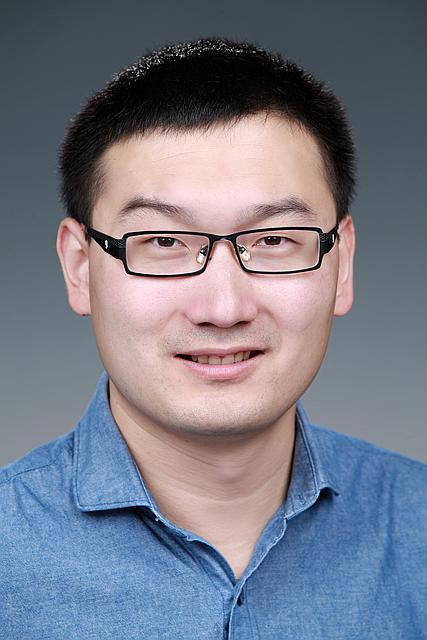 Bin Ren合作论文数Computer Science Department, College of William & Mary3Xiang Song合作论文数Shanghai AI Lab, Amazon Web Services3Wen-mei Hwu合作论文数2Wen-mei W. Hwu合作论文数2
 Alex Aiken合作论文数Department of Computer Science, Stanford University;Computer Science Division, SLAC National Accelerator Laboratory2
 Lang Wang合作论文数Inst Opt, Univ Rochester2
 Israt Nisa合作论文数Ohio State Univ, Columbus, OH 43210 USA2Tian Xia合作论文数Dept. of Electr. & Comput. Eng., Univ. of Illinois;c;Dept. of Electr. & Comput. Eng., Univ. of Illinois2
 William D. Gropp合作论文数Siebel School of Computing and Data Science, The Grainger College of Engineering, University of Illinois, Urbana-Champaign;National Center for Supercomputing Applications, University of Illinois, Urbana-Champaign2
 Rakesh Nagi合作论文数Department of Industrial and Enterprise Systems Engineering, The Grainger College of Engineering, University of Illinois Urbana-Champaign;Aviation Studies Institute, Singapore University of Technology and Design2
 Deming Chen (陈德铭)合作论文数Department of Electrical and Computer Engineering, The Grainger College of Engineering, University of Illinois at Urbana-Champaign;Inspirit IoT, Inc.2
 Da Zheng合作论文数Amazon Web Services2
 Ian Foster合作论文数Department of Computer Science, University of Chicago;Data Science and Learning Division, Argonne National Laboratory2Elliott Slaughter合作论文数2
 Lijun Jiang合作论文数College of Engineering and Computing, Missouri University of Science and Technology;TBG LLC;Teradyne Inc.2
 Abdul Dakkak合作论文数University of Illinois at Urbana-Champaign2
 Rajkumar Kettimuthu合作论文数Data Science and Learning Division, Argonne National Laboratory;Consortium for Advanced Science and Engineering, University of Chicago;Northwestern-Argonne Institute of Science and Engineering, Northwestern University2Raj Kettimuthu合作论文数1Jeongmin Park合作论文数1Aiyin Y. Liu合作论文数1
 Muhammad Saad Chughtai合作论文数1
 Daniel J Ching合作论文数Xray Sci Div, Argonne Natl Lab1Shu Chen合作论文数Department of Physics, University of Illinois at Urbana-Champaign1Sultan Durrani合作论文数1Mohammad Almasri合作论文数Electrical and computer engineering, University of Illinois at Urbana Champaign1
 Thomas E. Roth合作论文数Elmore Family Sch Elect & Comp Engn, Purdue Univ1
 Maryam Salim合作论文数Dept Elect Engn & Comp Sci, Univ Michigan1
 Hui Gan合作论文数1
 Bariscan Karaosmanoglu合作论文数1
 Xiaofan Zhang合作论文数Google DeepMind1
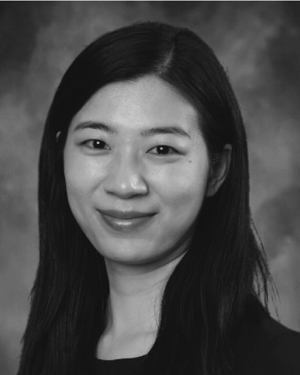 Qin Liu合作论文数University of Science and Technology of China, Univ. of Sci. and Technol. of China1
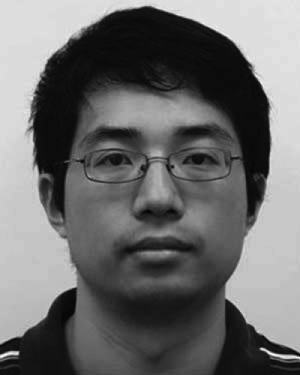 Qi I. Dai合作论文数1
 Sheng Sun (孙胜)合作论文数School of Electronic Science and Engineering(National Exemplary School of Microelectronics), University of Electronic Science and Technology of China1




