Supplementary Figure Legends 1-2 from Cancer-Testis Antigen Lymphocyte Antigen 6 Complex Locus K Is a Serologic Biomarker and a Therapeutic Target for Lung and Esophageal Carcinomas
Supplementary Methods and Materials from Cancer-Testis Antigen Lymphocyte Antigen 6 Complex Locus K Is a Serologic Biomarker and a Therapeutic Target for Lung and Esophageal Carcinomas
The degree of malignancy of neuroendocrine lung tumors (NEs) increases in this order: from typical carcinoids (TCs) through atypical carcinoids (ACs) to large cell neuroendocrine carcinomas (LCNECs) and small cell lung carcinomas (SCLCs). However, histological classification has sometimes proved difficult. We here investigated loss of heterozygosity (LOH) using eight microsatellite markers and expression of p53, Bcl‐2 and Bax proteins using immunohistochemical methods in 57 NEs (19 TCs, 5 ACs, 14 LCNECs and 19 SCLCs), looking for objective genetic markers to distinguish between subtypes. The frequencies of LOHs on D3S1300, RBi2 and TP53, the combinations of LOH status for RBi2 and TP53, and the immunohistochemically demonstrated Bcl‐2/Bax ratios and p53‐positive rates significantly differed among histopathologically diagnosed NEs. Differentiation between TC and AC was possible with reference to LOH on D3S1300, RBi2 and TP53, and the combined LOH status on RBi2 and TP53 (i.e., both LOH(‐) versus one LOH(+)). For comparison between AC and LCNEC+SCLC, LOH on TP53 or the combination of two markers—one LOH(+) versus both LOH(+)—was applied. Furthermore, in three discordant cases of diagnoses based on histology and LOH markers, diagnoses using the latter were considered to be more probable by survival analysis. The present study indicated that assessment of LOHs using microsatellite markers could provide objective markers that can distinguish subtypes of NEs, for which histological assessment may commonly result in disagreement.
BACKGROUND:Biphasic lung cancers with admixtures of adenocarcinoma and sarcomatoid components but lacking true mesenchymal differentiation (sarcomatoid adenocarcinomas) are rare, and extensive studies of their clinicopathological characteristics and histogenesis have not been performed.MATERIALS AND METHODS:Six surgically resected sarcomatoid adenocarcinomas were compared clinicopathologically with 317 standard adenocarcinomas, and studied immunohistochemically and by loss of heterozygosity (LOH) analysis focusing on each component.RESULTS:In comparison with standard adenocarcinomas, the sarcomatoid adenocarcinomas occurred in older patients, were more likely to be associated with smoking and were more acinar than papillary, with a worse five-year prognosis. Immunohistochemically, sarcomatoid components were positive for epithelial markers in three cases. In one case the carcinoma showed retention of heterozygosity and the sarcomatoid components allelic loss, while all other cases showed retention or LOH in both components.CONCLUSION:The sarcomatoid adenocarcinoma exhibits different clinicopathological characteristics from standard adenocarcinomas. The present immunohistochemical and LOH analyses provided support for the idea that both components are derived from one precursor cell, and that progression may be by way of adenocarcinoma to sarcomatoid differentiation.
 Hiroyuki Ito合作论文数2E Tsuchiya合作论文数2Masahiro Fujita合作论文数2Yataro Daigo合作论文数2Masao Hosokawa合作论文数2Kouki Inai合作论文数Department of Pathology, Graduate School of Biomedical Sciences, Hiroshima University2
 Yusuke Nakamura合作论文数Department of Medicine, University of Chicago;Department of Surgery, University of Chicago;Center for Personalized Therapeutics, The University of Chicago;Laboratory of Molecular Medicine, Institute of Medical Science, The University of Tokyo2
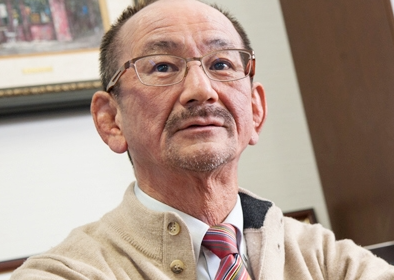 Wataru Yasui (安井弥)合作论文数Institute of Biomedical & Health Sciences, Hiroshima University;Graduate School of Biomedical & Health Sciences, Hiroshima University2Haruhiko Nakayama合作论文数2
 Yuichi Ishikawa (石川 雄一)合作论文数Division of Pathology, the Cancer Institute, Japanese
Foundation for Cancer Research;International University of Health and Welfare2Nobuhisa Ishikawa合作论文数2Nobuoki Kohno合作论文数2Eiju Tsuchiya合作论文数2Yohei Miyagi合作论文数2
Yuichi Ishikawa (石川 雄一)合作论文数Division of Pathology, the Cancer Institute, Japanese
Foundation for Cancer Research;International University of Health and Welfare2Nobuhisa Ishikawa合作论文数2Nobuoki Kohno合作论文数2Eiju Tsuchiya合作论文数2Yohei Miyagi合作论文数2 Atsushi Takano合作论文数Dept Appl Chem, Nagoya Univ2Morio Koike合作论文数1K Nakamura合作论文数1Ken Nakagawa合作论文数1Takehisa Hashimoto合作论文数1
 Keiichi Nakagawa (中川桂一)合作论文数Biomedical Precision Engineering Laboratory, Department of Bioengineering, School of Engineering, University of Tokyo1
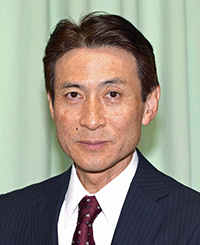 Yukitoshi Satoh合作论文数Department of Thoracic Surgery, Kitasato University Hospital1Kazunori Nishida合作论文数1Yoshio Tokuchi合作论文数Tokuchi Naika Clinic1
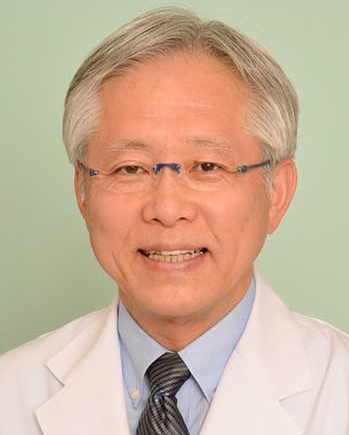 Sakae Okumura (奥村栄)合作论文数Cancer Institute Hospital1




