Millions of people use TikTok to seek health information, yet little is known about how users' search queries shape exposure to health misinformation. Whereas prior algorithm audits have focused primarily on recommendation feeds, we examine TikTok's search system, where users explicitly express their information needs through query formulation. We conduct a controlled sock-puppet audit of TikTok Search using 30 fresh accounts assigned to six experimental conditions spanning three information-seeking framings (Medical Information, Alternative Medicine, and Peer Narrative) and two breast-cancer contexts (Symptom Noticing and Active Treatment). Across 9,020 usable search-result exposures, annotated using a validated vision-language model pipeline, we find that query framing is strongly associated with misinformation exposure. Alternative Medicine queries returned misinformation in 54.1% of cancer-relevant results within the Symptom Noticing context and 53.5% within the Active Treatment context, 8.6 times and 7.6 times higher, respectively, than clinically framed Medical Information queries. Even Medical Information queries returned measurable levels of possible misinformation (6.3%–7.1%), suggesting that explicit medical intent alone does not eliminate exposure. Moreover, for Alternative Medicine queries, possible misinformation appeared throughout the ranked search results rather than only near the top, showing that exposure is not confined to the highest-ranked results. Videos labeled as misinformation were also substantially more likely to contain comments promoting unsupported treatments or anti-standard-care views. These findings demonstrate that search query framing plays a central role in shaping misinformation exposure on TikTok and highlight the importance of auditing query-driven search systems alongside recommendation algorithms.
Detecting unauthorized knowledge distillation from a deployed LLM API is hard because the defender controls neither the attacker's training pipeline nor the next-token logits. Existing defenses operate on the teacher's output tokens – biasing the next-token distribution (green-list watermarks, cryptographic schemes, antidistillation sampling) or rewriting outputs after generation. Recent work shows a paraphrasing attacker can strip these signals without losing the underlying knowledge. We propose interaction-layer antidistillation watermarks, which move the trace one layer higher, into the teacher's interaction behavior: the defender wraps the teacher with a system prompt that intermittently induces a behavioral marker – an explicit follow-up question, a low-frequency variant, or a declarative restatement. An oblivious distiller inherits the behavior, and the defender audits via black-box queries with a human-validated LLM-as-judge (Cohen's kappa = 0.84/0.78 on strong/style rubrics). Across 63 LoRA-distilled students under a Llama-3.3-70B-Instruct teacher (35,343 judged samples), behavioral watermarks transfer at 88.9
Recommender systems on social media increasingly mediate how users encounter mental health content, yet it remains unclear whether they distinguish help-seeking from distress expression. We conduct a controlled 7-day audit of TikTok's "For You" page using 30 fresh accounts and LLM-guided agents that vary initial search framing (distress- vs. help-initiated) and interaction strategy (engaged, avoidant, passive). Across 8,727 recommended videos, interaction behavior dominates exposure outcomes: engagement rapidly saturates feeds with mental health content ( 45
Recommender systems have grown from content-organization tools into sophisticated systems that shape daily behavior. By controlling what we see, they shape what we perceive, raising concerns about filter bubbles, radicalization, polarization, and social inequality. Large language models (LLMs) enable more powerful personalization, intensifying these dynamics. Yet most recommenders are tuned for engagement or limited accuracy metrics, with little attention to broader social implications, e.g. how personalization reshapes exposure in socially consequential domains. We investigate whether LLM-assisted reranking, while improving personalization, inadvertently amplifies exposure to ideologically extreme or conspiratorial political content, a risk theorized but not empirically characterized in news recommendation. Using real news-consumption histories, we rerank YouTube's sidebar candidates through zero-shot, instruction-based prompting. We compare a baseline prompt with a constrained variant that preserves topical relevance and broadens ideological exposure while reducing conspiratorial or extreme content. Without constraints, reranking strengthened personalization but increased exposure to conspiratorial and extremist material for users whose histories contained such content. Lightweight prompt-level regularization reduced promotion of extreme content and increased ideological diversity, with modest relevance loss. Synthetic experiments suggest that LLMs rerank via statistical regularities in language rather than semantic understanding of ideology, clarifying why naive prompts amplify these patterns and why regularization can reshape them. Together, our results highlight the power of LLMs to operationalize contextual nuance in high-stakes recommendation, and the need to evaluate LLM-assisted personalization beyond accuracy and treat prompt design as a value-laden rather than neutral default.
As reading Large Language Model (LLM)-produced summaries becomes an inescapable part of information consumption, it is crucial to understand how they change our political discourse. While prior work focuses on perceived utility, we examine whether LLM-generated summaries preserve the political lean of original news articles. We find that LLM-based summarization, at aggregate, neutralizes the lean of both Republican and Democratic sources, though with stronger moderation for Republican-leaning articles. However, this pattern obfuscates two key systematic effects. Firstly, news topics significantly shape this moderation. Secondly, summaries do not uniformly neutralize political lean, most strongly impacting moderately partisan content while retaining the extreme stances of strongly partisan articles. These findings complicate the narrative of a general leftward bias, showing moderation primarily affects moderate perspectives rather than tempering extremes. Finally, our automated framework demonstrates the need to evaluate not just perceived quality, but the active role summaries play in shaping contemporary political discourse.
Cancer-related discussions on social media provide an important space for information exchange and peer support, but also facilitate the spread of misinformation that may influence prevention, screening, and treatment decisions. Existing research on cancer misinformation often relies on narrow definitions, small-scale datasets, or binary labeling frameworks. We introduce a multi-dimensional taxonomy for characterizing cancer misinformation in Reddit discussions of breast, lung, colon, and prostate cancer. The taxonomy captures seven dimensions, including misinformation presence, information type, risk level, stance, and topical focus. Using expert-annotated data, we evaluate multiple large language models (LLMs) for scalable misinformation annotation and analyze cancer misinformation across Reddit communities. Our results show that cancer-related misinformation constitutes approximately 6% of Reddit cancer discussions, with substantial variation across communities and misinformation topics. Few-shot prompting substantially improves classification performance, particularly for nuanced taxonomy dimensions. We additionally identify recurring misinformation narratives centered on unsupported treatments, distrust of conventional medicine, and misleading claims about diagnosis and screening. Our taxonomy, dataset, and findings provide a foundation for multi-dimensional modeling of online cancer misinformation.
The potential for a large, diverse population to coexist peacefully is thought to depend on the existence of a public sphere in which citizens are exposed to similar facts about similar topics. A generation ago, broadcast television news was widely considered to serve this function; however, since the rise of cable news in the 1990s, critics and scholars have worried that the corresponding fragmentation and segregation of audiences has caused this baseline of common understanding to be lost. Recent work documents that millions of Americans are loyal consumers of cable TV news stations. However, the implications of partisan segregation in TV news consumption depend on bias in content-which topics TV news programs talk about and the language they use to talk about them. Here, we measure bias in the production of TV news at scale by analyzing nearly a decade of TV news (Dec. 2012-Oct. 2022) on the largest cable and broadcast stations. We quantify the share of attention each station devoted to more than 20 politically significant topics as well as the linguistic similarity of different stations' news coverage of those topics. We find that while broadcast news continues to cover similar topics with similar language, cable news stations have become increasingly distinct, both from broadcast news and from each other, diverging in terms of both content and language. This trend is driven by hard news as much as partisan commentary programs. Our results show that changes in the supply, not just consumption, of TV news are contributing to Americans' polarizing media diets.
In recent years, critics of online platforms have raised concerns about the ability of recommendation algorithms to amplify problematic content, with potentially radicalizing consequences. However, attempts to evaluate the effect of recommenders have suffered from a lack of appropriate counterfactuals-what a user would have viewed in the absence of algorithmic recommendations-and hence cannot disentangle the effects of the algorithm from a user's intentions. Here we propose a method that we call "counterfactual bots" to causally estimate the role of algorithmic recommendations on the consumption of highly partisan content on YouTube. By comparing bots that replicate real users' consumption patterns with "counterfactual" bots that follow rule-based trajectories, we show that, on average, relying exclusively on the YouTube recommender results in less partisan consumption, where the effect is most pronounced for heavy partisan consumers. Following a similar method, we also show that if partisan consumers switch to moderate content, YouTube's sidebar recommender "forgets" their partisan preference within roughly 30 videos regardless of their prior history, while homepage recommendations shift more gradually toward moderate content. Overall, our findings indicate that, at least since the algorithm changes that YouTube implemented in 2019, individual consumption patterns mostly reflect individual preferences, where algorithmic recommendations play, if anything, a moderating role.
Online platforms have banned ("deplatformed") influencers, communities, and even entire websites to reduce content deemed harmful. Deplatformed users often migrate to alternative platforms, which raises concerns about the effectiveness of deplatforming. Here, we study the deplatforming of Parler, a fringe social media platform, between 2020 January 11 and 2021 February 25, in the aftermath of the US Capitol riot. Using two large panels that capture longitudinal user-level activity across mainstream and fringe social media content (N = 112, 705, adjusted to be representative of US desktop and mobile users), we find that other fringe social media, such as Gab and Rumble, prospered after Parler's deplatforming. Further, the overall activity on fringe social media increased while Parler was offline. Using a difference-in-differences analysis (N = 996), we then identify the causal effect of deplatforming on active Parler users, finding that deplatforming increased the probability of daily activity across other fringe social media in early 2021 by 10.9 percentage points (pp) (95% CI [5.9 pp, 15.9 pp]) on desktop devices, and by 15.9 pp (95% CI [10.2 pp, 21.7 pp]) on mobile devices, without decreasing activity on fringe social media in general (including Parler). Our results indicate that the isolated deplatforming of a major fringe platform was ineffective at reducing overall user activity on fringe social media.
The potential for a large, diverse population to coexist peacefully is thought to depend on the existence of a ``shared reality:'' a public sphere in which participants are exposed to similar facts about similar topics. A generation ago, broadcast television news was widely considered to serve this function; however, since the rise of cable news in the 1990s, critics and scholars have worried that the corresponding fragmentation and segregation of audiences along partisan lines has caused this shared reality to be lost. Here we examine this concern using a unique combination of data sets tracking the production (since 2012) and consumption (since 2016) of television news content on the three largest cable and broadcast networks respectively. With regard to production, we find strong evidence for the ``loss of shared reality hypothesis:'' while broadcast continues to cover similar topics with similar language, cable news networks have become increasingly distinct, both from broadcast news and each other, diverging both in terms of content and language. With regard to consumption, we find more mixed evidence: while broadcast news has indeed declined in popularity, it remains the dominant source of news for roughly 50\% more Americans than does cable; moreover, its decline, while somewhat attributable to cable, appears driven more by a shift away from news consumption altogether than a growth in cable consumption. We conclude that shared reality on US television news is indeed diminishing, but is more robust than previously thought and is declining for somewhat different reasons.
Today's densely instrumented world offers tremendous opportunities for continuous acquisition and analysis of multimodal sensor data providing temporal characterization of an individual's behaviors. Is it possible to efficiently couple such rich sensor data with predictive modeling techniques to provide contextual, and insightful assessments of individual performance and wellbeing? Prediction of different aspects of human behavior from these noisy, incomplete, and heterogeneous bio-behavioral temporal data is a challenging problem, beyond unsupervised discovery of latent structures. We propose a Supervised Tensor Embedding (STE) algorithm for high dimension multimodal data with join decomposition of input and target variable. Furthermore, we show that features selection will help to reduce the contamination in the prediction and increase the performance. The efficiently of the methods was tested via two different real world datasets.
Partisan segregation within the news audience buffers many Americans from countervailing political views, posing a risk to democracy. Empirical studies of the online media ecosystem suggest that only a small minority of Americans, driven by a mix of demand and algorithms, are siloed according to their political ideology. However, such research omits the comparatively larger television audience and often ignores temporal dynamics underlying news consumption. By analyzing billions of browsing and viewing events between 2016 and 2019, with a novel framework for measuring partisan audiences, we first estimate that 17% of Americans are partisan-segregated through television versus roughly 4% online. Second, television news consumers are several times more likely to maintain their partisan news diets month-over-month. Third, TV viewers’ news diets are far more concentrated on preferred sources. Last, partisan news channels’ audiences are growing even as the TV news audience is shrinking. Our results suggest that television is the top driver of partisan audience segregation among Americans.
A multitude of online social networks (OSNs) of varying types has been introduced in the past decade. Because of their enormous popularity and constant availability, the threat of cyberbullying launched via these OSNs has reached an unprecedented level. Victims of cyberbullying are now more vulnerable than ever before to the predators, perpetrators, and stalkers. In this work, we perform a detailed analysis of user postings on Vine and Instagram social networks by making use of two labeled datasets. These postings include threads of media posts and user comments that were labeled for being cyberbullying instances or not. Our analysis has revealed several important differentiating factors between cyberbullying and non-cyberbullying instances in these social networks. In particular, cyberbullying and non-cyberbullying instances differ in (i) the number of unique negative commenters, (ii) temporal distribution of positive and negative sentiment comments, and (iii) textual content of media captions and subsequent comments. The results of these analyses can be used to build highly accurate classifiers for identifying cyberbullying instances.
Although it is under-studied relative to other social media platforms, YouTube is arguably the largest and most engaging online media consumption platform in the world. Recently, YouTube's scale has fueled concerns that YouTube users are being radicalized via a combination of biased recommendations and ostensibly apolitical "anti-woke" channels, both of which have been claimed to direct attention to radical political content. Here we test this hypothesis using a representative panel of more than 300,000 Americans and their individual-level browsing behavior, on and off YouTube, from January 2016 through December 2019. Using a labeled set of political news channels, we find that news consumption on YouTube is dominated by mainstream and largely centrist sources. Consumers of far-right content, while more engaged than average, represent a small and stable percentage of news consumers. However, consumption of "anti-woke" content, defined in terms of its opposition to progressive intellectual and political agendas, grew steadily in popularity and is correlated with consumption of far-right content off-platform. We find no evidence that engagement with far-right content is caused by YouTube recommendations systematically, nor do we find clear evidence that anti-woke channels serve as a gateway to the far right. Rather, consumption of political content on YouTube appears to reflect individual preferences that extend across the web as a whole.
A common graph mining task is community detection, which seeks an unsupervised decomposition of a network into groups based on statistical regularities in network connectivity. Although many such algorithms exist, community detection's No Free Lunch theorem implies that no algorithm can be optimal across all inputs. However, little is known in practice about how different algorithms over or underfit to real networks, or how to reliably assess such behavior across algorithms. Here, we present a broad investigation of over and underfitting across 16 state-of-the-art community detection algorithms applied to a novel benchmark corpus of 572 structurally diverse real-world networks. We find that (i) algorithms vary widely in the number and composition of communities they find, given the same input; (ii) algorithms can be clustered into distinct high-level groups based on similarities of their outputs on real-world networks; (iii) algorithmic differences induce wide variation in accuracy on link-based learning tasks; and, (iv) no algorithm is always the best at such tasks across all inputs. Finally, we quantify each algorithm's overall tendency to over or underfit to network data using a theoretically principled diagnostic, and discuss the implications for future advances in community detection.
Continuous collection of physiological data from wearable sensors enables temporal characterization of individual behaviors. Understanding the relation between an individual's behavioral patterns and psychological states can help identify strategies to improve quality of life. One challenge in analyzing physiological data is extracting the underlying behavioral states from the temporal sensor signals and interpreting them. Here, we use a non-parametric Bayesian approach to model sensor data from multiple people and discover the dynamic behaviors they share. We apply this method to data collected from sensors worn by a population of hospital workers and show that the learned states can cluster participants into meaningful groups and better predict their cognitive and psychological states. This method offers a way to learn interpretable compact behavioral representations from multivariate sensor signals.
Mobile health systems predict health conditions based on multimodal signals. Users are often reluctant to provide their health status over privacy concerns. It is challenging to make health predictions without sufficient historical data from the users. In this paper, we propose a user-based collaborative filtering mobile health system. The system requests users to provide a few health labels. These labels are used to determine cohort similarity and discarded afterward to ensure privacy protection. The cohorts are designed to maximize user similarity across health labels, variable relationships, and sensor data. Our system predicts users based on the health information from their cohort. We empirically evaluate the system by conducting a ten-week longitudinal study to assess the health conditions of 212 hospital workers using mobile devices, wearables, and sensors. The results show successful cohort assignments with five health labels. Health predictions achieve promising performance without historical data. Our system demonstrates strong interpretability, predictability, and usability.
Most real-world networks are incompletely observed. Algorithms that can accurately predict which links are missing can dramatically speedup the collection of network data and improve the validity of network models. Many algorithms now exist for predicting missing links, given a partially observed network, but it has remained unknown whether a single best predictor exists, how link predictability varies across methods and networks from different domains, and how close to optimality current methods are. We answer these questions by systematically evaluating 203 individual link predictor algorithms, representing three popular families of methods, applied to a large corpus of 548 structurally diverse networks from six scientific domains. We first show that individual algorithms exhibit a broad diversity of prediction errors, such that no one predictor or family is best, or worst, across all realistic inputs. We then exploit this diversity via meta-learning to construct a series of "stacked" models that combine predictors into a single algorithm. Applied to a broad range of synthetic networks, for which we may analytically calculate optimal performance, these stacked models achieve optimal or nearly optimal levels of accuracy. Applied to real-world networks, stacked models are also superior, but their accuracy varies strongly by domain, suggesting that link prediction may be fundamentally easier in social networks than in biological or technological networks. These results indicate that the state-of-the-art for link prediction comes from combining individual algorithms, which achieves nearly optimal predictions. We close with a brief discussion of limitations and opportunities for further improvement of these results.
 Richard (Rick) Han合作论文数School of Computing, Macquarie University18
 Shivakant Mishra合作论文数Department of Computer Science,University of Colorado,Boulder14
 Amir Ghasemian合作论文数Dept Stat Sci, Temple Univ13
 Qin (Christine) Lv合作论文数Department of Computer Science, University of Colorado Boulder13
 Rahat Ibn Rafiq合作论文数10
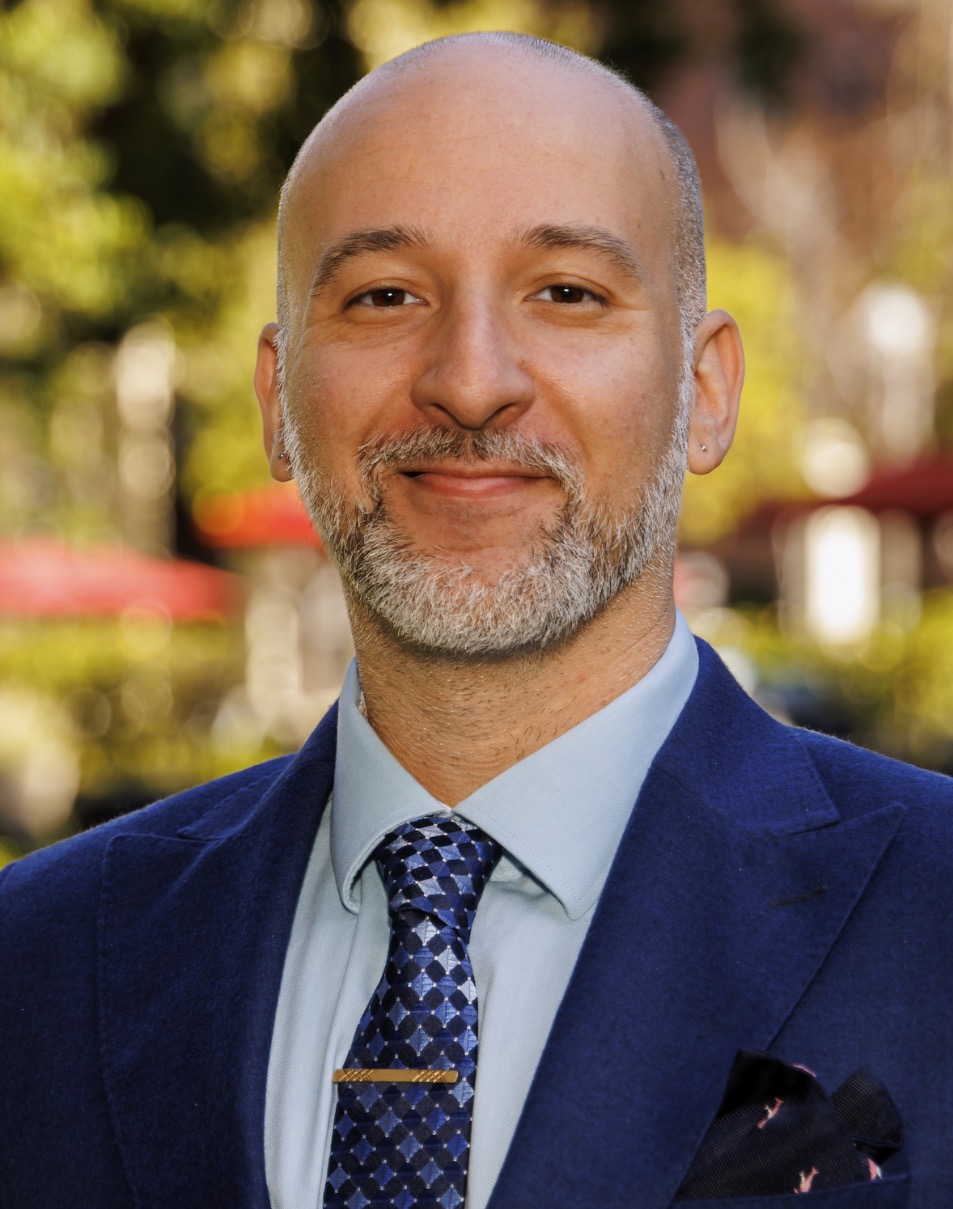 Emilio Ferrara合作论文数Thomas Lord Department of Computer Science, Viterbi School of Engineering, University of Southern California;Annenberg School for Communication, University of Southern California10
 Kristina Lerman合作论文数Thomas Lord Department of Computer Science, Viterbi School of Engineering, University of Southern California;Information Sciences Institute, University of Southern California7
 Duncan J. Watts合作论文数Department of Computer and Information Science, School of Engineering and Applied Science, University of Pennsylvania;Department of Operations, Information and Decisions, Wharton School, University of Pennsylvania7
 Hsien Te Kao合作论文数6
 Shrikanth (Shri) S. Narayanan合作论文数Signal Analysis and Interpretation Laboratory, Ming Hsieh Department of Electrical and Computer Engineering, Viterbi School of Engineering, University of Southern California;Google;Behavioral Signal Technologies, Inc.6
 Sabrina Arredondo Mattson合作论文数5
 Shen Yan合作论文数Computer Science at Information Sciences Institute, University of Southern California5
 David Rothschild合作论文数4
 Aaron Clauset合作论文数Department of Computer Science, College of Engineering and Applied Science, University of Colorado Boulde;BioFrontiers Institute, University of Colorado Boulde;Santa Fe Institute4
 Nikolaus Correll合作论文数Department of Computer Science, University of Coloradoat Boulder, Boulder, CO, USA3
 Aram Galstyan合作论文数Thomas Lord Department of Computer Science, Viterbi School of Engineering, University of Southern California;Information Science Institute, University of Southern California;Amazon3
 Markus Michael Mobius合作论文数Harvard University3Nicholas Farrow合作论文数2
 Manoel Horta Ribeiro合作论文数Department of Computer Science, Princeton University2
 Robert West合作论文数École Polytechnique Fédérale de Lausanne;Microsoft2
 Jeremy Blackburn合作论文数Telefonica Research2
 Farshad Lahouti合作论文数Vicinia - cntxts Inc.;Electrical Engineering Department, California Institute of Technology2
 Palash Goyal合作论文数Samsung Research America2
 Pavel Savgira合作论文数Department of Cinema and Media Studies, School of Theater, Film and Television, University of California, Los Angeles;Online and AI Systems' Integrity & Safety Lab, University of California, Los Angeles1Michelle Hasan合作论文数1Edoardo M. Airoldi合作论文数1Qin Lv合作论文数1Samuel Wolken合作论文数1Akshay Mysore合作论文数1Baird Howland合作论文数1
 Daniel Muise合作论文数Dept Commun, Stanford Univ1Nathan Bartley合作论文数University of Southern California1Nazgol Tavabi合作论文数Department of Computer Engineering, Sharif University of Technology1
 Neil Shah合作论文数Snap Inc.1
 Andrés Abeliuk合作论文数USC Information Sciences Institute, Marina del Rey, CA, USA1Di Huang合作论文数1
 Jennifer L. Villatte合作论文数University of Nevada1
 Patricia A. Ganz合作论文数Fielding School of Public Health, University of California, Los Angeles;David Geffen School of Medicine, University of California, Los Angeles;Center for Cancer Prevention and Control Research, Jonsson Comprehensive Cancer Center1Shaosong Li合作论文数1
 Bert Huang合作论文数Snorkel AI1




