Consistent query performance is essential for mission critical database applications, yet SQL execution plans can change due to factors such as database upgrades, DML changes, new indexes, etc. While plan stability mechanisms such as stored outlines prevent regressions by freezing execution plans, they also inhibit performance improvements by disallowing plan evolution. We introduced SQL Plan Management (SPM) in Oracle 11g to address this trade-off by maintaining a set of accepted execution plans and allowing plan evolution only when new plans demonstrably outperform existing baselines. However, prior implementations of SPM primarily rely on background performance verification processes, delaying regression detection and recovery. This issue is amplified in autonomous cloud database systems, where several automatic actions that could cause plan change driven regressions are performed with limited customer control. Timely detection and remediation is paramount, but the constrained background resources on cloud may not keep pace. To overcome these limitations, we introduce Real-Time SPM in Oracle 26ai, a novel extension of SPM that performs foreground verification of new execution plans during user query execution. Real-Time SPM leverages runtime session context to immediately validate plan changes, enabling rapid adoption of superior plans while promptly detecting and preventing regressions. This paper presents the architecture and design of Real-Time SPM - including technical challenges like reliably comparing performance of previous plans - and contrasts it with traditional background plan evolution.
Indexes are one of the important access structures that help improve database performance. This paper provides a methodology to automate the entire lifecycle of index creation and management with continuous index tuning based on changing data and workload. We present novel ideas that are critical to ensuring automatic indexing seamlessly works in a production database. Our methodology avoids using an expensive clone; yet offers non-intrusive index operations (candidate isolation and evaluation with Oracle resource manager ensuring no visible impact to the user workload), and upon deployment of auto indexes ensures non-disruptive plan invalidations and timely mitigation of performance regressions. The proposed approach is unique in that it is incremental and iterative, continually creating beneficial indexes and dropping unused ones as the workload evolves. The approach even supports indexes on expressions. It performs careful validation - including computing overhead of index maintenance incurred during DML while evaluating potential benefit - and provides accountability for its actions. Performance regressions are effectively managed using Oracle's powerful SQL Plan Management (SPM) framework. For example, a new automatic index isn't dropped in response to a single statement regressing due to it; SPM instead ensures such regressing statements revert to well-performing plans even in the presence of new indexes that continue to benefit other statements. We also share results of comprehensively evaluating various automatic indexing aspects in publicly available and Oracle customer workloads. Our experiments show benefit with automatic indexing, especially in customer workload, with a 15% improvement in performance and 60% space reclamation potential. This automatic indexing feature is available since Oracle 19c and in Oracle Autonomous Database.
Query optimization must evolve with new workloads. As analytic and data warehouse workloads become more ubiquitous, optimization techniques that reduce the amount of data processed during query execution, enable shared computation and avoid expensive data access and joins must be rigorously explored. In this paper, we present aggregate-decomposition techniques as enhancements to an existing query transformation that performs grouping before joins. Consequently, the transformation generates more query rewrite candidates and can also be applied to a larger set of queries. Further, we introduce two new query transformations, i) subsumption of views and subqueries that explores opportunities for sharing computation and ii) union-all duplicator transformation for queries with disjunctive join predicates that removes the need for multiple data access and joins. These techniques are applicable to commonly noticed query patterns in customer workloads and provide significant performance benefit as indicated in our performance study. They have been implemented in Oracle RDBMS.
Despite best coding practices, software bugs are inevitable in a large codebase. In traditional databases, when errors occur during query processing, they disrupt user workflow until workarounds are found and applied. Manual identification of workarounds often relies on a trial-and-error method. The process is not only time-consuming but also requires domain expertise that users are often lacking. In this paper, we propose a framework to automatically mitigate errors that occur during query compilation (including optimization and code generation) without any user intervention. An error is intercepted by the database internally, a workaround is identified for it, and the query is recompiled using the workaround. The entire process remains transparent to the user with the query being executed seamlessly. The proposed technique handles SQL errors during query compilation and provides three types of mitigation strategies - i) quickly failover to one of the readily-available historical plans for the statement ii) apply targeted error-correcting directives (hints) identified from the optimizer context at the time of the error iii) modify the global configuration of the optimizer using hints. This feature has been implemented and will be released in an upcoming version of Oracle Autonomous Database.
New generation of analytic applications emerged to process data generated from non conventional sources. The challenge for the traditional database systems is that the data sets are very large and keep increasing at a very high rate while the application users have higher performance expectations. The most straightforward response to this challenge is to deploy larger hardware configurations making the solution very expensive and not acceptable for most cases. Alternative solutions fall into two categories: reduce the data set using sampling techniques or reduce the computational complexity of expensive database operations by using alternative algorithms. Alternative algorithms considered in this paper are approximate aggregates that perform a lot better at the cost of reduced and tolerable accuracy. In Oracle 12C we introduced approximate aggregates of expensive aggregate functions that are very common in analytic applications, that is, approximate count distinct and approximate percentile. The performance is improved in two ways. First, the approximate aggregates use bounded memory, often eliminating the need to use temporary storage which results in significant performance improvement over the exact aggregates. Second, we provide materialized view support that allows users to store pre-computed results of approximate aggregates. These results can be rolled up to answer queries on different dimensions (such rollup is not possible for exact aggregates).
Stream applications bring the challenge of efficiently processing queries on sequentially accessible XML data streams. In this chapter, the authors study the current techniques and open challenges of XML stream processing. Firstly, they examine the input data semantics in XML streams and introduce the state-of-the-art of XML stream processing. Secondly, they compare and contrast the automatonbased and algebra-based techniques used in XML stream query execution. Thirdly, they study different optimization strategies that have been investigated for XML stream processing – in particular, they discuss cost-based optimization as well as schema-based optimization strategies. Lastly but not least, the authors list several key open challenges in XML stream processing.
Large tables are often decomposed into smaller pieces called partitions in order to improve query performance and ease the data management. Query optimizers rely on both the statistics of the entire table and the statistics of the individual partitions to select a good execution plan for a SQL statement. In Oracle 10g, we scan the entire table twice, one pass for gathering the table level statistics and the other pass for gathering the partition level statistics. A consequence of this gathering method is that, when the data in some partitions change, not only do we need to scan the changed partitions to gather the partition level statistics, but also we have to scan the entire table again to gather the table level statistics. Oracle 11g adopts a one-pass distinct sampling based method which can accurately derive the table level statistics from the partition level statistics. When data change, Oracle only re-gathers the statistics for the changed partitions and then derives the table level statistics without touching the unchanged partitions. To the best of our knowledge, although the one-pass distinct sampling has been researched in academia for some years, Oracle is the first commercial database that implements the technique. We have performed extensive experiments on both benchmark data and real customer data. Our experiments illustrate the this new method is highly accurate and has significantly better performance than the old method used in Oracle 10g.
Execution plans for SQL statements have a significant impact on the overall performance of database systems. New optimizer statistics, configuration parameter changes, software upgrades and hardware resource utilization are among a multitude of factors that may cause the query optimizer to generate new plans. While most of these plan changes are beneficial or benign, a few rogue plans can potentially wreak havoc on system performance or availability, affecting critical and time-sensitive business application needs. The normally desirable ability of a query optimizer to adapt to system changes may sometimes cause it to pick a sub-optimal plan compromising the stability of the system. In this paper, we present the new SQL Plan Management feature in Oracle 11g. It provides a comprehensive solution for managing plan changes to provide stable and optimal performance for a set of SQL statements. Two of its most important goals are preventing sub-optimal plans from being executed while allowing new plans to be used if they are verifiably better than previous plans. This feature is tightly integrated with Oracle's query optimizer. SQL Plan Management is available to users via both command-line and graphical interfaces. We describe the feature and then, using an industrial-strength application suite, present experimental results that show that SQL Plan Management provides stable and optimal performance for SQL statements with no performance regressions.
Many systems such as Tukwila and YFilter combine automaton and algebra techniques to process queries over tokenized XML streams. Typically in this architecture, an automaton is first used to locate all query patterns in the input stream and compose the matched tokens into XML element nodes. These XML nodes are then passed to the tuple-based algebraic operators for further filtering or restructuring. This common processing style is however not always optimal. At times it is more efficient to retrieve only a subset of the patterns in the automaton while retrieving the rest of the patterns on the XML element nodes. In this paper, we use a cost-based solution to explore this novel optimization opportunity. We design three plan optimization algorithms, namely, MinExhaust, GreedyBasic and FastPrune. We also study how to migrate from a currently running plan to a new plan in a safe and efficient manner. Our experimentations have shown that the GreedyBasic or FastPrune algorithm can quickly find a plan that is close to optimal in most scenarios. Also we illustrate that the overhead in our approach for run-time statistics collection and plan migration are very lightweight.
XML stream applications bring the challenge of efficiently processing queries on sequentially accessible token-based data streams. The automata paradigm is naturally suited for pattern recognition on tokenized XML streams, but requires patches for fulfilling the filtering or restructuring functionalities in the XML query language. In contrast, the algebraic paradigm is a well-established technique for processing self-contained tuples. It however does not traditionally support token inputs. The Raindrop framework is the first to accommodate these two paradigms within one algebraic framework, taking advantage of both. This paper describes the overall framework, highlighting in particular three aspects. First, we describe how the tokens and tuples are modeled in one uniform query processing model. Second, we present the query rewriting that switches computations between these two data models. Third, we discuss strategies for the implementation and synchronization of the operators within the framework. We report experimental results that illustrate the unique optimization opportunities offered by this novel framework.
This paper describes cost-based query transformation in Oracle relational database system, which is a novel phase in query optimization. It discusses a suite of heuristic- and cost-based transformations performed by Oracle. It presents the framework for cost-based query transformation, the need for such a framework, possible interactions among some of the transformation, and efficient algorithms for enumerating the search space of cost-based transformations. It describes a practical technique to combine cost-based transformations with a traditional physical optimizer. Some of the challenges of cost-based transformation are highlighted. Our experience shows that some transformations when performed in a cost-based manner lead to significant execution time improvements.
Optimizing queries over XML streams has been an important and non-trivial issue with the emergence of complex XML stream applications such as monitoring sensor networks and online transaction processing. Our system, R-SOX, provides a platform for runtime query optimization based on dynamic schema knowledge embedded in the XML streams. Such information provides refined runtime schema knowledge thus dramatically enlarged the opportunity for schema-based query optimizations. In this demonstration, we focus on the following three aspects: (1) annotation of runtime schema knowledge; (2) incremental maintenance of run-time schema knowledge; (3) dynamic semantic query optimization techniques. The overall framework for runtime semantic query optimization, including several classes of dynamic optimization techniques, will be shown in this demonstration.
 Elke A. Rundensteiner合作论文数Computer Science Department, School of Arts & Sciences, Worcester Polytechnic Institute18
 Mohamed Zait合作论文数Oracle9
 Mohamed Ziauddin合作论文数1275 East College Street Po Box 410,7
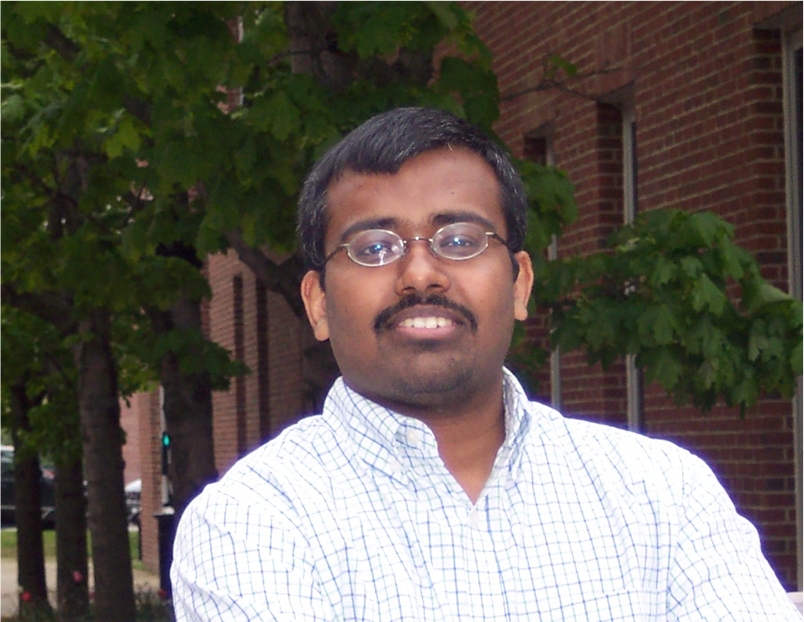 Murali Mani合作论文数Computer Science Dept6
 Harumi Kuno合作论文数Systems Architecture and Management Lab, Hewlett Packard Labs5
 Thierry Cruanes合作论文数5
 Kajal T. Claypool合作论文数Department of Computer Science;Worcester Polytechnic Institute;Department of Computer Science, Worcester Polytechnic Institute4
 Dinesh Das合作论文数Oracle4Benoit Dageville合作论文数4Allison Lee合作论文数3
 kantikiran krishna pasupuleti合作论文数Oracle America Inc.,3Yali Zhu合作论文数3Uri Shaft合作论文数3Lei Sheng合作论文数2Sriram Tirupattur合作论文数2
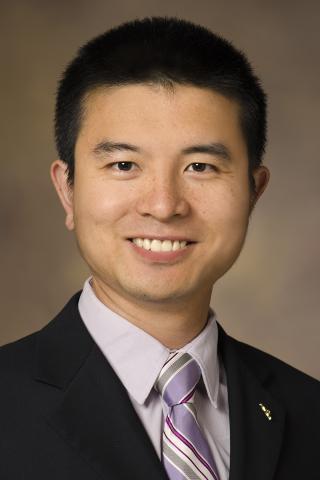 Ming Li合作论文数Department of Electrical and Computer Engineering, College of Engineering, University of Arizona;Department of Computer Science, University of Arizona;Wireless Network and Cyber Security Research Lab, University of Arizona2Bintou Kane合作论文数2
 Mingzhu Wei合作论文数2Jinhui Jian合作论文数2Khaled Yagoub合作论文数Oracle2Sunil Chakkappen合作论文数2G Mitchell合作论文数1Yuying Zhang合作论文数1Zhan Li合作论文数1Masoomeh Kishi合作论文数1Daniel Mcgreer合作论文数1Shreya Kunjibettu合作论文数1Jiakun Li合作论文数1WC Lee合作论文数1Sriram Padmanabhan合作论文数1L Chen合作论文数1
 Joseph Torres合作论文数Oracle1
 Xin Zhang合作论文数Computer Science Department, San Diego State University1
 Andre Menck合作论文数Oracle1Victor Chen合作论文数1
 Li Chen (陳黎)合作论文数Department of Computer Science, Hong Kong Baptist University1
 Umeshwar Dayal合作论文数Hitachi, Ltd.1De Ming Guan合作论文数1Keiji Oenoki合作论文数1
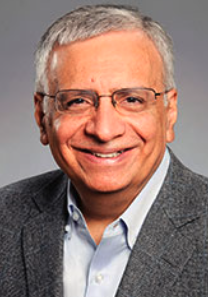 Rafi Ahmed合作论文数Department of Microbiology and Immunology, Emory University;Emory Vaccine Center, Emory University;Rollins Research Center, Emory University;Emory Center for AIDS Research, Emory University1Cuong Diep合作论文数1Jennifer Look合作论文数1
 Andrew Witkowski合作论文数Oracle Corporation1Peter Belknap合作论文数1Diane Kramer合作论文数Worcester Polytechnic Institute1Ming-Ling Lo合作论文数1




