Negative stiffness (NS) metamaterials offer high design flexibility in energy absorption, yet their specific energy absorption (SEA) capacity remains limited, and platform forces fluctuate substantially. This paper investigates the EA mechanism and performance enhancement strategies of a novel Sphere-Rod negative-stiffness (SRNS) metamaterial to address customized requirements. Three types of metamaterial unit cells are considered, namely Tri-Sphere-Rod (T-SR), Quad-Sphere-Rod (Q-SR), and Penta-Sphere-Rod (P-SR). The implicit dynamic algorithm was employed to obtain the load-displacement curves via ABAQUS. Model accuracy was validated through comparison with quasi-static compression experiments and published results. Two-dimensional phase diagrams were constructed to map key parameters-rod inclination angle (ranging 7 degrees-14 degrees) and cross-sectional diameter (ranging 5-15) - to deformation modes (bending/torsion-bending) and stiffness characteristics (positive/negative). Mass based and volumetric SEA and crushing force efficiency (CFE) of three types of unit cell were revealed under these deformation modes and stiffness regimes. The EA performance of tandem SRNS metamaterials was revealed, and two gradient design methods were proposed to improve the EA performance based on the mechanical properties of the unit cells. Results indicate that a thicker diagonal rod and a larger inclination angle enhance EA capacity and stability, potentially inducing bending or torsion-bending coupled NS behavior. By gradient-configuring unit cells, a significant enhancement in SEA is achieved. The inclination angle based gradient design enables the enhancement of SEAm by 46.58 %. This work unlocks broader design possibilities and regulation methods for improving the EA performance of NS metamaterials.
The inverse design of acoustic metamaterials with anticipated manipulation characteristic holds great potential for reducing computational costs and facilitating metamaterial design process. To this end, a generative algorithm based on novel denoising diffusion models is proposed to tailor diverse metaporous materials with specified sound absorption properties. The denoising diffusion model adopts the 2D U-Net framework to extract the feature of acoustic metamaterials. The proposed generative algorithm can efficiently obtain multiple design structures by randomly sampling from the noise distribution. The denoising diffusion model exhibits superior performance in terms of training stability, image quality and design diversity. In addition, the denoising diffusion model is remarkably capable of generating creative structures which combine the features of different structures and achieve much improved broadband sound absorption performance. Consequently, this work presents a new design strategy for acoustic metamaterials and shows immense potential to be further extended to designing other classes of metamaterials such as mechanical and optical metamaterials.
In this research, the cohesive zone model-crystal plasticity finite element (CZM-CPFE) method was applied to reveal the influence mechanism of grain boundaries (GBs) and grains on the mechanical properties of fine/ultrafine grained TWIP steels. The reliability and efficiency of this method were verified via corroborating with insitu SEM tensile tests and EBSD/TEM characterisation. When the average grain size was refined from 8.49 to 0.70 mu m, the yield stress increased from 181 to 317 MPa and the ultimate tensile strength from 868 to 1004 MPa with little loss of UE, which was successfully predicted by the CZM-CPFE method. Also, the neighbouring grain model revealed that stress concentrations are pronounced near GBs with high misorientation angle due to the dislocation motion and twin growth hindered by GBs. Furthermore, the simulation and experimental results indicated that the critical resolved shear stress (CRSS) for twinning increased to 202 MPa for average grain size reduction to 0.70 mu m, which was much higher than the 138.5 MPa for slip, making twin activation more difficult. The application of this work in steels with moderate grain sizes can facilitate understanding of the evolution of the slip and twins and the strain hardening.
To illustrate the microstructural factors of grain refinement for enhancing mechanical properties, the fine-/ultrafine-grained TWIP steels with a product of strength and elongation of similar to 71 GPa center dot% were first prepared by combining rolling and stress relief annealing. Subsequently, the evolution of dislocations, stacking faults, and associated substructures of the fine-/ultrafine-grained TWIP steels was analysed by using in-situ EBSD tensile tests and TEM characterisation of the interrupted strain experiments. The results reveal that the excellent mechanical properties of the TWIP steels are attributed to dislocations and associated dislocation cells, dislocation walls, dislocation tangles, stacking faults and associated Lomer-Cottrell locks (LCs), nano-twins, primary and secondary twins and their interactions during plastic deformation. The density of geometrically necessary dislocations (GNDs) was evaluated based on the modified Ashby's model and compared with experimental results, indicating that grain size heterogeneity can promote the accumulation of GNDs, which facilitates the generation of subgrains and new boundaries to reduce the mean free path (MFP) of dislocations, thus enhancing strain hardening. Meanwhile, the interaction of lamellar primary and secondary twins in fine grains and the generation of stacking faults and nano-twins in ultrafine grains at higher strains can further promote strain hardening to elevate strength. Furthermore, the effects of grain orientation and grain size on the activation and evolution of dislocations and twins were elucidated. In ultrafine grains, twinning is strongly inhibited due to the elevated critical shear stress for twinning, resulting in more stacking faults and nano-twins, but fewer dislocation cells. The present work contributes to an in-depth understanding of the mechanical properties of fine-/ultrafine-grained materials to exploit their potential for industrial applications.
Elastic metamaterials are popularly sought to realize numerous special functions such as vibration control and wave manipulation among which sound absorption is a typical task fulfilled by acoustic metamaterials. Inverse designing metamaterials with machine learning approaches has been under the spotlight thanks to the data-driven experience-free advantages and become one of the important design paradigms. Nevertheless, the existing works mostly concentrate on validating the reproduction accuracy of the neural networks on trained data and very few have explored their ability on designing for enhanced properties. To this end, our work studies the competence of the proposed inverse design framework in enhancing the acoustic performance of a three-dimensional mixed-size cavity-based waterborne sound absorptive metamaterial. With forward and inverse networks in the framework, the target sound absorption spectra (100-10000 Hz) are taken as inputs into the inverse network during training and a corresponding structure is output with the best matching spectra which is subsequently fed into the forward network for acoustic property evaluation and loss calculation. The trained forward network is shown to possess excellent generalization capabilities by highly accurately predicting for structures with “unseen” beyond-range parameters compared to the training set. Most importantly, the inverse network is delightfully capable of spontaneously adopting beyond-range structural parameters to ensure meeting the acoustic target whose mean sound absorption coefficient is higher than any of the data in the training set, hence inverse designing for enhanced performance. The inverse design accuracy is dramatically improved from only 9.2% of mean squared errors being <0.0001 to 99.6% with beyond-range exploration. A case study is presented to demonstrate the significant difference beyond-range exploration makes for inverse designing aiming at enhanced performance. It is hoped that this work will serve as an inspiration for the design and optimization of elastic metamaterials with enhanced performance for future work.
Grain boundaries (GBs) are the most vulnerable areas of metals during high temperature forming and processing where microcracks are highly likely to affect their macroscopic properties, resulting in fracture and ultimately reduced service life. In order to investigate the mechanisms of micro- and nano-scale damage evolution, microcrack initiation and propagation, GBs must be included as a crucial consideration in the theoretical and modelling solutions. Thus, to accurately illustrate the influence mechanisms of GBs on the mechanical behaviours, the cohesive zone model (CZM) considering GB damage evolution and the crystal plasticity finite element model (CPFEM) coupling slip and twinning inside the grain, were combined to propose a micromechanical mechanism of TWIP steels, which is applicable to predict the strengthening, damage and fracture of TWIP steels under high temperature. The CZM-CPFE method was confirmed by in situ SEM experiments at 750 ℃. The representative volume elements (RVEs) are constructed to predict the high temperature deformation behaviour of TWIP steels with different grain sizes and initial microdefects to obtain the influence of different initial states on the high temperature deformation behaviour, which can provide the solid theoretical basis for the subsequent manufacturing and forming processes of TWIP steel sheets. This work not only fills the gap in theoretical modelling of TWIP steels in the field of hot processing and manufacturing, but also provides some research approaches and analysis strategies for the GB damage behaviour of polycrystalline materials at high temperatures.
Isolating noise in water relies on materials with low acoustic impedance. However, reducing the existing materials' acoustic impedance severely compromises their stiffness and strength, resulting in a long-standing challenge of sound isolation in deep-sea environments with high ambient pressure. To overcome the mutual exclusion of low acoustic impedance and high mechanical properties, we propose a design principle including two steps that regulate the lattice orientation and incorporate a hierarchical morphology in an anisotropic metamaterial. Regulating the lattice orientation leads to low effective acoustic impedance while counterintuitively improving the initial stiffness. By learning from nature, incorporating a hierarchical morphology enables the metamaterial with an unprecedented decoupling characteristic that the mechanical strength can be enhanced independently from the acoustic impedance. A hierarchical metamaterial is constructed as a proof-of-concept demonstration and displays high sound transmission loss over 16 dB in a low and broad frequency range from 400 to 1200 Hz. Of note, the hierarchical metamaterial could maintain stable acoustic performance even under a high ambient pressure of 2 MPa. This work not only opens an alternative avenue for realizing sound isolation in deep-sea environments but also offers a design principle for metamaterials combining antagonistic functional properties.
Obtaining the airborne sound absorption coefficient is essential for studying the sound absorption performance and sound absorption mechanism of acoustic metamaterials. The most commonly used method for numerical calculation of airborne sound absorption coefficient is Finite Element Method (FEM). However, when the number of samples is relatively large, especially when the internal geometric structure of the samples is complicated, the calculation cost of FEM becomes exponentially high. Compared with FEM, machine learning algorithms show great potential in efficiently and intelligently predicting material properties. Taking images representing the topological structure of acoustic metamaterials (along with their airborne sound absorption performance simulated by FEM) as input, we propose a deep convolutional neural network to predict the broadband airborne sound absorption curve of the metaporous materials from 300 Hz to 3000 Hz with the interval of 50 Hz. To avoid overfitting, the network hyperparameter with favorable generalization capability is determined via constantly monitoring the overfitting level of the network. In addition, cross-validation is exploited to train the network to the best performance. Designed in such a compact manner where only one network is sufficient to predict for a whole absorption curve with a large range, the network is marvelously computationally economic and efficient and shows excellent prediction accuracy. (C) 2022 Elsevier Ltd. All rights reserved.
力学超材料是一类由人工微结构单元构筑的复合结构或复合材料,具有天然材料所不具备的静力学/动力学性能.由于这些超常特性通常取决于微结构单元而非材料组分,这就为力学性能调控和结构功能材料设计提供了新思路.本文在简述力学超材料概念的提出、发展及其超常力学性能的基础上,以装备减振降噪工程需求为牵引,重点探讨力学超材料在水声调控,空气声吸隔声降噪,结构减振抗冲设计等方面的应用探索及发展趋势,为相关领域的科研及工程人员提供一定参考.
Symmetry is ubiquitous in everyday objects. Humans tend to grasp objects by recognizing the symmetric regions. In this letter, we investigate how symmetry could boost robotic grasp detection. To this end, we present a learning-based method for detecting grasp from single-view RGB-D images. The key insight is to explicitly incorporate symmetry estimation into grasp detection, improving the quality of the detected grasps. Specifically, we first introduce a new grasp parameterization in grasp detection for parallel grippers based on symmetry. Based on this representation, a symmetry-aware grasp detection network method is present to simultaneously estimate object symmetry and detect grasp. We find that the learning of grasp detection greatly benefits from symmetry estimation, improving the training efficiency and the grasp quality. Besides, to facilitate the cross-instance generality of grasping unseen objects, we propose Principal-directional scale-Invariant Feature Transformer (PIFT), a plug-and-play module, that allows spatial deformation of points during the feature aggregation. The module essentially learns feature invariance to anisotropic scaling along the shape principal directions. Extensive experiments demonstrate the effectiveness of the proposed method. In particular, it outperforms previous methods, achieving state-of-the-art performance in terms of grasp quality on GraspNet-1-Billion and success rate on a real robot grasping experiment.
Elastic properties of classical bulk materials can hardly be changed or adjusted in operando, while such tunable elasticity is highly desired for robots and smart machinery. Although possible in reconfigurable metamaterials, continuous tunability in existing designs is plagued by issues such as structural instability, weak robustness, plastic failure and slow response. Here we report a metamaterial design paradigm using gears with encoded stiffness gradients as the constituent elements and organizing gear clusters for versatile functionalities. The design enables continuously tunable elastic properties while preserving stability and robust manoeuvrability, even under a heavy load. Such gear-based metamaterials enable excellent properties such as continuous modulation of Young’s modulus by two orders of magnitude, shape morphing between ultrasoft and solid states, and fast response. This allows for metamaterial customization and brings fully programmable materials and adaptive robots within reach.
The topological design and optimization of metaporous materials is one of the key challenges in the field of sound absorption. Limited by the expensive computational cost, it is particularly disadvantaged when instantaneous multiple designs are required. In recent years, an increasing number of research fields are harnessing machine learning approaches thanks to their experience-free manner and outstanding efficiency. Generative Adversarial Networks (GANs), as a type of machine learning algorithms, enjoy the special benefit of powerful generative capability, making them brilliantly suitable for designing purposes. Additionally, it can fully explore the data distribution space with enormous computational power and create brand new designs. In this work, GANs are newly employed for the topological design of metaporous materials for sound absorption. Trained with numerically prepared data, they successfully propose designs with high-standard broadband absorption performance, verified by simulation and experiment. The designing process is dramatically accelerated by hundreds of times using GANs (100 designs in 4.372 s). This allows GANs to easily provide more structures and configurations, and achieve instantaneous multiple solutions, giving designers more choices to satisfy various constraints such as mass or porosity. In addition, GANs are demonstrated remarkably capable of generating creative configurations and rich local features. This work proposes a new designing principle, illustrates the value of machine learning in guiding the designing and optimizing process in the mechanical world, and opens new possibilities for the future of AI-materials interdisciplinary research.
Airborne sound absorption coefficient is the premise for investigating the sound absorption performance or mechanism of metaporous materials. The common numerical evaluation approach is FEM which is relatively computationally costly particularly when processing complex structures or a large batch of data. Rapidly developing deep learning algorithms, on the other hand, show a promising trend in the data-driven manner to learn and predict material parameters efficiently and precisely. We propose SAP-net based on deep convolutional neural network to predict the sound absorption coefficient at a specific frequency of an input image representing the topological structure of metaporous materials. Trained with FEM-prepared data for six frequency points, SAP-net demonstrates outstanding evaluation speed of 0.007 s/image and brilliant prediction accuracy with mean absolute errors all smaller than 0.019 (the smallest 0.008 at f = 1000 Hz). Meanwhile, the fact that SAP-net remains accurate when predicting for images that are essentially different from those in the training data shows its capability of learning and capturing the underlying physical mechanism linking the topological structure to the sound absorption performance. In conclusion, SAP-net provides an extraordinarily fast and accurate approach for the investigation of sound absorption performance, which is expected to accelerate the examination and design process of materials.
Although 6D object pose estimation has been intensively explored in the past decades, the performance is still not fully satisfactory, especially when it comes to symmetric objects. In this paper, we study the problem of 6D object pose estimation by leveraging the information of object symmetry. To this end, a network is proposed that predicts 6D object pose and object reflectional symmetry as well as the key points simultaneously via a multitask learning scheme. Consequently, the pose estimation is aware of and regulated by the symmetry axis and the key points of the to-be-estimated objects. Moreover, we devise an optimization function to refine the predicted 6D object pose by considering the predicted symmetry. Experiments on two datasets demonstrate that the proposed symmetry-aware approach outperforms the existing methods in terms of predicting 6D pose estimation of symmetric objects.
6D object pose estimation is a fundamental problem for many computer vision and robotics applications. Recent work has shown that data-driven approaches could enable accurate 6D pose estimation for objects with sufficient texture on the surface. However, few works have focused on estimation 6D pose for texture-less objects. In this paper, we present a network that estimating 6D pose for texture-less objects by using the multi-scale relational features. The proposed network, which leverages both the appearance and geometry features from multi-scale point groups, is able to extract distinctive features for texture-less region. In particular, the multi-scale features encode relational information of the point groups, are more informative compared to the feature comes from vanilla convolutional neural networks and PointNet. The proposed network is end-to-end trainable. Experiments on T-LESS dataset demonstrate our method achieves competitive results on 6D pose estimation task of texture-less objects.
We study the problem of symmetry detection of 3D shapes from single-view RGB-D images, where severely missing data renders geometric detection approach infeasible. We propose an end-to-end deep neural network which is able to predict both reflectional and rotational symmetries of 3D objects present in the input RGB-D image. Directly training a deep model for symmetry prediction, however, can quickly run into the issue of overfitting. We adopt a multi-task learning approach. Aside from symmetry axis prediction, our network is also trained to predict symmetry correspondences. In particular, given the 3D points present in the RGB-D image, our network outputs for each 3D point its symmetric counterpart corresponding to a specific predicted symmetry. In addition, our network is able to detect for a given shape multiple symmetries of different types. We also contribute a benchmark of 3D symmetry detection based on single-view RGB-D images. Extensive evaluation on the benchmark demonstrates the strong generalization ability of our method, in terms of high accuracy of both symmetry axis prediction and counterpart estimation. In particular, our method is robust in handling unseen object instances with large variation in shape, multi-symmetry composition, as well as novel object categories.
We study the problem of symmetry detection of 3D shapes from single-view RGB-D images, where severely missing data renders geometric detection approach infeasible. We propose an end-to-end deep neural network which is able to predict both reflectional and rotational symmetries of 3D objects present in the input RGB-D image. Directly training a deep model for symmetry prediction, however, can quickly run into the issue of overfitting. We adopt a multi-task learning approach. Aside from symmetry axis prediction, our network is also trained to predict symmetry correspondences. In particular, given the 3D points present in the RGB-D image, our network outputs for each 3D point its symmetric counterpart corresponding to a specific predicted symmetry. In addition, our network is able to detect for a given shape multiple symmetries of different types. We also contribute a benchmark of 3D symmetry detection based on single-view RGB-D images. Extensive evaluation on the benchmark demonstrates the strong generalization ability of our method, in terms of high accuracy of both symmetry axis prediction and counterpart estimation. In particular, our method is robust in handling unseen object instances with large variation in shape, multi-symmetry composition, as well as novel object categories.
Traffic scene recognition under special conditions is one of the most promising yet challenging tasks for autonomous driving systems. This study presents a deep multi-task classification framework for scene recognition involving special traffic conditions. The framework incorporates four learning tasks where the recognition of special traffic scenes is the chief task and the time of occurrence (daytime or night-time), the weather type and the road attribute are the three auxiliary tasks for improving the recognition performance. The four tasks share the feature map generated by a convolutional neural network followed by task-specific sub-networks which are merged in the end via a joint loss function. Moreover, a small dataset of typical special traffic conditions was built for training and testing the recognition model. Experimental results demonstrate that the proposed framework significantly improves the accuracy of scene recognition under special traffic conditions.
 Dianlong Yu (郁殿龙)合作论文数8
 Jihong Wen (温激鸿)合作论文数College of Intelligence Science and Technology, National University of Defense Technology8
 Honggang Zhao合作论文数6
 Xin Xu (徐昕)合作论文数College of Mechatronics and Automation, National University of Defense Technology6
 Yang Wang (洋望)合作论文数5
 Yifei Shi (施逸飞)合作论文数National Univeristy of Defense Technology5
 Junwen Huang合作论文数Natl Univ Def Technol, Coll Intelligence Sci & Technol, Changsha 410073, Peoples R China4Cai Wang (王彩)合作论文数3HaiBin Yang (杨海滨)合作论文数3
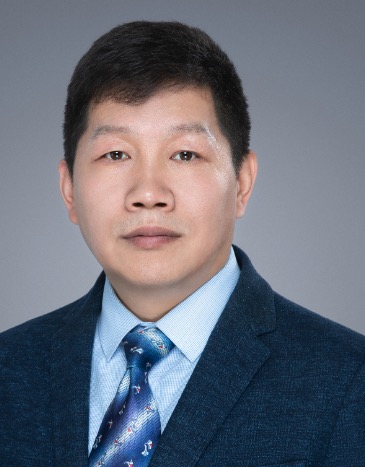 Chaoyang Sun (孙朝阳)合作论文数School of Mechanical Engineering, University of Science and Technology Beijing3Haitao Yang合作论文数2
 Jiawei Liu合作论文数2
 Chunhui Wang合作论文数2
 Keyu Lu合作论文数College of Mechatronics and Automation, National University of Defense Technology, Changsha, China2Jie Zhong合作论文数Natl Univ Def Technol, Lab Sci & Technol Integrated Logist Support, Changsha 410073, Hunan, Peoples R China2
 Xin Fang合作论文数National University of Defense Technology, National Univ. of Defense Technology2
 Kai (Kevin) Xu (徐凯)合作论文数Institute of AI for Industries, Chinese Academy of Sciences2
 Szymon Rusinkiewicz合作论文数Department of Computer Science, Princeton University2
 Zhihui Liu合作论文数1Xiangting Cai合作论文数1chenggang xie合作论文数1Hongjun Chen合作论文数1Qiang Fang合作论文数1Zixin Tang合作论文数1
 Yongqian Xiao合作论文数1
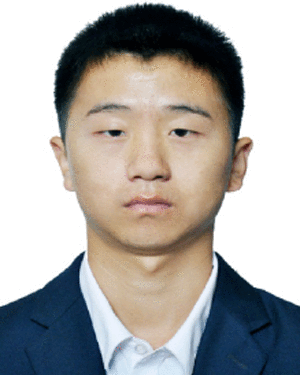 Xiaochang Hu合作论文数1Zhenwei Bian合作论文数1
 Jianfei Yin合作论文数Natl Univ Def Technol, Lab Sci & Technol Integrated Logist Support, Changsha 410073, Hunan, Peoples R China1
 Chao Wang (王超)合作论文数State Key Laboratory of Simulation and Regulation of Water Cycle in River Basin, China Institute of Water Resources and Hydropower Research1Lingyun Qian (钱凌云)合作论文数1
 Yong Xiao (肖勇)合作论文数College of Mechatronic Engineering and Automation, National University of Defense Technology1
 Li Cheng (成利)合作论文数Department of Mechanical Engineering, Faculty of Engineering, The Hong Kong Polytechnic University1
 Li Cai (蔡力)合作论文数School of Electrical Engineering and Automation, Wuhan University1
 Dewen Hu (胡德文)合作论文数National University of Defense Technology1
 Tao Li合作论文数1
 Peter Gumbsch合作论文数Karlsruhe Institute of Technology;Fraunhofer Group1
 Yiru Ren (任毅如)合作论文数College of Mechanical and Vehicle Engineering, Hunan University1
 Mingwang Fu (傅銘旺)合作论文数Department of Mechanical Engineering, Faculty of Engineering, The Hong Kong Polytechnic University1




