Vision-language models (VLMs) have been proven effective for detecting multi-modal misinformation on social platforms, especially in zero-shot settings with unavailable or delayed annotations. However, a single VLM's capacity falls short in the more complex mixed-source multi-modal misinformation detection (M3D) task. Taking captioned images as an example, in M3D, false information can originate from untruthful texts, forged images, or mismatches between the two modalities. Although recent agentic systems can handle zero-shot M3D by connecting modality-specific VLM agents, their effectiveness is still bottlenecked by their architecture. In existing agentic M3D solutions, for any input sample, each agent performs only one forward reasoning pass, making decisions prone to model randomness and reasoning errors in challenging cases. Moreover, the lack of exploration over alternative reasoning paths prevents modern VLMs from fully utilizing their reasoning capacity. In this work, we present AgentM3D, a multi-agent framework for zero-shot M3D. To amplify the reasoning capability of VLMs, we introduce an adaptive test-time scaling paradigm in which each modality-specific VLM agent applies a Best-of-N mechanism, coupled with a critic agent for task-aligned scoring. The agents are organized in a cascading, modality-specific decision chain to reduce unnecessary computation and limit error propagation. To ensure scalability, a planning agent dynamically determines the maximum number of reasoning paths based on sample difficulty, and an adaptive stopping mechanism prevents excessive reasoning within each agent. Extensive experiments on two M3D benchmarks demonstrate that AgentM3D achieves state-of-the-art zero-shot detection performance compared with various VLM-based and agentic baselines.
Recent advances in large language models has strengthened Text2SQL systems that translate natural language questions into database queries. A persistent deployment challenge is to assess a newly trained Text2SQL system on an unseen and unlabeled dataset when no verified answers are available. This situation arises frequently because database content and structure evolve, privacy policies slow manual review, and carefully written SQL labels are costly and time-consuming. Without timely evaluation, organizations cannot approve releases or detect failures early. FusionSQL addresses this gap by working with any Text2SQL models and estimating accuracy without reference labels, allowing teams to measure quality on unseen and unlabeled datasets. It analyzes patterns in the system's own outputs to characterize how the target dataset differs from the material used during training. FusionSQL supports pre-release checks, continuous monitoring of new databases, and detection of quality decline. Experiments across diverse application settings and question types show that FusionSQL closely follows actual accuracy and reliably signals emerging issues. Our code is available at https://github.com/phkhanhtrinh23/FusionSQL.
The implicit feedback (e.g., clicks) in real-world recommender systems is often prone to severe noise caused by unintentional interactions, such as misclicks or curiosity-driven behavior. A common approach to denoising this feedback is manually crafting rules based on observations of training loss patterns. However, this approach is labor-intensive and the resulting rules often lack generalization across diverse scenarios. To overcome these limitations, we introduce RuleAgent, a language agent based framework which mimics real-world data experts to autonomously discover rules for recommendation denoising. Unlike the high-cost process of manual rule mining, RuleAgent offers rapid and dynamic rule discovery, ensuring adaptability to evolving data and varying scenarios. To achieve this, RuleAgent is equipped with tailored profile, memory, planning, and action modules and leverages reflection mechanisms to enhance its reasoning capabilities for rule discovery. Furthermore, to avoid the frequent retraining in rule discovery, we propose LossEraser-an unlearning strategy that streamlines training without compromising denoising performance. Experiments on benchmark datasets demonstrate that, compared with existing denoising methods, RuleAgent not only derives the optimal recommendation performance but also produces generalizable denoising rules, assisting researchers in efficient data cleaning.
Vision-language pretrained models offer strong transferable representations, yet adapting them in privacy-sensitive multi-party settings is challenging due to the high communication cost of federated optimization and the limited local data on clients. Federated prompt learning mitigates this issue by keeping the VLPM backbone frozen and collaboratively training lightweight prompt parameters. However, existing approaches typically enforce a unified prompt structure and length across clients, which is inadequate under practical client heterogeneity in both data distributions and system resources, and may further introduce conflicts between globally shared and locally optimal knowledge. To address these challenges, we propose SDFed, a heterogeneous federated prompt learning framework that bridges Local-Global Discrepancy via Subspace Refinement and Divergence Control. SDFed maintains a fixed-length global prompt for efficient aggregation while allowing each client to learn a variable-length local prompt to better match its data characteristics and capacity. To mitigate local-global conflicts and facilitate effective knowledge transfer, SDFed introduces a subspace refinement method for local prompts and an information retention and divergence control strategy that preserves key local information while maintaining appropriate separability between global and local representations. Extensive experiments on several datasets demonstrate that SDFed consistently improves performance and robustness in heterogeneous federated settings.
Large language models have driven major advances in Text-to-SQL generation. However, they suffer from high computational cost, long latency, and data privacy concerns, which make them impractical for many real-world applications. A natural alternative is to use small language models (SLMs), which enable efficient and private on-premise deployment. Yet, SLMs often struggle with weak reasoning and poor instruction following. Conventional reinforcement learning methods based on sparse binary rewards (0/1) provide little learning signal when the generated SQLs are incorrect, leading to unstable or collapsed training. To overcome these issues, we propose FINER-SQL, a scalable and reusable reinforcement learning framework that enhances SLMs through fine-grained execution feedback. Built on group relative policy optimization, FINER-SQL replaces sparse supervision with dense and interpretable rewards that offer continuous feedback even for incorrect SQLs. It introduces two key reward functions: a memory reward, which aligns reasoning with verified traces for semantic stability, and an atomic reward, which measures operation-level overlap to grant partial credit for structurally correct but incomplete SQLs. This approach transforms discrete correctness into continuous learning, enabling stable, critic-free optimization. Experiments on the BIRD and Spider benchmarks show that FINER-SQL achieves up to 67.73% and 85% execution accuracy with a 3B model – matching much larger LLMs while reducing inference latency to 5.57 s/sample. These results highlight a cost-efficient and privacy-preserving path toward high-performance Text-to-SQL generation. Our code is available at https://github.com/thanhdath/finer-sql.
While user preferences are important to cross-domain recommendation (CDR), existing methods primarily discover preferences under specific, yet possibly redundant, item features. To this end, we first propose a novel Preference Prototype-Aware (PPA) learning method to quantitatively learn user preferences while minimizing disturbances from the source domain. It introduces a mix-encoder and a proto-decoder. On the one hand, the mix-encoder learns better general representations of interacted items and captures the intrinsic relationships between items across different domains. On the other hand, the proto-decoder implements a learnable prototype matching mechanism to quantitatively perceive user preferences, avoiding disturbances caused by item features from the source domain. Moreover, through experiments on PPA, we observe another two issues that affect existing CDR methods’ performance, i.e., the semantic deficiency caused by sparse item categories and the imbalance weights caused by different user-item distributions. Thus, we further propose a LoRA-based extractor and a domain cross-attention module to alleviate the two issues, respectively. The PPA incorporating with new extractor and attention module is called PPA++. Extensive experiments show that PPA++ outperforms the other state-of-the-art counterparts in four different CDR scenarios.
Traditional Chinese Medicine (TCM) formulas play a significant role in treating epidemics and complex diseases. Existing models for TCM utilize traditional algorithms or deep learning techniques to analyze formula relationships, yet lack comprehensive results, such as complete formula compositions and detailed explanations. Although recent efforts have used TCM instruction datasets to fine-tune Large Language Models (LLMs) for explainable formula generation, existing datasets lack sufficient details, such as the roles of the formula's sovereign, minister, assistant, courier; efficacy; contraindications; tongue and pulse diagnosis--limiting the depth of model outputs. To address these challenges, we propose ZhiFangDanTai, a framework combining Graph-based Retrieval-Augmented Generation (GraphRAG) with LLM fine-tuning. ZhiFangDanTai uses GraphRAG to retrieve and synthesize structured TCM knowledge into concise summaries, while also constructing an enhanced instruction dataset to improve LLMs' ability to integrate retrieved information. Furthermore, we provide novel theoretical proofs demonstrating that integrating GraphRAG with fine-tuning techniques can reduce generalization error and hallucination rates in the TCM formula task. Experimental results on both collected and clinical datasets demonstrate that ZhiFangDanTai achieves significant improvements over state-of-the-art models.
Text-to-SQL is the task of translating natural language queries into executable SQL for a given database, enabling non-expert users to access structured data without writing SQL manually. Despite rapid advances driven by large language models (LLMs), existing approaches still struggle with complex queries in real-world settings, where database schemas are large and questions require multi-step reasoning over many interrelated tables. In such cases, providing the full schema often exceeds the context window, while one-shot generation frequently produces non-executable SQL due to syntax errors and incorrect schema linking. To address these challenges, we introduce AV-SQL, a framework that decomposes complex Text-to-SQL into a pipeline of specialized LLM agents. Central to AV-SQL is the concept of agentic views: agent-generated Common Table Expressions (CTEs) that encapsulate intermediate query logic and filter relevant schema elements from large schemas. AV-SQL operates in three stages: (1) a rewriter agent compresses and clarifies the input query; (2) a view generator agent processes schema chunks to produce agentic views; and (3) a planner, generator, and revisor agent collaboratively compose these views into the final SQL query. Extensive experiments show that AV-SQL achieves 70.38
Social network simulation enables controlled study of information dynamics and collective behavior on social graphs, yet the literature remains fragmented across disciplines. This survey provides a unified treatment of the field, organizing 97 papers from the past seven decades into five paradigms: network structure models, information diffusion, opinion dynamics, rule-based agentbased models, and large language model (LLM)-based agentic simulation. We bridge classical and generative approaches by mapping the progression from analytical update rules to language-grounded agents with semantic memory and platform-native actions, and present the first systematic architectural comparison of LLM-based simulation systems. We analyze the literature across five application domains—misinformation, political discourse, platform design, information diffusion, and user behavior—tracing a shift from descriptive analysis toward prescriptive policy prototyping. We outline seven research frontiers spanning representational alignment, multi-level validation, scalability, and responsible use. An accompanying online repository at https://github.com/tamlhp/awesome-sns catalogs 48 implementations (42 open-source), 21 benchmarks and datasets, and 22 evaluation metrics.
Large language model-powered sequential recommender systems (LLM-SRSs) have recently demonstrated remarkable performance, enabling recommendations through prompt-driven inference over user interaction sequences. However, this paradigm also introduces new security vulnerabilities, particularly text-level manipulations, rendering them appealing targets for promotion attacks that purposely boost the ranking of specific target items. Although such security risks have been receiving increasing attention, existing studies typically rely on an unrealistic assumption of access to either the victim model or prompt to unveil attack mechanisms. In this work, we investigate the item promotion attack in LLM-SRSs under a more realistic setting where both the system prompt and victim model are unknown to the attacker, and propose a Prompt-Unknown Dual-poisoning Attack (PUDA) framework. To simulate attacks under this full black-box setting, we introduce an LLM-based evolutionary refinement strategy that infers discrete system prompts, enabling the training of an effective surrogate model that mimics the behaviors of the victim model. Leveraging the distilled prompt and surrogate model, we devise a promotion attack that adversarially revises target item texts under semantic constraints, which is further complemented by the highly plausible, surrogate-generated poisoning sequences to enable cost-effective target item promotion. Extensive experiments on real-world datasets demonstrate that PUDA consistently outperforms state-of-the-art competitors in boosting the exposure of unpopular target items. Our findings reveal critical security risks in modern LLM-SRSs even when both prompts and models are protected, and highlight the need for more robust defensive means.
Large reasoning models (LRMs) have emerged as a powerful paradigm for solving complex real-world tasks. In practice, these models are predominantly trained via Reinforcement Learning with Verifiable Rewards (RLVR), yet most existing outcome-only RLVR pipelines rely almost exclusively on a binary correctness signal and largely ignore the model's intrinsic uncertainty. We term this discrepancy the uncertainty-reward mismatch, under which high- and low-uncertainty solutions are treated equivalently, preventing the policy from "Know What You Know" and impeding the shift from optimizing for correct answers to optimizing effective reasoning paths. This limitation is especially critical in reasoning-centric tasks such as mathematics and question answering, where performance hinges on the quality of the model's internal reasoning process rather than mere memorization of final answers. To address this, we propose EGPO, a metacognitive entropy calibration framework that explicitly integrates intrinsic uncertainty into RLVR for enhancing LRMs. EGPO estimates per-sample uncertainty using a zero-overhead entropy proxy derived from token-level likelihoods and aligns it with extrinsic correctness through an asymmetric calibration mechanism that preserves correct reasoning while selectively regulating overconfident failures, thereby enabling stable and uncertainty-aware policy optimization. Moreover, EGPO recovers informative learning signals from otherwise degenerate group-based rollouts without modifying the verifier or reward definition. Extensive experiments across multiple benchmarks demonstrate that the proposed EGPO leads to substantial and consistent improvements in reasoning performance, establishing a principled path for advancing LRMs through metacognitive entropy calibration.
Federated sequential recommendation (FedSeqRec) allows many user devices to train a shared recommender without sending raw interaction histories to a central server, which is important for privacy. However, existing FedSeqRec methods still suffer from two key limitations: (1) most users have very short or sparse histories, especially when they only show interest in a few items for a short period, leaving the model with too little data to understand their preferences; and (2) in a sequential setting it is normal for interests to change suddenly, but the model may misinterpret these abrupt changes as anomalies. In this paper, we propose FORTRESS, a Federated cOntrastive RobusT REcommender for Sequential Systems, designed to address these limitations. To tackle the first issue, FORTRESS generates augmented versions of local interaction sequences on each client, so that the model can observe more plausible behaviour patterns and learn user preferences more reliably even when histories are short or sparse. This extra flexibility also gives adversaries more room to manipulate the training signal, so we complement it with a popularity-aware server-side regularizer that discourages rare or suspicious items from drifting into the same embedding clusters as genuinely popular items. To tackle the second issue, we introduce a temporal regularization term that discourages abrupt changes in user representations across adjacent subsequences, allowing the model to adapt to short-term interest shifts while still preserving stable long-term tastes. Experiments on three real-world datasets show that FORTRESS improves recommendation accuracy for sparse and cold-start users and substantially reduces the success of strong model poisoning attacks compared with competitive centralized and federated baselines.
As a fundamental data mining task, unsupervised time series anomaly detection (TSAD) aims to build a model for identifying abnormal timestamps without assuming the availability of annotations. A key challenge in unsupervised TSAD is that many anomalies are too subtle to exhibit detectable deviation in any single view (e.g., time domain), and instead manifest as inconsistencies across multiple views like time, frequency, and a mixture of resolutions. However, most cross-view methods rely on feature or score fusion and do not enforce analysis-synthesis consistency, meaning the frequency branch is not required to reconstruct the time signal through an inverse transform, and vice versa. In this paper, we present Learnable Fusion of Tri-view Tokens (LEFT), a unified unsupervised TSAD framework that models anomalies as inconsistencies across complementary representations. LEFT learns feature tokens from three views of the same input time series: frequency-domain tokens that embed periodicity information, time-domain tokens that capture local dynamics, and multi-scale tokens that learns abnormal patterns at varying time series granularities. By learning a set of adaptive Nyquist-constrained spectral filters, the original time series is rescaled into multiple resolutions and then encoded, allowing these multi-scale tokens to complement the extracted frequency- and time-domain information. When generating the fused representation, we introduce a novel objective that reconstructs fine-grained targets from coarser multi-scale structure, and put forward an innovative time-frequency cycle consistency constraint to explicitly regularize cross-view agreement. Experiments on real-world benchmarks show that LEFT yields the best detection accuracy against SOTA baselines, while achieving a 5x reduction on FLOPs and 8x speed-up for training.
Generative foundation models (GenFMs), such as large language models and text-to-image systems, have demonstrated remarkable capabilities in various downstream applications. As they are increasingly deployed in high-stakes applications, assessing their trustworthiness has become both a critical necessity and a substantial challenge. Existing evaluation efforts are fragmented, rapidly outdated, and often lack extensibility across modalities. This raises a fundamental question: how can we systematically, reliably, and continuously assess the trustworthiness of rapidly advancing GenFMs across diverse modalities and use cases? To address these gaps, we introduce TrustGen, a dynamic and modular benchmarking system designed to systematically evaluate the trustworthiness of GenFMs across text-to-image, large language, and vision-language modalities. TrustGen standardizes trust evaluation through a unified taxonomy of over 25 fine-grained dimensions—including truthfulness, safety, fairness, robustness, privacy, and machine ethics—while supporting dynamic data generation and adaptive evaluation through three core modules: Metadata Curator, Test Case Builder, and Contextual Variator. Taking TrustGen into action to evaluate the trustworthiness of 39 models reveals four key insights. (1) State-of-the-art GenFMs achieve promising overall trust performance, yet significant limitations remain in specific dimensions such as hallucination resistance, fairness, and privacy preservation. (2) Contrary to prevailing assumptions, open-source models now rival and occasionally surpass proprietary systems in trustworthiness metrics. (3) The trust gap among top-performing models is narrowing, likely due to increased industry convergence on best practices. (4) Trustworthiness is not an isolated property; it interacts complexly with other behaviors, such as helpfulness and ethical decision-making. TrustGen is a transformative step toward standardized, scalable, and actionable trustworthiness evaluation, supporting dynamic assessments across diverse modalities and trust dimensions that evolve alongside the generative AI landscape.
Graph filter design is central to spectral collaborative filtering, yet most existing methods rely on manually tuned hyperparameters rather than fully learnable filters. We show that this challenge stems from a bias in traditional recommendation objectives, which induces a spectral phenomenon termed low-frequency explosion, thereby fundamentally hindering the effective learning of graph filters. To overcome this limitation, we propose a novel adaptive spectral graph collaborative filtering framework (ASPIRE) based on a bi-level optimization objective. Guided by our theoretical analysis, we disentangle the filter learning objective, which in turn leads to excellent recommendation performance, spectral adaptivity, and training stability in practice. Extensive experiments show our learned filters match the performance of carefully engineered task-specific designs. Furthermore, ASPIRE is equally effective in LLM-powered collaborative filtering. Our findings demonstrate that graph filter learning is viable and generalizable, paving the way for more expressive graph neural networks in collaborative filtering.
Large language model-based recommender systems are increasingly adopting slow-thinking models that generate step-by-step reasoning before making predictions, often achieving higher accuracy than fast-thinking models that predict directly. However, their reasoning traces are often unnecessarily verbose, increasing inference costs without commensurate accuracy gains. Existing training-based approaches to reasoning compression often incur substantial adaptation costs, while inference-time methods are brittle and difficult to scale. These limitations motivate model merging as a promising training-free direction for transferring specialised behaviours between models in a shared parameter space. In particular, merging a slow-thinking model with a fast-thinking counterpart provides a natural mechanism for balancing recommendation accuracy and reasoning conciseness. To this end, we propose, to our knowledge, the first model merging framework for reasoning compression in recommender systems. Unlike conventional merging methods that apply uniform merge coefficients across model components, our method performs fine-grained merging at the level of individual attention heads, capturing heterogeneous patterns in recommendation reasoning. Each attention head is assigned a distinct merge coefficient according to its contribution to critical reasoning evidence and its sensitivity to parameter change, enabling selective injection of the concise behaviour of the fast-thinking model into the slow-thinking model and reducing reasoning verbosity without compromising recommendation quality. Experiments on three benchmark datasets show that our method reduces reasoning length by up to 24.3
Generative recommendation commonly represents items using fixed-length semantic identifiers (SIDs) constructed through clustering and quantization. However, these artificial codes may overcompress item semantics, remain misaligned with pretrained LLM vocabularies, and require costly autoregressive decoding. In light of this, we propose VaLiDRec, a generative recommendation framework based on variable-length, LLM-aligned semantic identifiers. VaLiDRec constructs SIDs directly from informative native LLM vocabulary tokens via token importance estimation, semantic-quality-aware pruning, and collision-aware refinement, allowing identifier lengths to adapt to item semantic complexity. To model user preferences, VaLiDRec incorporates graph-aware soft prompts and reformulates recommendation as token-set prediction with token-level item scoring, eliminating autoregressive SID generation and beam search. Experiments on four real-world datasets show that VaLiDRec consistently outperforms strong sequential and generative recommendation baselines across all evaluation metrics. It further achieves superior zero-shot item cold-start performance and 87.49× faster inference than LC-Rec. These results demonstrate that LLM-native variable-length semantic identifiers provide a more expressive and efficient paradigm for generative recommendation.
Dense text embeddings are widely used in data mining, retrieval, and downstream machine learning systems due to their compact and semantically rich representations, but recent embedding inversion attacks have shown that they can expose substantial information about the original text, leading to serious privacy leakage risks. A common defense is to release perturbed embeddings by adding Gaussian noise, which is simple yet effective against standard inversion attacks and does not significantly degrade embedding utility for downstream tasks. However, it remains unclear whether such noise-protected embeddings are sufficiently safe against adaptive attackers that explicitly account for the perturbation process. In this paper, we study text embedding inversion in a noise-protected setting, where the attacker can observe only noisy embeddings and has no access to clean embedding targets. We first analyze why existing generative inversion methods fail under this setting and identify a "Double Noise Trap", which fundamentally prevents standard generative inversion models from achieving high-quality reconstruction. To address this challenge, we propose DAEI, a denoising-aware embedding inversion pipeline that combines a residual denoising autoencoder with generative text inversion where the denoiser is trained in an unsupervised manner using Stein's unbiased risk estimate to enable denoising from noisy observations alone. Extensive experiments show that DAEI achieves approximately 154% relative improvement in BLEU over the existing generative inversion baseline, while also improving token-level F1 and ROUGE-L by 32–60%. The promising inversion performance of DAEI challenges the prevailing assumption that simple Gaussian perturbation is sufficient to prevent sensitive information leakage from embedding representations.
Temporal knowledge graphs (TKGs) effectively capture the dynamic evolution of events over time, emerging as a critical driving force in the advancement of artificial intelligence. In recent years, temporal knowledge graph reasoning (TKGR) has garnered significant attention for its ability to address the intrinsic incompleteness of TKGs. Among various TKGR methods, reinforcement learning (RL)-based multi-hop reasoning stands out due to the decision-making capabilities and interpretability. However, existing multi-hop reasoning methods are predominantly designed for the transductive setting where test entities are observed during training, and they exhibit limited performance in the fully-inductive setting where training and test entities are entirely disjoint. Moreover, the sparse links of newly emerged unseen entities in TKGs hinder multi-hop reasoning methods from utilizing sufficient actions to construct multihop relational paths, ultimately impairing reasoning accuracy. To address these challenges, we propose ARLIE (Adaptive Reinforcement Learning with Inductive Embeddings), a novel method capable of conducting multi-hop reasoning in both fully-inductive and transductive settings over TKGs. Specifically, ARLIE consists of the following two key components. (1) A context-based inductive representation method generates finegrained embeddings for unseen entities by exploiting queryrelated contextual information. (2) After obtaining temporal evolution and semantic dependencies of unseen entities, an actionaugmented adaptive RL framework leverages diverse actions to infer missing elements step-by-step over TKGs. Finally, experimental results show that ARLIE surpasses state-of-the-art TKGR methods across both fully-inductive and transductive settings.
 Henry Nguyen合作论文数School of Information and Communication Technology, Griffith University157
 Rocky Chen合作论文数School of Electrical Engineering and Computer Science, The University of Queensland;Faculty of Engineering, Architecture and Information Technology, The University of Queensland117
 Zi Helen Huang (黄兹)合作论文数School of Information Technology and Electrical Engineering, The University of Queensland55
 Xiaofang Zhou (周晓方)合作论文数Department of Computer Science and Engineering, School of Engineering, The Hong Kong University of Science and Technology;Big Data Institute, The Hong Kong University of Science and Technology51
 Junliang Yu (余俊良)合作论文数School of Information and Communication Technology, Griffith University49
 Wei Yuan (袁为)合作论文数School of Information Technology and Electrical Engineering, The University of Queensland46
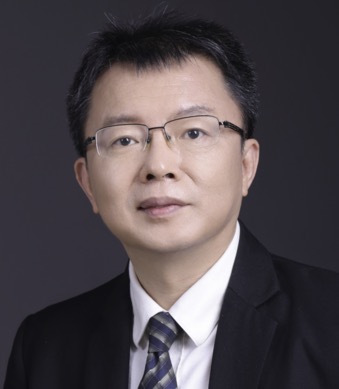 Bin Cui (崔斌)合作论文数School of Computer Science, Faculty of Informatics, Peking University42
 Thanh T. Nguyen合作论文数Công Ty Tnhh Mtv Giáo Dục Dt39
 Lizhen Cui (崔立真)合作论文数School of Software, Shandong University34
 Liang Qu (曲良)合作论文数School of Business and Law, Edith Cowan University31
 Kevin Kai Zheng (郑凯)合作论文数School of Computer Science and Engineering, University of Electronic Science and Technology of China31
 Weiqing Wang (王维清)合作论文数Department of Data Science and AI, Monash University30
 Hongxu Chen合作论文数Commonwealth Bank of Australia28
 Matthias Weidlich合作论文数Department of Computer Science, Faculty of Mathematics and Natural Sciences, Humboldt-Universitat zu Berlin27
 Xinyi Gao (高昕毅)合作论文数School of Electrical Engineering and Computer Science, The University of Queensland26
 Shazia Sadiq合作论文数School of Information Technology and Electrical Engineering, Faculty of Engineering, Architecture and Information Technology, University of Queensland26
 Hao(Henry) Wang (王浩)合作论文数AI Product Development Team, Alibaba Cloud Intelligence Group24
 Guanhua Ye合作论文数University of Queensland, Brisbane, Australia23
 Thanh Trung Huynh合作论文数Griffith Univ, Brisbane, Qld, Australia21
 Xiangyu Zhao (赵翔宇)合作论文数Applied Machine Learning Lab, Department of Data Science, College of Computing, City University of Hong Kong21
 Qinyong Wang合作论文数University of Queensland20
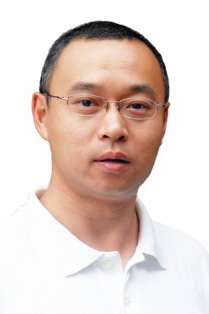 Lei Zhao (赵雷)合作论文数School of Computer Science and Technology, Soochow University20
 Wentao Zhang (张文涛)合作论文数Center of Machine Learning Research, Peking University19
 Min Gao (高旻)合作论文数School of Big Data & Software Engineering, Chongqing University18
 Ling Chen合作论文数Centre for Artificial Intelligence, School of Computer Science, University of Technology Sydney17
 Xiangliang (Lynn) Zhang合作论文数Machine Intelligence and kNowledge Engineering Lab, University of Notre Dame17
 Guandong Xu合作论文数School of Computer Science, University of Technology Sydney;Data Science Institute, University of Technology Sydney;Institution of Engineering and Technology;Smart Future Research Centre16
 Wei Chen (陈伟)合作论文数School of Computer Science & Technology, Soochow University15
 Yang Wang (王杨)合作论文数School of Computer Science and Information Engineering, Hefei University of Technology;Dalian University of Technology;School of Computer Science and Engineering, University of New South Wales15
 Zongwei Wang (王宗威)合作论文数School of Big Data & Software Engineering, Faculty of Information Technology, Chongqing University14
 Yuhui Shi (史玉回)合作论文数Department of Computer Science and Engineering, College of Engineering, Southern University of Science and Technology14
 Lei Guo (郭磊)合作论文数School of Information Science and Engineering, Shandong Normal University14
 Tieke He (何铁科)合作论文数Software Institute, Nanjing University14
 Qianru Zhang合作论文数The University of Hong Kong13
 Thang Duong合作论文数Ecole Polytech Fed Lausanne, Lausanne, Switzerland13
 Ruihong Qiu (邱瑞鸿)合作论文数School of Electrical Engineering and Computer Science, Faculty of Engineering, Architecture and Information Technology, The University of Queensland13
 Xingzhong Du合作论文数Coles Advanced Analytic Centre,Monash University13
 Xin Xia (夏新)合作论文数School of Electrical Engineering and Computer Science, The University of Queensland12
 Ruiqi Zheng合作论文数Department of Computer Science and Engineering, Southern University of Science and Technology;School of Information Technology and Electrical Engineering, University of Queensland11Chaoqun Yang合作论文数11
 Meng Wang (汪萌)合作论文数School of Computer Science and Information Engineering, Hefei University of Technology11
 Bolong Zheng (郑渤龙)合作论文数School of Computer Science and Artificial Intelligence, Wuhan University of Technology;School of Computer Science and Technology, Huazhong University of Science and Technology11
 Xue Li合作论文数School of Electrical Engineering and Computer Science, Faculty of Engineering, Architecture and Information Technology, The University of Queensland11Jing Long合作论文数The University of Queensland10
 Karl Aberer合作论文数Distributed Information Systems Laboratory, Ecole Polytechnique Federale de Lausanne;LinkAlong10
 Zhixu Li (李直旭)合作论文数School of Information, Renmin University of China;School of Smart Governance, Renmin University of China10
 Zhiting Hu (胡志挺)合作论文数Amazon;Halicioglu Data Science Institute, University of California, San Diego9
 Bohan Li (李博涵)合作论文数College of Computer Science and Technology, Nanjing University of Aeronautics and Astronautics9
 Xiangguo Sun (孙相国)合作论文数Department of Systems Engineering and Engineering Management, The Chinese University of Hong Kong9