The silent flight of barn owls is associated with wing and feather specialisations. Three special features are known: a serrated leading edge that is formed by free-standing barb tips which appears as a comb-like structure, a soft dorsal surface, and a fringed trailing edge. We used a model of the leading edge comb with 3D-curved serrations that was designed based on 3D micro-scans of rows of barbs from selected barn-owl feathers. The interaction of the flow with the serrations was measured with Particle-Image-Velocimetry in a flow channel at uniform steady inflow and was compared to the situation of inflow with freestream turbulence, generated from the turbulent wake of a cylinder placed upstream. In steady uniform flow, the serrations caused regular velocity streaks and a flow turning effect. When vortices of different size impacted the serrations, the serrations reduced the flow fluctuations downstream in each case, exemplified by a decreased root-mean-square value of the fluctuations in the wake of the serrations. This attenuation effect was stronger for the spanwise velocity component, leading to an overall flow homogenization. Our findings suggest that the serrations of the barn owl provide a passive flow control leading to reduced leading-edge noise when flying in turbulent environments.
The author came to lateral line research rather by chance, yet this sensory system ended up as the main research focus of my entire scientific career. This paper is not a review article. Instead, it gives an overview of some of the major research topics that the author, collaborators, and students have worked on for more than 4 decades. During the last century, lateral line research was mostly approached by using mono-frequency water motions generated in still water with a stationary vibrating sphere. At the beginning, this approach was necessary and useful. During studies, it became apparent that the fish lateral line can only be fully understood if more natural hydrodynamic stimuli (including natural hydrodynamic noise) were applied. Better methods, like particle image velocimetry, are then needed in the research of lateral line systems. Finally, how a biomimetic approach can be used to investigate lateral line function is discussed. In the final paragraph, some research gaps and hence, opportunities that still exist in the research of the lateral line systems are highlighted.
This paper is not meant to be a review article. Instead, it gives an overview of the major research projects that the author, together with his students, colleagues and collaborators, has worked on. Although the main focus of the author’s work has always been the fish lateral line, this paper is mainly about all the other research projects he did or that were done in his laboratory. These include studies on fishing spiders, weakly electric fish, seals, water rats, bottom dwelling sharks, freshwater rays, venomous snakes, birds of prey, fire loving beetles and backswimmers. The reasons for this diversity of research projects? Simple. The authors’s lifelong enthusiasm for animals, and nature's ingenuity in inventing new biological solutions. Indeed, this most certainly was a principal reason why Karl von Frisch and Alfred Kühn founded the Zeitschrift für vergleichende Physiologie (now Journal of Comparative Physiology A) 100 years ago.
 Uwe Homberg合作论文数Department of Neurobiology/Ethology, Faculty of Biology, Philipps-Universität Marburg;Center for Mind, Brain and Behavior20
 Joachim Mogdans合作论文数19
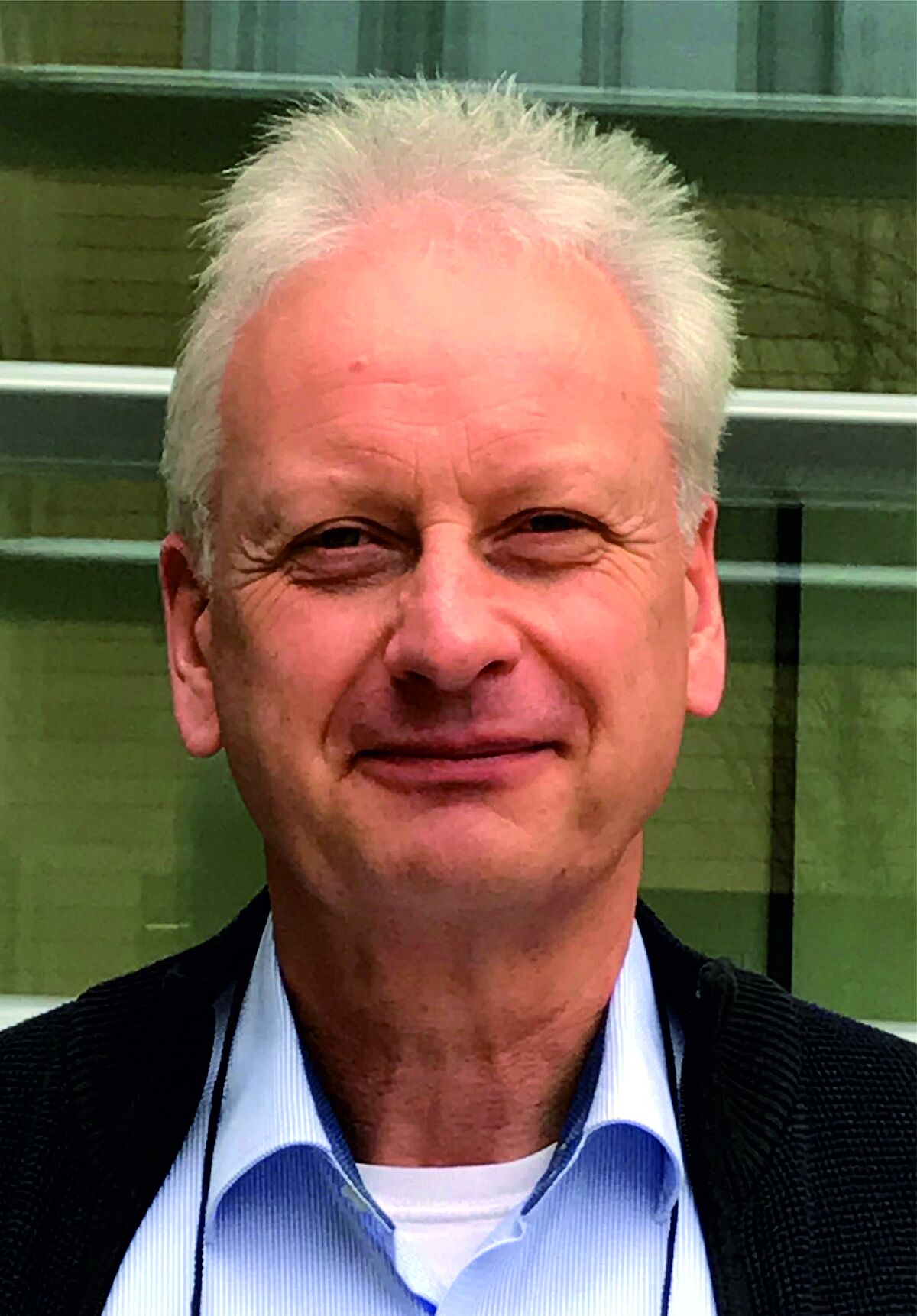 Jan-Peter Hildebrandt合作论文数Animal Physiology and Biochemistry, Zoological Institute and Museum, University of Greifswald19
 Vera Schluessel合作论文数School of Biomedical Sciences, The University of Queensland15
 Klein Adrian T合作论文数12
 Christoph Brücker合作论文数Institute of Mechanics and Fluid Dynamics10
 Guido Westhoff合作论文数9
 Helmut Schmitz合作论文数School of Modern Languages and Cultures, Faculty of Arts, The University of Warwick8Sheryl Coombs合作论文数JP Scott Center for Neuroscience, Mind and Behavior, Bowling Green State University7
 Anke Schmitz合作论文数7
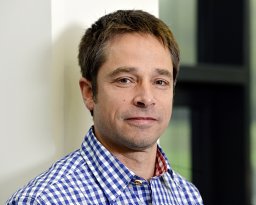 Jacob Engelmann合作论文数Institute for Zoology, University of Bonn5U Niemann合作论文数4Mh Hofmann合作论文数4Herzog Hendrik合作论文数4Fuss Theodora合作论文数4
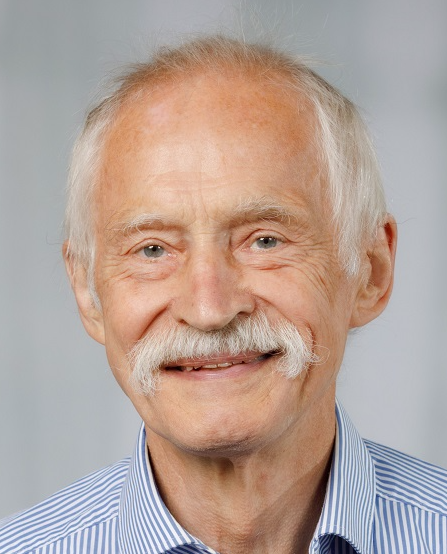 Bernd Fritzsch合作论文数Department of Neurological Sciences, College of Medicine, University of Nebraska Medical Center4Boris P. Chagnaud合作论文数Institute of Zoology, University of Bonn4Ruben Andres Berthé合作论文数3W Hanke合作论文数3Alexander Balmert合作论文数3Felix Kaldenbach合作论文数3Tätzner Simon合作论文数3Spinner Marlene合作论文数Zoological Institute, Kiel University3
 Guido Dehnhardt合作论文数University of Rostock Institute for Biosciences3Michael H. Hofmann合作论文数3
 Siegfried Steltenkamp合作论文数Institute of Physical Chemistry, University of Mainz3Sophia Kröther合作论文数3
 Gerhard Von Der Emde合作论文数Institute for Zoology, University of Bonn3Erich Schwartz合作论文数2Jan Winkelnkemper合作论文数2Elisabeth Schulze合作论文数2
 Dominik Fischer合作论文数2A. Klein合作论文数2
 Tobias Kohl合作论文数2Ponitz Benjamin合作论文数2
 Stanislav Gorb合作论文数Zoological Institute, Kiel University2
 David Hess合作论文数2Stefan Trenner合作论文数2Shaun P Collin合作论文数2Horst M. Müller合作论文数2
 Arthur Popper合作论文数Department of Biology, College of Computer, Mathematical & Natural Sciences, University of Maryland, College Park2
 Dick Fay合作论文数Loyola University Chicago2Alexander Rudert合作论文数1Franziska Hegner合作论文数1Hans E. Hummel合作论文数1
 Nguyen N Nguyen合作论文数Department of Pathology, Baylor Scott and White Health1
 Juergen Tautz合作论文数1Simon Stepniak合作论文数1Ingrid Waldner合作论文数1




