Twenty-five years since foundational publications on valuing ecosystem services for human well-being 1 , 2 , addressing the global biodiversity crisis 3 still implies confronting barriers to incorporating nature’s diverse values into decision-making. These barriers include powerful interests supported by current norms and legal rules such as property rights, which determine whose values and which values of nature are acted on. A better understanding of how and why nature is (under)valued is more urgent than ever 4 . Notwithstanding agreements to incorporate nature’s values into actions, including the Kunming-Montreal Global Biodiversity Framework (GBF) 5 and the UN Sustainable Development Goals 6 , predominant environmental and development policies still prioritize a subset of values, particularly those linked to markets, and ignore other ways people relate to and benefit from nature 7 . Arguably, a ‘values crisis’ underpins the intertwined crises of biodiversity loss and climate change 8 , pandemic emergence 9 and socio-environmental injustices 10 . On the basis of more than 50,000 scientific publications, policy documents and Indigenous and local knowledge sources, the Intergovernmental Platform on Biodiversity and Ecosystem Services (IPBES) assessed knowledge on nature’s diverse values and valuation methods to gain insights into their role in policymaking and fuller integration into decisions 7 , 11 . Applying this evidence, combinations of values-centred approaches are proposed to improve valuation and address barriers to uptake, ultimately leveraging transformative changes towards more just (that is, fair treatment of people and nature, including inter- and intragenerational equity) and sustainable futures.
Despite increasing scientific understanding of the global environmental crisis, we struggle to adopt the policies science suggests would be effective. One of the reasons for that is the lack of inclusive engagement and dialogue among a wide range of different actors. Furthermore, there is a lack of consideration of differences between languages, worldviews and cultures. In this paper, we propose that engagement across the science-policy interface can be strengthened by being mindful of the breadth and depth of the diverse human-nature relations found around the globe. By examining diverse conceptualizations of "nature" in more than 60 languages, we identify three clusters: inclusive conceptualizations where humans are viewed as an integral component of nature; non-inclusive conceptualizations where humans are separate from nature; and deifying conceptualizations where nature is understood and experienced within a spiritual dimension. Considering and respecting this rich repertoire of ways of describing, thinking about and relating to nature can help us communicate in ways that resonate across cultures and worldviews. This repertoire also provides a resource we can draw on when defining policies and sustainability scenarios for the future, offering opportunities for finding solutions to global environmental challenges.
Mapping ecosystem services (ES) has become an important tool to study nature's contributions to people (NCP) spatially and to manage ecosystems sustainably. However, few of these studies have been carried out in Africa and even fewer in drylands. This is not surprising, as drylands in general have not received much attention in the field of ecosystem services due to the perception that they do not provide much due to their low levels of productivity. In addition, not much data is available to map ecosystem services in Africa. In this study, we map regulating services of the Marrakesh Safi region in Morocco. First, a land cover map was developed based on existing information. This land cover map was thereafter used to map and model three regulating service categories in the region namely, carbon sequestration, microclimate regulation, and hydrological services (water regulation and water quantity) using six indicators. Our results show that agricultural land, which occupies the largest percentage area, also sequestered the most carbon in the study area. Forests sequestered about 16% carbon despite occurring in only 14% of the area and are the most efficient in sequestering carbon when considering carbon sequestered per hectare per year. The ecosystem type with the highest potential to supply water regulation services was Quercus ilex with about 200 m3/ha. The study shows that the hotspots areas are located in the southeast parts of the study area where the Quercus ilex is mostly found. Contrary to the belief that most arid systems are not productive and therefore do not provide many ecosystem services, our spatial outputs showed that the area around Marrakesh in Morocco, despite being arid provides many regulating services including water and microclimate regulation.
 Tuyeni Heita Mwampamba合作论文数3
 Ignacio Palomo合作论文数Social-Ecological Systems Laboratory, Universidad Autónoma de Madrid3
 Mette Termansen合作论文数Department of Food and Resource Economics, Faculty of Science, University of Copenhagen2
 Aibek Samakov合作论文数Aigine Cultural Research Center2
 David Gonzalez-Jimenez合作论文数Instituto de Investigaciones en Ecosistemas y Sustentabilidad, Universidad Nacional Autónoma de México2
 Jonas Ngouhouo Poufoun合作论文数Congo Basin Institute (CBI),, International Institute of Tropical Agriculture (IITA),2
 Mariaelena Huambachano合作论文数2
 Marcello Hernández-Blanco合作论文数Independent Researcher, San José, Costa Rica2
 Aidin Niamir合作论文数Senckenberg Biodiversity and Climate Research Institute (SBiK-F), Georg-Voigt-Strasse 14-16, Frankfurt am Main, 60325, Germany.2
 Zuzana V. Harmackova合作论文数Czech Acad Sci, Global Change Res Inst2
 Anna Filyushkina合作论文数Institute for Environmental Studies (IVM),, Vrije Universiteit Amsterdam2
 Nadia Sitas合作论文数Natural Resources and Environment, Council for Scientific and Industrial Research;Department of Conservation Ecology and Entomology, Stellenbosch University;Department of Conservation Ecology and Entomology, Stellenbosch University2
 Haripriya Gundimeda合作论文数Environmental Economics Unit;Department of Economics;University of GBox;Department of Economics, University of GBox2
 Sander Jacobs合作论文数Ecosystem Management Research Group, University of Antwerp2
 Nibedita Mukherjee合作论文数Department of Chemistry, University College of Science2
 Ram Pandit合作论文数Department of Biological Systems Engineering, Washington State University2
 Marije Schaafsma合作论文数Institute for Environmental Studies ( IVM );Vrije Universiteit Amsterdam;Institute for Environmental Studies ( IVM ), Vrije Universiteit Amsterdam2
 N. Dendoncker合作论文数Integrated Assessment of Vulnerable2SoEun Ahn合作论文数2Victoria Contreras合作论文数2Juliana S. Farinaci合作论文数1
 Sonali Ghosh合作论文数1Maylis Desrousseaux合作论文数1
 Roldan Muradian合作论文数1Barbara Nakangu合作论文数1Marina Kosmus合作论文数1Evonne Yiu合作论文数1Agnieszka Pawłowska-Mainville合作论文数1Ariane Amin合作论文数1
 Brigitte Baptiste合作论文数1Amina Mohamed合作论文数1Lenke Balint合作论文数1
 Uta Eser合作论文数1
 Erik Gomez-Baggethun合作论文数Norwegian University of Life Sciences1Suneetha M. Subramanian合作论文数1Mariana Cantu-Fernandez合作论文数1
 Gabriela Arroyo Robles合作论文数1
 Antonio J. Castro合作论文数1Sofía Monroy-Sais合作论文数1
 Yuki Yoshida合作论文数Center for Climate Change Adaptation, National Institute for Environmental Studies1
 Bernard Nuoleyeng Baatuuwie合作论文数Faculty of Natural Resources and Environment, University for Development Studies1
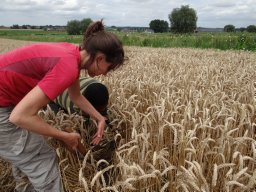 Fanny Boeraeve合作论文数Gembloux Agro-Bio Tech, Université de Liège1
 Bosco Lliso合作论文数Basque Centre for Climate Change (BC3), the University of the Basque Country1Sara Nelson合作论文数1Håkon da Silva Hyldmo合作论文数1
 Ranjini Murali合作论文数Geography Department, Humboldt‐Universität zu Berlin;The Snow Leopard Trust;Geography Department, Humboldt‐Universität zu Berlin1
 Lelani M. Mannetti合作论文数Urban Studies Inst, Georgia State Univ1
 Cem Iskender Aydın合作论文数Institute of Environmental Sciences, Boğaziçi University1
 Sacha Amaruzaman合作论文数World Agroforestry ICRAF1




