Roof-harvested rainwater stored for potable and nonpotable usages represent a clean and sustainable water supply resource. However, the microbial dynamics and mechanisms of community assembly in long-termed operated rainwater storage systems remain elusive. In this study, characteristics of microbial communities in different habitats were systematically compared within rainwater and tap-water simulated storage systems (SWSSs) constructed with different tank materials (PVC, stainless steel and cement). Distinct microbial communities were observed between rainwater and tap-water SWSSs for both water and biofilm samples (ANOSIM, p < 0.05), with lower diversity indexes noted in rainwater samples. Notably, a divergent potential pathogen profile was observed between rainwater and tap-water SWSSs, with higher relative abundances of potential pathogens noted in rainwater SWSSs. Moreover, tank materials had a notable impact on microbial communities in rainwater SWSSs (ANOSIM, p < 0.05), rather than tap-water SWSSs, illustrating the distinct interplay between water chemistry and engineering factors in shaping the SWSS microbiomes. Deterministic processes contributed predominantly to the microbial community assembly in cement rainwater SWSSs and all tap-water SWSSs, which might be ascribed to the high pH levels in cement rainwater SWSSs and low-nutrient levels in all tap-water SWSSs, respectively. However, microbial communities in the PVC and stainless-steel rainwater SWSSs were mainly driven by stochastic processes. Overall, the results provided insights to the distinct microbial assembly mechanisms and potential health risks in stored roof-harvested rainwater, highlighting the importance of developing tailored microbial management strategies for the storage and utilization of rainwater.
Nontuberculous mycobacteria (NTM) represent an emerging health concern due to their escalating infections worldwide. Although drinking water distribution systems (DWDSs) have been considered as NTM reservoirs and a potential infection route, NTM community at the species level remain largely elusive in DWDSs. This study employed high-throughput sequencing coupled with qPCR to profile NTM community and estimate their abundances at the species level in water and biofilm samples in four DWDSs using three different disinfectants (i. e. free chlorine, chloramine and chlorine dioxide). Results demonstrated the dominance of Mycobacterium par-agordonae and Mycobacterium mucogenicum in both biofilm and water across four DWDSs, whereas Mycobacterium abscessus and Mycobacterium chelonae, the two clinically significant species, exhibited low abundance but high prevalence. Comparable NTM community was observed in biofilm across these four DWDSs. Distinct separation of NTM community between SH-chloramine DWDSs water and other DWDSs highlighted the selective pressure of chloramine on NTM community. Furthermore, the research revealed that biofilm and water exhibited distinct NTM community structures, with biofilm harboring more diverse NTM community. Certain NTM species dis-played a preference for biofilm, such as Mycobacterium gordonae, while others, like Mycobacterium mucogenicum, were more abundant in water samples (P < 0.05). In terms of NTM community assembly, stochastic processes dominated biofilm, while comparable role of stochastic and deterministic processes was observed in water. In conclusion, this study offers a pioneering and comprehensive insight into the dynamics and assembly mecha-nisms of NTM community within four DWDSs treated with three distinct disinfectants. These findings serve as a critical foundation for assessing NTM exposure risks and devising effective management strategies within DWDSs.
Free-living amoebae (FLA) are prevalent in drinking water distribution networks (DWDNs), yet our understanding of FLA community dynamics and assembly mechanisms in DWDNs remains limited. This study characterized the occurrence patterns of amoeba communities and identified key factors influencing their assembly across four full-scale DWDNs in three Chinese cities, each utilizing different disinfectants (chlorine, chloramine, and chlorine dioxide). High-throughput sequencing of full-length 18S rRNA genes revealed highly diverse FLA communities and an array of rare FLA species in DWDNs. Unique FLA community structures and higher gene copy numbers of three amoeba taxa of concern (Vermamoeba vermiformis, Acanthamoeba, and Naegleria fowleri) were observed in the chloraminated DWDN, highlighting the distinct impact of chloramine on shaping the amoeba community. The FLA communities in DWDNs were primarily driven by deterministic processes, with disinfectant and nitrogen compounds (nitrate, nitrite, and ammonia) identified as the main influencing factors. Machine learning models revealed high SHapley Additive exPlanations (SHAP) values of dominant amoeba genera (e.g., Vannella and Vermamoeba), indicating their critical ecological roles in shaping broader bacterial and eukaryotic communities. Correlation analyses between amoeba genera and bacterial taxa revealed that 82% of the bacterial taxa exhibiting a negative correlation with amoebae were gram-negative, suggesting the preferred predation of amoebae toward gram-negative bacteria. Network analysis revealed the presence of only one to two amoebae in distinct modules, suggesting that individual amoebae might be selective in grazing. These findings provide insight into the amoeba community dynamics, assembly mechanisms and ecological roles of amoebae in drinking water, which can aid in risk assessments and mitigation strategies within DWDNs.
Secondary water supply systems (SWSSs) are crucial water supply infrastructures for high-rise buildings in metropolitan cities. In recent years, they have garnered public attention due to increased microbial risks. However, our understanding of SWSS microbial ecology, particularly concerning the composition of eukaryotes and the underlying mechanisms driving microbial dynamics and assembly in SWSSs, remains elusive. Herein, we conducted a comprehensive investigation on both eukaryotes and bacteria along the water transportation pathway and across various microbial habitats (water, biofilm, and sediment) in SWSSs. Sequencing results revealed that eukaryotes within SWSSs predominantly consist of protists (average abundance: 31.23%) and metazoans (20.91%), while amoebae accounted for 4.71% of the total. During water transportation from the distribution mains to taps, both bacterial and eukaryotic communities exhibited significant community shifts, and higher degrees of variation were observed for eukaryotic community among different locations within SWSSs. The normalized stochasticity ratio (NST) analysis demonstrated that bacterial community assembly was governed by stochastic processes, while eukaryotic community assembly was primarily shaped by deterministic processes. Within SWSS tanks, bacterial communities significantly varied across water, biofilm, and sediment, whereas eukaryotic communities showed minor differences among these habitats. The co-occurrence networks analysis revealed that tank biofilm and sediment harbored more eukaryote-bacterium linkages than water, suggesting biofilm and sediment might be hotspots for inter-kingdom interactions. We also applied FEAST analysis to track the source of tap water microbiota, results of which showed that household-tap bacteria mainly originated from tank water. In contrast, tank biofilm was identified as the primary microbial source to eukaryotes in household tap water. Additionally, engineering factors such as tank materials significantly affected amoeba community, and the SWSS configuration was found to influence Legionella and Mycobacterium abundances in SWSSs. Overall, results of our study shed light on the microbial ecology in SWSS and provide insights into SWSS management and health risk control.
Nitrifiers are omnipresent in drinking water systems. While being capable of degrading nitrogenous contaminants in drinking water treatment process, nitrifiers accelerate the consumption of disinfectant in drinking water distribution systems, thus posing a serious threat to public health. This paper introduces the methodological techniques currently used in the detection of nitrifiers and summarizes the distribution characteristics of nitrifiers in filters,drinking water distribution systems, and secondary water supply systems. Further, it elucidates the influencing mechanism of environmental and engineering factors on nitrifiers, discusses the augmentation and suppression of nitrification in drinking water system and prospects the future research and application of nitrifiers.
饮用水安全与公众健康息息相关,而供水管道材料的选择会影响饮用水化学性质、微生物生长,甚至是致病菌定殖.近年来,包含了原核病原体(如:嗜肺军团菌、非结核分枝杆菌)和真核病原体(如:棘阿米巴)在内的一类新型饮用水条件致病微生物引发了公众健康安全担忧,通过管材优选控制条件致病菌及其他微生物生长,具有研究价值和应用潜力.文章综述了建筑供水管网金属管材和塑料管材在不同环境条件下(如消毒剂、停滞时间、温度)对水化学性质的影响,分析了不同管材影响下微生物载量和群落结构组成的差异,剖析了管材对条件致病菌定殖的直接影响,以及在环境因子交互作用下的间接效用,提出了深化认识供水系统中真核微生物群落结构多样性及新兴管材的微生物安全风险的研究需求.
针对我国东南沿海地区4个使用不同类型二次消毒剂(氯、氯胺、二氧化氯)的局部管网水样的中三卤甲烷(THMs)、卤乙酸(HAAs)、卤乙腈(HANs)的分布特征及影响因素进行了分析.结果表明,3座城市DBPs的超标风险整体较低,采集的117份水样中有10份水样THMs超过国标限值,其余DBPs均符合标准.以氯为消毒剂的管网水样中THMs浓度和HANs浓度远高于其他管网,以二氧化氯为消毒剂可以减少消毒副产物THMs的生成,但以氯胺为消毒剂的上海地区HAAs浓度较高,是其他3个系统的5~19倍,可能与原水中HAAs前体物含量较高有关.在SH-NH₂Cl系统中,消毒剂浓度与输配距离成反比(r =-0.57),同时该系统中硝酸盐、亚硝酸盐及氨氮浓度也随距离变化,说明饮用水在管网输送过程中余氯被逐渐消耗,同时管网中发生了硝化反应,氨氮被氧化为亚硝酸盐和硝酸盐.WJ-Cl2系统中DBPs与输配距离相关,HANs浓度沿程减少(r =-0.49),HAAs浓度沿程增加(r = 0.45).此外,建筑管网中长停滞时间也会影响水样理化指标.该研究揭示了不同类型二次消毒剂的管网水中DBPs浓度水平和变化规律,研究结果可为不同地区水质安全评价和风险控制提供依据.
Nitrifiers in chloraminated drinking water distribution systems can trigger severe nitrification, resulting in subsequent water quality deteriorations. However, the occurrence and dynamics of nitrifiers in secondary water supply systems (SWSSs), an important water supply component beyond the distribution mains, remain largely unexplored. This study investigated the density, distribution, and diversities of nitrifiers in different microbial habitats (water, biofilm, and sediment) in SWSSs with different characteristics. Quantitative polymerase chain reaction analysis indicated higher gene copy numbers of ammonia-oxidizing archaea, ammonia-oxidizing bacteria, comammox clade A, and strict nitrite-oxidizing bacteria in SWSSs relative to the distribution mains (1.3-2.1 log10GC/mL increase, P < 0.05). Comammox were preferentially enriched in biofilm and sediments of SWSS tanks, highlighting biofilm and sediment as important ecological niches for comammox. Illumina sequencing of 16S rRNA genes revealed the presence of diverse nitrifiers (e.g., Nitrospira, Nitrosomonas, Nitrotoga, and Nitrobacter) in SWSSs, with distinct bacterial nitrifier communities noted in SWSS water compared to the distribution main water (analysis of similarity (ANOSIM), P < 0.05). Different bacterial nitrifier communities were noted between water and sediments in SWSS tanks, indicating niche segregations of nitrifiers (ANOSIM, P < 0.05). The results highlight SWSS as an important reservoir of nitrifiers and provide insights into nitrification monitoring and control strategies in SWSSs.
自由生活阿米巴(Free-living amoebae,FLA)微生物近年来在饮用水系统中频繁被检出.FLA抗消毒能力较强,易在饮用水管网中定殖.除了自身致病性外,FLA可作为多种条件致病菌的宿主,给用户健康造成威胁.综述了饮用水系统中FLA的传播风险、FLA与抗阿米巴微生物(Amoeba-resistant microorganism,ARM)的相互关系及其分布特征,探讨了饮用水系统环境条件对FLA的影响及物理、化学和生物手段对其的控制措施,为饮用水系统中FLA监测及控制提供参考.
 Hong Wang (王虹)合作论文数College of Environmental Science and Engineering, Tongji University8
 Xucheng Cai合作论文数5
 Siqing Xia (夏四清)合作论文数College of Environmental Science and Engineering, Tongji University4Die Meng合作论文数3Jinhao Yang (杨锦浩)合作论文数2Yanyan Zhang合作论文数2
 Jianfu Zhao (赵建夫)合作论文数Demonstration Center for Experimental (Environmental Science and Engineering) Education, Tongji University2Min Rui合作论文数1
 Xiaodong Zhang合作论文数1
 Jianhua Guo合作论文数Australian Centre for Water and Environmental Biotechnology, Faculty of Engineering, Architecture and Information Technology, University of Queensland1
 Zhao Renzun合作论文数Department of Civil and Environmental Engineering Department, Virginia Tech1
 Weixian Zhang (张伟贤)合作论文数College of Environmental Science and Engineering, Tongji University1
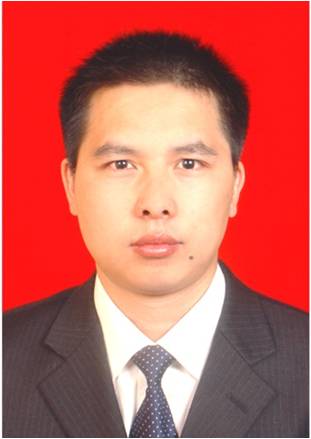 Shuang Zhou (周爽)合作论文数Cancer Institute, School of Medicine, Tongji University1
 Weihai Pang (庞维海)合作论文数College of Environmental Science and Engineering, Tongji University1




