Ammonia (NH3) volatilization has garnered significant concern owing to its detrimental environmental impact. Yet, the specific characteristics of NH3 volatilization and its associated microbial activity in response to various fertilizer management strategies in acidic soils remain poorly understood. To address this gap, we conducted a five-year field observation experiment by applying urea alone, as well as in combination with organic fertilizer (rapeseed cake or Vicia), to explore the effect of soil organic matter (SOM) mineralization on NH3 volatilization and to elucidate the contribution of ammonia oxidizers to NH3 volatilization in the acidic soil. The results revealed that the combined application of organic fertilizers and urea (ranging from 0.63 to 7.81 kg ha- 1) reduced NH3 volatilization compared with applying urea alone (ranging from 2.6 to 13.02 kg ha- 1). Vicia mulching was shown to be more effective in reducing NH3 loss. NH3 volatilization was positively regulated by CO2 emissions. Initially, organic fertilizers applications facilitated SOM mineralization, thereby enhancing NH3 volatilization during the first year. However, after five years of sustained application of these fertilizers, SOM mineralization became suppressed, consequently lowering the cumulative NH3 volatilization. Moreover, NH3 volatilization exhibited a significant negative correlation with the nitrification potential of ammonia-oxidizing bacteria (AOB), which became more abundant after organic fertilizer application. Our results underscore the suppressive effect of organic fertilizer application on NH3 volatilization through the reduction of SOM mineralization. Furthermore, it was elucidated that AOB was the primary drivers of nitrification, regulating the conversion of NH3 to NO3 - in the acidic soil.
Soil contains a substantial amount of organic carbon, and its feedback to global warming has garnered widespread attention due to its potential to modulate atmospheric carbon (C) storage. Temperature sensitivity (Q10) has been widely utilized as a measure of the temperature-induced enhancement in soil organic carbon (SOC) decomposition. It is currently rare to incorporate Q10 of CO2 and CH4 into the study of waterlogged soil profiles and explore the possibility of artificially reducing Q10 in rice fields. To investigate the key drivers of Q10, we collected 0-1 m paddy soil profiles, and stratified the soil for submerged anaerobic incubation. The relationship between SOC availability, microbial activity, and the Q10 of CO2 and CH4 emissions was examined. Our findings indicate that as the soil layer deepens, soil C availability and microbial activity declined, and the Q10 of anaerobic degradation increased. Warming increased C availability and microbial activity, accompanied by weakened temperature sensitivity. The Q10 of CO2 correlated strongly with soil resistant C components, while the Q10 of CH4 was significantly influenced by labile substrates. The temperature sensitivity of CH4 (Q10 = 3.99) was higher than CO2 emissions (Q10 = 1.78), indicating the need for greater attention of CH4 in predicting warming's impact on anaerobic degradation in rice fields. Comprehensively assessing CO2 and CH4 emissions, the 20-40 cm subsurface soil is the most temperature-sensitive. Despite being a high-risk area for C loss and CH4 emissions, management of this soil layer in agriculture has the potential to reduce the threat of global warming. This study underscores the importance of subsurface soil in paddy fields, advocating greater attention in scientific simulations and predictions of climate change.
Soil organic carbon (SOC) is the key indicator of soil fertility, and its stabilization plays a significant role in terrestrial carbon cycling. The turnover of SOC often interacts with iron due to its active redox characteristics, especially in paddy soils. Zero-valent iron (ZVI) is highly reductive, while how its addition controls SOC turning over in soil received less attention and knowledge gap exists on soil C dynamics. Therefore, we investigated the influence of ZVI addition on soil and straw C dynamics in submerged soil over a period of 30 days in an incubation study. The results showed that ZVI addition enhanced the endogenous Fe(III) reduction, and the exogenous ZVI was oxidized mostly to Fe(II), resulting in substantial Fe(II) accumulation, with the content 33.39-164.9% higher than that in non-ZVI treatments after incubation. At the initial stage of incubation during day 0-10, ZVI addition showed a stimulated effect on OC accumulation as both the cumulative CO2 emission and dissolved organic carbon (DOC) released were reduced in ZVI-amended treatments. This could be attributed to the O2 limitation on OC mineralization caused by the lower oxidation-reduction potential (ORP) by ZVI addition. Besides, endogenous Fe(III) reduction boosted by ZVI addition could release fresh surfaces on Fe mineral for C accumulation by forming organics-Fe mineral complexes. During the latter stage of day 10-30, ZVI addition showed an inhibited effect on OC accumulation as both the cumulative CO2 emission and DOC released were increased in ZVI-amended treatments, and CH4 emission was vigorous after a 10-day lag phase. Labile OC was liberated and vulnerable to decomposition by microorganisms due to the dissolution of OC-Fe(III) oxide complexes as Fe(III) reduction was enhanced by ZVI addition. Furthermore, CH4 emission was promoted by ZVI addition through lowering soil ORP and supplying electrons for methanogenesis. ZVI addition mitigated OC decomposition during the initial stage and stimulated that during the latter stage of incubation. Overall, ZVI addition increased straw C accumulation in the form of insoluble carbon (Caccumulated), but the different responses of C dynamic between days 0-10 and 10-30 led to a statistic insignificant positive effect. However, the association between iron oxides and OC was enhanced in ZVI addition treatments due to the anaerobic corrosion of ZVI, which may increase the stability of OC, indicating a potential to accumulate more straw C in the long term.
Paddy fields serve as significant sources of methane (CH4) emissions. The periodic flooding and draining in paddy soils induce alternating redox processes, leading to iron transformations and further influencing the production and oxidation of CH4. However, the relationships between CH4 production/oxidation and the concentrations/forms of iron oxides in rice paddies across different regions are largely unknown. Here we collected 26 paddy soil samples from various regions spanning from North to South China. We show that the CH4 production potential varies from 0.005 to 0.618 mg kg−1 d−1, which exhibits an overall trend of higher values in the south and lower values in the north. Moreover, the CH4 oxidation potential spans from 0.888 to 57.384 mg kg−1 d−1, showing no significant latitudinal trend. Highly weathered soils exhibit higher CH4 production potentials, mainly due to the high content of free iron oxides and the low reactivity of aged iron minerals. This hinders the protection of organic carbon (OC) by iron minerals, therefore increasing substrate availability for methanogenesis. In addition to the direct effect, iron forms also indirectly influence CH4 production and oxidation potentials by affecting soil pH, OC availability, and CH4-related microbial abundances. The coefficients of the indirect effect of iron forms on CH4 production and oxidation potential are 0.44 and 0.26, respectively, which are larger than that of the direct effects. Our research reveals the pivotal role of various iron forms in controlling CH4 production and oxidation processes in paddy soils, helping to expand the understanding of the effect of iron biogeochemistry on CH4 emissions in paddy soils and offering new perspectives for mitigating agricultural greenhouse gas emissions.
The role of iron (Fe) in soil organic matter (SOM) stabilization and decomposition in paddy soils has recently gained attention, but the underlying mechanisms during flooding and drying periods remain elusive. As the depth water layer is maintained in the fallow season, there will be more soluble Fe than during the wet and drainage seasons and the availability of oxygen (O2) will be different. To assess the influence of soluble Fe on SOM mineralization during flooding, an incubation experiment was designed under oxic and anoxic flooding conditions, with and without Fe(III) addition. The results showed that Fe(III) addition significantly (p < 0.05) decreased SOM mineralization by 14.4 % under oxic flooding conditions over 16 days. Under anoxic flooding incubation, Fe(III) addition significantly (p < 0.05) decreased 10.8 % SOM decomposition, mainly by 43.6 % methane (CH4) emission, while no difference in carbon dioxide (CO2) emission was noticed. These findings suggest that implementing appropriate water management strategies in paddy soils, considering the roles of Fe under both oxic and anoxic flooding conditions, can contribute to SOM preservation and mitigation of CH4 emissions.
The ongoing global warming is causing paddy soil to come under threat by hitherto unseen levels of carbon and nitrogen loss. The mechanism of soil organic matter (SOM) components and microbial metabolism responding to increased temperature is complicated; for example, the temperature sensitivity (Q10) of SOM decomposition in rice topsoil and subsoil remains poorly understood. In this study, 0-30 cm columns of undisturbed paddy soil were collected and incubated at 5, 15, or 25 degrees C for 117 days to investigate the effect of temperature on SOM decomposition and microbial characteristics in different soil layers. Results showed that Q10 of subsoil (15-30 cm) was more than twice that of topsoil (0-15 cm), indicating that SOM mineralisation in subsoil was facilitated more by temperature than that in topsoil. Warming promoted the decomposition of recalcitrant SOM and reduced the fluorescent intensity of dissolved organic matter. Increased temperature exerted no significant effect on microbial biomass, but it did enhance the relative abundance of oligotrophic bacteria and promote anabolism. Therefore, recalcitrant SOM decomposition driven by oligotrophic bacteria was more sensitive to warming than labile organic matter consumption mediated by copiotrophic bacteria. Our findings revealed the underlying mechanisms by which elevating temperature promoted SOM mineralisation, thereby emphasising the need to remain vigilant regarding the threat to carbon dynamics in deep soil poised by global climate changes.
Global temperature is projected to increase, which impacts the ecological process in northern mid- and high-latitude ecosystems, but the winter temperature change in ecosystems is among the least understood. Rice paddy represents a significant contributor to global anthropogenic CH 4 emissions and has a strong climate forcing feedback; however, the legacy effects of warming winter on CH 4 emissions in the subsequent growing season remain uncertain. Here, we conducted field and incubation experiments to determine the effects of winter soil temperature changes on CH 4 emissions in the subsequent growing season. First, in the 3 year field experiment, we continuously measured CH 4 emissions from the rice cropping system. The winter soil temperature and its variation showed significant differences over the 3 years. In the warming-winter year, the rice paddy accumulated less NH 4 + –N and more dissolved organic carbon (DOC) in the soil during winter, resulting in high CH 4 emissions. Second, we incubated the paddy soils without flooding at three temperatures (5 °C, 15 °C, and 25 °C) for 4 weeks to simulate warming winter, and subsequently incubated at same temperature (25 °C) under submerged conditions for 4 weeks to simulate growing season. The result was consistent with field experiment, increased soil temperature significantly increased soil DOC content and decreased NH 4 + –N content in ‘winter season’. The CH 4 emissions in the subsequent ‘growing season’ increased by 190% and 468% when previous incubation temperature increased 10 °C and 20 °C. We showed strong and clear links between warming winter and CH 4 emissions in the subsequent growing season for the first time, suggesting that CH 4 related processes respond not only to warming during the growing season but also in the previous winter. Our findings indicate that nonuniform global warming causes a disproportionate increase in climate forcing feedback to emit more CH 4 .
 Jinli Hu合作论文数6
 Wu Xian合作论文数6
 Ronglin Su (苏荣琳)合作论文数5
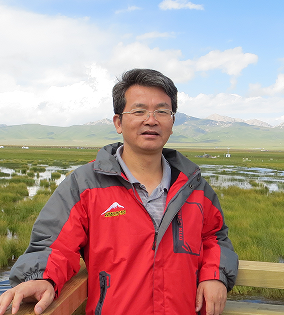 Ronggui Hu (胡荣桂)合作论文数华中农业大学资源与环境学院5
 Yan Wang (王砚)合作论文数College of Resources & Environment of Huazhong Agricultural University4Jinsong Zhao合作论文数3
 Shan Lin (林杉)合作论文数College of Resources & Environment of Huazhong Agricultural University3Hengbin Xiao合作论文数2
 Yue Luo合作论文数2
 Zheng Sun合作论文数Coll Resources & Environm, Huazhong Agr Univ2Muhammad Shaaban合作论文数Huazhong Agricultural University, Huazhong Agricultural University2
 Yanbin Jiang (姜炎彬)合作论文数College of Resources & Environment of Huazhong Agricultural University2Xiaolei Sun合作论文数1
 Jinshui Wu (吴金水)合作论文数Institute of Subtropical Agriculture, Chinese Academy of Sciences;University of Chinese Academy of Sciences1
 Yupeng Wu (伍玉鹏)合作论文数College of Resources & Environment of Huazhong Agricultural University1
 Jingsong Zhao (赵劲松)合作论文数College of Resources & Environment of Huazhong Agricultural University1K. Quenea合作论文数Laboratoire de Biogéochimie Isotopique, CNRS/INRA/UPMC1




