Feature matching is a necessary and important step for remote sensing image registration, intended to establish reliable point correspondences between two sets of features. In this paper, we propose a feature registration model based on local relative motion, which combines Gaussian kernel convolution with relative motion (GRM) vector to obtain better results by removing wrong matches and improving the inlier point accuracy. We first establish putative matching based on the similarity between local descriptors. Then, the preliminary hypothetical matching point set is filtered using consistency with nearest neighbors among the inlier points to obtain a more accurate motion vector, and to fit the real motion vector through the Gaussian convolution kernel. Finally, we find the displacement between the fitted motion vector and the matching generated motion vector. And combine the displacement with the optimization model to find the inlier point set. Experimental results show that our GRM method outperforms related work, achieving better matching results.
With the success of Vision Transformer (ViT), Transformer is being increasingly used for hyperspectral image (HSI) classification given its ability to extract global context dependencies. However, existing methods based on transformers tend to classify HSI in the traditional patch-wise manner. Thus, these methods cannot obtain true global features because the inputs of the model are local patches. To solve these problems, a hybrid convolution and ViT network (HCVN) is proposed for HSI classification. HCVN realizes the classification task from the perspective of semantic segmentation, and its input is the entire HSI, which makes it possible to obtain truly meaningful global features. By improving the original ViT, an HCV module is proposed, which enhances the ability of local structure characterization while extracting global features. The HCVN hybrid convolution layer and HCV module realize the extraction and fusion of local and global features. Finally, the dual branch network architecture is used to integrate the spatial and spectral features. Extensive experiments on two datasets verify the effectiveness of the proposed method.
Recently, deep learning methods using the attention mechanism have generated considerable research interest for hyperspectral image classification. In many existing attention-based methods, global pooling is widely used to obtaining the attention weights. In general, there are multiple categories in a hyperspectral image, so the operation of global pooling is too crude and inappropriate. To alleviate this problem, we propose a coarse-refined local attention network (CRLAN) for hyperspectral image classification. CRLAN is composed of two stages of fully convolutional networks. The first stage employs a coarse local attention fully convolutional network for hyperspectral image classification. In this stage, local parameters are roughly estimated according to the original size of the hyperspectral image. In the second stage, the prediction classification probability of the first stage network is applied to obtain the refined local attention features. Finally, for testing convenience, these two stages are integrated into an end-to-end network. Experimental results on two public data sets demonstrate that CRLAN is effective in improving classification performance.
Transfer learning is an effective way to alleviate the problem of insufficient samples in a hyperspectral image (HSI) classification. However, the present transfer learning-based methods usually transfer knowledge from a single source domain, such as the natural image domain. Therefore, these methods cannot simultaneously transfer spectral and spatial knowledge to the target domain in HSIs. Generally, the natural image has rich spatial structure and texture information, while the HSI has abundant spectral information. To better utilize the knowledge learned from natural image datasets and HSI datasets, we proposed a multimodal transfer feature fusion network (MTFFN) for HSI classification. In MTFFN, a dual-branch network structure is designed to transfer the two-modal knowledge from the natural image domain and the source HSI domain to the target domain in two branches, respectively. A multitask learning strategy is adopted to achieve feature fusion. The fused features are used to generate the final classification result. Moreover, a local attention mechanism is designed to extract more meaningful spectral features. Experiments on two public datasets show that the proposed method is effective ( https://github.com/HuaipYan/MTFFN ).
Given the imaging characteristics of synthetic aperture radar (SAR) images and the inherent speckle noise in them, scale-invariant feature transform based algorithms are unable to perform satisfactorily. To improve registration efficiency between SAR images, we propose a robust and efficient registration method with three main contributions. First, considering sudden dark patches appearing in SAR images, we propose the ratio of exponentially weighted average blocks to suppress the sudden dark patches and better adapt to different test images. This new operator called blocks of the ratio of exponentially weighted averages (ROEWA-B) divides the processing windows of ROEWA into blocks, which can not only reduce speckle noise but also retain more edge details compared to ROEWA when sudden dark patches appear. Second, for outlier removal, we present an approach using the minimum moment map to remove erroneous keypoints. Finally, based on the gradient location orientation histogram descriptor, we propose a novel multiscale circle descriptor, which combines scale change information to give weights to feature points at different scales. Experimental results for various thresholds and evaluations demonstrate the advantage and robustness of our method in registration.
Most traditional hyperspectral image (HSI) classification methods relied on hand-crafted or shallow-based descriptors, which limits their applicability and performance. Recently, deep learning has gradually become the mainstream method of HSI classification, because it can automatically extract deep abstract features for classification. However, it remains a challenge to learn more meaningful features for HSI classification from a small training sample set. In this paper, a 3D cascaded spectral–spatial element attention network (3D-CSSEAN) is proposed to solve this issue. The 3D-CSSEAN integrates the spectral–spatial feature extraction and attention area extraction for HSI classification. Two element attention modules in the 3D-CSSEAN enable the deep network to focus on primary spectral features and meaningful spatial features. All attention modules are implemented though several simple activation operations and elementwise multiplication operations. In this way, the training parameters of the network are not added too much, which also makes the network structure suitable for small sample learning. The adopted module cascading pattern not only reduces the computational burden in the deep network but can also be easily operated via plug–expand–play. Experimental results on three public data sets show that the proposed 3D-CSSEAN achieved comparable performance with the state-of-the-art methods.
 Jinye Peng (彭进业)合作论文数School of Electronic Information, Northwest University6
 Chengcai Leng (冷成财)合作论文数School of Mathematics, Northwest University5
 Jun Wang (王珺)合作论文数School of Electronic Information, Northwest University4
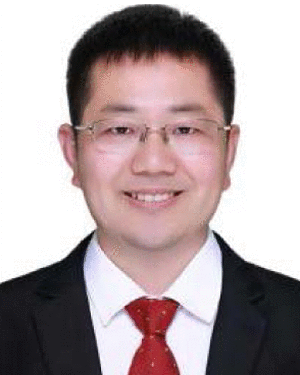 Erlei Zhang (张二磊)合作论文数College of Information Engineering, Northwest A&F University4
 Anup Basu合作论文数Computing Science Department, University of Alberta3
 Yameng Hong合作论文数1
 Kun Yan合作论文数1Kai Yu合作论文数Northwest Univ, Sch Informat Sci & Technol, Xian 710127, Peoples R China1
 Haida Liang合作论文数School of Science & Technology, Nottingham Trent University1
 Zhao Pei (裴炤)合作论文数School of Computer Science, Shaanxi Normal University1
 Irene Cheng合作论文数Univ. of Alberta1
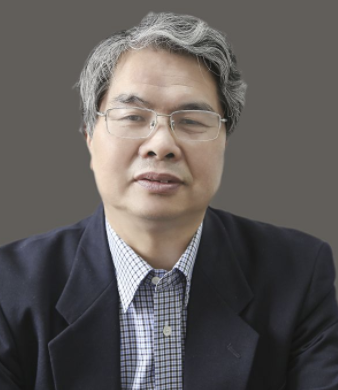 Licheng Jiao (焦李成)合作论文数School of Artificial Intelligence, Xidian University;Key Laboratory of Intelligent Perception and Image Understanding of Ministry of Education of China, Xidian University1
 Xinyue Zhang合作论文数Beijing Hospital of Traditional Chinese Medicine, Capital University of Medical Sciences Acupuncture Center1
 Lei Tang合作论文数Amazon1




