With the growing computational cost of large models, leveraging pre-trained models and applying fine-tuning have become standard practices in machine learning. While these approaches improve accessibility and efficiency, they also introduce new security and ethical risks. Models can be misused for prohibited or high-risk applications, even when publishers explicitly forbid such use. This paper proposes Backdoor-assisted Inversion for Abuse Verification (BIAV), a framework that enables model publishers to verify unauthorized or unethical model use. In BIAV, the publisher embeds one backdoor corresponding to predefined high-risk usage patterns and declares that the model must not be employed in these contexts. If a user violates this policy and fine-tunes the model on sensitive images aligned with the sensitive pattern, the publisher can reveal the sensitive images for verification. Unlike traditional backdoor attacks designed for malicious behavior, BIAV leverages the backdoor to trace misuse. In fine-tuning scenarios, such hidden triggers are nearly impossible for users to detect, as models behave normally on clean images. BIAV associates each backdoor with a sensitive concept (e.g., “fighter aircraft” in a model meant for civilian aviation). When fine-tuned on images containing such sensitive concept, these inputs disproportionately affect the parameter updates. By analyzing the weight changes before and after fine-tuning, the publisher can estimate the corresponding gradients and reconstruct the sensitive images via gradient inversion. Notably, BIAV remains effective under multi-epoch training and multiple-image settings where conventional inversion methods fail. Experiments show that BIAV successfully recovers sensitive, backdoor-tagged images from local fine-tuning data. These results demonstrate that BIAV provides a practical mechanism for verifying model misuse after deployment.
Watermarking has emerged as a key defense against the misuse of machine-generated images (MGIs). Yet the robustness of these protections remains underexplored. To reveal the limits of SOTA proactive image watermarking defenses, we propose HIDE SEEK (HS), a suite of versatile and cost-effective attacks that reliably remove embedded watermarks while preserving high visual fidelity.
Dataset distillation compresses a large real dataset into a small synthetic one, enabling models trained on the synthetic data to achieve performance comparable to those trained on the real data. Although synthetic datasets are assumed to be privacy-preserving, we show that existing distillation methods can cause severe privacy leakage because synthetic datasets implicitly encode the weight trajectories of the distilled model, they become over-informative and exploitable by adversaries. To expose this risk, we introduce the Information Revelation Attack (IRA) against state-of-the-art distillation techniques. Experiments show that IRA accurately predicts both the distillation algorithm and model architecture, and can successfully infer membership and recover sensitive samples from the real dataset.
Poisoning-based backdoor attacks pose significant threats to deep neural networks by embedding triggers in training data, causing models to misclassify triggered inputs as adversary-specified labels while maintaining performance on clean data. Existing poison restraint-based defenses often suffer from inadequate detection against specific attack variants and compromise model utility through unlearning methods that lead to accuracy degradation. This paper conducts a comprehensive analysis of backdoor attack dynamics during model training, revealing that poisoned samples form isolated clusters in latent space early on, with triggers acting as dominant features distinct from benign ones. Leveraging these insights, we propose Cluster Segregation Concealment (CSC), a novel poison suppression defense. CSC first trains a deep neural network via standard supervised learning while segregating poisoned samples through feature extraction from early epochs, DBSCAN clustering, and identification of anomalous clusters based on class diversity and density metrics. In the concealment stage, identified poisoned samples are relabeled to a virtual class, and the model's classifier is fine-tuned using cross-entropy loss to replace the backdoor association with a benign virtual linkage, preserving overall accuracy. CSC was evaluated on four benchmark datasets against twelve poisoning-based attacks, CSC outperforms nine state-of-the-art defenses by reducing average attack success rates to near zero with minimal clean accuracy loss. Contributions include robust backdoor patterns identification, an effective concealment mechanism, and superior empirical validation, advancing trustworthy artificial intelligence.
Transfer learning is devised to leverage knowledge from pre-trained models to solve new tasks with limited data and computational resources. Meanwhile, dataset distillation has emerged to synthesize a compact dataset that preserves critical information from the original large dataset. Therefore, a combination of transfer learning and dataset distillation offers promising performance in evaluations. However, a non-negligible security threat remains undiscovered in transfer learning using synthetic datasets generated by dataset distillation methods, where an adversary can perform a model hijacking attack with only a few poisoned samples in the synthetic dataset. To reveal this threat, we propose Osmosis Distillation (OD) attack, a novel model hijacking strategy that targets deep learning models using the fewest samples. Comprehensive evaluations on various datasets demonstrate that the OD attack attains high attack success rates in hidden tasks while preserving high model utility in original tasks. Furthermore, the distilled osmosis set enables model hijacking across diverse model architectures, allowing model hijacking in transfer learning with considerable attack performance and model utility. We argue that awareness of using third-party synthetic datasets in transfer learning must be raised.
Visual brain decoding reconstructs visual content perceived by a person from neural measurements such as fMRI, providing a computational approach to studying how visual information is represented in the brain. Recent multimodal representations and diffusion priors have improved reconstruction realism. However, visually plausible reconstructions may contain incorrect objects, attributes, or relations because a strong generative prior can complete content not sufficiently specified by the decoded representation. Conventional reconstruction metrics mainly assess the final image and may therefore obscure such semantic errors. We propose ConceptAlign, a counterfactual semantic alignment framework for visual brain decoding. ConceptAlign pools decoded visual tokens and projects them into a frozen text-embedding space, aligning the representation with the ground-truth caption while separating it from scene-preserving near-miss alternatives. Generated offline by an LLM, these alternatives modify one critical object, attribute, or relation while retaining the scene. A margin-based objective learns fine-grained semantic boundaries between the observed stimulus and plausible but incorrect interpretations without requiring LLM calls during inference. We introduce a systematic three-level semantic evaluation framework covering foundational discriminability, counterfactual description discrimination, and representational geometry. Experiments on the Natural Scenes Dataset show that ConceptAlign improves reconstruction measures, counterfactual semantic discrimination, and representational alignment over the MindEye2 backbone. Matched negative-source ablations, independent LLM and human-written alternatives, and human evaluation support the effectiveness and robustness of the supervision, with favorable patterns in fine-grained conflicts, limited-data decoding, and cross-subject structure.
Model extraction attacks currently pose a non-negligible threat to the security and privacy of deep learning models. By querying the model with a small dataset and using the query results as the ground-truth labels, an adversary can steal a piracy model with performance comparable to the original model. Two key issues that cause the threat are, on the one hand, accurate and unlimited queries can be obtained by the adversary; on the other hand, the adversary can aggregate the query results to train the model step by step. The existing defenses usually employ model watermarking or fingerprinting to protect the ownership. However, these methods cannot proactively prevent the violation from happening. To mitigate the threat, we propose QUEEN (QUEry unlEarNing) that proactively launches counterattacks on potential model extraction attacks from the very beginning. To limit the potential threat, QUEEN has sensitivity measurement and outputs perturbation that prevents the adversary from training a piracy model with high performance. In sensitivity measurement, QUEEN measures the single query sensitivity by its distance from the center of its cluster in the feature space. To reduce the learning accuracy of attacks, for the highly sensitive query batch, QUEEN applies query unlearning, which is implemented by gradient reverse to perturb the softmax output such that the piracy model will generate reverse gradients to worsen its performance unconsciously. Experiments show that QUEEN outperforms the state-of-the-art defenses against various model extraction attacks with a relatively low cost to the model accuracy. The artifact is publicly available at https://github.com/MaraPapMann/QUEEN.
Membership inference and model inversion attacks present a substantial risk to the security of neural network models and their training data. Current defense methods often rely on strategies such as noise addition or regularization. However, these approaches either prove ineffective against advanced attacks or fail to strike a satisfactory balance between fidelity and effectiveness. To tackle this challenge, we propose Stand-in Model Protection (SMP) as a countermeasure, establishing a fake target for potential adversaries. The name "SMP" reflects our approach of training a model on a synthetic dataset to serve as a stand-in for the original model. In SMP, we leverage a label-directed diffusion model (LDM) trained on the original dataset to generate the synthetic dataset. Subsequently, we employ the original classifier model to filter the synthetic data, discarding entries that do not meet a predefined confidence score threshold. Following this filtration process, we train the stand-in model using the filtered synthetic dataset and release it publicly, offering only label-only access. In this setup, the adversary can solely access the stand-in model, remaining unaware of the original model or dataset. Consequently, any attacks launched by the adversary are redirected towards the falsified target, namely the synthetic dataset. We demonstrate that the synthetic dataset achieves delta-PAC security if the Fr & eacute;chet inception distance between the synthetic and original datasets exceeds a predetermined threshold. In this context, delta-PAC security refers to the property whereby any hypothesis test aimed at determining the source dataset of a fixed number of samples drawn from either the synthetic or original dataset exhibits at least delta error probability.
In recent years, there has been significant advancement in the field of model watermarking techniques. However, the protection of image-processing neural networks remains a challenge, with only a limited number of methods being developed. The objective of these techniques is to embed a watermark in the output images of the target generative network, so that the watermark signal can be detected in the output of a surrogate model obtained through model extraction attacks. This promising technique, however, has certain limits. Analysis of the frequency domain reveals that the watermark signal is mainly concealed in the high-frequency components of the output. Thus, we propose an overwriting attack that involves forging another watermark in the output of the generative network. The experimental results demonstrate the efficacy of this attack in sabotaging existing watermarking schemes for image-processing networks, with an almost 100% success rate. To counter this attack, we devise an adversarial framework for the watermarking network. The framework incorporates a specially designed adversarial training step, where the watermarking network is trained to defend against the overwriting network, thereby enhancing its robustness. Additionally, we observe an overfitting phenomenon in the existing watermarking method, which can render it ineffective. To address this issue, we modify the training process to eliminate the overfitting problem.
Deep learning has been used to address various problems in a range of domains within both academia and industry. However, the issue of intellectual property with deep learning models has aroused broad attention. Watermarking, a proactive defense approach widely adopted to safeguard the copyright of digital content, is now sparking novel mechanisms for protecting the intellectual property of deep learning models. Further, significantly improved digital watermarking techniques have been developed to protect multimedia content, primarily images, with high efficiency and effectiveness. Yet, our current understandings of these two technical forefronts, i.e., deep learning model watermarking and image watermarking via deep learning, are unilaterally separated and application-oriented. To this end, we have undertaken a survey on emerging watermarking mechanisms in the two areas from a novel security perspective. That is, we have surveyed attacks and defenses in deep learning model watermarking and deep-learning-based image watermarking. Within the survey, we propose an objective taxonomy to unify the two domains, revealing their commonly shared properties with reference to design principles, functionalities, etc. Upon the taxonomy, a comprehensive analysis of attacks and defenses associated with the shared properties in both domains is presented. We have summarized the collected methods from a technical aspect and their advantages vs. disadvantages. A discussion of the joint characteristics and possible improvements of the methods are attached. Lastly, we have also proposed several potential research directions to inspire more ideas in these areas.
Image deep steganography (IDS) is a technique that utilizes deep learning to embed a secret image invisibly into a cover image to generate a container image. However, the container images generated by convolutional neural networks (CNNs) are vulnerable to attacks that distort their high-frequency components. To address this problem, we propose a novel method called Low-frequency Image Deep Steganography (LIDS) that allows frequency distribution manipulation in the embedding process. LIDS extracts a feature map from the secret image and adds it to the cover image to yield the container image. The container image is not directly output by the CNNs, and thus, it does not contain high-frequency artifacts. The extracted feature map is regulated by a frequency loss to ensure that its frequency distribution mainly concentrates on the low-frequency domain. To further enhance robustness, an attack layer is inserted to damage the container image. The retrieval network then retrieves a recovered secret image from a damaged container image. Our experiments demonstrate that LIDS outperforms state-of-the-art methods in terms of robustness, while maintaining high fidelity and specificity. By avoiding high-frequency artifacts and manipulating the frequency distribution of the embedded feature map, LIDS achieves improved robustness against attacks that distort the high-frequency components of container images.
DeepFakes are raising significant social concerns. Although various Despite various DeepFake detectors having been developed as countermeasures, their vulnerability under attacks remains further explorations. Recently, several attacks, such as adversarial attacks, have successfully fooled DeepFake detectors. However, existing attacks suffer from detector-specific designs, requiring detector-side knowledge, leading to poor transferability. Moreover, they only consider simplified security scenarios; but less is known about the attacking performance in complex scenarios where the capability of detectors or attackers varies. To fill the gap, we propose a novel, detector-agnostic trace removal attack. The attack removes all possible counterfeiting traces arising from the original DeepFake manufacture procedure to make DeepFakes essentially more "realistic" and thus able to defeat arbitrary or unknown detectors. Concretely, we first perform an in-depth DeepFake trace discovery, identifying three intrinsic traces: spatial anomalies, spectral disparities, and noise fingerprints. Then an adversarial learning-based trace removal network (TR-Net) involving one generator and multiple discriminators is proposed. Each discriminator is responsible for one individual trace representation to avoid inner-trace interference. All discriminators are optimized in parallel to enforce the generator to remove various traces simultaneously. We additionally craft heterogeneous security scenarios where the detectors are embedded with different levels of defense and the attackers own varying background data knowledge. The experimental results show that the proposed trace removal attack can significantly compromise the detection accuracy of six state-of-the-art DeepFake detectors while causing only a negligible degradation in visual quality.
Machine learning methods are employed in many areas, such as medical data research, for their efficient and powerful data mining ability. However, submitting unprotected data to a third party, which attempts to train a machine learning model, may suffer from data leakage and privacy violation when the third party is compromised by an adversary. Hence, designing a protocol to execute encrypted computation is inevitably indispensable. In order to address this problem, we propose protocols based on secure multi-party computation to train a support vector machine model privately. Utilizing the semi-honest adversary model and oblivious transfer, the proposed protocols enable the training of a non-linear support vector machine on the combined data from various sources without sacrificing the privacy of individuals. The protocols are applied to train a support vector machine model with the radial basis function kernel on HIV sequence data to predict the efficacy of a certain antiviral drug, which only works if the viruses can only use the human CCR5 coreceptor for cell entry. Benchmarked on synthesized data with 10 data sources that consist of randomly generated integers, containing 100 labeled samples each, the protocol has consumed online time 2991.386/166.912 ms on average in arithmetic/boolean circuits, respectively. The cross-validation has reached 0.5819 F1-score on average on training data with the optimized parameters, which have reached 0.7058 F1-score afterwards on testing data set, which consists of protein sequence of CCR5 and its subtypes. The complete training and testing process on the real data, which contains in total 766 samples having 924 features after encoding, has consumed 43.75/15.84 seconds on average using arithmetic/boolean circuits, respectively, which shows the effectiveness and efficiency of our protocols compared to some of the existing studies in the literature.
 Tianqing Zhu (朱天清)合作论文数School of Computer Science, China University of Geosciences10
 Wanlei Zhou (周万雷)合作论文数Faculty of Data Science, City University of Macau10
 Chi Liu合作论文数Faculty of Data Science, City University of Macau4
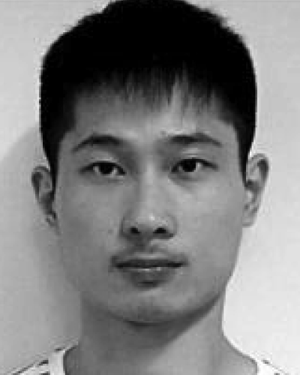 Lefeng Zhang合作论文数Zhongnan Univ Econ & Law, Sch Informat & Secur Engn, Changde, Peoples R China2
 Ali Burak Uenal合作论文数1
 Yuan Zhao合作论文数1
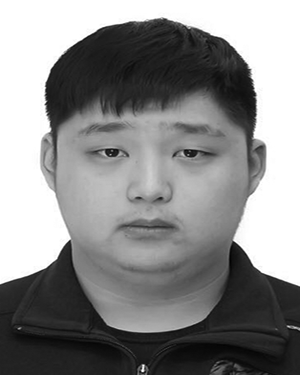 Minghao Wang合作论文数Sch Comp Sci, Univ Technol Sydney1
 Derui Wang合作论文数Faculty of Science, Engineering and Technology, Swinburne University of Technology, Hawthorn, VIC, Australia1
 Shuai Zhou合作论文数University of Technology Sydney1
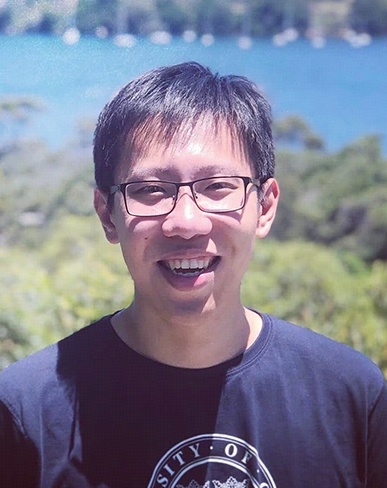 Jason Xue合作论文数CSIRO's Data611
 Xin Yu合作论文数1
 Jun Zhang合作论文数School of Science, Computing and Emerging Technologies, Swinburne University of Technology1
 Nico Pfeifer合作论文数Center for Bioinformatics, Eberhard-Karls University1
 Shui Yu合作论文数School of Computer Science, Faculty of Engineering and Information Technology, University of Technology Sydney1
 Mete Akgün合作论文数Tübitak UEKAE1
 Bo Liu合作论文数School of Computer Science, University of Technology Sydney1
 Shouling Ji (纪守领)合作论文数College of Computer Science and Technology, Zhejiang University;Network SystEm Security & PrivAcy Research Lab, Zhejiang University1




