为解决分布式电源及负荷不确定性导致的配电网电压越限问题,提出了柔性互联配电系统两阶段分布鲁棒机会约束优化调度方法.首先,基于Wasserstein理论确定源荷预测误差的不确定概率集合.其次,计及节点电压和支路功率的机会约束,建立基于分布鲁棒机会约束的柔性互联配电系统日前、日内两阶段电压优化模型.再次,对机会约束条件进行近似转化处理,应用混合整数随机二阶锥优化算法,以提高随机混合整数非线性模型的求解速度.最后,通过改进的IEEE 33节点系统验证模型和求解算法的有效性.算例表明,所提模型可有效提高柔性互联配电系统优化运行的安全性、经济性和鲁棒性,求解算法可有效提高计算效率.
As the typical provincial transmission power grid,Jiangsu power grid is faced with the pressures and challenges induced from system-integration of rapid developments of renewable energy during the energy transition period,which needs to be upgraded in "source-network-load-storage" and other aspects. Through the analysis of energy development from load,power supply,grid structure in Jiangsu,challenges faced by Jiangsu power grid such as insufficient transfer abilities of important transmission sections are put forward. Considering the large-scale integrated renewable energy and structure characteristics of Jiangsu transmission power grid,transmission-capacity demands of the Yangtze-river-crossing section during the "14th Five-Year Plan" and future are emphatically analyzed. Afterwards embedded DC transmission technology that both the transmission-and receiving-ends are located in Jiangsu AC network and distributed on both sides of the Yangtze River are proposed. Comparing with the traditional long-distance and high-capacity DC transmission technology constructed under the interconnection mode,the embedded DC transmission technology proposed in this paper usually uses the existing overhead transmission lines or existing/reserved AC cable channels to construct the AC-DC hybrid power grid in Jiangsu,greatly improving transmission capacities of important sections with limited transmission corridor spaces and power supply potential abilities of the existing power system to satisfy the development demands of Jiangsu power system.
静态电压稳定临界点能够为电压稳定评估和控制措施提供重要信息,为此,提出了一种快速计算静态电压临界点的方法,包括鞍结型分岔点和极限诱导分岔点.首先提出了一种线性特性较好的鞍结型分岔点逼近指标,然后利用大步长的连续潮流方法逼近临界点,检测极限诱导分岔,同时通过鞍结型分岔点逼近指标判断潮流解逼近鞍结型分岔点的程度.当满足切换条件时,从连续潮流法切换为直接法,为直接法提供了较好的计算初值,能够快速准确地计算分岔点.算例结果表明,较之连续潮流法,所提方法具有更高的计算效率.此方法避免了连续潮流法在鞍结型分岔点附近校正环节计算量较大的问题,同时也解决了分岔点直接计算方法在离鞍结型分岔点较远时的收敛问题,兼顾了连续潮流法和分岔点直接法两者的优点,具有精度和速度的双重优势,具有在线应用的潜力.
随着社会负荷不断增长、网架结构日益复杂,骨于网络潮流分布不均、电压支撑能力不足等问题已成为制约系统输送能力的重要因素.线间潮流控制器(Interline Power Flow Controller,IPFC)是一种潮流控制能力强大的新型FACTS装置,可应用于多条通道的潮流控制和暂态稳定控制,提升稀缺廊道资源的输电效率.考虑到目前缺乏对IPFC应用效果评估的理论研究和指导规划,文中提出了一种基于模糊层次分析的综合评判方法.从静态、暂态、动态等方面定义了电网柔性评估指标,建立评估层次结构,并给出各指标的权重赋值方法.并在大系统中选取关键输电断面,通过多组算例获取各指标的标度,评估IPFC在典型应用场景下的控制潜力、安全指标及投资价值.最后结合模糊分析给出IPFC方案的综合分值和整体评价,量化装置对系统的作用,为IPFC的规划应用工程提供一定理论依据和技术支撑.
随着市区220 kV变电站供电线路电缆规模逐步扩大,针对220 kV电网无功倒送严重,供电电能质量下降等问题,提出了一种适应线路电缆化的220 kV变电站无功容量配置方法.首先建立变电站高峰负荷/低谷负荷功率因数模型,然后按功率因数达标所需补偿的最低无功量为原则计算无功设备容量值,建立无功补偿功率因数模型检验不同负荷条件下无功补偿后的功率因数,最后通过迭代循环计算得到精度较高的无功设备容量.该方法计算简单快捷,可充分发挥无功设备最大经济效益,降低无功设备投资费用.
电力电子器件恒导纳建模是实现电压源型换流器小步长实时仿真的关键技术,伴随离散电路(associated discrete circuit,ADC)是目前最为广泛使用的电力电子器件恒导纳模型.针对ADC模型的虚拟功率损耗问题,该文提出一种基于负电阻补偿的开关器件恒导纳建模方法,该方法基于传统ADC模型,采用后退欧拉积分算法对模型进行离散化处理,通过在导通支路串联负电阻以补偿由ADC模型储能造成的虚拟功率损耗.基于三相两电平电压源型换流器拓扑,从最小化虚拟功率损耗和维持切换系统稳定的角度出发,提出所提模型的最优参数设计方法.最后,在PSCAD/EMTDC仿真软件进行仿真实验,实验结果表明,所提模型能够显著降低稳态下换流器的虚拟功率损耗,并提高暂态工况下的仿真精度.
In order to solve the problem of insufficient system operation flexibility caused by the strong uncertainty of renewable energy source and load, taking into account the power-energy timing adjustment characteristics of multi-terminal back-to-back VSC-HVDC and energy storage, an intraday rolling optimization program for flexible interconnected distribution network based on adaptive dynamic update strategy are proposed. First, in order to fully mobilize the flexible adjustment capabilities of energy storage, an energy storage flexibility margin evaluation index has been established. Secondly, energy storage charge and discharge power and state of charge constraints are treated as chance constraints, and adaptively updated in real time to automatically tighten or relax constraints according to the actual deviation probability between the violation level and the desired level during the rolling optimization stage. Then, the goal planning and second-order cone programming are used to process and solve the model to improve the efficiency of the solution. Finally, the results of calculation examples show that the proposed model and algorithm can effectively improve the utilization rate of energy storage, thereby ensuring the safe, flexible and economic operation of the system.
随着电网的复杂互联,电力系统中的功角失稳和电压失稳现象常常同时出现,相互耦合.针对难以识别主导失稳模式、并根据主导失稳模式采取有针对性的控制措施的问题,该文分析了这两种稳定形态的耦合机理,提出耦合强度的量化评估指标.分析暂态功角失稳和暂态电压失稳耦合特性在不同网络结构下的差异性,并分析得到功角不稳定与电压不稳定现象相互耦合的两种机理:一种机理与负荷和发电机的动态特性有关,另一种机理与负荷功率和网络的功率传输能力有关.基于上述两类耦合机理,提出对应的两个耦合强度的量化指标y1和y2.通过4个仿真算例,分别在非耦合情况下、两种不同的耦合情况下以及多机系统的情况下,验证耦合机理分析的正确性与指标体系的合理性.同时,理论分析和仿真结果表明,当两种稳定形态耦合性较强时,有必要进一步分析系统的主导稳定性模式.
为了提高互联配电网多端背靠背柔性直流系统的直流电压控制精度,增强抗干扰能力,提出一种基于深度强化学习的直流电压控制方法,将深度学习神经网络与确定策略梯度融合,实现连续动作搜索,自适应调整电压控制策略.首先,建立多端背靠背柔性直流系统数学模型,分析直流电压控制的非线性和不确定性特征;然后,给出了基于深度强化学习的直流电压控制算法框架,设计了动作与状态空间、奖励函数、神经网络和学习流程;最后,通过仿真分析发现,相比传统比例-积分(PI)控制方法,所提方法具有更好的动静态性能,有效提高了直流电压的控制精度,减小了扰动下直流电压波动和功率超调,缩短了直流电压和功率的恢复稳定时间.
工业园区具有经济基础好、能源消耗大、产业集聚等特点,是构建灵活多样、低碳高效的综合能源服务体系的“理想试验田”.从物理层、信息层、服务层3个层面阐述了当前工业园区综合能源服务系统架构.从促进清洁能源消纳、能源需求优化、能源效率提升以及市场效益挖掘4个方面探讨了适合园区开展的综合能源服务商业模式,并从推动市场公平竞争、开放共享发展的角度提出了相关政策建议,为探索建立园区综合能源服务商业模式提供参考.
从保证电网安全的角度简要介绍了高受电比例受端电网的输电网网架结构需要具备的能力和满足的要求,对各电压等级电网在受端电网输电网网架结构中的定位与规划思路进行了梳理。考虑到在受端电网中存在着对受电能力影响显著的关键断面,提出了此类断面的优选指标和提升其受电能力的加强策略。考虑到受端电网在构建特高压环网的进程初期会出现与输电网网架结构密切相关的多级电磁环网问题,提出了电磁环网解环的基本原则。总结得出了高受电比例受端电网的各级输电网优化及协调发展的技术要求,并将其应用于江苏电网的远景输电网网架规划与优化,有效地提高了未来江苏电网乃至华东电网的受电能力和安全稳定运行裕度。
In order to improve the calculation accuracy,speed and stability for parameter identification in nonlinear models of hydro-turbine system,which the elastic water-hammer model is considered,the improved biogeography-based optimization algorithm based on orthogonal learning (IOLBBO) is proposed.The method of good point set is used to initialize characteristic variables of habitats.The elitism strategy is introduced to improve the efficiency of algorithm's operation,and orthogonal learning (OL) strategy is brought to enhance the ability of algorithm's global optimization.Based on the comparison of test data with IOLBBO,genetic algorithm,particle swarm optimization,and quantum particle swarm optimization,the conclusion can be obtained that the IOLBBO algorithm can be used for parameter identification of turbine system's nonlinear model,and it has advantages of faster convergence and higher precision,which provides a new way for parameters identification of power system.
An introduction is made in this paper to a 500 kV unified power flow controller (UPFC) demonstration project,which is implemented in Suzhou southern power grid and is scheduled to be put into operation by the end of 2017.The UPFC project will be of the largest power capacity and the highest AC voltage level of all UPFC projects in the world.The overview of the Suzhou southern power grid and its existing problems are firstly introduced,and the difficulties for implementing conventional solutions (e.g.upgrading existing transmission lines and constructing new transmission lines) are also addressed.Then,the UPFC solution are discussed,including the project scheme,the effectiveness of the solution,the implementation difficulties and the investment cost.Finally,the economic and social benefits of the 500 kV UPFC project are demonstrated though technical and economic comparisons.The analysis shows that the UPFC project,which has smaller implementation difficulties and better economic benefits than conventional solutions,can effectively alleviate the operation problems of the Suzhou southern power grid,such as limited power supply capacity,insufficient reactive power support,and high risk of commutation failures.The project is of demonstration value to the application of UPFC in higher voltage projects.
Based on the research of low-frequency oscillation damping by UPFC (Unified Power Flow Controller),DTA(Damping Torque Analysis) method is extended to the multi-machine power system with UPFC.According to the mechanism of damping torque generation,transmission and distribution of stabilizer,DTA index is adopted to select the best damping channel of UPFC.A four-generator two-area system is taken to verify its rationality.Since multiple stabilizers can be added to multiple damping channels of a UPFC for suppressing multiple oscillation modes,a method of coordinated design is proposed for the multiple stabilizers of a UPFC,which selects multiple damping channels of UPFC according to DTA index,applies HookeJeeves method to coordinate the equivalent damping coefficients,and uses the phase compensation method to design the parameters of multiple stabilizers.Simulative result shows that,the proposed method can effectively damp multi-mode oscillations(including inter-area mode and local mode).
In this paper,a control strategy of STATCOM sub-synchronous oscillation controller was proposed based on electrical damping calculation.Firstly,the simplified formula of electromagnetic torque and electrical damping used in power system including STATCOM was derived.And the effects of the voltage regulating function of STATCOM on sub-synchronous damping were analyzed.The damping near the resonant frequency could be complicated by the voltage regulation which would bring difficulties to the design of STATCOM controller.Therefore,the influence of the torsional frequencies was taken into account,and the comprehensive optimal phase compensation was used as the object based on the formula of electrical damping.Thus,the design of the controller parameters was transformed into an optimization problem,and genetic algorithm was used to solve it.Finally,the validity of the controller is proved by the eigen-value calculation and electromagnetic transient time domain simulations.
首先介绍了江苏电网及区外来电的概况.针对区外来电的运行现状,从总体受电容量、实际调节特性、电力平衡等角度阐述了区外来电入苏后所带来的问题.在简要分析影响区外来电消纳的主要因素的基础上,对现有区外来电的消纳能力和应对未来区外来电增长的规划方案进行了分析研究.通过分析发现,2020年江苏电网的规划网架可以满足高峰时段受入55 GW区外来电的需要,但需考虑在特高压落点附近配置一定容量的动态无功补偿装置,加强落点附近500 kV网架建设以及优化布局省内事故备用容量.与此同时,规划的江苏2020年主网架能够满足N-2故障或省内一条直流发生双级闭锁故障时安全稳定运行的要求.
Large-scale smart charging stations can effectively satisfy and control the charging demands of tremendous plug-in electric vehicles (PEVs). But simultaneously their penetrations inevitably induce new challenges to the operation of power systems. In this paper, damping torque analysis (DTA) was employed to examine the effects of the integration of smart charging station on the dynamic stability of the transmission system. While the discussion has focused on the damping of power system oscillations in the transmission system, and the smart charging station in the distribution system can be considered as an equivalent one with the proper control connecting to the specified bus. A single-machine infinite-bus power system with a smart charging station which denoted the equivalent of several ones was used for analysis. From the results obtained from DTA, it reveals that in the view of the damping ratio, the optimal charging capacity is better to be considered in the design of the smart charging station. Under the proposed charging capacity, the power system can achieve the best maintained dynamic stability, and the damping ratio can reach the crest value. According to the established Phillips-Heffron model in the previous analysis, the phase compensation method was utilized to design the stabilizer via the active and reactive power regulators of the smart charging station respectively. With the help of the stabilizers, damping of the system oscillation under certain operating conditions can be significantly improved, and the power oscillation in the tie-line can be suppressed more quickly. The results of the case study verified the conclusions.
 Junhui Huang合作论文数7XIE Zhenjian (谢珍建)合作论文数3Weiyuan Wang合作论文数3XIN Shujun (辛蜀骏)合作论文数3Le Ge (葛乐)合作论文数3
 Chongru Liu (刘崇茹)合作论文数North China Electric Power University3Wanchun QI (祁万春)合作论文数2WAN Wenwen (万文文)合作论文数2LI Xiao (黎晓)合作论文数2Wenjia Zhang合作论文数2WenTao Sun (孙文涛)合作论文数武汉大学2
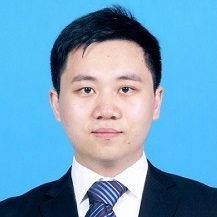 Le Zheng (郑乐)合作论文数School of Electrical and Electronic Engineering, North China Electric Power University2Zhenjian XIE (谢珍建)合作论文数1Xingning Han (韩杏宁)合作论文数1Ge Yi合作论文数1Zhen-jian XIE (谢珍建)合作论文数1GUO Zhaohui (郭朝辉)合作论文数1Gang CHEN (陈刚)合作论文数1Mengshuang Feng合作论文数1Quanquan Wang合作论文数1Hangwei Ji (季杭为)合作论文数1HOU Yanqi (侯延琦)合作论文数1Fanjun MENG (孟繁骏)合作论文数1Boyang GAO (高伯阳)合作论文数1Zhihuang SUN (孙志凰)合作论文数1Wei HU (胡伟)合作论文数1Liang CHENG (程亮)合作论文数1XU Zhiwei (徐志伟)合作论文数1
 Pengcheng Song合作论文数1
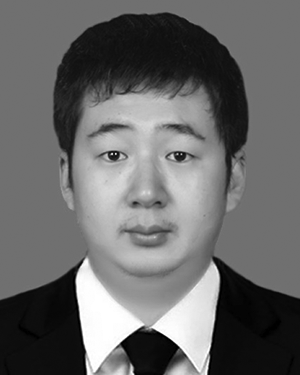 Bixing Ren合作论文数State Grid Jiangsu Electric Power Co. Ltd. Research Institute, Nanjing, China1Chao HAN (韩超)合作论文数1Jun ZHU (朱君)合作论文数1Zhang Yan (张琰)合作论文数1HaiQian Wang (王海潜)合作论文数1ZhiWei Wang (王之伟)合作论文数1DaiGang Liu (刘代刚)合作论文数1Yi Ge (葛毅)合作论文数1JinShan Luo (罗金山)合作论文数1Qiang Sun (孙强)合作论文数1Lin Yang (杨林)合作论文数1Qiyu Chen合作论文数1
 Xin Zhao (赵欣)合作论文数School of Electrical Engineering, Southeast University1
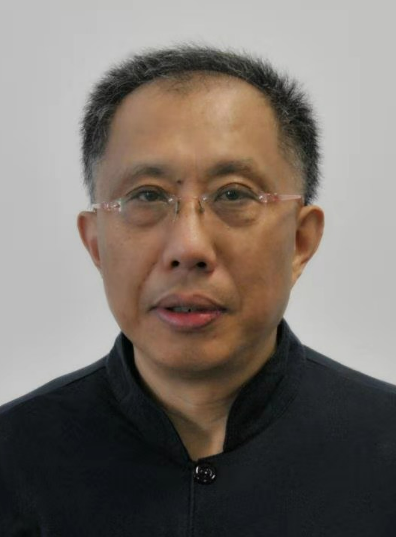 Haifeng Wang (王海风)合作论文数College of Electrical Engineering, Sichuan University1
 Zhendong Wan (万振东)合作论文数1
 Jie Zhao (赵洁)合作论文数School of Electrical Engineering and Audomation, Wuhan University1
 Xi Wu (吴熙)合作论文数School of Electrical Engineering, Southeast University1
 Zheng Xu (徐政)合作论文数College of Electrical Engineering, Zhejiang University1
 Tim Littler合作论文数Energy Systems Research Group, Queen’s University1




