Outlier detection is a critical process in data engineering. Leveraging machine learning techniques for outlier detection enables the handling of large-scale, high-dimensional data, enhancing detection accuracy and efficiency. Traditional methods typically model data directly in the data space. However, these approaches often struggle to accurately distinguish inliers from outliers when dealing with complex data distributions. GMM can flexibly fit complex, multi-peak distributions using multiple Gaussian components and effectively identify outliers through probabilistic modelling. We introduce a novel outlier detection approach, which improves detection efficiency by indirectly modelling data in a latent space using a Gaussian Mixture Model (GMM).This approach aligns with a growing trend in AI, notably advocated by Yann LeCun, that emphasizes decision-making and learning in latent representation spaces, instead of depending on raw token or feature spaces. For this, we design an encoder-decoder neural network with a GMM as the decision layer, enabling effective identification of outliers through probabilistic modelling. Our method not only addresses practical needs in anomaly detection but also contributes to this broader trend of latent space modelling as a step toward more autonomous and generalisable learning systems.Extensive evaluations on public and proprietary datasets demonstrate that our method outperforms existing approaches, including DAGMM and ECOD, highlighting its superiority in accuracy.
The acceleration of automated scientific discovery has been fundamentally bottlenecked by the epistemic gap between the semantic reasoning of large language models (LLMs) and the deterministic physics of mammalian biology. While recent multi-agent frameworks have achieved autonomous hypothesis generation and in vitro experimental analysis, they lack the mathematically grounded, causal constraints required for multi-scale clinical translation. Furthermore, while algorithmic clinical digital twins successfully forecast biological states, they rely on black-box latent spaces, sacrificing mechanistic interpretability for predictive accuracy. Here, we introduce the Multi-Scale Autonomous Discovery Engine (Octopus), a neuro-symbolic architecture that unites zero-leakage, local LLM swarms with strict algorithmic physics engines. Rather than stopping at isolated cellular assays, the system autonomously generated therapeutic hypotheses against in vitro CRISPR dependency data (CCLE), traced dynamic causal cascades using mechanistic interpretability (XGBoost SHAP vectors), and orthogonally translated the emergent vulnerabilities in silico to predict in vivo mammalian tumor trajectory (PDX) and human overall survival (Marisa). In a fully unsupervised sweep of colorectal cancer transcriptomes, the pipeline autonomously identified Insulin-like Growth Factor 2 (IGF2) as a strictly bounded vulnerability to 5-Fluorouracil resistance. The discovery maintained significance after rigorous Benjamini-Hochberg false discovery rate correction (q=0.0292, Log-Rank p=0.0007 ) and successfully predicted significant in vivo tumor volume shrinkage in an independent mouse cohort (Mann-Whitney p=0.0373). By bridging the chasm between multi-agent reasoning and mathematically bounded clinical survival, this framework establishes a verifiable, zero-leakage paradigm for automated, end-to-end biomedical discovery.
Multimodal LLMs that recognise events reliably still fail to say when they happen. Prompted for timestamps, strong VLMs reach as little as 3.8% R@0.5 on Charades-STA, and 77 to 80% of their wrong predictions carry low output entropy: the models are confidently wrong, and entropy-based error detection stays below a random classifier. We show that this failure lives in the task interface, not in perception. Holding the weights fixed, replacing timestamp regression with a coarse-to-fine scan of binary questions, whose first-token probabilities are consumed only as a ranking, raises R@0.5 by 28 to 50 points across four frozen backbones. The residual failures decompose into two measurable axes: a perception axis that moves with the backbone, and a geometry axis that is analytically predictable from the ratio of the output-window and event widths. FV-Action, the training-free method built on this analysis, reaches 56.8% R@0.5 on Charades-STA, above the same backbone's native grounding pipeline and the strongest training-free result on this benchmark; it surpasses every TVG-trained model evaluated zero-shot on TACoS, and improves over direct prediction on ActivityNet Captions and QVHighlights, with no temporal supervision at any stage.
Idea and hypothesis generation are creative processes that demand a significant level of reasoning. Methods such as brainstorming, analytical reasoning, inductive reasoning and other forms of reasoning have proven useful in advancing research in this domain. Machine learning techniques have been widely investigated to address these challenging tasks. However, they are limited and have insufficient reasoning required for these tasks, making the emergence of language models reignite research in this direction. Large language models (LLMs) have debuted as the current state-of-the-art for achieving impressive generative tasks, and to support language understanding. Models such as the BERT, BARD, GPT and LLaMa have architectural layouts which are mostly transformer network based. These models headline impressive results in downstream tasks such as text classification, sentiment analysis, language inference, question answering, text summarization and named entity recognition among others. However, the need to adapt these models to the emerging downstream tasks of idea and hypothesis generation have uncovered a new research opportunity. In this study, systematic literature review is carried out to provide understanding on how LLMs have been applied to the classical downstream tasks and to then motivate adaptation of LLMs to idea and hypothesis generation. Furthermore, the study examines techniques applied to customization and knowledge distillation with the aim of contextualizing these methods to solve idea and hypothesis generation. We then explored the limitations of LLM-based research efforts to idea and hypothesis generation. A detailed and technical discussion of the findings of the study is presented, and we provide a high-level novel conceptual framework to describe and summarize our findings. Also, potential insights to combining knowledge graphs, causal inference, logic reasoning and LLMs distillation in idea and hypothesis generation are discussed. Finally, challenges in these research areas on adaptation of LLMs to idea and hypothesis generation are discussed.
Laser-induced breakdown spectroscopy (LIBS) and near-infrared spectroscopy (NIRS) are complementary spectroscopic techniques that provide elemental and molecular fingerprint information of materials, respectively. The integration of LIBS and NIRS enhances analytical accuracy and broadens application potential, attracting growing interest in scientific and industrial communities. However, existing data fusion methods for LIBS and NIRS often process each modality separately, neglecting cross-modal correlations and leaving the intrinsic connections between atomic emission lines and molecular absorption bands unexplored. To address this limitation, we propose a bidirectional cross-attention feature fusion network (Bi-CAFF), a novel data fusion method for improving quantification accuracy in LIBS-NIRS fused data analysis. Bi-CAFF utilises a bidirectional cross-attention mechanism to establish interactive feature correlations between LIBS and NIRS modalities. Importantly, we interpret these interactions based on physical knowledge, revealing a meaningful relationship between LIBS atomic emission lines and NIRS molecular absorption bands. Additionally, we introduce spectral feature distillation (SFD), where a student network trained on NIRS data learns refined features from a LIBS-based teacher model. This approach enhances the quantification accuracy of portable NIRS systems while preserving their cost-efficiency and field-deployment capabilities. Evaluations on industrial datasets show that Bi-CAFF outperforms baseline fusion methods, reducing mean absolute error (MAE) by 12.1-60.3 % and root-mean-square error (RMSE) by 12.4-54.1 %. Moreover, SFD achieves MAE and RMSE reductions of 6.6-49.2 % and13.1-46.7 %, respectively, compared to standalone NIRS-based models. Together, these innovations advance the state-of-the-art in machine learning-assisted chemical analysis, laying the groundwork for a new paradigm in multimodal spectral data analysis.
We study multimodal learning under missing modalities, with particular motivation from bioscience applications in which heterogeneous modalities are often only partially available when decisions need to be made. We propose Latent World Recovery (LWR), a framework built on two key ideas: (i) modality-specific embeddings from different modalities are aligned in a shared latent space, and (ii) a unified representation is constructed by fusing only the embeddings of the modalities that are actually available at both training and inference time. Rather than imputing missing modalities or requiring a fixed modality set, LWR treats each modality as a partial perception of an underlying latent state and performs availability-aware representation learning directly from the observed modalities. This combination of neighbor-based latent alignment and availability-aware modality fusion enables robust multimodal prediction under partial observation, while avoiding error propagation from explicit reconstruction of missing modalities. We evaluate the proposed framework on real-world incomplete multi-omics benchmarks and demonstrate that it provides an effective approach to downstream tasks such as cancer phenotype classification and survival prediction.
Understanding directed temporal interactions in multivariate time series is essential for interpreting complex dynamical systems and the predictive models trained on them. We present Causal-INSIGHT, a model-agnostic, post-hoc interpretation framework for extracting model-implied (predictor-dependent), directed, time-lagged influence structure from trained temporal predictors. Rather than inferring causal structure at the level of the data-generating process, Causal-INSIGHT analyzes how a fixed, pre-trained predictor responds to systematic, intervention-inspired input clamping applied at inference time. From these responses, we construct directed temporal influence signals that reflect the dependencies the predictor relies on for prediction, and introduce Qbic, a sparsity-aware graph selection criterion that balances predictive fidelity and structural complexity without requiring ground-truth graph labels. Experiments across synthetic, simulated, and realistic benchmarks show that Causal-INSIGHT generalizes across diverse backbone architectures, maintains competitive structural accuracy, and yields significant improvements in temporal delay localization when applied to existing predictors.
The growing demand for rapid, on-site chemical analysis has driven the development of cost-effective smartphone-based sensors. However, such methods are typically confined to the visible range and lack spectral selectivity and chemical specificity, which limits their accuracy and reliability for elemental quantification and mapping. In this work, we propose a laser-induced breakdown spectroscopy (LIBS)-enhanced smartphone video imaging (LE-SVI) approach that leverages LIBS-derived spectral fingerprints to overcome these limitations. By establishing a cross-modal association between videos and spectra, LE-SVI transfers spectral knowledge to the imaging modality, allowing colour patterns to be interpreted as compositional information. During inference, only a smartphone is required for rapid measurements, yielding elemental content predictions and spatial distribution maps. Experimental results demonstrate that LE-SVI significantly improves the accuracy of NiO content prediction in composite samples compared to a smartphone-only benchmark, with the coefficient of determination increasing from 0.957 to 0.979 on the test set. Furthermore, the method enables fast and high-resolution mapping of relative Mg content in rock samples by utilising the reconstructed LIBS characteristic line intensity. LE-SVI offers a cross-modal knowledge transfer strategy to compensate for the hardware limitations of smartphone-based sensors, enhancing their analytical performance beyond conventional constraints. It achieves an advantageous trade-off between speed, cost and accuracy, providing a high-throughput and reliable solution for rapid elemental analysis in field-deployable applications.
When retrieving a person from a video archive by voice and face, should the system be multimodal or not? In real-world broadcast archives, unlike curated benchmarks, a target may be heard but unseen, seen but unheard, or both. Fusing scores from an absent modality injects noise, degrading precision below the best unimodal system. We propose a query-adaptive framework that detects active modalities via cross-modal score consistency: when both modalities are active, files retrieved by one also score highly on the other; this agreement breaks down when a modality is absent. Classifiers driven by these cross-modal features achieve 89
Few-shot fine-grained image classification is a challenging task as it requires the ability to detect minor variations across subclasses. Metric-based methods are some of the most popular methods for dealing with this issue, but they have the problems of spatial information loss and local feature misalignment. Feature reconstruction-based methods can partially mitigate these two problems and exhibit substantial potential for fine-grained image classification. However, we found and verified that feature reconstruction-based methods have two unresolved difficulties, including inadequate extraction of discriminative local information and insufficient fitting capability when reconstructing numerous support set features with limited query set features. These difficulties are key obstacles to further improving the performance of few-shot fine-grained image classification. Therefore, we propose the enhanced local homogenization and reconstruction network (ELHRN) for few-shot fine-grained image classification. The proposed method includes three main modules: the local homogenization and distinction module (HDM) to learn more subtle discriminative local features; the double-layer cross-reconstruction module (DCM) to increase the hierarchy and complexity of feature reconstruction, effectively enhancing feature diversity; and the branch weighting module (BWM) to adjust the weights of mutual reconstruction between the support set and query set, thereby mitigating the issue of insufficient fitting capability when reconstructing numerous features with a limited number of features. Extensive experiments are conducted on five benchmark fine-grained datasets, and the results demonstrate that ELHRN outperforms state-of-the-art methods. The code is available at https://github.com/sausage0611/ELHRN.
Positive and unlabeled (PU) learning aims to develop algorithms for classification in scenarios with positive and unlabeled samples. However, existing PU learning still faces challenges including relying on specific assumptions, ignoring global connections between data features and labels, and insufficient adaptability to class imbalance scenarios. To this end, this paper proposes a PU learning algorithm based on kernel alignment, namely PUKA. The algorithm introduces an implicit label function in the Reproducing Kernel Hilbert Space (RKHS), and achieves the global inference of implicit labels by maximizing the alignment degree between the kernel matrix representing the similarity of the feature space and the implicit label matrix representing the similarity of labels. To adapt to different class distributions, PUKA designs two models. For balanced class scenarios, Model 1 constrains the predicted mean of the label function to be close to zero, ensuring that model predictions globally cancel out positive and negative values, thereby eliminating prediction bias. For imbalanced class scenarios, Model 2 constrains the predicted mean of the label function to be significantly biased toward the majority class, adapting to data skewness. Both models are formulated as optimization problems in the RKHS based on the kernel representation theorem, incorporating the aforementioned constraints, and solved using quadratic programming (QP). Theoretical analysis establishes the computational complexity of the two models and provides generalization error bounds. Experimental results demonstrate that the PUKA algorithm effectively improves the classification performance of PU learning from a novel perspective, particularly exhibiting competitiveness in class imbalanced scenarios.
Effective detection of financial market manipulation is critically impeded by three fundamental challenges: signal concealment, data sparsity, the boundary vagueness. This paper introduces SD-FMM, a Self-supervised Detection framework tailored for Financial Market Manipulation that addresses these fundamental challenges through three innovative components. First, our Amplification Component extracts and fuses domain-specific features grounded in market microstructure theory, substantially amplifying subtle manipulation signals that would otherwise remain concealed. Second, our Synthesis Component generates realistic synthetic anomalies through few-shot learning and dynamic frequency analysis using Discrete Wavelet Transform, enabling self-supervised training without relying on scarce labeled data. Third, our Detection Component employs a novel Dual-branch Contrastive Detection Neural Network that enhances sensitivity to manipulation boundaries through local contrastive learning and holistic modeling of temporal dependency. We evaluate SD-FMM using a newly collected proprietary dataset of 25 Chinese stock market manipulation cases and a public benchmark of 338 cryptocurrency pump-and-dump schemes. Extensive experiments against 12 state-of-the-art baselines demonstrate the significant superiority of SD-FMM. On the stock dataset, our method outperforms the second-best baseline by 47.61% in average precision metrics and reduces the false alarm rate by 47.46%. Meanwhile, it shortens the mean detection delay by 25.05%, enabling swift regulatory intervention. On the cryptocurrency dataset, SD-FMM exhibits remarkable sensitivity, achieving a Hit Rate@3 of 83.13% and Hit Rate@20 of 97.93%. Overall, our framework offers a generalized solution that can not only accurately distinguish manipulations from normal trading but also deliver a faster and stronger response to manipulations across diverse financial markets.
Precision oncology is currently limited by the small-N, large-P paradox, where high-dimensional genomic data is abundant but pharmacological response samples are sparse. While deep learning achieves predictive accuracy, it frequently fails to provide the mechanistic clarity required for clinical adoption. We present the Contextual Invertible World Model (CIWM), a Neuro-Symbolic Agentic Framework that bridges this gap by integrating a quantitative machine learning emulator with a Large Language Model reasoning layer. Utilising a stringently curated, high-fidelity data engineering pipeline on the Sanger GDSC dataset (N=83), we isolate true biological signals from in vitro artifacts to establish a rigorous baseline predictive correlation for complex transcriptomics (r=0.268). Through Inverse Reasoning, we perform in silico CRISPR perturbations across the colorectal landscape. The framework autonomously overturns classical mechanistic assumptions, identifying a hierarchical dominance of mutant KRAS over the APC/Wnt-axis in driving 5-fluorouracil resistance (Δ=-0.0469) via a "KRAS Shield" mapped to MAPK/PI3K networks. Furthermore, the agentic layer identified a "PIK3CA Paradox", revealing that repairing PIK3CA inadvertently increases chemoresistance (Δ=+0.0085) by triggering a compensatory feedback loop that hyperactivates the dominant MAPK survival pathway.
Traditional fusion methods often encounter challenges related to temporal misalignment and signal variability, resulting in suboptimal performance. This study proposes a novel hybrid fusion model that integrates early and late fusion strategies to capture low-level feature interactions and high-level modality-specific abstractions. Advanced feature extraction techniques are employed to ensure robust multimodal representation: visual features are extracted using Scale-Invariant Feature Transform (SIFT) and Local Binary Patterns (LBP), while audio features are processed using Spectral Centroid and Pitch-Synchronous Speech Features. Additionally, the Ridgelet Transform enhances spatial-temporal representation. A preprocessing pipeline further reduces data noise, applying Different Resolution Total Variation (DRTV) for visual noise suppression and Mel Frequency Cepstral Coefficients (MFCCs) for audio feature extraction. Furthermore, we incorporated an xLSTM-based hierarchical multi-scale temporal encoder in the audio branch and implemented an attention-based fusion stream with Feature-wise Linear Modulation (FiLM) for dynamic alignment based on different modalities. Class imbalance is addressed by applying SMOTE in the latent feature space and using class-weighted cross-entropy loss to improve model sensitivity to minority classes. Evaluated on a collected dataset of 22,133 audio-visual samples across 21 object categories, our proposed fusion model achieves an F1 score of 97.89% and a PR AUC of 98.02%. The attention-based fusion variant converged in 14 epochs but required more resources, totaling 19.1M parameters, 9.26G FLOPs, and 14.6 ms of inference latency. In contrast, hybrid fusion with LSTM provided a more efficient option with 12.0M parameters, 4.73G FLOPs, and 9.0 ms latency, making it ideal for low-resource edge applications. These results prove the proposed model's flexibility in real-time multimodal applications such as autonomous systems, surveillance, and recycling automation.
Recent advances in proposal-free Video Moment Retrieval (VMR) have highlighted the effectiveness of Static Scene Graphs (SSGs). By modeling objects and their relations at the frame level, SSGs enrich retrieval-oriented video representations. However, integrating SSGs into VMR remains constrained by two inherent limitations: (1) Lack of Temporal Dynamics. SSGs fail to model how objects and their relationships evolve over time, leading to the loss of essential temporal dependencies in video representation; and (2) Lack of Explicit Temporal Span Encoding. SSGs do not explicitly encode the duration of relationships, making precise localization challenging. To address these limitations, we propose Temporal Bipartite Scene Graph Network (TBSG-Net)—to the best of our knowledge, the first Dynamic Scene Graph (DSG) based proposal-free VMR model. Specifically, TBSG-Net leverages DSGs to extract event-centric graph representations of the input video, enabling the modeling of object interactions over time and thus addressing limitation (1). These DSGs are then processed by a novel Dynamic Scene Graph Embedding (DSG-E) module to capture both Temporal Span and spatio-temporal information. First, DSG-E utilizes a TBSG Constructor to transform DSGs into TBSGs, explicitly encoding objects, relationships, and time spans to tackle limitation (2). Second, the resultant TBSGs are passed into a hybrid TBSG Encoder that integrates a Transformer variant for global event modeling and a Graph Convolutional Network for detailed relational reasoning, ultimately producing a more comprehensive spatio-temporal representation. Our experiments demonstrate substantial improvements of TBSG-Net over all baselines.
Few-shot fine-grained image classification is a challenging task as it requires the ability to detect minor variations across subclasses. Metric-based methods are some of the most popular methods for dealing with this issue, but they have the problems of spatial information loss and local feature misalignment. Feature reconstruction-based methods can partially mitigate these two problems and exhibit substantial potential for fine-grained image classification. However, we found and verified that feature reconstruction-based methods have two unresolved difficulties, including inadequate extraction of discriminative local information and insufficient fitting capability when reconstructing numerous support set features with limited query set features. These difficulties are key obstacles to further improving the performance of few-shot fine-grained image classification. Therefore, we propose the enhanced local homogenization and reconstruction network (ELHRN) for few-shot fine-grained image classification. The proposed method includes three main modules: the local homogenization and distinction module (HDM) to learn more subtle discriminative local features; the double-layer cross-reconstruction module (DCM) to increase the hierarchy and complexity of feature reconstruction, effectively enhancing feature diversity; and the branch weighting module (BWM) to adjust the weights of mutual reconstruction between the support set and query set, thereby mitigating the issue of insufficient fitting capability when reconstructing numerous features with a limited number of features. Extensive experiments are conducted on five benchmark fine-grained datasets, and the results demonstrate that ELHRN outperforms state-of-the-art methods. The code is available at https://github.com/sausage0611/ELHRN.
Explainable AI (XAI) is essential for trust and transparency in deep learning, especially in medical imaging. Existing local explanation methods provide per-instance insights but fail to show whether similar explanations hold across samples of the same class. This limits global interpretability and demands time-consuming manual review by clinicians to trust models in practice. We introduce the Consensus Alignment Score (CAS), a novel metric that quantifies consistency of explanations at the class level. We also present ConsensusXAI, an open-source, model- and method-agnostic framework that evaluates explanation agreement quantitatively (via CAS) and qualitatively (through consensus heatmaps) per class. Unlike prior benchmarks, ConsensusXAI uses a latent-space clustering approach, Latent Consensus, to identify dominant explanation patterns, exposing biases and inconsistencies towards certain classes. Evaluated across two different medical imaging modalities for both correct and incorrect predictions on two different backbones, our method consistently reveals meaningful class-level insights, outperforming traditional consensus method i.e. SSIM, and enabling faster, more confident clinical adoption of AI models. The source code is available at https://github.com/a-haider1992/cas_toolbox.
This paper proposes a new method to improve the accuracy of analysing low-quality spectral data, namely twin spectral reconstruction network. It consists of two neural networks with shared weights and generates useful spectral fingerprints in low-quality spectra by learning from high-quality spectra. The proposed method is tested on a new and challenging task of identifying fire-retardant coating (FRC) brands using low-quality spectra under small sample conditions. It significantly improves the identification accuracy compared to the baseline classifiers, and the reconstructed high-quality spectra closely resemble the target spectra. In addition, this paper presents a low-cost approach for FRC identification using smartphone videos and machine learning. It records short videos of samples being illuminated by a colour-changing screen and converts them into spectral data. As a pre-screening tool, it yields an accuracy of 87 % and can greatly reduce the cost and complexity of FRC identification compared to baseline techniques.
 Jun Liu合作论文数Artificial Intelligence Research Centre, School of Computing, Ulster University61
 Gongde Guo (郭躬德)合作论文数福建师范大学数学与信息学院45
 Zhiwei Lin合作论文数Faculty of Computing and Engineering34
 Bryan Scotney合作论文数School of Computing, University of Ulster33
 Weiran Song合作论文数School of Computing, Ulster University, BT37 0QB, Newtownabbey, Co. Antrim, UK27
 Liming Chen (陈立明)合作论文数School of Computer Science and Technology, Dalian University of Technology20
 Huan Wan合作论文数18
 William Blackburn合作论文数17
 Ivo Düntsch合作论文数Department of Computer Science, Faculty of Mathematics & Science, Brock University17
 Wing W. Y. Ng (吴永贤)合作论文数School of Computer Science and Engineering, South China University ofTechnology16
 Christopher Nugent合作论文数School of Computing, Ulster University16
 Sally Mcclean合作论文数School of Computing, Faculty of Computing, Engineering and the Built Environment, University of Ulster16
 De-Gang Chen (陈德刚)合作论文数School of Control and Computer Engineering, North China Electric Power University;Department of Mathematics and Physics, North China Electric Power University15
 Paul D Maguire合作论文数14
 Niall Rooney合作论文数14
 Omar Nibouche合作论文数14
 Juan Carlos Augusto合作论文数Department of Computer Science, School of Science and Technology, Middlesex University14
 Haiying Wang合作论文数School of Computing and Mathematics, University of Ulster13
 Girijesh Prasad合作论文数School of Computing and Intelligent Systems, University of Ulster13
 Zhe Wang (王哲)合作论文数Department of Energy and Power Engineering, Tsinghua University13
 Yaxin Bi合作论文数School of Computing and Mathematics, Ulster University;Computer Science Research Institute, Ulster University13
 Xing Tian (田星)合作论文数School of Artificial Intelligence, South China Normal University13
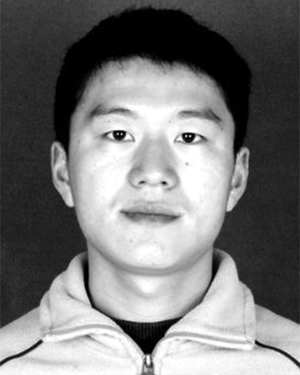 Xin Wei合作论文数12
 Andrik Rampun合作论文数Aberystwyth University12
 Shuwei Chen (陈树伟)合作论文数School of Mathematics, Southwest Jiaotong University11Philip J. Morrow合作论文数School of Computing and Information Engineering, University of Ulster11
 Raymond Bond合作论文数School of Computer Science and Mathematics, Keele University;Digital Society Institute, Keele University;School of Computing, Ulster University11David H. Glass合作论文数10Jordan Vincent合作论文数10
 David A. Bell合作论文数School of Electronics, Electrical Engineering and Computer Science, Queen's University of Belfast10
 Glenn I. Hawe合作论文数Durham University10
 George Okeyo合作论文数Computer Science Research Institute, University of Ulster10
 Leo Galway合作论文数10
 James O Uhomoibhi合作论文数Faculty of Computing and Engineering;University of Ulster;Faculty of Computing and Engineering, University of Ulster10
 Anas Samara合作论文数Univ Ulster, Sch Comp & Math, Belfast BT37 0QB, Antrim, North Ireland9
 Huiru (Jane) Zheng合作论文数School of Computing, Ulster University9
 Gunther Gediga合作论文数Brock computer science9
 Luis Martínez López合作论文数Departamento de Informatica, Universidad de Jaen9
 Alberto Calzada合作论文数University of Jaén9
 Pramod Gaur合作论文数BITS Pilani, Dept Comp Sci, Dubai Campus, Dubai, U Arab Emirates8
 Yang Hua (华扬)合作论文数School of Electronics, Electrical Engineering and Computer Science, Queen’s University Belfast8
 Zongyu Hou (侯宗余)合作论文数Department of Energy and Power Engineering, Tsinghua University8
 Fiona Browne合作论文数School of Computing and Mathematics, University of Ulster;Datactics8
 Zhining Liao合作论文数King's College London8
 Liam Maguire合作论文数Faculty of Computing, Engineering and the Built Environment, University of Ulster8
 Roy Sterritt合作论文数School of Computing, University of Ulster8Michael P. Poland合作论文数7Abbas Haider合作论文数7
 Sam Tak Wu Kwong (鄺得互)合作论文数School of Graduate Studies, Lingnan University;Division of Artificial Intelligence, Lingnan University7




