Image search systems could be endangered by adversarial attacks and data perturbations. The image retrieval system can be compromised either by distorting the query or hacking the ranking system. However, existing literature primarily discusses attack methods, whereas the research on countermeasures to defend against such adversarial attacks is rare. As a defense mechanism against the intrusions, quality assessment can complement existing image retrieval systems. "GuaRD" is proposed as an end-to-end framework that uses the quality metric as a weighted-regularization term. Proper utilization and balance of the two features could lead to reliable and robust ranking; the original image is assigned a higher rank while the distorted image is assigned a relatively lower rank. Meanwhile, the primary goal of the image retrieval system is to prioritize searching the relevant images. Therefore, the use of leveraged features should not compromise the accuracy of the system. To evaluate the generality of the framework, we conducted three experiments on two image quality assessment(IQA) benchmarks (Waterloo and PieAPP). For the first two tests, GuaRD achieved enhanced performance than the existing model: the mean reciprocal rank(mRR) value of the original image predictions increased by 61%, and the predictions for the distorted input query decreased by 18%. The third experiment was conducted to analyze the mean average precision (mAP) score of the system to verify the accuracy of the retrieval system. The results indicated little deviation in performance between the tested methods, and the score was not effected or slightly decreased by 0.9% after the GuaRD was applied. Therefore, GuaRD is a novel and robust framework that can act as a defense mechanism for data distortions.
This paper presents a review of the NTIRE 2023 challenge on night photography rendering. The goal of the challenge was to find solutions that process raw camera images taken in nighttime conditions conditions, and thereby produce a photo-quality output images in the standard RGB (sRGB) space. Unlike the previous year’s competition, participants were not provided with a large training dataset for the target sensor. Instead, this time they were given images of a color checker illuminated by a known light source. To evaluate the results, a sufficient number of viewers were asked to assess the visual quality of the proposed solutions, considering the subjective nature of the task. The highest ranking solutions were further ranked by Richard Collins, a renowned photographer. The top ranking participants’ solutions effectively represent the state-of-the-art in nighttime photography rendering. More results can be found at https://nightimaging.org/
Recently, graphic processing unit (GPU) multitasking has become important in many platforms since an efficient GPU multitasking mechanism can enable more GPU-enabled tasks running on limited physical GPUs. However, current GPU multitasking technologies, such as NVIDIA Multi-Process Service (MPS) and Hyper-Q may not fully utilize GPU resources since they do not consider the efficient use of intra-GPU resources. In this paper, we present smCompactor, which is a fine-grained GPU multitasking framework to fully exploit intra-GPU resources for different workloads. smCompactor dispatches any particular thread blocks (TBs) of different GPU kernels to appropriate stream multiprocessors (SMs) based on our profiled results of workloads. With smCompactor, GPU resource utilization can be improved as we can run more workloads on a single GPU while their performance is maintained. The evaluation results show that smCompactor improves resource utilization in terms of the number of active SMs by up to 33% and it reduces the kernel execution time by up to 26% compared with NVIDIA MPS.
 Nakyung Lee合作论文数2Song Wang合作论文数1Richard Collins合作论文数1Alina Shutova合作论文数1Yi-Chung Chen合作论文数1
 Claudio Rota合作论文数University of Milano-Bicocca1Yasi Wang合作论文数1Lu Xu合作论文数1Chao Zhang合作论文数1Maria Efimova合作论文数1Shuai Liu合作论文数1Ivan Ermakov合作论文数1Yangfan Sun合作论文数1Jin Guo合作论文数1Youngsun Cho合作论文数1Yuan-Chun Chiang合作论文数1Sungkeun Kwak合作论文数1Chia-Hsuan Hsieh合作论文数1Omar R. Elezaby合作论文数1
 Ершов Егор Иванович合作论文数Vision System Laboratory, Institute for Information Transmission Problems, Russian Academy of Sciences;Computer Science Faculty, Higher School of Economy1Chaoyu Feng合作论文数1Guangqi Shao合作论文数1Tianli Liu合作论文数1Chunxia Lei合作论文数1Georgy Perevozchikov合作论文数1
 Tim Seizinger合作论文数Computer Vision Laboratory, Institute of Computer Science, Faculty of Mathematics and Computer Science, The Julius Maximilians University of Würzburg1
 Xiaotao Wang合作论文数1Hao Dejun合作论文数1Zhikai Huang合作论文数1
 Simone Zini合作论文数Imaging and Vision Laoratory, Department of Informatics, Systems and Communication, University of Milano - Bicocca1Arseniy Terekhin合作论文数1Wang Tingniao合作论文数1Qichen Chen合作论文数Seoul Natl Univ, Dept Comp Sci & Engn, Seoul, South Korea1
 Hua-En Chang合作论文数Shanghai AI Lab, Shanghai, China1
 I-Hsiang Chen合作论文数1
 Marco Buzzelli合作论文数Univ Milano Bicocca, Dipartimento Informat Sistemist & Comunicaz, Viale Sarca 336, I-20126 Milan, Italy1
 Barış Özcan合作论文数Geodetic Institute and Chair for Computing in Civil Engineering Geo Information Systems, RWTH Aachen University1
 Furkan Kınlı合作论文数Video Vision and Graphics Lab, Özyeğin University1Florin Alexandru Vasluianu合作论文数ETH Zürich1
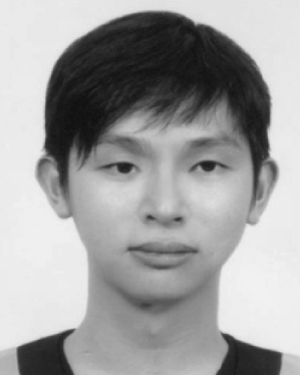 Hao-Hsiang Yang合作论文数Nat. Taiwan Univ.;c;Nat. Taiwan Univ.1
 Radu Timofte合作论文数Computer Vision Laboratory, Institute of Computer Science, Faculty of Mathematics and Computer Science, Julius Maximilians University of Würzburg;ETH Zurich1
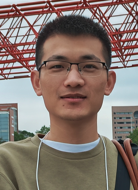 Hao Wang (王浩)合作论文数School of Cyberspace Security, Hangzhou Dianzi University1
 Simone Bianco合作论文数Imaging and Vision Laboratory, Department of Informatics, Systems and Communication, University of Milano-Bicocca;Imaging and Vision Solutions S.r.l1
 Raimondo Schettini合作论文数Department of Informatics, Systems and Communication, University of Milan-Bicocca;Imaging and Vision Laboratory, University of Milan-Bicocca1
 Marcos V. Conde合作论文数Sony (Germany);Computer Vision Laboratory, Institut für Informatik, Fakultät für Mathematik und Informatik, Julius-Maximilians-Universität Würzburg;H2O.ai;PlayStation1
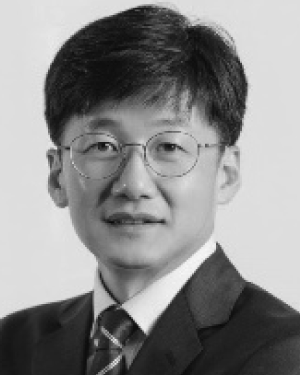 Jihwan Woo合作论文数1
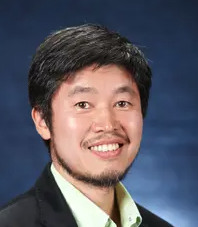 Heon Young Yeom合作论文数Department of Computer Science and Engineering, Seoul National University1
 Yongseok Son合作论文数Seoul National University1
 Furkan Kiraç合作论文数Department of Industrial Engineering, Bogaziçi University1




