We introduce the Block Transformer which adopts hierarchical global-to-local modeling to autoregressive transformers to mitigate the inference bottlenecks associated with self-attention. Self-attention requires the key-value (KV) cache of all previous sequences to be retrieved from memory at every decoding step to retrieve context information, leading to two primary bottlenecks during batch inference. First, there is a significant delay in obtaining the first token, as the information of the entire prompt must first be processed to prefill the KV cache. Second, computation of subsequent tokens is bottlenecked by the high memory I/O demand of fetching the entire KV cache, which grows linearly with sequence length, incurring quadratic memory reads overall. We design the Block Transformer to strategically mitigate these costs, by incorporating coarsity and locality into an integrated global-to-local architecture. At the lower layers, we aggregate tokens into fixed size blocks to apply attention across the entire sequence at coarse-grained detail, to capture the global context while minimizing KV cache overhead. At upper layers, we apply attention within each block to decode individual tokens, to model fine-grained details with a lightweight local KV cache. We pretrain vanilla and Block Transformers from scratch and demonstrate that Block Transformers reach 10--20x inference throughput compared to vanilla transformers with equivalent perplexity and zero-shot task performance.
We introduce EXAONE 3.0 instruction-tuned language model, the first open model in the family of Large Language Models (LLMs) developed by LG AI Research. Among different model sizes, we publicly release the 7.8B instruction-tuned model to promote open research and innovations. Through extensive evaluations across a wide range of public and in-house benchmarks, EXAONE 3.0 demonstrates highly competitive real-world performance with instruction-following capability against other state-of-the-art open models of similar size. Our comparative analysis shows that EXAONE 3.0 excels particularly in Korean, while achieving compelling performance across general tasks and complex reasoning. With its strong real-world effectiveness and bilingual proficiency, we hope that EXAONE keeps contributing to advancements in Expert AI. Our EXAONE 3.0 instruction-tuned model is available at https://huggingface.co/LGAI-EXAONE/EXAONE-3.0-7.8B-Instruct.
This technical report introduces the EXAONE 3.5 instruction-tuned language models, developed and released by LG AI Research. The EXAONE 3.5 language models are offered in three configurations: 32B, 7.8B, and 2.4B. These models feature several standout capabilities: 1) exceptional instruction following capabilities in real-world scenarios, achieving the highest scores across seven benchmarks, 2) outstanding long-context comprehension, attaining the top performance in four benchmarks, and 3) competitive results compared to state-of-the-art open models of similar sizes across nine general benchmarks. The EXAONE 3.5 language models are open to anyone for research purposes and can be downloaded from https://huggingface.co/LGAI-EXAONE. For commercial use, please reach out to the official contact point of LG AI Research: contact_us@lgresearch.ai.
Research on the advanced detection of harmful objects in airport cargo for passenger safety against terrorism has increased recently.However, because associated studies are primarily focused on the detection of relatively large objects, research on the detection of small objects is lacking, and the detection performance for small objects has remained considerably low.Here, we verified the limitations of existing research on object detection and developed a new model called the Small Hazardous Object detection enhanced and reconstructed Model based on the You Only Look Once version 5 (YOLOv5) algorithm to overcome these limitations.We also examined the performance of the proposed model through different experiments based on YOLOv5, a recently launched object detection model.The detection performance of our model was found to be enhanced by 0.3 in terms of the mean average precision (mAP) index and 1.1 in terms of mAP (.5:.95) with respect to the YOLOv5 model.The proposed model is especially useful for the detection of small objects of different types in overlapping environments where objects of different sizes are densely packed.The contributions of the study are reconstructed layers for the Small Hazardous Object detection enhanced and reconstructed Model based on YOLOv5 and the non-requirement of data preprocessing for immediate industrial application without any performance degradation.
Constructing a robust dialogue system on spoken conversations bring more challenge than written conversation. In this respect, DSTC10-Track2-Task2 is proposed, which aims to build a task-oriented dialogue (TOD) system incorporating unstructured external knowledge on a spoken conversation, extending DSTC9-Track1. This paper introduces our system containing four advanced methods: data construction, weighted negative sampling, post-training, and style transfer. We first automatically construct a large training data because DSTC10-Track2 does not release the official training set. For the knowledge selection task, we propose weighted negative sampling to train the model more fine-grained manner. We also employ post-training and style transfer for the response generation task to generate an appropriate response with a similar style to the target response. In the experiment, we investigate the effect of weighted negative sampling, post-training, and style transfer. Our model ranked 7 out of 16 teams in the objective evaluation and 6 in human evaluation.
 yireun kim合作论文数4
 jungkyu choi合作论文数3Woohyung Lim合作论文数2Heuiyeen Yeen合作论文数2
 Haeju Lee合作论文数Department of Computer Science, Korea Advanced Institute of Science and Technology;Kim Jaechul Graduate School of AI, Korea Advanced Institute of Science and Technology2Seonghwan Kim合作论文数2Eunbi Choi合作论文数2
 Joonkee Kim合作论文数2Sunkyoung Kim合作论文数2
 Hyeongu Yun合作论文数(Seoul National University)2
 Seokhee Hong合作论文数Exaone Lab, Lg Ai Research2
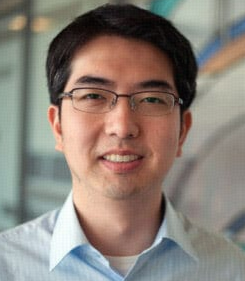 Honglak Lee合作论文数Electrical Engineering and Computer Science Department, College of Engineering, University of Michigan;LG AI Research2
 Kyung-Hoon Bae合作论文数School of Electronic Engineering, Kwangwoon University2Seungjun Lee合作论文数1SONG HOSUNG合作论文数1KwangTek Na合作论文数1Gyeonghun Kim合作论文数1
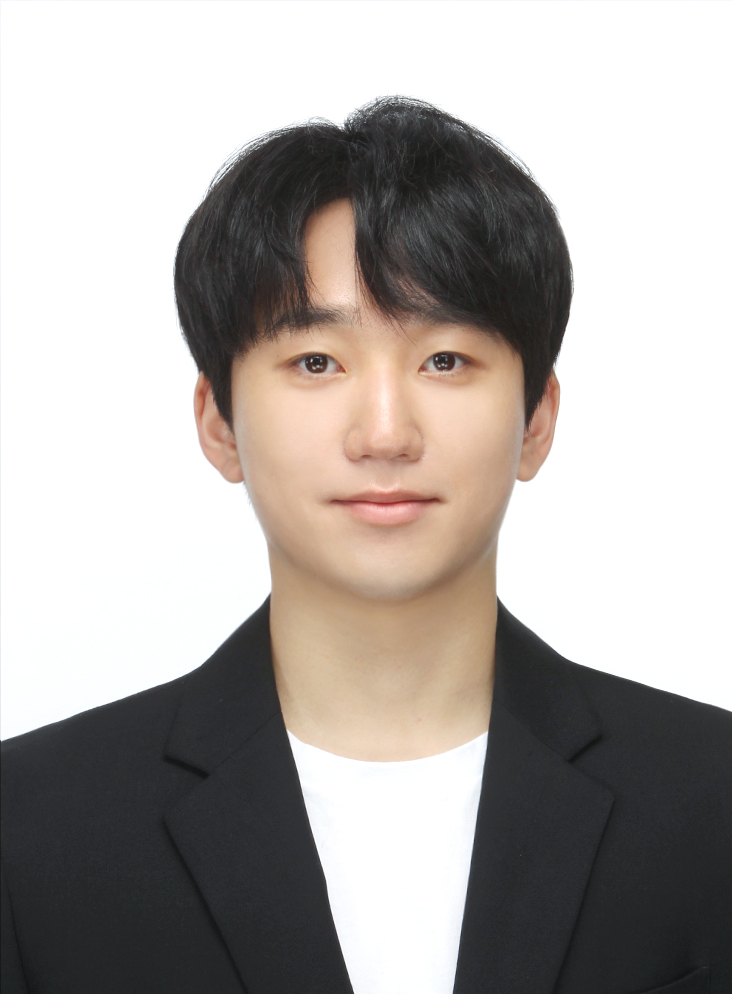 Sangmin Bae合作论文数Optimization and Statistical Inference Lab, Kim Jaechul Graduate School of Artificial Intelligence, Korea Advanced Institute of Science and Technology1
 Namgyu Ho合作论文数Optimization and Statistical Inference Lab, Kim Jaechul Graduate School of Artificial Intelligence, Korea Advanced Institute of Science and Technology1Jin-Young Lee合作论文数Yonsei Univ, Dept Elect & Elect Engn, Seoul, South Korea1
 Janghoon Han合作论文数1Eunchan Kim合作论文数1
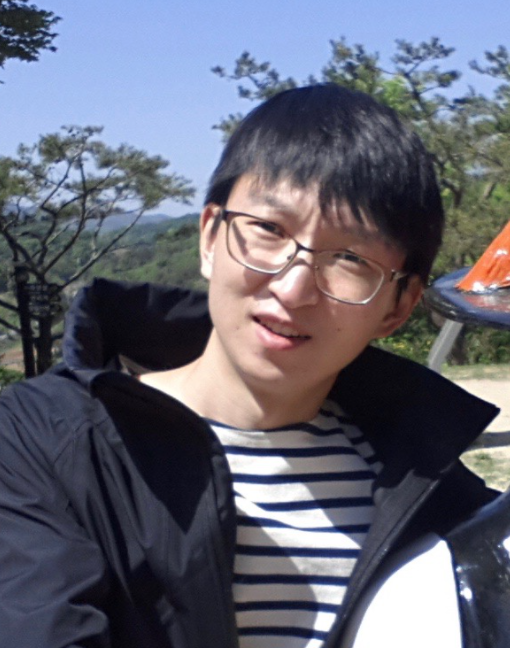 Se-Young Yun合作论文数Graduate School of AI, Korea Advanced Institute of Science and Technology1
 Joongbo Shin合作论文数LG AI Research1
 Moontae Lee合作论文数Department of Information and Decision Sciences, University of Illinois at Chicago;Superintelligence Lab, LG AI Research1
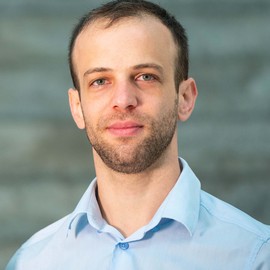 Tal Schuster合作论文数Google1
 Taehyeon Kim合作论文数Holiday Robotics1
 Adam Fisch合作论文数Google DeepMind1
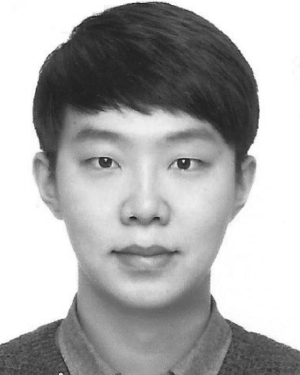 Yong-Il Kim合作论文数1
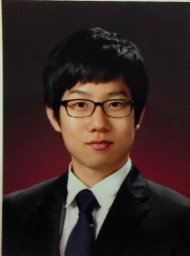 Yeunwoong Kyung合作论文数Sch. of Electr. Eng., Korea Univ.;c;Sch. of Electr. Eng., Korea Univ.1
 James Thorne合作论文数Theia Insights;Kim Jaechul AI Graduate School, Korea Advanced Institute of Science and Technology1
 YOO, BYUNGJOON合作论文数College of Business Administration, Seoul National University;Graduate School of Business, Seoul National University1
 Gahgene Gweon合作论文数Seoul Natl Univ Dept Transdisciplinary Studies Seoul South Korea1




