Portal hypertension occurs secondary to a combination of increased resistance to portal venous flow and increased splanchnic inflow to the portal venous system. The main clinical complication is gastrooesophageal haemorrhage from which mortality remains high at approximately 40%.
Our purpose was to evaluate the role of diffusion-weighted imaging (DWI) in the diagnosis of various common pathologies of the uterine cavity, by comparing them with contrast-enhanced MRI findings. One hundred sixty-four patients with lesions in endometrial cavity were included in the study. The patients were grouped in four (one malignant and three benign groups). We have observed that the differences of the apparent diffusion coefficient, b1000q, and Cq values between various common benign and malignant lesions were statistically significant (P<.001). However, the differences of the values between benign groups were not statistically significant (P>.05). Alternatively, endometrial polyp group's signal intensity on DWI was different than the other groups.
BACKGROUND/AIMS:Combinations of beta-blockers and vasodilators have been assessed for their ability to lower portal pressure and so prevent variceal haemorrhage. However, reservations have been raised particularly with respect to renal function and perfusion after the use of these medicines in patients with chronic liver disease. We studied the acute effects of carvedilol, a new vasodilating beta-blocker which combines non-selective beta-blockade with alpha-1 receptor antagonism, upon the haemodynamics of patients with cirrhosis.METHODS:Sixteen patients completed the study which measured the changes approximately 1 h after the administration of 25 mg oral carvedilol.RESULTS:The hepatic venous pressure gradient fell from 16.7 +/- 0.9 to 13.6 +/- 1.0 mmHg (p < 0.00001), accounted for largely by reductions in the wedged hepatic venous pressure. Despite this, the azygos blood flow did not change. There was a significant fall in mean arterial pressure (94.8 +/- 4.4 cf. 84.6 +/- 4.3 mmHg; p = 0.0001), which was particularly apparent in the diastolic blood pressure of those patients with ascites. The heart rate only fell significantly in the ascitic subjects. No significant changes occurred in the cardiac output or systemic vascular resistance. Unilateral renal vein flow as measured by the reverse thermodilution technique remained constant.CONCLUSIONS:Carvedilol is therefore a potent acute portal hypotensive agent which does not appear to compromise renal perfusion. However, patients with ascites are at greater risk of its systemic hypotensive action.
A year in the life of the President of the British Society of Gastroenterology passes very rapidly.During my term of office a number of old, perennial issues have been revisited but additionally new important initiatives have been planned for the Society.We continue to question the frequency, role, and strat- egy of the twice yearly meetings that the Society holds.What is our attitude to European Gastroenterology and how should this influence our meetings?There are no easy answers and the Society remains divided.I shall return to
SynopsisIn this paper we deal with those methods which are used, or which may be used, to ensure that research in the biomedical and health services field is of a satisfactory standard. We discuss not only what is undertaken to ensure that the quality of the applications which are funded is of the best, but also those activities which may be pursued in an endeavour to stimulate a healthy quantity of high-quality applications for research. This latter point is an issue relating primarily to health services research. We cover the topic of quality assurance of biomedical and health services research from an experience which is derived mainly, but not solely, from involvement with Scottish funding agencies. Consideration is given to the allocation of budgets for research in medicine and the impact that this has on the quality of biomedical and health services research.
Sodium ion (Na+) transport, a principal function of the gallbladder epithelium, was studied by measuring the flux of 22Na across isolated human gallbladder mucosa maintained in a modified 'Ussing' flux chamber. Tissue was obtained from cholecystectomy specimens in symptomatic patients with cholelithiasis. Out of 26 gallbladders studied, 13 had a net Na+ flux from mucosa to serosa which indicated active Na+ absorption. The hormone secretin, when added to the serosal fluid, reversed the direction of net flux in these gallbladders and caused a secretion of Na+ from serosa to mucosa. These results suggest that secretin may be involved in the physiological regulation of fluid transport in the human gallbladder, and also suggest a possible role for this hormone in gallbladder emptying.
Gastroenterology is recognized as a speciality in most countries, especially in Europe and North America. The requirements for being acknowledged as a specialist vary from 1 1/2 to 4 years of training and education in gastroenterology in addition to 1-6 years of training and education in internal medicine/surgery. The requirement of theoretical education varying from 40 to 300 h is practiced in some countries only. In some countries training in endoscopy is separated from gastroenterology. A formal examination and post-specialization training program is required in only some of the countries answering the questionnaire. The number of centres per million inhabitants recognized for training and education also varied greatly. The number of specialists per million inhabitants was 3.6 to 15. In the Middle and Far East the organisation of gastroenterology was much inferior to that in Europe and North America because of insufficient education and organization programs and lack of economic support to perform them. The answers from the gastroenterological associations and personal reporters agreed on the following: A speciality in medical and surgical gastroenterology should be established in all countries around the world. Programs for training and education should be agreed upon in recognized teaching and training institutions of gastroenterology, probably of 3 years' duration in combination with a speciality in internal medicine. A gastroenterologist will in most cases be dealing with other diseases as well. The number of specialists per million inhabitants may be estimated to 10, the exact number not being possible to determine at present. In most countries the post-specialization programs were not required but were offered, a problem that has to be clarified.(ABSTRACT TRUNCATED AT 250 WORDS)
The determination of uptake rates for lipids across absorptive epithelia, using radiolabelled compounds has normally used non-absorbable volume markers to correct gross tissue counts for contamination by adherent mucosal fluid. There is evidence however to indicate that the macromolecules traditionally used as non-absorbable markers are in fact absorbed. This may result in an overestimate of the apparent adherent mucosal fluid with consequent errors in the calculation of lipid uptake. An in-vitro method was used to assess cholesterol absorption by human gallbladder from artificial bile, containing 3H-dextran 70,000 as a 'non-absorbable' volume marker. Both cholesterol and dextran were transported through the mucosa and appeared on the serosal side of the gallbladder. Confirmation of dextran absorption was obtained by electron microscopic examination of the gallbladder epithelium. By using the serosal appearance of dextran as a guide to the amount of absorbed (intracellular) dextran in the tissue samples, we have derived a formula to calculate tissue dextran absorption and, from the revised adherent mucosal volume, have consequently obtained more realistic estimates of tissue lipid uptake. In this study, comparison made between the previous estimate of lipid uptake compared to this new calculation, showed that the previous technique significantly underestimated true lipid uptake.
Oral cholecystography is a well established method for studying the human gallbladder and radiological non-visualization of the gallbladder has been shown to correlate highly with the presence of disease. The exact mechanism by which diseased gallbladders fail to visualize is unclear, but may be due to a failure of the gallbladder to concentrate the luminal contents. Concentration of gallbladder contents is achieved by the reabsorption of water, the driving force for which is active sodium (Na+) absorption. Therefore Na+ transport was studied by measuring the flux of Na22 across isolated human gallbladder mucosa (obtained at cholecystectomy) and compared with the results of oral cholecystography and histological grading. In 27 gallbladders studied, 59% absorbed Na+, whilst the remainder secreted Na+. Comparison with histological grading showed that as gallbladders became more diseased they absorbed less Na+ and were more likely to secrete Na+. In addition, gallbladders that absorbed Na+ were significantly more likely to visualize on cholecystography than those that secreted Na+. These results indicate that some diseased human gallbladders secrete, rather than absorb, Na+ and suggest that the mechanism for radiological non-visualization is failure of fluid absorption and the development of active fluid secretion.
 David Hopwood合作论文数12P. E. Ross合作论文数12MR Jacyna合作论文数8M.C. Bateson合作论文数6
 Julienne Agnew合作论文数5D B Trash合作论文数4R N Melmed合作论文数4Gr Youngs合作论文数4Hartmut Brandt合作论文数3Rg Pendleton合作论文数3G Milne合作论文数3A W Mangel合作论文数3Hans O Graffner合作论文数3J.P. Nagpaul合作论文数3D. El Allaf合作论文数3
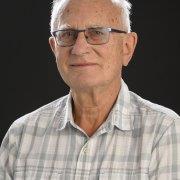 Bertil Hamberger合作论文数Department of Molecular Medicine and Surgery, Karolinska Institutet;Karolinska University Hospital3Kathleen R. Logan合作论文数3M C Bateson合作论文数2Ws Hislop合作论文数2
 Rana P Singh合作论文数2Ge Levin合作论文数2G. I. Dhall合作论文数2Lars-Ove Farnebo合作论文数2Elias a Kouroumalis合作论文数2S R Cooperband合作论文数2David L. Carr–Locke合作论文数1Thomas A. Brasitus合作论文数1Jean‐Pierre Benhamou合作论文数1Richard Loftus合作论文数1R BRATTSAND合作论文数1W Bruns合作论文数1Toshio Terata合作论文数1K MULLY合作论文数1C Tourne合作论文数1R Petrarca合作论文数1E E Cooper合作论文数1C Gallacher合作论文数1Jamie S. Barkin合作论文数1John A. Balint合作论文数1Simmy Bank合作论文数1Kenneth A. Bauer合作论文数1Cyrille Feray合作论文数1
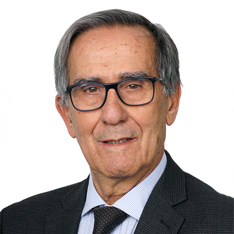 Vicente Arroyo合作论文数University of Barcelona Medical School;Liver Unit, Hospital Clinic Barcelona;Esther Koplowitz Research Center1Henry C Lin合作论文数1David W J Armstrong合作论文数1E Veneroni合作论文数1G Maione合作论文数1Michael H. Chapman合作论文数1A. J. Chadwick合作论文数1




