Service 326 Latest Publications You Should Not Miss Brinkhaus, B. (Berlin) Gesellschaftsmitteilungen 329 Schweizerische Medizinische Gesellschaft für Phytotherapie (SMGP) 333 Vegetarische Ernährung und Medizin (VegMed) 336 Buchbesprechung 337 News / Ticker 338 Tagungen und Kongresse 340 Impressum Abstract Service 326 Latest Publications You Should Not Miss Brinkhaus, B. (Berlin)
Background: In Traditional Chinese Medicine (TCM) tongue diagnosis and pulse diagnosis are the major diagnostic methods up till now. As western research has tended to focus on acupuncture, attempts to standardize the classic diagnostic methods have been few. Methods: A digital camera with a ring flash was fixed in a frame, so that the tongue-lens-distance and illumination were kept constant. A pilot study testing the inter-methods reliability, test-retest reliability, and interrater reliability of 2 observers was conducted: the tongues (1 ×) as well as the tongue images (2 ×) from 76 patients from our ward were assessed with a standardized rating list in a randomized order by both observers, who were mutually blinded. As primary outcome measure we used agreement beyond chance (Cohen's kappa). Results: The colors of the tongue body / the tongue coating were the main criteria for the authentic reproduction of the tongue in our images. Inter-methods reliability for the color of the tongue body/coating was kappa 0.35 / 0.34 (p < 0.001) for observer 1 and 0.59 / 0.57 (p < 0.001) for observer 2. Test-retest reliability for the color of the tongue body / the tongue coating was kappa 0.53 / 0.48 (p< 0.001) for observer 1 and 0.65 / 0.62 (p < 0.001) for observer 2. Interrater reliability was generally low. Conclusions: The introduced device represents a first step towards standardization of tongue diagnosis. However, inter-methods as well as test-retest reliability vary between observers and different morphological characteristics.
Acupuncture is the most popular component of traditional Chinese medicine in Western countries. However, the mechanisms of its effects remain unclear. The therapeutic effect of acupuncture appears when a sensation of DeQi is achieved. We previously reported that repeated, but not single acupuncture treatment affected leukocyte circulation and blood pressure in healthy young humans. The objective of this study was to quantify DeQi sensation by using visual analog scales (VASs) and, to test whether DeQi induction is an important factor for the therapeutic effects of acupuncture in the same cohort. After either acupuncture or sham-acupuncture (placebo) treatment, a questionnaire containing five individual VASs was given to subjects to evaluate their DeQi sensation, including numbness, pressure, heaviness, warmth, and radiating paraesthesia, respectively. A separate VA S to measure their levels of anxiety during the treatment was also included. Our results showed that acupuncture significantly induced higher VA S values for numbness, pressure, warmth, and radiating paraesthesia, but not for heaviness than the placebo across three treatment sessions. Additionally, acupuncture did not induce higher anxiety levels than the placebo. These data confirm that VAS is an objective and reliable way to quantify DeQi sensation and, indicate that DeQi is unique to verum acupuncture treatment. Furthermore, either acupuncture-induced therapeutic effects or DeQi sensation should not be attributed to the stress-mediated effects. In summary, the induction of DeQi in each treatment session is an important factor for the physiological outcomes of repeated acupuncture treatment, and VASs offer objective, an easy and reliable way to assess it.
Acupuncture is the most popular component of traditional Chinese medicine in western countries, which has been widely used in the treatment of numerous medical conditions, e.g., pain, emesis or asthma. However, the effects of acupuncture on neuroendocrine and immune functions in humans remain unclear. Therefore, the present study was performed to analyse whether acupuncture treatment affects leukocyte circulation as well as plasma levels of cortisol and norepinephrine in humans. Ten healthy young male subjects were enrolled in a randomized single-blind two-period crossover study. Each period contained three sessions of either acupuncture or sham acupuncture (placebo) treatment. After randomisation, the group 1 (n=5) received acupuncture treatment at acu-points ST36, LI11, SP10, and GV14, while sham acupuncture was performed for group 2 (n=5). Two weeks later, each group received the alternative treatment. Blood samples were taken before needling, 10min after, and 30min after removing the needles in the first and the third session. In addition, blood pressure and heart rate were determined simultaneously. Although acupuncture treatment did not affect leukocyte circulation in peripheral blood after the first session, we observed a significant decrease in leukocyte and lymphocyte values after the third session. In contrast, cortisol and norepinephrine plasma levels remained unchanged by acupuncture. These data indicate that repeated acupuncture treatment can affect leukocyte circulation in healthy humans by still unknown mechanisms.
 Gustav J. Dobos合作论文数Integrative Medicine, University of Duisburg-Essen9Linda Tan合作论文数7Lauche Romy合作论文数7Niggemeier Corinna合作论文数7
 Thomas Rampp合作论文数7Petra Klose合作论文数7Marisa Pascale Quintino合作论文数6Gerald Jose合作论文数6
 Ricardo Ghelman合作论文数Univ Sao Paulo6
 Antonio Moron合作论文数Dept Obstet, Univ Fed Sao Paulo6
 Karin Kraft合作论文数6Sundberg Tobias合作论文数6Sonntag Ulrike合作论文数6Stelmach-Mardas Marta合作论文数6Grygiel-Górniak Bogna合作论文数6Hosomi Jorge Kioshi合作论文数6
 Christine Gimpel合作论文数6
 George B Stefano合作论文数Center for Cognitive-Molecular Neuroscience, 1st Medicine Faculty, Charles University;Department of Psychiatry, Charles University in Prague6
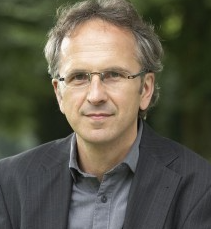 Andreas Michalsen合作论文数Institute of Social Medicine, Epidemiology and Health Economics, Charité – Universitätsmedizin Berlin6
 Torkel Falkenberg合作论文数Karolinska Institutet & Head of Research, Vidarinstitutet (a non profit, independent charitable research foundation6Eduardo De Souza合作论文数Department of Obstetrics, Sao Paulo Federal University6Christel von Scheidt合作论文数5
 Mary UCHIYAMA Nakamura合作论文数Hospital Municipal Vereador José Storópolli5
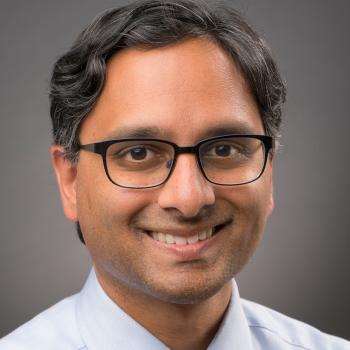 Rajesh Shah合作论文数Radiology Department, Stanford University5John D Bell合作论文数2Manfred Schedlowski合作论文数2Lüdtke Rainer合作论文数Karl and Veronica Carstens-Foundation, Essen, Germany.2Wei Kou合作论文数2
 Gustavo Pacheco-Lopez合作论文数Health Sciences Department, Metropolitan Autonomous University2marcus baecker合作论文数1Marion U. Goebel合作论文数1MU Goebel合作论文数1Gunter Spahn合作论文数1
 Rainer Lüdtke合作论文数Karl and Veronica Carstens Foundation1Guenther Spahn合作论文数1
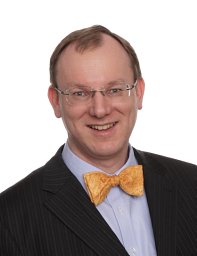 Onno E. Janßen合作论文数Department of Medicine, Endokrinologikum Hamburg Betriebsgesellschaft mbH;Asklepios Medical School1Michael Stratmann合作论文数1




