Technology evolution, environmental concerns associated with central electric power plants and deregulation of the electric utility industry are providing the opportunity for small distributed generators to become very important in order to satisfy the on - site customer expanding power demand. In this paper, the steady state and transient operation of a typical microgrid are studied. The models of two dispersed generation units (photovoltaic system, wind turbine) are presented. Models of the power electronics interface and control strategies for fast control of frequency and voltage magnitude without communication are derived.
In this paper low cost concepts for future wireless access are presented and discussed from the business perspective. Instead of extending today's cellular technology or to focus on the bandwidth efficiency of the radio equipment, the chosen approach focus on reduction of costs for network deployment and operation. Adaptive antennas (MIMO), multihop schemes and local access points are combined with user deployed infrastructure and reuse of existing network assets. Business models candidates are analysed, showing that all proposed low cost solutions can be used either by local network operators (LNOs) in close cooperation with mobile operators (network franchising) or to be user deployed using a traditional subscriber model. MIMO and multihop relays require close integration into the cellular network implying that these solutions would be less suitable for an independent LNO.
In 1978, the Supreme Court decided in Santa Clara Pueblo v. Martinez1 that it was constitutionally permissible for the Pueblo to enforce a membership ordinance that expressly treated female members in a disabling and different way than male members. The ordinance denied membership in the tribe to children of female members who marry outside the tribe, while extending membership to children of male members who similarly "outmarry." The decision was a startling contrast to the jurisprudence of equal protection in the Constitution. While the dominant society in the United States (U.S.) was experiencing outspoken discourse on feminism and legal challenges to gender discrimination,2 the Court deferred to the culturally and politically distinct needs of the Pueblo. Thus, it seemed anomalous that the Court permitted intentional discriminatory treatment of women among similarly situated members. From the time the case was filed, Martinez engendered conflict in cultural perspectives. As the first and only Supreme Court case to interpret and apply the Indian Civil Rights Act of 1968 (ICRA), Martinez has significance. Filing the case required the Santa Clara plaintiffs to reach to external law -- the federal power that had enacted the law invoked -- the ICRA.3 The federal courts involved in the case expressed different perspectives about what federal constitutional and statutory law required. The district court in New Mexico attempted to comprehend the customary law underlying the ordinance and held for the Pueblo. The District Court used its outsider interpretation of the Pueblo's customs and traditions as a basis for the decision. However, the Tenth Circuit Court of Appeals reversed because the undeniable gender discrimination had substantive import greater than what the Pueblo argued as customary principle. Ultimately, the Supreme Court, without making the inquiry into cultural specifics, accommodated the tribal customary law and practices. Martinez has roiled among non-Indians who cannot accept this gender discrimination as constitutionally permissible, even though anchored in the unique tribal-federal political relationship long established in constitutional law.4
We show a simple method for increasing on-average capacity of correlated MIMO channels, given limited channel knowledge at the transmitter. We further show that under certain channel constraints, this capacity approaches the capacity gained by water-filling on the complete channel. We give results which determine the benefit of applying a de- correlating, or whitening, matrix to the transmit signals in terms of the asymptotic growth of the MIMO channel.
They have also provided accounts of health care justice in particular. This essay examines a characteristic that all these theories share: an attempt to establishing an account of justice for the structure of society in separation from particular understandings of the good life for individual persons. I identify this character as “an intended separation.” Specifically, under such “an intended separation,” each of these theories attempts to justify its view of justice independently of any concrete premises from particular religions, metaphysics, ideologies, or conceptions of the good life. Each contends that its requirements of justice are compatible with all conflicting but reasonable accounts of the good life. Consequently, each argues that its views of justice ought to be accepted by all reasonable individuals and communities in contemporary pluralist societies. This essay illustrates that with such “an intended separation” the contemporary theories of justice embrace a less ambitious intellectual goal than the comprehensive moral systems that formed within the Enlightenment project. The modem Enlightenment project did not plan to provide an account of justice or rightness only for the structure of society. Instead, it attempted through sound rational argument to establish a comprehensive, canonical, and universally-applicable system of morality to regulate both societal structure and individual lives. However, the modem Enlightenment project has failed rationally to secure a comprehensive morality (MacIntyre, 1984, 1988, 1990). Rational argument cannot justify a standard morality without begging the question or involving infinite regresses (Engelhardt, 1991, 1996). The contemporary theories of justice have come to form a default strategy for the modem Enlightenment project. They no longer attempt to establish a
—An approximate approach to the performance evaluation in mobile radio communications systems is considered, and its accu- racy is investigated. Our computations show that, in many cases of practical interest, it performs very well. The performance analysis of such systems, always hard and sometimes even numerically infeasible, turns out to be greatly simplified. where is the transmitted power, is the path loss due to distance, is a random amplitude (of unit power) due to fading, and the factor accounts for log-normal shadowing. is a Rayleigh random variable (r.v.) in the commonly adopted Rayleigh fading model, whereas it is a Rice r.v. in the Ricean model (2; 4). is a Gaussian r.v., with zero mean and standard deviation . Usually, the shadowing is described in terms of the dB spread, , i.e., decibels are used instead of natural units: of course, 0 1 log 10 . In the following, the subscript 0 will refer to the intended user, whereas 1 will denote the interferers. Also, we assume that and are the same for all signals. The receiver employs capture, i.e., is able to receive a signal which is sufficiently larger than the sum of all the interfering signals (to focus on the interference, we neglect noise in the analysis presented in this paper, even though it could be easily extended to the more general case). The performance index we will consider throughout the paper is the outage probability, i.e., the probability t hat the intended user fails to achieve a minimum Signal-to- Interference Ratio, which will be denoted by . In formula, the outage probability, , is expressed as
Ground state properties of finite nuclei (16O and 40Ca) are evaluated from realistic nucleon-nucleon interactions. The calculations are based on the Brueckner-Hartree-Fock approximation. Special attention is paid to the role of the energy spectrum for the particle states, in particular for those close to the Fermi energy. Additional binding energy is obtained from the inclusion of the hole-hole scattering term within the framework of the Green function approach. Results for the energy distribution of the single-particle strength and the sensitivity to the nucleon-nucleon interaction are investigated. For that purpose three modern nucleon-nucleon interactions are employed: the Argonne V18, the charge dependent Bonn potential and a realistic nucleon- nucleon interaction which is based on chiral perturbation theory and which has recently been fitted by the Idaho group.
Formation of a large amplitude Turing pattern may be accompanied by appearance of the negative differential conductance in a self-organized system. The effect is observed at studying a two-component reaction-diffusion model introduced earlier to interpret the occurrence of pattern formation in semiconductor-gas discharge devices. The revealed autocatalytic process can initiate further complicated scenarios of self-organization of a system. respect to light. The device is fed by a d.c. voltage source. The value of gas-discharge current, which is along the z axis, is controlled with the semiconductor electrode. Its resistance can be varied by applying the irradiation with infrared light.
The City of Los Angeles monitors bacterial densities at the Santa Monica Bay shoreline daily. Since the onset of the City of Los Angeles' monitoring in the 1950's, and Hyperion Treatment Plant's (HTP) construction of the 5-Mile Outfall, water quality monitoring has indicated that HTP's wastewater has not reached the shoreline. Urban runoff has been implicated as the largest source of bacterial contamination at Santa Monica Bay beaches (CLA, EMD 2003). Urban runoff, which mainly originates from rainfall and street runoff (Dojiri et al., 2003) and reaches Santa Monica Bay through approximately 200 outlets, is the largest nonpoint source of pollution to Santa Monica Bay. Street runoff can result from domestic, commercial, and industrial activities, and irrigation water. It has been estimated that Santa Monica Bay receives a flow of 10- 25 million gallons per day from storm drains during dry weather (SMBRP 1996). During rain events, the concentrations of pollutants (heavy metals, human and animal wastes, petroleum- and automobile-based chemicals) are more dilute, but the mass loading is much larger due to wash- down effects of the rain on the surrounding urban environment. The City of Los Angeles has taken numerous actions to improve water quality in Santa Monica Bay. The City collaborated on the Santa Monica Urban Runoff Recycling Facility (SMURRF), which processes 500,000 gallons of runoff per day during dry weather. Additionally, the City of Los Angeles's Watershed Protection Division is employing Low-Flow Diversion systems to direct major storm drains to HTP during dry weather. Also, the City's Environmental Monitoring Division (EMD) provided co-leadership and proactive participation in drafting the Coordinated Monitoring Plan for the state and federally mandated Santa Monica Bay Beaches Bacterial Total Maximum Daily Load (SMBBB TMDL) program. The SMBBB TMDL, which became effective in July of 2003, has stringent compliance requirements for Santa Monica Bay shoreline storm drains. Based on daily monitoring, the summer and winter dry-weather SMBBB TMDLs allow for zero and three annual exceedences of AB 411 standards, respectively. The wet-weather portion, which allows for seventeen annual exceedances, must be met within eighteen years. In addition, EMD participated in the Southern California Bight 2003 Regional Monitoring Program, which attempts to gain insight into the dynamics of pollution along the Southern California coastline. This report summarizes the City of Los Angeles EMD's Santa Monica Bay shoreline bacteriological data for the fiscal year 2003-2004 (July 1, 2003 to June 30, 2004). The bacteriological data consist of bacterial densities for three categories of bacteria (referred to as "indicator" bacteria) that indicate the presence of water-borne human disease causing (pathogenic) bacteria. These indicator groups are the total coliforms, the fecal coliforms or their
The discovery of the Higgs boson (H) is the key prob- lem of modern particle physics. A crucial point for the Standard Model (SM), the Higgs boson remains elusive in the experiments being conducted currently. It is ex- pected that the colliders of a new generation will have enough energy and lathe enough luminosity integral to discover a Higgs boson unambiguously. We assume that these efforts will be successful and discuss one of the sub- sequent series of problems. Our point is: The study of Higgs boson produc- tion at photon colliders ( and e ) and in gluon fusion at hadron colliders (Tevatron and LHC) gives the best way to probe New Physics effects with a scale � > 1 TeV at lower energies. At energies belowthe above New Physics effects ap- pear as some anomalous interactions of the particles al- ready known (anomalies). The Higgs boson interactions with photons (H and HZ) or gluons (Hgg) provide a radically new opportu- nity since the corresponding SM interactions arise only at the loop level. So the relative contribution of anoma- lies will be enhanced in these vertices. This is the leading idea that motivates us to study the processes
The detection of bad pixels is an important issue for quality restoration in computational stereo. This paper presents a bad pixel detection method using a hierarchical decision table approach, based on the information of left-right checking, unreliability methods and the disparity smoothness. The proposed method integrates the features of the first two methods and additionally adds the disparity smoothness to eliminate the noise effect in detected pixels. The experiment result shows that the proposed method can achieve higher and consistent detection rate (58.2%~82.7%) and accuracy (56.7%~84.4%) over different stereo image pairs when compared with previous approaches.
During the late 1950s, studies of the helicity dependence of weak interaction cross section and decay rates has shown that the weak interaction involves the coupling between vector current built of quark and lepton flelds. It was thus natural to assume that the weak interaction is due to exchange of very heavy vector bosons. In contrast with electromagnetic interaction, this is due to exchange the photons. Such vector bosons, now named as W and Z particles were discovered at CERN in 1983. However the most di-culty for building the complete theory of weak interaction comes from the massive boson flelds themselves. Any mass term appearing in the Lagrangian will spoil the gauge-invariance property because gauge symmetry prohibit the generation of a mass for the vector fleld. The nonzero W and Z masses turns out to require incorporating into the theory of symmetry spontaneous breaking. The resulting theory is known as GWS model. It was flrst formulated by Weinberg in 1967 and by Salam in 1968 independently. The essay is formulated as follows. First in order to built the theory of weak interaction, some properties of weak interaction are discussed. We will argue that why the symmetry spontaneous breaking is essential to approach the theory of weak interaction.
 A. I. Tsouchnikas合作论文数1Xianhao Xin合作论文数1Y. Huang合作论文数1Lisa Birr合作论文数1
 Serge Bernard合作论文数University of Montpellier1
 Pengcheng Dai合作论文数Department of Physics and Astronomy, Rice University1J. Zhao合作论文数1
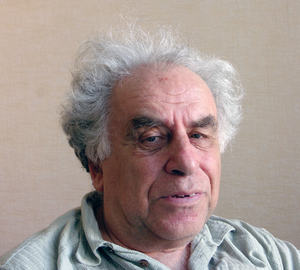 Ilya Faivilevich Ginzburg合作论文数Sobolev Institute of Mathematics, Siberian Branch of the Russian Academy of Sciences1
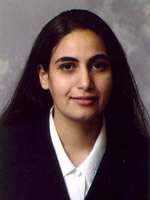 Sonia Fahmy合作论文数Department of Computer Science, Purdue University;Center for Education and Research in Information Assurance and Security1Sri International合作论文数1
 Tian Sheuan Chang (張添烜)合作论文数VLSI Signal Processing Lab, Department of Electronics and Electrical Engineering, National Yang Ming Chiao Tung University1
 Lei Shan (单磊)合作论文数Information Materials and Intelligent Sensing Laboratory of Anhui Province, Anhui University1
 I. P. Ivanov合作论文数Sobolev Institute of Mathematics1J. Ruiz合作论文数1John F Gunion合作论文数1
 Hai-Hu Wen (闻海虎)合作论文数Center for Superconducting Physics and Materials, Nanjing University;School of Physics, Nanjing University1D. H. Ryan合作论文数Physics Department;Centre for the Physics of Materials;McGill University;Centre for the Physics of Materials, McGill University1Vladimir Gasparian合作论文数Department of Physics;California State University1Laura K. Perry合作论文数1
 Sanjib Chowdhury合作论文数Department of Management, Eastern Michigan University1Yu. A. Astrov合作论文数1
 Yves Bertrand合作论文数CNRS,Université de Poitiers1U. C. Davis合作论文数1Resul Ts合作论文数1
 Christos Papanagnou合作论文数College of Engineering and Physical Sciences, Aston University;School of Infrastructure and Sustainable Engineering, Aston University1
 Leif W. Hanlen合作论文数Australian National University1
 Jose M. G. Vilar合作论文数Biofisika Institute, University of the Basque Country1
 Barbara M Means合作论文数1
 Michel Renovell合作论文数Laboratory of Informatics, Robotics and Microelectronics of Montpellier1Florence Azaïs合作论文数Microelectronics Department, Laboratoire d'Informatique, de Robotique et de Microélectronique de Montpellier1
 Cong Ren (任丛)合作论文数1
 Michele Zorzi合作论文数Department of Information Engineering, University of Padova1G. Venturini合作论文数1
 Mariane Comte合作论文数University of Montpellier1
 Rudra Pratap合作论文数MEMS Laboratory;Department of Mechanical Engineering;Indian Institute of Science;MEMS Laboratory, Indian Institute of Science1A. T. Banin合作论文数1
 Peter Harremoës合作论文数Copenhagen Business College1
 Tsung-Hsien Tsai合作论文数School of Hotel Administration, Cornell University1C. K. Reddy合作论文数1
 Songlin Li (黎松林)合作论文数School of Electronic Science and Engineering, Nanjing University1Gloria Valencia-Weber合作论文数1G.D. Halikias合作论文数1
 Yong-Lei Wang (王永磊)合作论文数Research Institute of Superconductor Electronics, Nanjing University;School of Electronic Science and Engineering, Nanjing University1
 Ruiping Fan (范瑞平)合作论文数Department of Public Policy, College of Liberal Arts and Social Sciences, City University of Hong Kong1
 Nelson Yen-Chung Chang合作论文数1
 Fotis D. Kanellos合作论文数School of Electrical and Computer Engineering, National Technical University of Athens1Milind V. Diwan合作论文数1STATE OF MICHIGAN合作论文数1
 Nikolaos Hatziargyriou合作论文数Power Division, School of Electrical and Computer Engineering, National Technical University of Athens1




