This study evaluates two contrasting mooring methods for Passive Acoustic Monitoring (PAM) of harbor porpoise (Phocoena phocoena) in the German Borkum Riffgrund Special Area of Conservation (North Sea). The first method utilized a low-profile subsurface acoustic-release buoy, while the second employed a large surface-chained buoy. Porpoises were monitored using T- and C-PODs, which are autonomous echolocation click detectors. The experimental subsurface acoustic-release buoy yielded significantly higher-quality data compared to the surface buoy, likely due to reduced hydrodynamic drag and self-generated noise. Porpoise detection positive minutes per day were significantly higher at the experimental site, indicating superior performance of the subsurface mooring. The study highlights the importance of mooring design in PAM studies and suggests that subsurface acoustic-release buoys are more effective for the long-term monitoring of harbor porpoises in high-noise environments. These findings have implications for the design of future PAM studies and the mitigation of underwater noise impacts on marine mammals.
Some offshore Oil and Gas platforms act as mini de facto Marine Protected Areas, supporting diverse marine ecological reef communities. Many policies mandate the removal of most O&G infrastructure at the end of its operational life, potentially harming marine species and removing critical habitat. One unexplored notion is that repurposed offshore platforms could be considered (and/or augmented) as ‘nature-in-design reefs’ in a variation of the ‘rewilding’ context, which involves restoring the complexity of food webs, natural disturbances, and the spread of ecosystems so that they need minimal human intervention in the long term. In 2017, as part of a Net Environmental Benefit Analysis Comparative-Assessment procedure, the subsea ecological importance and optimal jacket cut-off depth of a 34-year-old North Sea platform scheduled for decommissioning were assessed using incidentally collected Remotely Operated Vehicle imagery data. Species presence, richness, diversity, and vertical distribution were analysed, and 33 taxa across ten phyla were identified, with 23 taxa at species level. Species assemblages varied significantly with depth; algae, mussels, and serpulid polychaetes were abundant in shallow waters, while anemones and soft corals, were prevalent at depths of 15–100 m. Commercially important fish species were found predominantly below 70 m. Optimal jacket cut-off depth was recommended to be 15 m below Lowest Astronomical Tide. This research demonstrated the extensive diversity of native and protected species on an ageing North Sea oil platform and takes the first step in considering the potential environmental, societal, and economic net benefits of decommissioned platforms in the context of a rewilding paradigm.
Acoustic Harassment Devices (AHDs) are used worldwide to deter pinnipeds from predating fish-aquaculture facilities; however, effects on non-target species are of concern. This study focused on the newly developed, Research & Development OTAQ Aquaculture Seal Fence AHD system, tested at a fully operational salmonid farm in Scotland, located within a Special Area of Conservation. The primary aim was to estimate the Source Levels (SLs) of the AHD system in real field conditions and assess its signal propagation. Field measurements revealed that AHD signals were detectable up to 4.2 km away. The estimated SLs ranged from 79.66 to 82.03 dB re 1μPa RMS @ 1 m, which is significantly lower than other commercially available devices; however, despite these low levels, introduction of anthropogenic noise into the marine environment, combined with other sources, should always be considered. This study provides valuable empirical data on the acoustic output of a new AHD system, highlighting its potential to minimise noise pollution compared to existing devices; however, further research is needed to evaluate its efficacy in deterring seals and its impact on non-target species.
Offshore Oil and Gas (O&G) exploration and production has been cycling from cradle to grave for over 100 years, spanning many generations of marine fauna. Despite global occurrence of offshore infrastructure, implications of their presence for apex predators, including cetaceans, is understudied. We analyzed data from autonomous underwater passive-echolocation-click detectors (C-PODs) deployed at an offshore O&G production platform and at control locations to investigate acoustic activity of harbor porpoises (Phocoena phocoena) from 2015 to 2020, before, during, and after platform construction. Despite a statistically significant decrease in porpoise detections following platform construction and initial drilling operations (2015-2016), detections returned to baseline levels within five months. We detected no long-term effects of platform presence on porpoise-detection rates. While additional study is required to further understand activity of porpoise at O&G platforms during continued operation through to decommissioning, our findings, nonetheless, have important implications for Environmental Impact Assessments (EIAs), which do not currently consider effects of platform presence on marine mammals in any context other than short-term noise mitigation. While we know porpoise forage at ageing platforms, this is the first study to demonstrate porpoise also utilize space around new platforms, which must be accommodated in long-term EIA processes.
Offshore Oil & Gas (O&G) infrastructure creates artificial reef complexes that support marine communities in oceans. No studies have characterized the first wave of colonization, which can reveal information about habitat attraction and ecological connectivity. Here we used opportunistically-collected industrial Remotely Operated Vehicles (ROVs) to investigate fish and invertebrate colonization on a new North Sea O&G platform and trenching of an associated pipeline. We observed rapid colonization of fish communities, with increases in species richness (S), abundance (N), and diversity (H′) over the first four days (the entire study period). By contrast, there was minimal change in motile invertebrate communities over the survey period. After trenching, invertebrate S, N and H′ decreased significantly, whilst fish S, N and H′ increased. This study is the first to report on the pioneer wave of fish and invertebrate colonization on O&G infrastructure, thereby providing rare insight into formation of new reef communities in the sea. These short and opportunistic data are valuable in terms of showing what can be discovered from analysis of ‘pre-installation’ ROV footage of O&G structures, of which there are terabytes of data held by O&G companies waiting to be analyzed by environmental scientists.
Acoustic Deterrent Devices (ADDs) are used worldwide to deter pinnipeds from predating fish-aquaculture facilities. Desk-based noise-propagation modelling of six commercial ADD models, and a 'fictional' ADD was performed, the latter involving alternating source level, frequency, duty cycle, noise-exposure duration, and number of ADDs active simultaneously. Potential auditory impacts on marine mammals were explored using the Southall et al. (2019) criteria. Depending on operational characteristics, real ADDs were predicted to cause Temporary Threshold Shift (TTS) to Very High Frequency (VHF) cetaceans at ranges of 4-31 km, and a single fictional device operating at the highest outputs tested was predicted to cause TTS to VHF cetaceans at up to 32 km. Cumulative effects of 23 real fish-farm ADDs produced noise across large swathes of the Inner-Hebrides. The single variable causing greatest reduction in potential impact to marine mammals from fictional ADDs was SL.
C-PODs are used for Passive Acoustic Monitoring (PAM) of harbour porpoises (Phocoena phocoena) at an offshore open sea location in the German North Sea. Diel patterns of echolocation click trains are extracted from minimum inter-click interval (minICI) data by binning. The aim of this study is to reassess and refine minICI ranges of click train data with particular consideration to the binning widths. Emphasis is also placed on choosing an appropriate visualisation of these binned data. Key ecological results include presence of higher train rates during the day with intermediate minICI values defined by the range 6-28 ms and a higher train rate with short minICI values 1.25-2.00 ms at night. This indicates an increase in porpoise feeding behaviour, or change of style, at night. Click trains with long minICI values > 35 ms occur at an equal rate throughout both diel phases, suggesting a more routine behaviour, such as navigation. Results could be revealed only by judicious choice of binning widths, e.g. previously overlooked patterns within historical echolocation data. The classification methodology can be used to analyse echolocation trains from a variety of species and can be applied to any PAM data with the relevant click parameters.
In oceans and seas worldwide, an increasing number of end-of-life anthropogenic offshore structures (e.g., platforms, pipelines, manifolds, windfarms, etc.) are facing full or partial removal. As part of the decommissioning process, studies on potential importance of subsea infrastructure to marine megafauna (defined as: cetaceans, pinnipeds, sirenians, large fish – such as sharks, rays, billfishes, and tuna, as well as marine reptiles, and seabirds) are lacking. Dedicated scientific Remotely Operated Vehicle (ROV) surveys around offshore installations are rare, but there is a wealth of archived industrial data and noteworthy species sightings posted publicly on various social media platforms. This study used routine, incidentally collected ROV (n = 73) and commercial diver (n = 9) video recordings spanning 1998–2019 globally. Data were gathered directly from industrial partners (n = 36) and the public domain (YouTube; n = 46) to provide an account of marine megafauna presence and potential feeding behavior in the near-visible vicinity of subsea anthropogenic structures. A total of 79 video clips and 3 still images of marine megafauna near offshore structures were examined, resulting in 67 individual sightings and 16 sub-sightings (in which an individual was recorded within the same day). At least 178 individuals were identified to a minimum of 17 species of marine megafauna, amounting to a total (combined) sighting duration of 01:09:35 (hh:mm:ss). Results demonstrated proximate presence of marine megafauna (many of which are threatened species) to anthropogenic structures, with most animals displaying foraging or interaction behaviors with the structures. Observations included the deepest (2,779 m) confirmed record of a sleeper shark (Somniosus spp.) and the first confirmed visual evidence of seals following pipelines. These ROV observations demonstrate a latent source of easily accessible information that can expand understanding of marine megafauna interactions with offshore anthropogenic infrastructure. Consequently, other workers in this field should be encouraged to re-analyze archived datasets, commence further collaborative research projects with industrial partners, and/or expand Internet search terms to additional species assemblages, in a bid to quantitatively elucidate relationships between offshore infrastructure and marine species.
Potentially inappropriate medications (PIMs) can contribute to morbidity through exacerbations or progression of existing conditions among older people. In order to characterize the prevalence of PIMs according to the Beers Criteria in older Australians, three hundred and eleven participants were recruited from three residential aged care facilities (RACFs) and two hundred and twenty participants from three community pharmacies in South Australia for a retrospective audit of medication administration charts and community pharmacy dispensing histories. Although a similar number of participants were prescribed at least one PIM (P=0.09), the average number of PIMs was significantly greater in the RACF cohort (1.96 vs 1.26, P<0.05). Additionally, PIMs prescribed as pro re nata (PRN) in the RACF cohort had a significantly low administration rate compared to prescription rate (19.7% vs 40.7%). The mean number of PIMs within each cohort was statistically significant (RACF=1.93 vs CDOA=1.26, P<0.05). RACF residents were at a slightly greater risk of being prescribed more than one PIM compared to those within the community. Routine medication reviews by pharmacists embedded in RACFs and within the community could be utilised to detect PIMs before such harm occurs.
Objective To identify patterns of medication load, client’s care team, coordination of healthcare and clients’ understanding of their medications. Methods Face-to-face interviews were conducted with community-dwelling older Australians between June and August 2017 in three community pharmacies in Adelaide, South Australia. Key findings Forty interviews were conducted. On average, participants were taking 7.53 medicines with 77.5% using five or more regularly. Lack of collaboration between healthcare professionals, need for increased communication between prescribers and increased patient education on medicines, were highlighted. This study demonstrates that polypharmacy and inappropriate prescribing are occurring within the community pharmacy setting, but shows insight into how these concerns can be overcome, by implementing pharmacist-led services such as non-dispensing pharmacists in community pharmacies. Conclusion Careful consideration when prescribing and effective communication are required to minimise risks associated with polypharmacy in this population.
A decade of visual and acoustic detections of marine megafauna around offshore Oil & Gas (O&G) installations in the North and Irish Seas are presented. Marine megafauna activity was monitored visually and acoustically by Joint Nature Conservation Committee (JNCC) qualified and experienced Marine Mammal Observers (MMO) and Passive Acoustic Monitoring (PAM) Operators respectively, with real-time towed PAM in combination with industry standard software, PAMGuard. Monitoring was performed during routine O&G industrial operations for underwater noise mitigation purposes, and to ensure adherence to regulatory guidelines. Incidental sightings by off-effort MMOs and installation crew were also reported. Visual and acoustic monitoring spanned 55 non-consecutive days between 2004 and 2014. A total of 47 marine mammal sightings were recorded by MMOs on dedicated watch, and 10 incidental sightings of marine megafauna were reported over 10 years. Species included: harbour porpoise (Phocoena phocoena), Atlantic white-sided dolphin (Lagenorhynchus acutus), white beaked dolphin (Lagenorhynchus albirostris), common dolphin (Delphinus delphis), minke whale (Balaenoptera acutorostrata), common seal (Phoca vitulina), grey seal (Halichoerus grypus) and, basking shark (Cetorhinus maximus). Passive Acoustic Monitoring was conducted on two occasions in 2014; 160 PAM hours over 12 days recorded a total of 308 individual clicks identified as harbour porpoises. These appear to be the first such acoustic detections obtained from a North Sea drilling rig whilst using a typically configured hydrophone array designed for towing in combination with real-time PAMGuard software. This study provides evidence that marine megafauna are present around mobile and stationary offshore O&G installations during routine operational activities. On this basis, Environmental Impact Assessments (EIAs) for decommissioning O&G platforms should be carried-out on a case-by-case basis, and must include provisions for hitherto overlooked marine megafauna.
Marine Mammal Observer and Passive Acoustic Monitoring Handbook is the ultimate instruction manual for mitigation measures to minimise man-made acoustical and physical disturbances to marine mammals from industrial and defence activities. Based on more than two decades of offshore experience, and a decade of supplying MMO and PAM services (commercial and scientific), the Handbook is a long-overdue reference guide that seeks to improve standards worldwide for marine operations such as seismic and drilling exploration, wind farm and civil engineering piling, dredging, trenching, rock-dumping, hydrographical surveys, and military/defence exercises. By popular request, this manual will also form an accompaniment to MMO and PAM courses. Handbook consolidates all aspects of this discipline into one easily accessible resource, to educate all stakeholders (e.g. MMOs, PAM operators, suppliers, recruitment agencies, clients, contractors, regulators, NGOs, consultants, scientists, academia and media), regardless of experience. Topics include worldwide legislation, compliance, anthropogenic noise sources and potential effects, training, offshore life, visual and acoustic monitoring (theory and practice), marine mammal distribution, hearing and vocalisations, and report writing. Advice is provided on implementing sensible and practical mitigation techniques, appropriate technologies, data collection, client and regulator liaison, and project kick-off meetings. The Handbook is an indispensable How To guide to the growing and increasingly important occupation of marine mammal monitoring, written with clarity and humor by scientists who have extensive experience in this field. -Dr Phillip J. Clapham, world-renowned cetologist and Director of the Cetacean Assessment and Ecology Program at the National Marine Mammal Laboratory in Seattle.
Cetaceans (whales, dolphins and porpoises) rely heavily on sound for communication, foraging, predator avoidance, orientation, and navigation. Noise generated by offshore construction work, such as piling during wind-farm construction and conductor hammering during explorationdrilling operations, has the potential to cause behavioural changes, masking of communication signals or, in extreme cases, a temporary loss of hearing in marine mammals. Numerous countries have issued individual standards for offshore noise monitoring before, during and after construction, but few standards specify actual noise thresholds, due to the complexity of underwater environments. Underwater noise measurements were taken from an offshore support vessel, stationed at distances of 750 m, 1 km, and 2 km away from a drilling-rig conductor hammering site in the North Sea. Results were then compared with the only official threshold value, which was issued by the German Federal Environment Agency (UBA). Sound Pressure Level (SPL) at various measurement locations, and beyond was predicted. The Sound Exposure Level for conductor hammering noise was monitored in real time, and did not reach 160 dB re 1 μPa at a distance of 750 m, in accordance with the UBA. Given the known behaviour of porpoises around offshore installations, it is unlikely that animals were exposed to levels of sound that might be potentially detrimental in the single and brief 2 h period that conductor hammering occurred.
 Don Pollacco合作论文数25
 Ian Skillen合作论文数21
 Andrew Cameron合作论文数School of Physics and Astronomy, University of St Andrews20
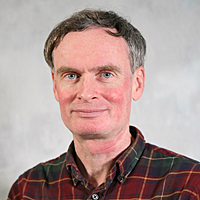 Coel Hellier合作论文数Astrophysics Group, Keele University;Department of Physics and Astrophysics, School of Chemical and Physical Sciences, Keele University19
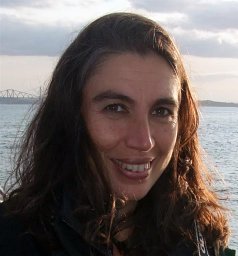 Victoria L. G. Todd合作论文数Ocean Science Consulting Limited18Elaine Simpson合作论文数18R.G. West合作论文数17Barry Smalley合作论文数17
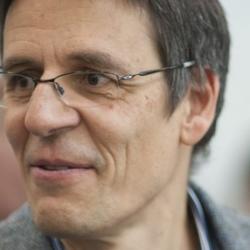 Didier Queloz合作论文数Battcock Centre for Experimental Astrophysics, Cavendish Laboratory, University of Cambridge17David R. Anderson合作论文数Astrophys Grp, Keele Univ16
 Betilda Enoch合作论文数16T. A. Lister合作论文数16
 Stéphane Udry合作论文数Department of Astronomy, Universite de Geneve16A. J. Norton合作论文数15
 Pierre Maxted合作论文数School and Chemical and Physical Sciences, Keele University15
 Neil Parley合作论文数15
 Francis Keenan合作论文数Astrophysics Research Centre, School of Mathematics and Physics, Queen's University Belfast15
 Peter Wheatley合作论文数Department of Physics, University of Warwick;Centre for Exoplanets and Habitability, University of Warwick14C. A. Haswell合作论文数14S. C. C. Barros合作论文数Queen's University Belfast14
 Yogesh C. Joshi合作论文数Astrophysics Research Centre;School of Mathematics & Physics;Queen ' s University;School of Mathematics & Physics, Queen ' s University13
 François Bouchy合作论文数Department of Astronomy, University of Geneva12C. Moutou合作论文数12
 Keith Horne合作论文数School of Physics and Astronomy, University of St Andrews12
 Robert A. Street合作论文数Palo Alto Research Center12
 Damian J Christian合作论文数Department of Physics and Astronomy, California State University, Northridge12
 Leslie Hebb合作论文数School of Physics and Astronomy;University of St Andrews;School of Physics and Astronomy, University of St Andrews12
 Amaury H. M. J. Triaud合作论文数School of Physics and Astronomy, University of Birmingham11
 Guillaume Hébrard合作论文数CNRS;Institut d'Astrophysique de Paris11A. M. S. Smith合作论文数10Neale Gibson合作论文数School of Physics, Trinity College Dublin, The University of Dublin;European Southern Observatory10
 F. Faedi合作论文数10
 James McCormac合作论文数Department of Physics, University of Warwick10
 Laura D. Williamson合作论文数Ocean Sci Consulting Ltd, Dunbar, Scotland9
 Francesco Pepe合作论文数Department of Astronomy, University of Geneva9Stempels Henricus C.合作论文数9R. S. I. Ryans合作论文数Department of Pure;Applied Physics;University of Belfast;Department of Pure, Queen ' s University of Belfast9
 Damien Ségransan合作论文数Department of Astronomy, University of Geneva8D. M. Wilson合作论文数8
 Michaël Gillon合作论文数Département d'astrophysique, géophysique et océanographie, Faculté des Sciences, University of Liège8Sophie E Cox合作论文数7
 Joaquim P. Bento合作论文数7J. Irwin合作论文数7
 Benoit Loeillet合作论文数Laboratoire d'Astrophysique de Marseille7V. Moulds合作论文数6
 Michel Mayor合作论文数Department of Astronomy, University of Geneva6Isabelle Boisse合作论文数6
 Christopher Allan Watson合作论文数Astrophys Res Ctr, Queens Univ Belfast6
 Alexandre Santerne合作论文数Laboratoire d'Astrophysique de Marseille6




