Harbour porpoises are sensitive to noise from recreational vessels, which can induce short-term behavioural reactions such as spatial avoidance. However, the long-term population consequences of such disturbances remain poorly understood. As porpoises must forage at high rates to meet their energy demands, minor behavioural disruptions may affect the animals’ energy balance, fitness and population dynamics. In this study we used an agent-based model (ABM) to quantify the potential impact of recreational boats on the Danish Belt Sea harbour porpoise population, which has declined in recent years. Porpoise movements and boat distributions were calibrated to resemble field data, and porpoise population dynamics emerged from individuals’ tendency to move away from approaching boats and competition for food. Recreational boats were assumed to operate during summer months only, and our simulations represent a ”worst-case scenario” where porpoises were assumed to avoid recreational boats as they do when close to a large vessel. Our results suggest that the number of boats currently found in the waters around Denmark (11238) may cause a 5% population decline if porpoises are assumed to respond at a distance of 500 m, 18% if they react at 1 km, and 53–72% if deterrence ranges extend to 2–5 km. Since porpoises have been reported to respond to boats within 1 km, our findings suggest that recreational boating may already have negative effects on the population. More detailed assessments of population effects would require detailed information on how strongly animals react at different distances to recreational boats to refine management recommendations.
Abstract We developed an agent-based model (ABM) to assess how area-based controls on fishing methods can reduce fishing mortality and population declines. The model incorporates the behavior and distributions of dolphins and fishing vessels, and realistic displacement of fishing effort when protection is extended. Our case study is New Zealand dolphin – Hector’s and Maui dolphins. The model was designed and calibrated using pattern-oriented modeling. Our results show that mortality due to entanglement in fishing gears has been reduced thanks to a gradual increase in dolphin protection. However, current protection is not as effective as previously thought, and scarce populations are negatively affected by Allee effects. Neither national nor international goals for reducing bycatch are met by current dolphin protection. The IUCN has recommended banning gillnet and trawl fisheries in New Zealand waters < 100m deep. For most New Zealand dolphin populations, this would be effective in achieving national and international goals for reducing bycatch. Only two populations would require additional protection. This modelling approach is also suitable for assessing impacts of bycatch and ship strikes for other marine species, making it suitable for informing management decisions in many regions.
Seal haulout behavior is of interest in relation to energetics and abundance estimation. To assess year-round and diel haulout patterns and estimate correction factors, data were obtained from 100 seals (66 harbor and 34 gray seals) tagged with satellite transmitters in Kattegat and the western Baltic Sea during 2004-2017. Kattegat harbor seals had highest haulout probability during the night throughout the year, except for adults shifting to daytime preference during the mating season. Western Baltic harbor seals had higher haulout probabilities during daytime, peaking in March-May, with lowest probabilities in December-February. We found no clear differences in haulout behavior among age classes in Kattegat, but pups of the year hauled out more than other age classes in autumn in the western Baltic. Harbor seal haulout probabilities were similar to other parts of their range during autumn, winter, and spring, but lower during summer. Our data on harbor seal haulout probabilities in both June and August, months during which abundance counts are made, suggest that previous abundance estimates were too low. Baltic gray seals mostly hauled out at night throughout the year. Juveniles had highest haulout probabilities in March-April, while pups of the year peaked during molt (May-June). Our data highlight that haulout behavior can be highly variable, even between neighboring areas and should not be geographically extrapolated, and that it is essential to include recent and local knowledge of haulout behavior to adjust the estimates of abundance based on aerial counts.
Quantifying and mitigating transboundary effects of anthropogenic activity is a key challenge in environmental management, particularly for wide-ranging species such as large predators, fish and migratory birds, relying on habitats across multiple national jurisdictions. This challenge is especially complex in marine ecosystems, where the movement of species and impacts across borders is largely unobserved. Central-place foragers, such as pinnipeds and seabirds, exemplify this complexity: abundance is typically assessed on local (regional or national) scales on land, yet at-sea movements and drivers of abundance occur on broader transboundary scales. Resolving this mismatch is critical to effective conservation, especially in areas such as the Northwest European Shelf (NWES), which features globally important predator populations (including two pinniped species) alongside growing anthropogenic pressures and a mosaic of national maritime borders. We model an unprecedented GPS dataset from 236 grey (Halichoerus grypus) and 606 harbour seals (Phoca vitulina) tracked in waters of seven countries across the NWES (United Kingdom, Ireland, France, Belgium, Netherlands, Germany and Denmark). Using regional habitat association models, we generate at-sea distribution estimates for both species at 5 km resolution, scaled to haulout counts, producing country-specific and NWES-wide density maps. Analysis of the extent to which seals making foraging trips from one country occupy the Exclusive Economic Zones (EEZs) of other countries revealed substantial transboundary overlap, particularly for grey seals, and harbour seals in the southern North Sea. A case study apportioning grey seal density within three adjacent offshore marine protected areas in different EEZs revealed that, where total density in a given area is required, overlooking transboundary distribution can underrepresent numbers by an order of magnitude. Synthesis and applications. This study provides the first comprehensive, regionally scalable distribution estimates for pinnipeds across the NWES and its constituent countries. The modelling framework is adaptable to other central-place and migratory species, supporting transboundary biodiversity assessments and international conservation policy. We discuss common limitations and misconceptions of species distribution estimates, highlight priorities for future work and underscore the need for transboundary efforts to manage wide-ranging species, providing a foundation for future ecological modelling and decision-making across shared ecosystems. Quantifier et att & eacute;nuer les effets transfrontaliers des activit & eacute;s anthropiques est un d & eacute;fi majeur dans la gestion environnementale, en particulier pour les esp & egrave;ces & agrave; large r & eacute;partition telles que les grands pr & eacute;dateurs, les poissons et les oiseaux migrateurs, qui d & eacute;pendent d'habitats r & eacute;partis sur plusieurs juridictions nationales. Ce d & eacute;fi est particuli & egrave;rement complexe dans les & eacute;cosyst & egrave;mes marins, o & ugrave; les d & eacute;placements des esp & egrave;ces et les impacts transfrontaliers sont largement inobserv & eacute;s. Les esp & egrave;ces & agrave; places centrales, telles que les pinnip & egrave;des et les oiseaux marins, illustrent bien cette complexit & eacute;: leur abondance est g & eacute;n & eacute;ralement & eacute;valu & eacute;e & agrave; l'& eacute;chelle locale (r & eacute;gionale ou nationale) sur terre, alors que leurs mouvements en mer et les facteurs qui d & eacute;terminent leur abondance se produisent & agrave; une & eacute;chelle transfrontali & egrave;re plus large. Il est essentiel de r & eacute;soudre ce d & eacute;calage pour assurer une conservation efficace, en particulier dans des zones telles que le plateau nord-ouest europ & eacute;en (NWES), qui abrite des populations de pr & eacute;dateurs d'importance mondiale (dont deux esp & egrave;ces de pinnip & egrave;des) et qui est soumise & agrave; des pressions anthropiques croissantes et & agrave; une mosa & iuml;que de fronti & egrave;res maritimes nationales. Nous avons mod & eacute;lis & eacute; un jeu de donn & eacute;es GPS sans pr & eacute;c & eacute;dent provenant de 236 phoques gris (Halichoerus grypus) et 606 phoques veaux-marins (Phoca vitulina) suivis dans les eaux de sept pays du NWES (Royaume-Uni, Irlande, France, Belgique, Pays-Bas, Allemagne et Danemark). & Agrave; partir de mod & egrave;les r & eacute;gionaux d'association d'habitats, nous avons g & eacute;n & eacute;r & eacute; des estimations de r & eacute;partitions en mer des deux esp & egrave;ces avec une r & eacute;solution de 5 km, mises & agrave; l'& eacute;chelle en fonction du nombre d'animaux recens & eacute;s sur les zones de repos terrestres, afin de produire des cartes de densit & eacute; sp & eacute;cifiques & agrave; chaque pays et & agrave; l'ensemble de la r & eacute;gion NWES. L'analyse de la r & eacute;partition des zones de chasse des phoques partant d'un pays et se superposant aux Zones & Eacute;conomiques Exclusives (ZEEs) d'autres pays a r & eacute;v & eacute;l & eacute; un chevauchement transfrontalier important, en particulier pour les phoques gris et les phoques veaux-marins dans le sud de la mer du Nord. Une & eacute;tude de cas portant sur la r & eacute;partition de la densit & eacute; des phoques gris dans trois zones marines prot & eacute;g & eacute;es adjacentes situ & eacute;es dans diff & eacute;rentes ZEE a r & eacute;v & eacute;l & eacute; que, lorsqu'il est n & eacute;cessaire de d & eacute;terminer la densit & eacute; totale dans une zone donn & eacute;e, le fait de n & eacute;gliger la r & eacute;partition transfrontali & egrave;re peut entra & icirc;ner une sous-estimation des chiffres d'un ordre de grandeur. Synth & egrave;se et applications: Cette & eacute;tude fournit les premi & egrave;res estimations compl & egrave;tes et adaptables & agrave; l'& eacute;chelle r & eacute;gionale de l Le cadre de mod & eacute;lisation est adaptable & agrave; d'autres esp & egrave;ces & agrave; place centrales et migratrices, permettant les & eacute;valuations transfrontali & egrave;res de la biodiversit & eacute; et les politiques internationales de conservation. Nous discutons des limites et des id & eacute;es fausses courantes concernant les estimations de la r & eacute;partition des esp & egrave;ces, soulignons les priorit & eacute;s pour les travaux futurs et insistons sur la n & eacute;cessit & eacute; d'efforts transfrontaliers pour g & eacute;rer les esp & egrave;ces & agrave; large r & eacute;partition, fournissant ainsi une base pour la mod & eacute;lisation & eacute;cologique et la prise de d & eacute;cision futures dans les & eacute;cosyst & egrave;mes partag & eacute;s.
Understanding animal foraging behaviour can answer pertinent questions in behavioural ecology and help conservation efforts. Baleen whales have extreme adaptations for feeding on some of the smallest animals. One species of special interest is the Bryde's whale Balaenoptera edeni, which feeds in various ways across different ecosystems. No previous study on foraging kinematics exists for the vulnerable inshore population of Bryde's whales B. edeni brydei in South Africa. Over 2 consecutive years, we deployed multisensory camera-tag dataloggers on 8 Bryde's whales in Plettenberg Bay, South Africa. Combining supervised and unsupervised clustering algorithms, we analysed 190 feeding lunges to investigate whether different foraging techniques were performed and, if so, at what depths. The whales showed 3 distinct ways of attacking their prey: (1) 'Slow lunges', which started and concluded at a very low speed, regardless of the depth at which they were performed; (2) 'Neutral lunges', occurring between 40 and 100 m depth, in which whales had high initial speeds and moved vertically in the acceleration phase of the lunge while being less acrobatic; and (3) 'Ambush lunges', used at shallow depths (<30 m), with the whale pitching upwards and accelerating faster compared to other techniques, often reaching the surface right after lunging. When engulfing prey, individual whales switched between different techniques throughout a deployment. Our findings form the basis of understanding the energetic costs of feeding techniques of this species, and for further investigation of any spatial-temporal factors that could impact the development of their foraging behaviour.
Marine ecosystems across the globe are under pressure requiring evaluations of whether marine protected areas (MPAs) remain effective in safeguarding marine life and critical habitats. Our objectives were to 1) estimate shifts in seasonal habitat suitability over a 25-year period (1997-2022) for the harbour porpoise (Phocoena phocoena) across the North Sea-Baltic Sea transition zone, and 2) quantify any spatiotemporal changes in the overlap between suitable habitats and an existing network of 62 MPAs (an area covering 16,404 km2) dedicated to harbour porpoise protection. Habitat suitability was estimated using the maximum entropy (MaxEnt) algorithm, based on satellite tag data of 111 individuals and a range of dynamic and static environmental conditions as predictor variables. Model output revealed a northward shift of medium and high suitable habitats during winter (Nov-Apr) over the study period. Changes in habitat suitability during summer (May-Oct) were also evident though without clear directional shifts. A maximum of 14.5 % of the MPAs (n = 9; area of 1096 km2) were found to overlap with highly suitable habitat during the summers of 2005-2012, with a minimum of 6.4 % (n = 4 MPAs; area of 194 km2) during the winters of 2013-2022. These results clearly indicate a decline in the spatiotemporal overlap between habitat suitability during winter and the location of MPAs dedicated to harbour porpoise protection in the North Sea-Baltic Sea transition zone. The model output may inform effective design of forthcoming MPAs under the EU Biodiversity Strategy for 2030.
The Arctic experiences rapid climate change, but our ability to predict how this will influence plant communities is hampered by a lack of data on the extent to which different species are associated with particular environmental conditions, how these conditions are interlinked, and how they will change in coming years. Increasing temperatures may negatively affect plants associated with cold areas due to increased competition with warm-adapted species, but less so if local temperature variability is larger than the expected increase. Here we studied the potential drivers of vegetation composition and species richness along coast to inland and altitudinal gradients by the Nuuk fjord in western Greenland using hierarchical modelling of species communities (HMSC) and linear mixed models. Community composition was more strongly associated with random variability at intermediate spatial scales (among plot groups 500 m apart) than with large-scale variability in summer temperature, altitude or soil moisture, and the variation in community composition along the fjord was small. Species richness was related to plant cover, altitude and slope steepness, which explained 42% of the variation, but not to summer temperature. Jointly, this suggests that the direct effect of climate change will be weak, and that many species are associated with microhabitat variability. However, species richness peaked at intermediate cover, suggesting that an increase in plant cover under warming climatic conditions may lead to decreasing plant diversity.
Understanding and predicting optimal movement decisions in complex and dynamic landscapes requires identifying the mechanisms driving movements, beyond correlations or simple energetic trade-offs between costs and gains. This is increasingly important as human activities transform landscapes at unprecedented rates, altering environmental predictability. As a result, animals must continually relearn and adapt to transformed, often degraded, environments, with consequences for their movement and fitness. We propose a structured movement framework that integrates abiotic and biotic drivers of foraging decisions. The net energyscape reflects spatial variation in net energy gains, while the optimal movement landscape includes non-energetic external modifiers, such as the landscape of fear. This framework opens improved avenues for more accurately identifying critical habitats and informing effective conservation strategies.
Theoretical research has considered how animals should optimise foraging strategies to maximise fitness, adapting search scale to exploit different habitats and minimise competition. Empirical studies have described multi-scale area-restricted search (ARS) strategies for some species, but the physical and biological mechanisms underpinning such behaviour are rarely studied. Our objectives were to quantify the presence, prevalence, and habitat associations of scale-dependent foraging for two sympatric seal species, accounting for regional variation across the seascape. We analyse a GPS telemetry dataset of 116 grey (Halichoerus grypus) and 325 harbour seals (Phoca vitulina) tracked throughout the North Sea. We test the existence of multi-scale ARS, comparing hidden Markov models (HMMs) with two ARS states against more conventional HMMs (one ARS state). We quantify regional variation and examine the scale-dependence of foraging habitat associations using post-hoc “use-encounter” models. Both species exhibited nested broad-scale and focussed ARS. Accounting for scale resulted in increases of up to 25
Rorqual whales exhibit foraging plasticity to maximize their energy intake and reduce the cost of feeding manoeuvres. Bryde's whales are known for their inter-population differences in the way they lunge, typified by acceleration, engulfment and filtration. This study presents the first description of potentially intentional interruption of lunge feeding, with whales not opening their mouth at the point of maximum speed during the acceleration, which usually corresponds to engulfing the prey. Three different hypotheses are proposed to explain the reason for aborting a lunge: (1) when aborted lunges occur isolated in time and are not followed by true lunges - defined as conventional lunges with engulfment and filtration - the reason may be that whales simply fail at catching the prey; (2) when whales abort lunges in sequence within the same feeding dive, a prey herding scenario is suggested, where whales may actively work around the prey to either reduce the prey ball size or herd the prey into a single bigger ball to maximize food intake during the next lunge; (3) to minimize the cost of the lunge, whales may also not open their mouth after sensing insufficient prey density to justify the drag costs of the lunge operation. The documentation of this foraging behaviour forms the basis to investigate further how rorquals may adjust their feeding ecology around the optimal foraging theory.
AbstractRecreational boats are common in many coastal waters, yet their effects on cetaceans and other sensitive marine species remain poorly understood. To address this knowledge gap, we used drone video footage recorded from a recreational boat to quantify how harbour porpoises (Phocoena phocoena) responded to the boat approaching at different speeds (10 or 20 knots). Furthermore, we used a hydrophone to record boat noise levels at full bandwidth (0.1–150 kHz) and at the 1/3 octave 16 kHz frequency band for both experimental speeds. The experiments were carried out in shallow waters near Funen, Denmark (55.51° N, 10.79° E) between July and September 2022. Porpoises were more likely to move further away from the path of the boat when approached at 10 knots, but not when approached at 20 knots. In contrast, they swam faster when approached at 20 knots, but not when approached at 10 knots. The recorded received sound level did not depend on how fast the boat approached, suggesting that differences in porpoise responses were related to the speed of the approaching boat rather than to sound intensity. In addition, porpoises generally reacted within close proximity (<200 m) to the approaching boat and quickly (<50 s) resumed their natural behaviour once the boat had passed, indicating that the direct impact of small vessels on porpoise behaviour was most likely small. Nevertheless, repeated exposure to noise from small vessels may influence porpoises' activity or energy budget, and cause them to relocate from disturbed areas. The approach used in this study increases our understanding of recreational boats' impact on harbour porpoises and can be used to inform efficient mitigation measures to help focus conservation efforts.
The harbour porpoise (Phocoena phocoena) is considered part of the ‘Outstanding Universal Value’ characterising the Wadden Sea World Heritage Site (WS WHS). The Trilateral Wadden Sea Plan aims to preserve the conservation status of the Trilateral Wadden Sea Cooperation Area, encompassing the WS WHS. The plan has specified two conservation targets for the harbour porpoise: (1) viable stocks and a natural reproduction capacity and (2) conservation of habitat quality for its conservation. To assess the current occurrence of the harbour porpoise in the Wadden Sea area, we collated and analysed data from regional and national research projects using telemetry, aerial surveys, strandings and passive acoustic monitoring, obtained over the years 1990–2020. The results illustrate that porpoises occur in both offshore and intertidal waters, showing seasonal movements and changes in local occurrence over time. Some porpoises displayed limited home ranges throughout the year, suggesting a possible residency for some of the animals using the Wadden Sea area. We also showed that methods, frequency and spatial coverage of monitoring activities vary among the countries Denmark, Germany and the Netherlands. We discuss the suitability of the different methods both regarding the challenges of monitoring in the complex Wadden Sea habitat as well as their ability to target the conservation aims of the WHS. We give several recommendations to assess the status of the species to meet the identified conservation aims.
Seal scarers (or acoustic harassment devices, AHDs) are designed to deter seals from fishing gear and aquaculture operations, as well as to prevent seals from entering rivers to avoid predation on valuable fish. Our study investigated the potential effects of AHDs on non-target species, specifically the Eurasian otters (Lutra lutra), by testing the reaction of two rehabilitated otters to simulated AHDs sounds at 1 and 14 kHz, with a received sound intensity of 105–145 dB re 1 µPa rms. The 1 kHz sounds were used to investigate alternative frequencies for scaring seals without scaring otters. The otters reacted to both 1 and 14 kHz tonal signals when retrieving fish from a feeding station 0.8 m below the surface. Their diving behaviour and time to extract food progressively increased as sound intensity increased for all tested sound levels. Notably, the sound levels used in our tests were significantly lower (40–80 dB) than the source levels from commercial AHDs. These findings highlight the importance of caution when using AHDs in river and sea habitats inhabited by otters, as AHDs can change their behaviour and potentially result in habitat exclusion.
The EU-funded SATURN project contributes to improve our understanding of the effects of ship noise on aquatic animals through several studies. Assessing the effects of underwater noise on aquatic animals is complex due to the diversity of taxa involved, each with their own sound sensitivity in terms of spectral and temporal aspects, as well as behavioural and physiological sensitivity to acoustic disturbances. To conduct exposure experiments on fish and invertebrates that are sensitive to the particle motion component of sound, we have developed innovative laboratory setups. Invertebrates are studied in an AQUAVIB exposure chamber, while migratory fish species are studied in a MIGRADOME swimming tunnel. The project also focuses on three marine mammal species: porpoises, pilot whales, and harbour seals. These species provide broad biological coverage of acoustic specialisations and relevant European habitats. Field data were collected using tags deployed on wild animals and dose-response relationships of marine mammal behaviour and energetics were established as a function of real-world exposure to ship noise. The effects on porpoise population are assessed using the updated DEPONS model. The results of SATURN will be transferred to stakeholders to inform management actions for the mitigation of the effects of acoustic pollution in marine habitats.
Improving species distribution models (SDMs) and species abundance models (SAMs) of woody shrubs is critical for predicting biodiversity changes in the Arctic, which is experiencing especially high warming rates. Yet, it remains relatively unexplored if SDMs and SAMs can explain local scale patterns. We aim to identify predictor differences for the distribution versus abundance of two widespread Arctic shrub species with high resolution models and to compare validation approaches to assess the models’ predictive abilities.
Recreational boats are common in many coastal waters, yet their effects on cetaceans and other sensitive marine species remain poorly understood. To address this knowledge gap, we used drone videos to quantify how harbour porpoises (Phocoena phocoena) responded to a small motorboat approaching at different speeds (10 or 20 knots). The experiment was carried out in shallow waters near Funen, Denmark (55.51° N, 10.79° E) between July and September 2022. Porpoises moved further away from the boat path during approaches at both boat speeds. In addition, porpoises swam faster when approached at 20 knots but not when approached at 10 knots, and they had a higher likelihood of moving away from the boat path when approached at 10 knots but not at 20 knots. Importantly, the received sound level did not depend on how fast the boat approached, suggesting that differences in porpoise responses were related to the speed of the boat’s approach rather than to sound itself. The porpoises’ behaviour during the minute where the boat was closest did not differ from their behaviour before boat exposure, indicating that the direct impact of small vessels on porpoise behaviour was most likely small. Nevertheless, repeated exposure to noise from small vessels could influence porpoises’ foraging efforts and cause them to relocate from disturbed areas. The approach used in this study increases our understanding of recreational boats’ impact on harbour porpoises and can be used to inform efficient mitigation measures to help conservation efforts.
Shipping is the most pervasive source of marine noise pollution globally, yet its impact on sensitive fauna remains unclear. We tracked 10 harbour porpoises for 5-10 days to determine exposure and behavioural reactions to modelled broadband noise (10 Hz-20 kHz, VHF-weighted) from individual ships monitored by AIS. Porpoises spent a third of their time experiencing ship noise above ambient, to which they regularly reacted by moving away during daytime and diving deeper during night. However, even ships >2 km away (noise levels of 93 +/- 14 dB re 1 mu Pa-2) caused animals to react 5-9 % of the time (similar to 18.6 ships/day). Ships can thus influence the behaviour and habitat use of cetaceans over long distances, with worrying implications for fitness in coastal areas where anthropogenic noise from dense ship traffic repeatedly disrupt their natural behaviour.
Danish coastal waters are a hotspot for recreational boating and harbour porpoises (Phocoena phocoena), but as there is little data on the boats' speeds and distributions, it is difficult to determine where porpoises are likely to be affected by boat noise. To gain knowledge on the potential impacts of small boats we 1) used coastal observations to assess how boat speed is related to boat size, type, distance to marinas, and wave height, and 2) used satellite images to assess the spatial distribution of small boats in Kattegat, the Sound, the Belt Sea and the Western Baltic areas (see map in Sveegaard et al., 2015). This made it possible to determine how the probability of observing boats was related to distance to the coast and number of people living within a radius of 5 km from a given area. We found that boat speeds varied among marinas and that speed was positively correlated with distance to the marina. The relationship between boat speed and size depended on boat type, with motorboats being the fastest. The satellite image analysis showed that motorboats were the dominant type in coastal waters, constituting 61.4% of the observed boats. The probability of observing boats on a satellite image covering 0.25 km2 dropped from 0.13 by the shore to 0.04 at a distance of 5 km from shore. The probability of observing boats was >10% in 6.6% of the study area, and the probability of observing boats and porpoises in the same area was >10% in 3.0% of the study area. Coastal waters are important habitats for many aquatic species, e.g., fish, invertebrates and porpoises, that use sound for communication or navigation. Our study uses a combination of observation and satellite data to identity areas where boats overlap with harbour porpoise presence and thus where the animals may be affected by boat noise. The study also illustrates how combining these two methods can yield important information on the potential impacts of boats on wildlife.
 Jonas Teilmann合作论文数National Environmental Research Institute22
 Floris M van Beest合作论文数Dept Biosci, Aarhus Univ16
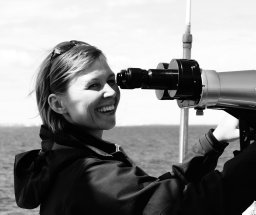 Signe Sveegaard合作论文数15
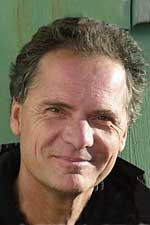 Rune Dietz合作论文数Department of Ecoscience, Aarhus University;Department of Bioscience, Faculty of Science and Technology, Aarhus University15
 Jakob Tougaard合作论文数Department of Arctic Environment11
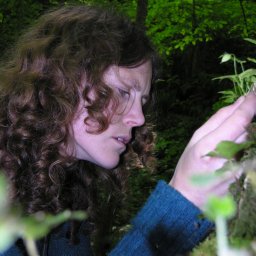 Signe Normand合作论文数Landscape Dynamics, Swiss Federal Research Institute WSL10
 Volker Grimm合作论文数Department of Ecological Modelling, Helmholtz Centre for Environmental Research - UFZ10
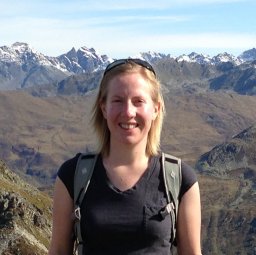 Bjorkman Anne D合作论文数8
 Richard M. Sibly合作论文数School of Biological Sciences, University of Reading8
 magda e chudzinska合作论文数Scottish Ocean Inst, Univ St Andrews7
 Bo Elberling合作论文数Department of Geosciences and Natural Resource Management, Faculty of Science, University of Copenhagen7
 Ursula Siebert合作论文数Inst Terr & Aquat Wildlife Res, Univ Vet Med Hannover7
 Anders Galatius合作论文数National Environmental Research Institute, Aarhus University7
 Urs A. Treier合作论文数7
 Christian Sonne合作论文数Department of Ecoscience, Aarhus University;Arctic Research Centre, Department of Bioscience, Faculty of Science and Technology, Aarhus University6
 Mads Forchhammer合作论文数6
 Jakob J Assmann合作论文数Aarhus Univ, Dept Biol, Aarhus, Denmark5
 Cara Gallagher合作论文数Plant Ecol & Nat Conservat, Univ Potsdam5
 Jesper Madsen合作论文数Department of Bioscience, Aarhus University5
 Esther Levesque合作论文数Dept Sci Environm, Univ Quebec Trois Rivieres5
 Magnus Wahlberg合作论文数Fjord&Bælt5
 Sonja Wipf合作论文数WSL Institute for Snow and Avalanche5
 Niels M. Schmidt合作论文数Centre for Integrated Population Ecology, www.cipe.dk5
 Mariska te Beest合作论文数4
 Chris Topping合作论文数4
 Robert Hollister合作论文数4
 Viola Pavlova合作论文数4
 Sandra Angers-Blondin合作论文数Sch Biol & Environm Sci, Liverpool John Moores Univ4
 Katherine Sarah Christie合作论文数Alaska Dept Fish & Game, Threatened Endangered & Divers Program4
 Tage Vowles合作论文数Dept Earth Sci, Univ Gothenburg4
 Maitane Iturrate-Garcia合作论文数Dept Chem & Biol Metrol, Fed Inst Metrol METAS4Nadejda A. Soudzilovskaia合作论文数4
 Xiuqing Hao (郝秀青)合作论文数4
 Jonathan von Oppen合作论文数Dept Biol, Aarhus Univ4
 F Jaroszynska合作论文数Univ Bergen, Dept Biol Sci, Bergen, Norway4
 Michele Carbognani合作论文数Univ Parma, Dept Chem Life Sci & Environm Sustainabil, Parma, Italy4Haydn J D Thomas合作论文数4
 Isla Myers-Smith合作论文数Global Change, School of GeoSciences, The University of Edinburgh4
 Lamarque Laurent J合作论文数4
 Anders Michelsen合作论文数Department of Biology, Faculty of Science, University of Copenhagen4
 Trant Andrew J合作论文数University of Victoria, Acadia University4
 Buchwal Agata合作论文数Inst Geoecol & Geoinformat, Adam Mickiewicz Univ4Allan Buras合作论文数4
 Jens-Christian Svenning合作论文数Center for Ecological Dynamics in a Novel Biosphere, Department of Biology, Aarhus University;Center for Sustainable Landscapes under Global Change, Department of Biology, Aarhus University;Aarhus Institute of Advanced Studies, Aarhus University;15. Juni Fonden4
 Chelsea Jean Little合作论文数Department of Ecology and Genetics, Uppsala University4
 Rumpf Sabine B合作论文数Department of Conservation Biology, University of Vienna;Institute for Arctic and Marine Biology, University of Tromsø;Institute of Interdisciplinary Mountain Research, University of Vienna;University of Vienna, University of Vienna4
 Daniel Ayllon合作论文数Faculty of Biology, Complutense University of Madrid4
 Frei Esther R合作论文数Ecosystem Management - Department of Environmental Systems Science, ETH Zurich4
 James D. M. Speed合作论文数Norwegian Univ Sci & Technol, NTNU Univ Museum4




