We explore an evolutionary search strategy for scaling inference time compute in Large Language Models. The proposed approach, Mind Evolution, uses a language model to generate, recombine and refine candidate responses. The proposed approach avoids the need to formalize the underlying inference problem whenever a solution evaluator is available. Controlling for inference cost, we find that Mind Evolution significantly outperforms other inference strategies such as Best-of-N and Sequential Revision in natural language planning tasks. In the TravelPlanner and Natural Plan benchmarks, Mind Evolution solves more than 98 formal solver.
Deterministic flow models, such as rectified flows, offer a general framework for learning a deterministic transport map between two distributions, realized as the vector field for an ordinary differential equation (ODE). However, they are sensitive to model estimation and discretization errors and do not permit different samples conditioned on an intermediate state, limiting their application. We present a general method to turn the underlying ODE of such flow models into a family of stochastic differential equations (SDEs) that have the same marginal distributions. This method permits us to derive families of stochastic samplers, for fixed (e.g., previously trained) deterministic flow models, that continuously span the spectrum of deterministic and stochastic sampling, given access to the flow field and the score function. Our method provides additional degrees of freedom that help alleviate the issues with the deterministic samplers and empirically outperforms them. We empirically demonstrate advantages of our method on a toy Gaussian setup and on the large scale ImageNet generation task. Further, our family of stochastic samplers provide an additional knob for controlling the diversity of generation, which we qualitatively demonstrate in our experiments.
Current Large Language Models (LLMs) are not only limited to some maximum context length, but also are not able to robustly consume long inputs. To address these limitations, we propose ReadAgent, an LLM agent system that increases effective context length up to 20x in our experiments. Inspired by how humans interactively read long documents, we implement ReadAgent as a simple prompting system that uses the advanced language capabilities of LLMs to (1) decide what content to store together in a memory episode, (2) compress those memory episodes into short episodic memories calledgist memories, and (3) take actions to look up passages in the original text if ReadAgent needs to remind itself of relevant details to complete a task. We evaluate ReadAgent against baselines using retrieval methods, using the original long contexts, and using the gist memories. These evaluations are performed on three long-document reading comprehension tasks: QuALITY, NarrativeQA, and QMSum. ReadAgent outperforms the baselines on all three tasks while extending the effective context window by 3.5-20x.
Ensembling has proven to be a powerful technique for boosting model performance, uncertainty estimation, and robustness in supervised learning. Advances in self-supervised learning (SSL) enable leveraging large unlabeled corpora for state-of-the-art few-shot and supervised learning performance. In this paper, we explore how ensemble methods can improve recent SSL techniques by developing a framework that permits data-dependent weighted cross-entropy losses. We refrain from ensembling the representation backbone; this choice yields an efficient ensemble method that incurs a small training cost and requires no architectural changes or computational overhead to downstream evaluation. The effectiveness of our method is demonstrated with two state-of-the-art SSL methods, DINO (Caron et al., 2021) and MSN (Assran et al., 2022). Our method outperforms both in multiple evaluation metrics on ImageNet-1K, particularly in the few-shot setting. We explore several weighting schemes and find that those which increase the diversity of ensemble heads lead to better downstream evaluation results. Thorough experiments yield improved prior art baselines which our method still surpasses; e.g., our overall improvement with MSN ViT-B/16 is 3.9 p.p. for 1-shot learning.
The information bottleneck framework provides a systematic approach to learning representations that compress nuisance information in the input and extract semantically meaningful information about predictions. However, the choice of a prior distribution that fixes the dimensionality across all the data can restrict the flexibility of this approach for learning robust representations. We present a novel sparsity-inducing spike-slab categorical prior that uses sparsity as a mechanism to provide the flexibility that allows each data point to learn its own dimension distribution. In addition, it provides a mechanism for learning a joint distribution of the latent variable and the sparsity and hence can account for the complete uncertainty in the latent space. Through a series of experiments using in-distribution and out-of-distribution learning scenarios on the MNIST, CIFAR-10, and ImageNet data, we show that the proposed approach improves accuracy and robustness compared to traditional fixed-dimensional priors, as well as other sparsity induction mechanisms for latent variable models proposed in the literature.
Intelligent agents need to select long sequences of actions to solve complex tasks. While humans easily break down tasks into subgoals and reach them through millions of muscle commands, current artificial intelligence is limited to tasks with horizons of a few hundred decisions, despite large compute budgets. Research on hierarchical reinforcement learning aims to overcome this limitation but has proven to be challenging, current methods rely on manually specified goal spaces or subtasks, and no general solution exists. We introduce Director, a practical method for learning hierarchical behaviors directly from pixels by planning inside the latent space of a learned world model. The high-level policy maximizes task and exploration rewards by selecting latent goals and the low-level policy learns to achieve the goals. Despite operating in latent space, the decisions are interpretable because the world model can decode goals into images for visualization. Director outperforms exploration methods on tasks with sparse rewards, including 3D maze traversal with a quadruped robot from an egocentric camera and proprioception, without access to the global position or top-down view that was used by prior work. Director also learns successful behaviors across a wide range of environments, including visual control, Atari games, and DMLab levels.
The predictive information, the mutual information between the past and future, has been shown to be a useful representation learning auxiliary loss for training reinforcement learning agents, as the ability to model what will happen next is critical to success on many control tasks. While existing studies are largely restricted to training specialist agents on single-task settings in simulation, in this work, we study modeling the predictive information for robotic agents and its importance for general-purpose agents that are trained to master a large repertoire of diverse skills from large amounts of data. Specifically, we introduce Predictive Information QT-Opt (PI-QT-Opt), a QT-Opt agent augmented with an auxiliary loss that learns representations of the predictive information to solve up to 297 vision-based robot manipulation tasks in simulation and the real world with a single set of parameters. We demonstrate that modeling the predictive information significantly improves success rates on the training tasks and leads to better zero-shot transfer to unseen novel tasks. Finally, we evaluate PI-QT-Opt on real robots, achieving substantial and consistent improvement over QT-Opt in multiple experimental settings of varying environments, skills, and multi-task configurations.
A longstanding goal of the field of AI is a method for learning a highly capable, generalist agent from diverse experience. In the subfields of vision and language, this was largely achieved by scaling up transformer-based models and training them on large, diverse datasets. Motivated by this progress, we investigate whether the same strategy can be used to produce generalist reinforcement learning agents. Specifically, we show that a single transformer-based model - with a single set of weights - trained purely offline can play a suite of up to 46 Atari games simultaneously at close-to-human performance. When trained and evaluated appropriately, we find that the same trends observed in language and vision hold, including scaling of performance with model size and rapid adaptation to new games via fine-tuning. We compare several approaches in this multi-game setting, such as online and offline RL methods and behavioral cloning, and find that our Multi-Game Decision Transformer models offer the best scalability and performance. We release the pre-trained models and code to encourage further research in this direction.
Imitation learning often needs a large demonstration set in order to handle the full range of situations that an agent might find itself in during deployment. However, collecting expert demonstrations can be expensive. Recent work in vision, reinforcement learning, and NLP has shown that auxiliary representation learning objectives can reduce the need for large amounts of expensive, task-specific data. Our Empirical Investigation of Representation Learning for Imitation (EIRLI) investigates whether similar benefits apply to imitation learning. We propose a modular framework for constructing representation learning algorithms, then use our framework to evaluate the utility of representation learning for imitation across several environment suites. In the settings we evaluate, we find that existing algorithms for image-based representation learning provide limited value relative to a well-tuned baseline with image augmentations. To explain this result, we investigate differences between imitation learning and other settings where representation learning has provided significant benefit, such as image classification. Finally, we release a well-documented codebase which both replicates our findings and provides a modular framework for creating new representation learning algorithms out of reusable components.
Learning effective visual representations that generalize well without human supervision is a fundamental problem in order to apply Machine Learning to a wide variety of tasks. Recently, two families of self-supervised methods, contrastive learning and latent bootstrapping, exemplified by SimCLR and BYOL respectively, have made significant progress. In this work, we hypothesize that adding explicit information compression to these algorithms yields better and more robust representations. We verify this by developing SimCLR and BYOL formulations compatible with the Conditional Entropy Bottleneck (CEB) objective, allowing us to both measure and control the amount of compression in the learned representation, and observe their impact on downstream tasks. Furthermore, we explore the relationship between Lipschitz continuity and compression, showing a tractable lower bound on the Lipschitz constant of the encoders we learn. As Lipschitz continuity is closely related to robustness, this provides a new explanation for why compressed models are more robust. Our experiments confirm that adding compression to SimCLR and BYOL significantly improves linear evaluation accuracies and model robustness across a wide range of domain shifts. In particular, the compressed version of BYOL achieves 76.0% Top-1 linear evaluation accuracy on ImageNet with ResNet-50, and 78.8% with ResNet-50 2x.
We propose a new method for learning image attention masks in a semi-supervised setting based on the Information Bottleneck principle. Provided with a set of labeled images, the mask generation model is minimizing mutual information between the input and the masked image while maximizing the mutual information between the same masked image and the image label. In contrast with other approaches, our attention model produces a Boolean rather than a continuous mask, entirely concealing the information in masked-out pixels. Using a set of synthetic datasets based on MNIST and CIFAR10 and the SVHN datasets, we demonstrate that our method can successfully attend to features known to define the image class.
In the Information Bottleneck (IB), when tuning the relative strength between compression and prediction terms, how do the two terms behave, and what's their relationship with the dataset and the learned representation? In this paper, we set out to answer these questions by studying multiple phase transitions in the IB objective: IB_β[p(z|x)] = I(X; Z) − βI(Y; Z) defined on the encoding distribution p(z|x) for input X, target Y and representation Z, where sudden jumps of dI(Y; Z)/dβ and prediction accuracy are observed with increasing β. We introduce a definition for IB phase transitions as a qualitative change of the IB loss landscape, and show that the transitions correspond to the onset of learning new classes. Using second-order calculus of variations, we derive a formula that provides a practical condition for IB phase transitions, and draw its connection with the Fisher information matrix for parameterized models. We provide two perspectives to understand the formula, revealing that each IB phase transition is finding a component of maximum (nonlinear) correlation between X and Y orthogonal to the learned representation, in close analogy with canonical-correlation analysis (CCA) in linear settings. Based on the theory, we present an algorithm for discovering phase transition points. Finally, we verify that our theory and algorithm accurately predict phase transitions in categorical datasets, predict the onset of learning new classes and class difficulty in MNIST, and predict prominent phase transitions in CIFAR10.
Much of the field of Machine Learning exhibits a prominent set of failure modes, including vulnerability to adversarial examples, poor out-of-distribution (OoD) detection, miscalibration, and willingness to memorize random labelings of datasets. We characterize these as failures of robust generalization, which extends the traditional measure of generalization as accuracy or related metrics on a held-out set. We hypothesize that these failures to robustly generalize are due to the learning systems retaining too much information about the training data. To test this hypothesis, we propose the Minimum Necessary Information (MNI) criterion for evaluating the quality of a model. In order to train models that perform well with respect to the MNI criterion, we present a new objective function, the Conditional Entropy Bottleneck (CEB), which is closely related to the Information Bottleneck (IB). We experimentally test our hypothesis by comparing the performance of CEB models with deterministic models and Variational Information Bottleneck (VIB) models on a variety of different datasets and robustness challenges. We find strong empirical evidence supporting our hypothesis that MNI models improve on these problems of robust generalization.
In the causal learning setting, we wish to learn cause-and-effect relationships between variables such that we can correctly infer the effect of an intervention. While the difference between a cyclic structure and an acyclic structure may be just a single edge, cyclic causal structures have qualitatively different behavior under intervention: cycles cause feedback loops when the downstream effect of an intervention propagates back to the source variable. We present three theoretical observations about probability distributions with self-referential factorizations, i.e. distributions that could be graphically represented with a cycle. First, we prove that self-referential distributions in two variables are, in fact, independent. Second, we prove that self-referential distributions in N variables have zero mutual information. Lastly, we prove that self-referential distributions that factorize in a cycle, also factorize as though the cycle were reversed. These results suggest that cyclic causal dependence may exist even where observational data suggest independence among variables. Methods based on estimating mutual information, or heuristics based on independent causal mechanisms, are likely to fail to learn cyclic casual structures. We encourage future work in causal learning that carefully considers cycles.
In the Information Bottleneck (IB), when tuning the relative strength between compression and prediction terms, how do the two terms behave, and what’s their relationship with the dataset and the learned representation? In this paper, we set out to answer these questions by studying multiple phase transitions in the IB objective: IBβ [p(z|x)] = I(X;Z)−βI(Y ;Z) defined on the encoding distribution p(z|x) for input X , target Y and representation Z, where sudden jumps of dI(Y ;Z) dβ and prediction accuracy are observed with increasing β. We introduce a definition for IB phase transitions as a qualitative change of the IB loss landscape, and show that the transitions correspond to the onset of learning new classes. Using secondorder calculus of variations, we derive a formula that provides a practical condition for IB phase transitions, and draw its connection with the Fisher information matrix for parameterized models. We provide two perspectives to understand the formula, revealing that each IB phase transition is finding a component of maximum (nonlinear) correlation between X and Y orthogonal to the learned representation, in close analogy with canonical-correlation analysis (CCA) in linear settings. Based on the theory, we present an algorithm for discovering phase transition points. Finally, we verify that our theory and algorithm accurately predict phase transitions in categorical datasets, predict the onset of learning new classes and class difficulty in MNIST, and predict prominent phase transitions in CIFAR10.
In this short note, we relate the variational bounds proposed in Alemi et al. (2017) and Fischer (2020) for the information bottleneck (IB) and the conditional entropy bottleneck (CEB) functional, respectively. Although the two functionals were shown to be equivalent, it was empirically observed that optimizing bounds on the CEB functional achieves better generalization performance and adversarial robustness than optimizing those on the IB functional. This work tries to shed light on this issue by showing that, in the most general setting, no ordering can be established between these variational bounds, while such an ordering can be enforced by restricting the feasible sets over which the optimizations take place. The absence of such an ordering in the general setup suggests that the variational bound on the CEB functional is either more amenable to optimization or a relevant cost function for optimization in its own regard, i.e., without justification from the IB or CEB functionals.
In the Information Bottleneck (IB), when tuning the relative strength between compression and prediction terms, how do the two terms behave, and what's their relationship with the dataset and the learned representation? In this paper, we set out to answer these questions by studying multiple phase transitions in the IB objective: $\text{IB}_\beta[p(z|x)] = I(X; Z) - \beta I(Y; Z)$ defined on the encoding distribution p(z|x) for input $X$, target $Y$ and representation $Z$, where sudden jumps of $dI(Y; Z)/d \beta$ and prediction accuracy are observed with increasing $\beta$. We introduce a definition for IB phase transitions as a qualitative change of the IB loss landscape, and show that the transitions correspond to the onset of learning new classes. Using second-order calculus of variations, we derive a formula that provides a practical condition for IB phase transitions, and draw its connection with the Fisher information matrix for parameterized models. We provide two perspectives to understand the formula, revealing that each IB phase transition is finding a component of maximum (nonlinear) correlation between $X$ and $Y$ orthogonal to the learned representation, in close analogy with canonical-correlation analysis (CCA) in linear settings. Based on the theory, we present an algorithm for discovering phase transition points. Finally, we verify that our theory and algorithm accurately predict phase transitions in categorical datasets, predict the onset of learning new classes and class difficulty in MNIST, and predict prominent phase transitions in CIFAR10.
In discriminative settings such as regression and classification there are two random variables at play, the inputs X and the targets Y. Here, we demonstrate that the Variational Information Bottleneck can be viewed as a compromise between fully empirical and fully Bayesian objectives, attempting to minimize the risks due to finite sampling of Y only. We argue that this approach provides some of the benefits of Bayes while requiring only some of the work.
Tractable models of human perception have proved to be challenging to build. Hand-designed models such as MS-SSIM remain popular predictors of human image quality judgements due to their simplicity and speed. Recent modern deep learning approaches can perform better, but they rely on supervised data which can be costly to gather: large sets of class labels such as ImageNet, image quality ratings, or both. We combine recent advances in information-theoretic objective functions with a computational architecture informed by the physiology of the human visual system and unsupervised training on pairs of video frames, yielding our Perceptual Information Metric (PIM). We show that PIM is competitive with supervised metrics on the recent and challenging BAPPS image quality assessment dataset and outperforms them in predicting the ranking of image compression methods in CLIC 2020. We also perform qualitative experiments using the ImageNet-C dataset, and establish that PIM is robust with respect to architectural details.
Intuitively, one way to make classifiers more robust to their input is to have them depend less sensitively on their input. The Information Bottleneck (IB) tries to learn compressed representations of input that are still predictive. Scaling up IB approaches to large scale image classification tasks has proved difficult. We demonstrate that the Conditional Entropy Bottleneck (CEB) can not only scale up to large scale image classification tasks, but can additionally improve model robustness. CEB is an easy strategy to implement and works in tandem with data augmentation procedures. We report results of a large scale adversarial robustness study on CIFAR-10, as well as the ImageNet-C Common Corruptions Benchmark, ImageNet-A, and PGD attacks.
 Alexander A. Alemi合作论文数Anthropic11
 Kuang-Huei Lee合作论文数Google DeepMind8
 Joshua V. Dillon合作论文数Luma AI6
 Kevin P Murphy合作论文数Google DeepMind6
 Sergio Guadarrama合作论文数Google DeepMind5
 Shumeet Baluja合作论文数Google4
 Craig Gotsman合作论文数Ying Wu College of Computing, New Jersey Institute of Technology4
 Andrey Zhmoginov合作论文数Stealth3
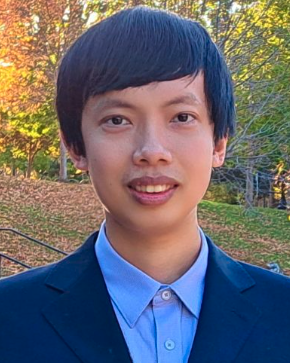 Tailin Wu (吴泰霖)合作论文数AI for Scientific Simulation and Discovery Lab, Department of Engineering, Westlake University3
 Ben Poole合作论文数Google Brain3
 John Canny合作论文数Department of Electrical Engineering and Computer Science, University of California, Berkeley;Division of Computer Science, University of California, Berkeley3
 Jonathan Chung-Kuan Huang合作论文数Google Inc.3
 Rachna Dhamija合作论文数Harvard University3Andy Ozment合作论文数3mariana c baca合作论文数2
 Anoop Korattikara合作论文数Arta Finance2Warren R. Morningstar合作论文数Google Res, Mountain View, CA 94043 USA2
 Zbigniew Wojna合作论文数UCL, London, England2
 Rif A. Saurous合作论文数Google Research2
 Pieter Abbeel合作论文数Department of Electrical Engineering and Computer Sciences, University of California, Berkeley;Amazon2
 Alireza Fathi合作论文数Google DeepMind2
 Menglong Zhu合作论文数DJI2
 Danijar Hafner合作论文数University of Toronto;DeepMind2
 Vivek Rathod合作论文数Apple2
 Chen Sun (孙晨)合作论文数2
 Yang Song合作论文数Waymo2
 Saurabh Singh合作论文数Poetiq2
 Dawn Song (宋晓东)合作论文数Department of Electrical Engineering and Computer Science, University of California, Berkeley2
 Mark Sandler合作论文数Google Research2
 Xinyun Chen (陈昕昀)合作论文数Meta Superintelligence Labs2
 Ling Huang (黄铃)合作论文数AHI Fintech2
 Honglak Lee合作论文数Electrical Engineering and Computer Science Department, College of Engineering, University of Michigan;LG AI Research2Stuart Schechter合作论文数SandCart Studio;Personal Maker Space2L. Weitzman合作论文数Initiative in Innovative Computing ,Harvard University2Alister Lewis-Bowen合作论文数2
 Mario Frank合作论文数ETH Zurich, Zurich, Switzerland2
 Sherry Yang合作论文数1Umesh Shankar合作论文数1
 Steven H. Wang合作论文数ETH Zürich1
 Lisa Lee合作论文数Google DeepMind1
 Anirban Samaddar合作论文数1Katie Everett合作论文数Massachusetts Institute of Technology1
 Bryan Seybold合作论文数Google;Google DeepMind1
 Cody Wild合作论文数1
 Neel Alex合作论文数University of Cambridge1Winnie Xu合作论文数University of Toronto1
 Xin Chen合作论文数Univ Hong Kong, AI Safety, Hong Kong, Peoples R China1
 Sandeep Madireddy合作论文数Argonne Natl Lab, Lemont, IL 60439 USA1
 Sam Toyer合作论文数Dept Elect Engn Comp Sci, Univ Calif Berkeley1




