Aims To identify the range of internal specialist management expertise providers in the NHS and explore their blending with external organisations to address complex organisational challenges.Methods Ongoing quantitative and qualitative research (e.g. interviews) and a national networking event and workshop organised by the University of Bristol with NHS partners.Findings There is a diverse NHS ecosystem of what we term internal consultancies where strategic benefits can result from combining their contextual insight with the specialist skills of external providers. Effective blending can build sustainable management capacity, deliver better value and reduce over-reliance on external consultants.Conclusion There is a need for coordinated action across policy, procurement and workforce development to support a network of internal consultancy/expertise and its periodic blending with other partners, including external organisations.
Abstract Management consultancy in the public sector faces persistent criticism regarding efficiency, ethics, and effectiveness. This study examines governance challenges, such as co-production complexities, secrecy under “commercial confidentiality,” and sales-driven incentives, which undermine accountability and service quality. Emerging trends in transparency and socially responsible practices offer pathways for reform. Key recommendations include stricter procurement rules, continuous monitoring of consultancy use, project evaluation transparency, and aligning consultant incentives with ethical goals. Strengthened governance and external oversight are essential to ensure consultancy delivers genuine public value.
Efforts to improve the governance of external management consulting have a mixed record. Attention has focused on either procurement (and insourcing) and/or raising standards through professionalization. The persistence of critiques and public scandals suggests that more is needed from the industry, policy-makers, clients/purchasers and other stakeholders. In this article, the authors highlight how systemic problems with consulting arise from the nature of its reward and value systems and the resulting lack of openness of consultants and their clients-none of which have been adequately addressed through traditional governance mechanisms. The authors explain why these neglected areas need attention. This can be done, in part, by drawing on new trends and classic dilemmas. Is the rise of purpose-led or alternative organizational forms, as well as moves to facilitate transparency and the speaking of 'truth to power', improving the governance and outcomes of external management consultancy? Most research on the use of external management consultancy in the public sector focuses on critique, with less attention given to improving governance. Where governance has been considered, a longstanding concern has been with client procurement and consultant professionalization. However, the persistence of malpractice and critique suggests a need for complementary approaches. In this review article, the authors explore three such options which are linked to core problems in the practice and use of consulting: reward systems and values in consulting firms and spaces where both clients and consultants can openly challenge and speak 'truth to power'. These are examined in the wider context of an apparent move towards 'purpose-led' consulting where profit is held to be less important. This is seen to present an opportunity for reform, but is insufficient on its own without other actors and activists intervening and traditional approaches being strengthened or radicalized.
Introduction Healthcare organisations around the world are under increasing pressure to improve their productivity and quality of care, while achieving financial viability. In response, policy makers have argued for greater investment to support the development of clinical leadership at all levels. There is now a significant body of evidence demonstrating the positive impact of the increased participation of doctors on hospital boards on outcomes such as quality ratings, patient satisfaction and improved decision making. This positive impact is attributed to the knowledge that doctors have of the healthcare 'core-business', strong communication skills and their greater credibility. Secure in their profession, doctors may be willing to adopt more risky strategies, while always advocating for the patients. However, less is known about the relationships and dynamics created between the doctors (if more than one present on the board), executives and non-executives, as well as between the doctors and the chief nurse. Aims and objectives of the research project or activity Focusing on NHS provider organisations, this paper seeks to explore why senior medical leadership makes a difference to outcomes. Specifically, it reports on a study investigating the role of senior medical leaders in change management, to identify their unique leadership skills, behaviours and values, both in the context of the board of directors as well as in the wider organizational environment. The study also examined the relationships between doctors on boards, between each other (when more than one, executive or non-executive, is on the board), and between the medical director and the chief nurse. The aim here was, to understand if these relationships have a specific impact on governance and organisational outcomes. Method or approach Because of the exploratory nature of the study, essentially a scoping project, a qualitative methodology was adopted. Following two pilot interviews, a questionnaire was developed and refined. Twelve semi-structured interviews of physician executive directors from 11 different organizations were then conducted. The study used a maximum variation sampling method, by including doctors with none, one, or more than one additional doctors serving on the same board (executive or non-executive). The sample included NHS organizations that varied on several dimensions: acute/mental health, bed capacity, number of employees, Care Quality Commissioning ratings. A reflexive thematic analysis was chosen to allow for flexible and evolving coding. Transcripts for the first 6 interviews were checked and corrected, followed by initial coding and theme generation to refine research questions. These steps were repeated for the last 6 interviews. Finally, codes and themes were mapped, reviewed and finalised prior to defining, naming and recording the themes. Findings This study revealed that doctors are very efficient in the process of change management, through good operational knowledge, innovative ideas, and ability to identify and overcome many common barriers to change. It found that doctors in senior leadership roles tend to invest in personal relationships, they trust the people around them while helping them develop, and could think and act strategically. Doctors on boards displayed a mixture of the traditionally described leadership styles and behaviours and they lead based on the circumstances, the abilities of the people around them and the organizational culture. These approaches were combined with innovation, investment on relationships and learning, as suggested by complexity leadership frameworks. Additionally, the found evidence that some senior doctors on boards created coalitions that consist of three members in total: themselves, the chief nurse plus one more doctor board member (either executive or non-executive). The members of these coalitions were more likely to support each other towards either board reassurance or prioritisation. Lastly, the study identified several weaknesses of non-clinical board members, such as unrealistic expectations about change and intolerance to ambiguity. Here, the contribution of senior medical leaders was essential to achieve a more balanced approach towards organizational governance. Key messages This paper adds to the evidence base relating to the unique leadership skills, values and behaviours of doctors in senior leadership positions, which can be invaluable for healthcare organizations seeking to balance multiple goals of efficiency, high quality patient care and financial sustainability. It also uncovers the dynamic relationships between doctors on the board, who support, encourage, and advise each other, and form coalitions. A better understanding of the mechanisms and the processes behind the positive overall impact of increased physician representation in senior leadership positions is essential for evidence-based policymaking. Crucially it highlights a minimum requirement for doctor representation on boards, which is more than just the mandatory medical director role.
The evidence base on the consequences of medical leadership for the performance of healthcare organizations remains fragmented. Drawing on five years' worth (2013-2017) of data, the authors explore the impact of increasing medical participation in the senior management teams (SMTs) of acute care hospital trusts in the English National Health Service. Employing a quasi-experimental research design, based on propensity using score matching and GMM system of equations, the analysis shows the positive effect of having a critical mass of medical leaders on the SMT of public hospitals on patient experience scores and infection rates.
Abstract This article reflects on the disproportionate academic and media attacks that management consultancy seems to attract and links this to the failure of developing strong professional institutions on the example of comparable professions such as law and accountancy. In particular, whilst a professional project was initially at play within this sector, it eventually lost support from key stakeholders, in particular the large firms who employed a majority of management consultants. As such professional associations in the management consultancy field engaged in a series of accommodation strategies to win back some corporate support. The result was a weaker form of corporate professionalism.
While recent debates about the professions have noted the pervasive influence of organizations, less is known about how this plays out at the macro or occupational level. In this paper, we address this concern, focusing on corporate professionalism (CP) as an emergent form which appears to be shaped by organizational interests. Drawing on relational perspectives of professions, we focus on the strategies of two associations in the UK management consultancy field over a 50-year period. Our analysis of archival and interview data reveals how, over time, both associations substantially modified their strategies in response to shifting priorities of firms employing large numbers of consultants—abandoning early commitments to occupational professionalism in favor of a corporate form. A key contribution of the paper is to develop a process model for understanding how and why CP emerges. We also highlight the need to pay more attention to the often neglected role of employing organizations in accounts of professional formation in contemporary society.
Opinion is divided on how far and in what ways professionalism as a mode of regulation has evolved. To date, attention has focused on the impact of neoliberal political and economic ideologies that challenge the idea that professions should be trusted to regulate themselves. This article further examines the impact of these attacks on professionalism and assesses whether they have triggered a process of decline. Drawing on a range of documentary sources from the US, it suggests that, while professional modes of regulation are evolving, the dominant pattern is one of continuity. The analysis also draws attention to the path-dependent nature of professionalism and how it is associated with increasing returns for key stakeholders: producers, government regulators and employers. The article's main contribution is to highlight these trends empirically and raise questions about the accuracy and value of grand narratives that over-emphasise change and understate the self-reinforcing nature of professional modes of regulation.
Expenditure on management consultants in public sector organizations is generally seen as contributing to a "hollowing out" of the state through the substitution of internal management capability. However, there is little systematic evidence for this view which also ignores how public sector managers may, themselves, drive consulting use. Looking at 125 English public hospitals over 6 years, we explore the relationship between the development and composition of management functions and spending on consultants. Our findings show the absence of a substitution effect and, therefore, challenge the "hollowing out" thesis. Instead, they point to a more active, occupationally varied and political use of consultancy. We find that larger management functions overall are associated with greater reliance on consultants-a complementary relationship. However, where a higher proportion of managers are engaged in internal consulting functions, this results in the lower use of external management consultants, with implications for theory, research and policy.
Public management reforms worldwide have triggered processes of re-stratification in professions leading to the emergence of ‘administrative elites’ and potential changes in the nature of social status hierarchies. We investigate the nature of these adjustments and their supporting conditions in the context of English publicly owned hospitals. Applying fsQCA, our analysis shows a form of adaptation of the social status hierarchy of medicine to management demands. However, the emergence of a management criterion for seniority is only apparent under certain conditions. This suggests a form of path-dependent adaptation which reinforces, rather than challenges, the status position of elite doctors.
The human resource (HR) function has become increasingly professionalised in recent times, with the development of HR certification and degree level qualifications. In this study, we assess the implications of HR professional qualifications using data from the British 2011 Workplace Employment Relations Study. Specifically, we focus on whether the adoption of high-performance work practices (HPWPs) is greater, and the relationship between these practices and organisational performance is stronger, in workplaces with a qualified HR professional. Our analysis reveals a mixed picture. While the presence of qualified HR professionals is associated with HPWP adoption, it is not associated with a stronger relationship between HPWPs and organisational performance. Therefore, although the results suggest that professionalisation may be having some impact on the influence of the HR function, this is far from transformational.
The growing use of external management consultancy services by public sector organizations has generated controversy. Some claim that users have become overreliant on, or even addicted to, this source of knowledge. However, our understanding of this phenomenon and the precise nature of its risks is underdeveloped. In this article, we address these concerns by focusing on whether using consulting services inflates future demand and on its consequences for efficiency. This is examined in the context of the English National Health Service and the adoption of New Public Management practices such as outsourcing and private finance initiative contracting. Based on an analysis of four years of data, the results suggest that using consulting services is associated with demand inflation and has negative implications for client organizational efficiency. These findings reveal a strong management consultancy effect, emphasizing the risks associated with demand inflation, with implications for both theory and policy.
The process of corporatization in public services has led to the emergence of new, more autonomous organizational forms. However, while these reforms have been centrally about the development of management capabilities in public sector organizations, we know surprisingly little about what this process involves. To address this concern, we draw on the literature on administrative intensity (AI) to frame hypotheses about the likely relationship between corporatization and investments in management and administration, and the consequences of these investments for performance. As an empirical case, we then focus on the effects of Foundation Trust status on AI and efficiency, effectiveness, and responsiveness in the acute care hospital sector in the English NHS. Based on a database of nine years (2008/09-2016/17) and dynamic panel data regressions, the results show that corporatization leads to a leaner administration and improved organizational efficiency, effectiveness, and responsiveness. In addition, the analysis reveals that lower levels of AI positively mediate the relationship between corporatization and performance, although only in relation to the efficiency dimension. These findings highlight the crucial, but previously misunderstood, importance of lean administration as part of the corporatization reform package, with implications for theory, research, and policy.
This Commentary looks at the recent experience of China's healthcare system in dealing with the Covid-19 outbreak.Focusing on events in the city of Wuhan between Dec 2019 and April 2002 it shows how, initially, the response to the pandemic was impaired by a legacy of past reforms that had required public health organizations such as hospitals and community healthcare centers to operate as mini businesses.By increasing service fragmentation, this legacy left China's healthcare system badly prepared for the recent crisis.Specifically, it resulted in poor intelligence and patients bypassing primary care to access larger tertiary hospitals, with consequences for overcrowding and spiraling infection rates.However, China's experience also points to the role of the City administration in overcoming these obstacles, using the established hierarchy to adopt a system wide perspective and quickly re-organize services.This involved formalizing the role of GPs in the gatekeeping and triage of patients with Covid-19 symptoms and in the process, helping to fastforward earlier reforms aimed at improving service integration.This policy highlights the advantages of public ownership and control over healthcare in the Chinese case with implications not just for policy makers, but also managers and clinical leaders locally who must enact these changes.
Despite growing interest on the impact of hybrid professional manager roles in public sector organizations, less attention has focused on their population and whether they have advanced as an occupational interest. Using a longitudinal administrative dataset, we explore trends in the growth, characteristics and organizational positions of medical managers in the UK NHS. While they seem to have reinforced their position at the strategic apex of hospitals, especially those with elite status, there is little evidence of their ability to control the jurisdiction of management. This highlights the slow, uneven development of hybrid professional managers as an occupational interest.
Over thirty years since Eliot Freidson’s seminal account of re- stratification and the emergence of administrative elites in professions, we still know little about how far this process has been associated with changes in the criteria for determining seniority and authority. Have new criteria emphasising proven management competency for advancement in professional management hierarchies displaced those of professional status, and if so, under what conditions? In this paper, we investigate this matter focusing on senior medical management roles in English public hospitals. Drawing on a mix of administrative data sources and applying fsQCA, we highlight both change and continuity in the prevailing status hierarchy of medicine. Our findings reveal the continued influence of externally derived professional status criteria for access to the highest-ranking professional manager roles. Additionally, the configurational approach shows how, in situations where hospitals have achieved greater formal autonomy (corporatisation), different criteria emphasising management competency have also been influential.
Purpose Globally, there have been calls to enhance medical leadership in healthcare, although we know little about how this objective has been pursued in low-income middle-income contexts such as India. This paper highlights the opportunities to strengthen leadership in this context, while also considering the obstacles to this change and how they might be overcome. Methods The paper draws on a review of available secondary sources including published journal articles in the academic and grey literature, reports published by the Indian government and transnational organisations. The search focused specifically on medical leadership, clinical leadership, management and governance in the Indian healthcare system. Findings India is currently in the throes of the world’s biggest experiment in universal healthcare popularly known as ‘Modicare’. However, these reforms have been criticised with regard to the lack of solid healthcare management framework in the country. The current National Health Policy highlights the need for specialised ‘public health management cadre, human resource governance and leadership development’. Nevertheless, the available research highlights a gap in the research on this topic, specifically about the development of medical leadership competencies. Our findings highlight not only the opportunities to develop medical leadership but also the obstacles to this process. Inadequate training and education, spiralling workloads, low salaries in the public sector and a growing culture of kickbacks have all stifled attempts to engage more doctors in leadership roles. Conclusions While the Indian government is now focusing more on the need to strengthen medical leadership, there are significant barriers to change. In future, building leadership capabilities will require deeper reforms in training, regulation and remuneration of doctors to generate sufficient incentives especially in the public sector.
 Veronesi Gianluca合作论文数Leeds University Business School, The University of Leeds24
 Martin Kitchener合作论文数National Center for Personal Assistance Services16Richard Whipp合作论文数15
 Kim Hoque合作论文数Warwick Business School, University of Warwick14
 Stephen Ackroyd合作论文数Management School, Lancaster University12Daniel Muzio合作论文数Business Sch, Newcastle Univ11
 Matthias Kipping合作论文数The Schulich School of Business, York University9
 Mike Dent合作论文数Staffordshire Univ8
 Richard M. Walker合作论文数Department of Public Policy, College of Liberal Arts and Social Sciences, City University of Hong Kong7
 Miguel Martinez Lucio合作论文数Alliance Manchester Business School, Faculty of Humanities, The University of Manchester6
 Andrew J. Sturdy合作论文数School of Management, University of Bristol/Cabot Institute for the Environment, University of Bristol6
 Chris Lonsdale合作论文数Australian Catholic University6
 Ali Altanlar合作论文数6Francesco Vallascas合作论文数5
 Alex de Ruyter合作论文数5
 Mark Stuart合作论文数Business School, Leeds University;University of Leeds;Leeds University Business School, University of Leeds5peter kragh jespersen合作论文数4Sundeep Aulakh合作论文数Univ Leeds4
 Robert Mackenzie合作论文数4
 Chris Forde合作论文数4
 Irena Grugulis合作论文数Univ Durham4
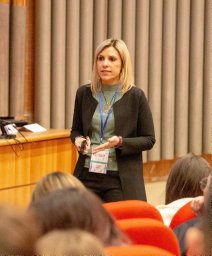 Fabrizia Sarto合作论文数Department of Economics, Management, Institutions, University of Naples "Federico II",3
 Nuria Reguera-Alvarado合作论文数Dept Accounting & Financial Econ, Univ Seville3
 Andy Charlwood合作论文数Warwick Business School;University of Warwick;Warwick Business School, University of Warwick3Antonio Blanco-Oliver合作论文数3
 Kathy Hartley合作论文数Salford Business School, University of Salford2
 Jixia Mei (梅继霞)合作论文数School of Public Administration, Zhongnan University of Economics and Law2
 Jennifer Tomlinson合作论文数2
 Ellen Kuhlmann合作论文数Institute of Economics, Labour and Culture, Goethe-University Frankfurt2
 Kate Hardy合作论文数2
 Alessandro Zardini合作论文数University of Verona2
 Bernadette Bullinger合作论文数2
 Annette Davies合作论文数2
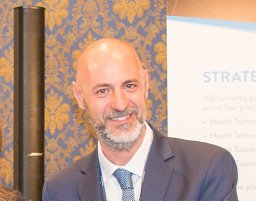 Federico Lega合作论文数Institute of Public Administration and Health Care Management, Bocconi University2Bob Hinings合作论文数2Indareth Neogy合作论文数2F. Lega合作论文数1K. Hoque合作论文数1Robert McGregor合作论文数1
 Helen Skouteris合作论文数1
 Christopher Robin Hinings合作论文数Department of Strategic Management and Organization, University of Alberta1
 Yaru Chen合作论文数1
 Kamal Gulati合作论文数Dept Neurol, All India Inst Med Sci1
 Ya-Ru Chen合作论文数Samuel Curtis Johnson Graduate School of Management, Cornell SC Johnson College of Business, Cornell University1
 Zhiyong Liu (刘智勇)合作论文数School of Medicine and Health Management, Tongji Medical College, Huazhong University of Science and Technology1
 Tracey Adams合作论文数Department of Sociology, University of Western Ontario1
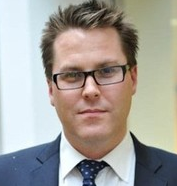 Justin Waring合作论文数Health Services Management Centre, School of Social Policy, University of Nottingham1
 Graeme Currie合作论文数Warwick Business School, The University of Warwick1
 David Angrave合作论文数1




