The mediation by teachers of the many activity systems that constitute any given class has traditionally been an ignored aspect of teaching. In this paper we argue that the teacher's responsibility for this mediation exists and must therefore be accounted for in the praxis of teaching. In addition we argue for the cogenerative dialogue as one viable solution for teachers to mediate in an ethically responsive manner. We construct these arguments because teachers must be better prepared to understand their complex role in the classroom along with their ethical responsibility to the students for the effective negotiation of the systems they navigate each day. (C) 2009 Elsevier Ltd. All rights reserved.
We present cogenerative dialogue as an authentic research tool which, when conducted properly, can address some of the ethical issues inherent in classroom research. To begin with, there is the question of the participation of the researcher in the cogenerative dialogue. Next, we present cogenerative dialogue as an ideal tool to instigate interaction and participation among the participants in classroom research: students, teachers, and researcher. And finally we present cogenerative dialogue as tool to facilitate the discussion of the ethical issues that are part of the research setting (e.g., class). URN: urn:nbn:de:0114-fqs0602382
In this cogenerative dialogue about cogenerative dialogue as qualitative research method and ethics, we move beyond our individual contributions in this special issue to begin a process that we hope will be carried further by our readers. We conclude that cogenerative dialoguing constitutes an excellent starting point towards enacting equity in practice. URN: urn:nbn:de:0114-fqs0602449
Coteaching, like any student teaching method, is filled with ethical questions and communicative problems. With the metalogue presented in "Warts and all: Ethical dilemmas in implementing the coteaching model" as the base this paper focuses on the experience of Matt, the student teacher, and the ethically issues he faced as a coteacher. In line with the experiences of Matt I reanalyze the question of how change can be implemented given the variety of philosophies of education inherent in a large-scale project. Finally, the cogenerative dialogue is presented as an ethical tool to increase the quality and frequency of communication between participants. URN: urn:nbn:de:0114-fqs0604228
Coteaching ist – wie jede andere Lehrmethode – eng verbunden mit ethischen Fragen und kommunikativen Problemen. Dieser Artikel bezieht sich auf den Beitrag Ethische Dilemmata bei der Implementierung des Coteaching-Modells und nimmt die Erfahrung von Matt, einem Lehrer in Ausbildung, in den Blick, sowie die ethischen Probleme, mit denen er als Coteacher konfrontiert wurde. An diese Erfahrungen anknupfend reanalysiere ich die Frage, wie Veranderung implementiert werden kann, unter der Annahme, dass einem Grosprojekt wie diesem vielfaltige Lehrphilosophien innewohnen. Schlieslich wird der kogenerative Dialog vorgestellt – als ein ethisches Werkzeug, das dazu dienen kann, Quantitat und Qualitat der Kommunikation zwischen den Teilnehmenden zu verbessern. URN: urn:nbn:de:0114-fqs0604228
In this paper, we outline several ethical considerations that arose in our collaborative research in urban classrooms. Specifically, Beth discusses the concerns she had as a beginning researcher with regard to the demands she placed on Ian, the subject of her research, during his first year of teaching. Together, we then discuss a sensitive issue that emerged in the data analysis and the implications of the decision to write about the issue. Finally, Beth outlines an argument for the misalignment between the theoretical framework used in her study and Ian's roles and participation in the research process. Rather than offering suggestions, we envision that this paper will spark questions for other qualitative researchers who plan to collaborate with practitioners. URN: urn:nbn:de:0114-fqs0501185
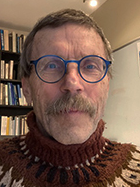 Wolff-Michael Roth合作论文数University of Victoria13
 Mijung Kim合作论文数Asan Medical Center, University of Ulsan College of Medicine2Lilian Pozzer Ardenghi合作论文数1ed lehner合作论文数1sarahkate lavan合作论文数1
 Gholam Reza Emad合作论文数1
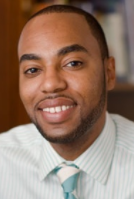 Christopher Emdin合作论文数Department of Science Education, Teachers College, Columbia University1Leanna Boyer合作论文数1
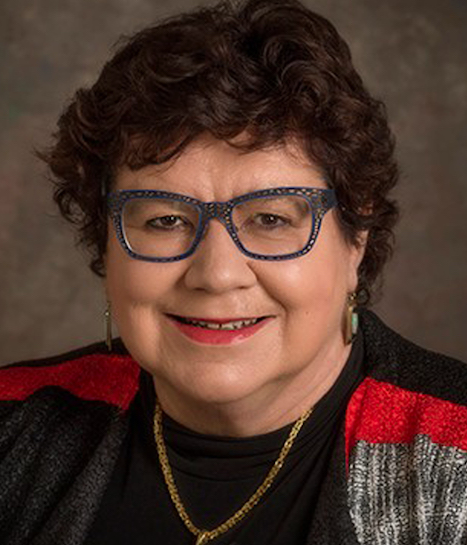 Kathryn Scantlebury合作论文数Department of Chemistry & Biochemistry, University of Delaware;College of Arts and Sciences, University of Delaware1
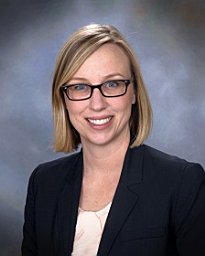 Beth Wassell合作论文数College of Education, Rowan University1Michiel Van Eijck合作论文数1
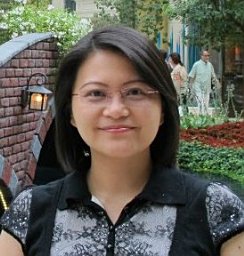 Pei-Ling Hsu合作论文数National Tsing Hua University1
 Giuliano Reis合作论文数1




