Magnetic resonance (MR) imaging is the most sensitive clinical tool in the diagnosis and monitoring of multiple sclerosis (MS) alterations. Spinal cord evaluation has gained interest in this clinical scenario in recent years, but, unlike the brain, there is a more limited choice of algorithms to assist spinal cord segmentation. Our goal was to investigate and develop an automatic MR cervical cord segmentation method, enabling automated and seamless spinal cord atrophy assessment and setting the stage for the development of an aggregated algorithm for the extraction of lesion-related imaging biomarkers. The algorithm was developed using a real-world MR imaging dataset of 121 MS patients (96 cases used as a training dataset and 25 cases as a validation dataset). Transversal, 3D T1-weighted gradient echo MR images (TE/TR/FA = 1.7–2.7 ms/5.6–8.2 ms/12°) were acquired in a 3 T system (Signa HD, GEHC) as standard of care in our clinical practice. Experienced radiologists supervised the manual labelling, which was considered the ground-truth. The 2D convolutional neural network consisted of a hybrid residual attention-aware segmentation method trained to delineate the cervical spinal cord. The training was conducted using a focal loss function, based on the Tversky index to address label imbalance, and an automatic optimal learning rate finder. Our automated model provided an accurate segmentation, achieving a validation DICE coefficient of 0.904 ± 0.101 compared with the manual delineation. An automatic method for cervical spinal cord segmentation on T1-weighted MR images was successfully implemented. It will have direct implications serving as the first step for accelerating the process for MS staging and follow-up through imaging biomarkers.
In recent times, health applications have been gaining rapid popularity in smart cities using the Internet of Medical Things (IoMT). Many real-time solutions are giving benefits to both patients and professionals for remote data accessibility and suitable actions. However, timely medical decisions and efficient management of big data using IoT-based resources are the burning research challenges. Additionally, the distributed nature of data processing in many proposed solutions explicitly increases the threats of information leakages and damages the network integrity. Such solutions impose overhead on medical sensors and decrease the stability of the real-time transmission systems. Therefore, this paper presents a machine-learning model with SDN-enabled security to predict the consumption of network resources and improve the delivery of sensors data. Additionally, it offers centralized-based software define network (SDN) architecture to overcome the network threats among deployed sensors with nominal management cost. Firstly, it offers an unsupervised machine learning technique and decreases the communication overheads for IoT networks. Secondly, it predicts the link status using dynamic metrics and refines its strategies using SDN architecture. In the end, a security algorithm is utilized by the SDN controller that efficiently manages the consumption of the IoT nodes and protects it from unidentified occurrences. The proposed model is verified using simulations and improves system performance in terms of network throughput by 13%, data drop ratio by 39%, data delay by 11%, and faulty packets by 46% compared to HUNA and CMMA schemes.
Biocleaning technology is based on the use of safe environmental microorganisms for green cultural heritage (CH) restoration. Compared with traditional cleaning products, this biological technique is very specific, effective, and nontoxic. This innovative biotechnological application has been used for recovering diverse monuments and artworks. Most CH in situ surfaces that are treated with microorganisms are small areas; however, some important pathologies, such as salt contamination, can affect high dimension artistic surfaces. The purpose of this study is to analyze and overcome the problems and limitations of scaling up the bio-desalination protocol for in situ applications. Three water-based gel delivery systems and three heating systems were tested in situ and evaluated in terms of performance difficulty, efficacy, and costs. The tests were carried out on the salt contaminated granite pavement of Cristo Chapel of Sta Ma de Conxo in Santiago de Compostela (Spain). Ground agar 2% and a heating electric mat were selected as the best performing systems. The implemented protocol was applied for the bio-desalination of the 233 m2 Chapel pavement. Conductivity, nitrate–nitrite measurements, biological monitoring, and digital image analysis were performed to determine the efficacy of the treatment. This research allowed for the development of an innovative and optimized in situ, high dimension bio-desalination application protocol transferable to other large scale, in situ biocleaning strategies.
Klebsiella aerogenes ATCC 13048 and Comamonas sp. ATCC 700440 (here identified as Comamonas testosteroni) have previously been shown to be good candidates for graffiti bioremoval, demonstrating in both immersion and subaerial strategies high levels of tolerance to the presence of the graffiti paint and some ability to degrade the graffiti material. To explore further the graffiti bioremoval capacity by these two newly found suitable bacteria, an experiment was carried out encompassing an improved assay protocol (protocol time was reduced from 20 to 14 days). The formation of pinholes - noticeably higher on concrete than on granite - was already observable by naked eye and further proved by digital image analysis, novel to this experiment, which showed holes greater in number due to K. aerogenes and greater in size due to C. testosteroni. Complementarily, surface microtopography - also novel for bioremoval studies with bacteria - offered detailed information on surface irregularities that allows better understanding of the performance of the bacteria. In contrast, non-mapping techniques, such as wetting by droplet, specular gloss and roughness measured in line transects provided less information for the study. Infrared (ATR-FTIR) spectroscopy and colour change assessment – mainly in the achromatic parameter L* – showed more intense changes by Comamonas testosteroni.
Internet of Vehicle (IoV) is a sub class of vehicular ad hoc networks with more advanced cloud and Internet-enabled services. These networks offer various types of safety and infotainment services and provide comfortability and safety to passengers as well as to the drivers. Due to the high mobility of nodes, the nodes are out from its communication range and the information becomes outdated and causes link disconnections and packet dropping. Most feasible routing protocols are needed to provide in-time data communication, handle high mobility of nodes, dynamic topologies and unpredictable environments of these networks. In this paper, we proposed SACBR (Self-Assessment Cluster-based Routing) protocol in which the Cluster Heads (CHs) can communicate with other CHs. Every vehicle node initiates a self-assessment approach based on more appropriate routing metrics and elects the CH for every cluster and then collects the data from member nodes and further forward the data to other CHs. The CH is responsible to manage its own and member nodes' data forwarding process. The proposed protocol provides more stability and less overhead compared to the aggregation method where every node exchanges its data with a one-hop neighbor. Proposed protocol suites sparse and dense traffic scenarios where most of the time vehicle nodes are moving in platoons or snaking structures. The experimental results show the better performance of SACBR compared to state-of-the-art protocols.
The number of forest fires that occurred in recent years in different parts of the world is causing increased concern in the population, as the consequences of these fires expand beyond the destruction of the ecosystem. However, with the proliferation of the Internet of Things (IoT) industry, solutions for early fire detection should be developed. The assessment of the fire risk of an area and the communication of this fact to the population could reduce the number of fires originated by accident or due to the carelessness of the users. This paper presents a low-cost network based on Long Range (LoRa) technology to autonomously evaluate the level of fire risk and the presence of a forest fire in rural areas. The system is comprised of several LoRa nodes with sensors to measure the temperature, relative humidity, wind speed and CO2 of the environment. The data from the nodes is stored and processed in a The Things Network (TTN) server that sends the data to a website for the graphic visualization of the collected data. The system is tested in a real environment and, the results show that it is possible to cover a circular area of a radius of 4 km with a single gateway.
MR is the most sensitive clinical tool in the diagnosis and monitoring of multiple sclerosis (MS) alterations. Spinal cord (SC) evaluation has gained interest in this clinical scenario in the last 10 years but unlike in brain, there is a lack of algorithms assisting SC segmentation. Our goal was to investigate and develop an automatic MR cervical SC segmentation method that would enable seamless imaging biomarkers extraction related to SC atrophy and lesion infiltration. This algorithm was developed using a dataset based on real-world MR data of 121 MS patients. 96 cases were used as training data and the remaining 25 cases were retained as the testing data. MR sequences used consisted of 3D-T1 gradient echo MR axial images, acquired in a 3T system (SignaHD-USA), (TE/TR/FA:1.7–2.7 ms/5.6–8.2 ms/12°). Manual labeling ground-truth is performed under radiologist supervision. The architecture of the 2D convolutional neural network consisted of a hybrid residual attention aware segmentation method trained to extract the region of interest. The training was designed with a focal loss function based on the Tversky-index to address the issue of label imbalance in medical image segmentation and an automatic optimal learning rate finder. Our model provided an automated and accurate method achieving a DICE coefficient of 0.87. An automatic method for SC segmentation from MR was successfully implemented. It will have direct implications for accelerating the process for MS diagnosis, follow-up and extraction of imaging biomarkers.
Lamb waves have emerged as a valuable tool to examine long plate-like structures in a faster way compared to conventional bulk wave techniques, which make them attractive in non-destructive testing. However, they present a multimodal and dispersive nature, which hinders signal identification. Oblique incidence is one of the most known methods to generate and receive Lamb waves and it is applied in different experimental arrangements with different types of sensors. In this work, several setups were conducted and compared to determine the optimal ones to launch and detect ultrasonic Lamb waves, especially in non-homogeneous specimens. The chosen arrangements were contact with angle beam transducers, immersion in a water tank, localised water coupling using conical containers and air coupling. Plates of two different materials were used, stainless steel and Portland cement mortar. Theoretical and experimental dispersion curves were compared to verify the existence of Lamb modes and good correspondence was achieved.
The 5G network is a next-generation wireless form of communication and the latest mobile technology. In practice, 5G utilizes the Internet of Things (IoT) to work in high-traffic networks with multiple nodes/sensors in an attempt to transmit their packets to a destination simultaneously, which is a characteristic of IoT applications. Due to this, 5G offers vast bandwidth, low delay, and extremely high data transfer speed. Thus, 5G presents opportunities and motivations for utilizing next-generation protocols, especially the stream control transmission protocol (SCTP). However, the congestion control mechanisms of the conventional SCTP negatively influence overall performance. Moreover, existing mechanisms contribute to reduce 5G and IoT performance. Thus, a new machine learning model based on a decision tree (DT) algorithm is proposed in this study to predict optimal enhancement of congestion control in the wireless sensors of 5G IoT networks. The model was implemented on a training dataset to determine the optimal parametric setting in a 5G environment. The dataset was used to train the machine learning model and enable the prediction of optimal alternatives that can enhance the performance of the congestion control approach. The DT approach can be used for other functions, especially prediction and classification. DT algorithms provide graphs that can be used by any user to understand the prediction approach. The DT C4.5 provided promising results, with more than 92% precision and recall.
High levels of nitrate contamination of granite stone are a major problem, affecting large surfaces of many historical monuments, particularly in the north-west of Spain. This study showed a comparison between different traditional and biotechnological desalination methods in order to evaluate the most appropriate cleaning treatment for nitrate desalination of granite. Three types of traditional desalination methods (with cellulose and/or sepiolite) were compared with two types of bacterial denitrifying treatments that used Pseudomonas stutzeri (with cotton wool or with agar 2% as delivery systems). The in-situ tests were carried in the Cristo Chapel of Stª Mª de Conxo in Santiago de Compostela (Spain), which has a high nitrate salt content in its granite pavement. Conductivity and nitrate content measurements, biological monitoring and digital image analysis were performed to determinate the efficacy of each method. The findings showed that both techniques succeeded in reducing salt content, but bio-desalination was the more effective method tested. This work contributes to the practical implementation of BTCH (Biocleaning Technologies for Cultural Heritage) for the bio-desalination of granite surfaces, and to the evaluation of the use of non-destructive cleaning techniques based on digital imaging.
Aiming at the limitations of the existing Limited Feedback Interference Alignment algorithms, this paper proposes a direct codeword selection scheme that maximizes the lower-bound of the user rate and reduces the sum rate loss by integrating the Bit Allocation algorithm. The target signal is decoded using the maximum signal to interference plus noise ratio (MAX-SINR) algorithm. Moreover, low complexity and global searching mechanisms are deployed to select the optimized codewords from the generated sets of codewords that approach the ideal precoder. Simulation results show that the proposed algorithm effectively improves the rate lower-bound of the system user as compared with the existing state-of-the-art algorithms.
According to World Health Organization (WHO) estimations, one out of five adults worldwide will be obese by 2025. Worldwide obesity has doubled since 1980. In fact, more than 1.9 billion adults (39%) of 18 years and older were overweight and over 600 million (13%) of these were obese in 2014. 42 million children under the age of five were overweight or obese in 2014. Obesity is a top public health problem due to its associated morbidity and mortality. This paper reviews the main techniques to measure the level of obesity and body fat percentage, and explains the complications that can carry to the individual's quality of life, longevity and the significant cost of healthcare systems. Researchers and developers are adapting the existing technology, as intelligent phones or some wearable gadgets to be used for controlling obesity. They include the promoting of healthy eating culture and adopting the physical activity lifestyle. The paper also shows a comprehensive study of the most used mobile applications and Wireless Body Area Networks focused on controlling the obesity and overweight. Finally, this paper proposes an intelligent architecture that takes into account both, physiological and cognitive aspects to reduce the degree of obesity and overweight.
The 2D precoding technology can only adjust the beam in a horizontal direction through data processing, which will cause serious problems for multiuser systems, especially at the edge of the base station it will cause serious inter-cell interference. To solve this problem, in the frequency-division duplex (FDD) 3D-MIMO Heterogeneous network system, the influence of feedback overhead on system performance under limited feedback mechanism is studied using random geometry. Based on the deployment of a uniform planar array (UPA) at the base station, a 3D-MIMO multiuser codebook design scheme based on horizontal transmission angle and the vertical down-tilt angle is proposed, and the codebook design scheme is simulated and analyzed. The results show that the feedback overhead and the micro base station density affect the system throughput and even affect the bit error rate (BER) of the 3D precoding scheme. Compared with the precoding scheme based on 2D and 3D discrete Fourier transform (DFT) codebooks, this scheme greatly reduces the system's BER, improves the system's throughput, and optimizes system performance.
In this paper, the study of frequency-dependent ultrasonic attenuation in strongly heterogeneous cementitious materials is addressed. To accurately determine the attenuation over a wide frequency range, it is necessary to have suitable excitation techniques. We have analysed two kinds of ultrasound techniques: contact ultrasound and airborne non-contact ultrasound. The mathematical formulation for frequency-dependent attenuation has been established and it has been revealed that each technique may achieve similar results but requires specific different calibration processes. In particular, the airborne non-contact technique suffers high attenuation due to energy losses at the air-material interfaces. Thus, its bandwidth is limited to low frequencies but it does not require physical contact between transducer and specimen. In contrast, the classical contact technique can manage higher frequencies but the measurement depends on the pressure between the transducer and the specimen. Cement specimens have been tested with both techniques and frequency attenuation dependence has been estimated. Similar results were achieved at overlapping bandwidth and it has been demonstrated that the airborne non-contact ultrasound technique could be a viable alternative to the classical contact technique.
For the problem of channel state information (CSI) delay and error, this paper proposes a joint interference and phase alignment algorithm based on Bayesian estimation and power allocation among data streams for multicell, multiple-input multiple-output broadcast channels (MIMO-BC). Firstly, the sender obtains the best estimate of the current CSI through Bayesian estimation. Secondly, the interference suppression matrix is designed by maximizing the ratio of the desired signal power to the intercell interference plus noise ratio (SINR) in the forward link, and in the reverse communication, by maximizing the SINR design precoding. Further, the water-filling algorithm is combined to optimize power allocation among data streams. Finally, the phase alignment is used to rotate the interference between data streams into the signal space of the target receive data stream, thereby enhancing the received power of the target data stream. Simulation results show that the proposed algorithm has certain performance advantages over other algorithms, whether it is ideal CSI or delay and error CSI.
Passive acoustic monitoring of underwater sounds is an emerging discipline that can be used to guarantee that anthropogenic noise meets acceptable limits, to detect the presence of cetacean species, and to ensure sustainable exploitation of our oceans and seas. In this scenario, graphical representation techniques play a key role in helping to reveal seasonal structures of human made noises. Nevertheless, for very long temporal series, it might be challenging to find a graphic visualization technique that allows representing a time range that is long enough to capture these seasonal events, while at the same time preserving short isolated events. We propose a framework for the creation of such visualization techniques and analyze the different stages involved: data reduction, color encoding, and signal processing on graphs. All of this is applied to data from deployments in two marine protected areas in order to provide an acoustic panorama and identify seasonal events.
An exhaustive monitoring of an internal sulphate attack of Portland cement-based materials is addressed. Four series of Portland cement mortars with different amounts of gypsum (0%-2% SO3 respect to the cement by mass) were monitored by means of physical and non-destructive tests, studying specimens with a low expansion rate to examine the sensitivity of the applied techniques. The expansion analysis has shown the progressive axial deformation as a function of time and gypsum content. In the mechanical analysis, lower values of R-c were attained as the gypsum content increased. Ultrasonic pulse velocity have closely predicted the stiffness of the specimens. The time-frequency attenuation extracted by means of optimal broadband signals presented different trends, showing clear differences for the most damaged series (2% SO3). Attenuation supplied interesting information about the hardening process and the microcracking effect due to a mortar expansion higher than 0.04%, as well as the analysis of the frequency frontiers and patterns in damage progression.
This work addresses the study of sounds produced by odontocetes using a brand-new approach based on signal modality. Characterizing the mechanisms used in sound generation, as well as classifying the repertory of sounds, is a complicated task given the complexity of the marine environment and the huge number of different marine mammal species. Several works in the last years have been raised to clarify how these sounds are generated. Understanding the behaviour of the organs responsible for the production and the mechanisms used in the generation is essential for the proposal of new classification features related to the underlying physics. This complex panorama may gain leverage from the advances in signal processing to the design of new algorithms based on the nature of the signals. Reconstructing the phase space, obtaining Recurrence Plots (RPs) and quantifying the complexity of the resulting structures are processed used with the aim of discerning and characterizing the different sounds produced by the odontocetes. Specifically between sounds with strong (almost-)periodic components, where traditional algorithms of signal processing are unable to get information related to the corresponding underlying model.
Anthropogenic underwater sound is now recognized as a world-wide problem. Shipping, seismic surveys and pile driving, among some other human activities, have shown a broad range of negative effects in a variety of species. It is thus important to control, register and characterize these activities in order to establish policies that mitigate its effects. For this purpose, automatic detectors of the major anthropogenic sound categories (impulsive and tonal sounds) are needed. An efficient algorithm capable of detecting impulsive and tonal sound categories is proposed. The detection algorithm is based on the Pulsed to Tonal Ratio (PTR) and, in this work, we show not only its simplicity but also how well it performs in a variety of situations. In contrast to what happens with some other techniques, the proposed detector generally succeeds in detecting pulsed and tonal events with additive white and pink noise. This makes the PTR detector particularly appropriate for passive acoustic monitoring.
En este artículo se realiza un seguimiento del trabajo realizado en competencias transversales en diferentes asignaturas de distintas titulaciones de ingeniería de la Universitat Politècnica de València (UPV), permitiéndonos obtener una visión amplia sobre éstas. Nos centramos en la comparación de los materiales desarrollados en cada asignatura para el diseño y propuesta de actividades de enseñanza - aprendizaje, así como en el diseño de instrumentos de evaluación y la recopilación de evidencias. Finalmente se muestran las estrategias de evaluación llevadas a cabo, así como los resultados obtenidos. Las asignaturas analizadas en este artículo son impartidas por los profesores pertenecientes al grupo de innovación docente EITACURTE, los cuales realizan reuniones periódicas para intercambiar ideas sobre sus experiencias docentes.
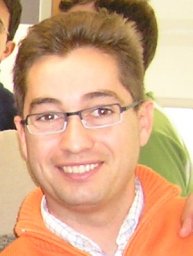 Jorge Gosálbez合作论文数Departamento de Comunicaciones, Universidad Politécnica de Valencia27
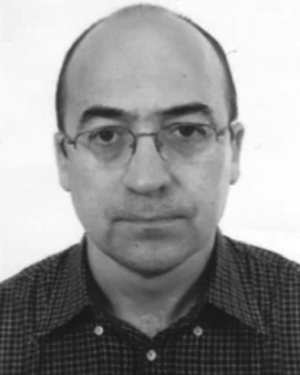 Luis Vergara合作论文数Inst Telecommun & Multimedia Applicat, Univ Politecn Valencia20
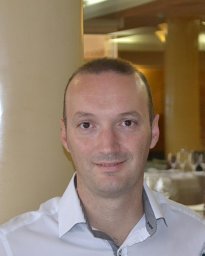 Ramon Miralles合作论文数ETSI Telecomunicación, Univesidad Politécnica de Valencia18
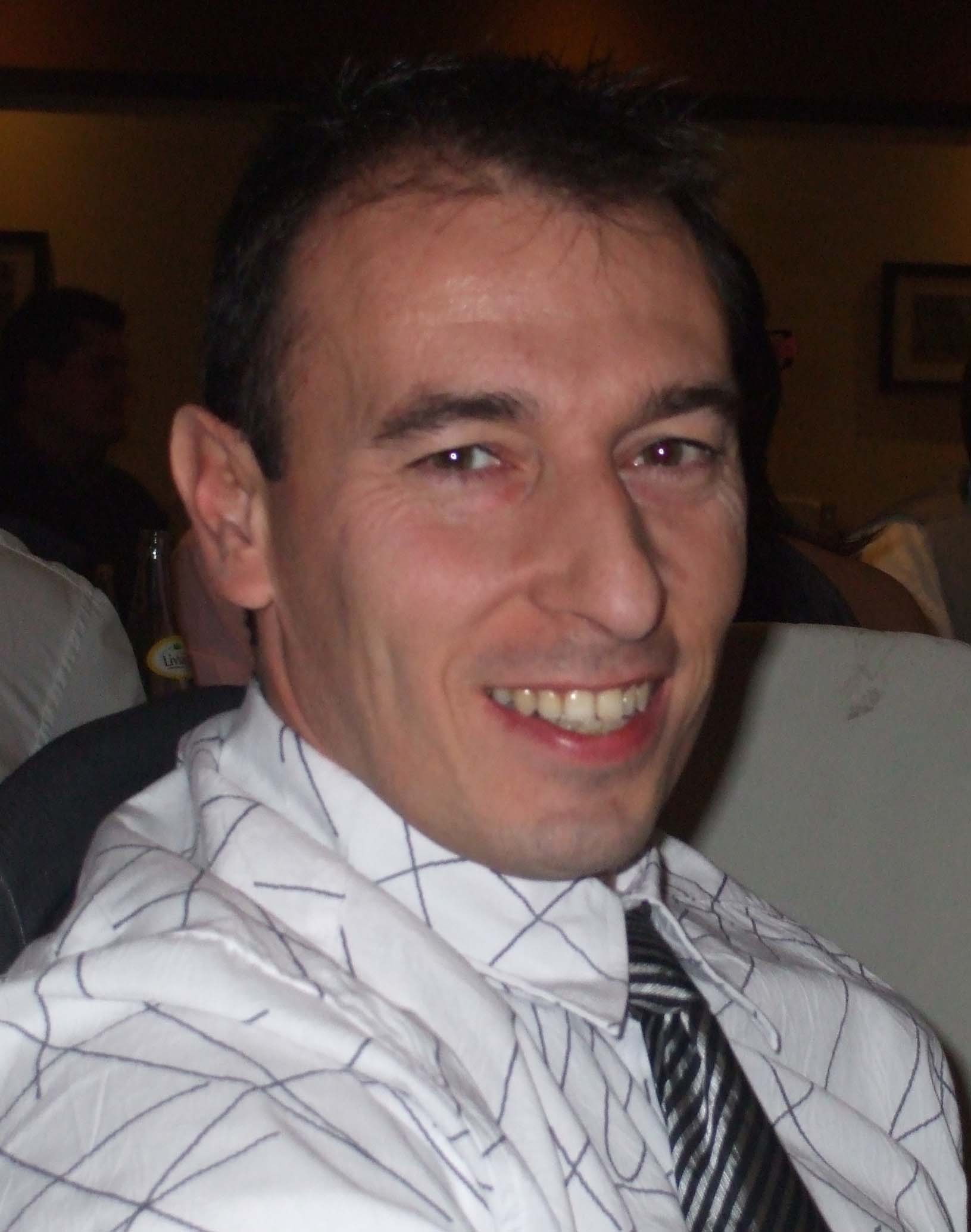 Jaime Lloret Mauri合作论文数Department of Communications, Polytechnic University of Valencia13
 Addisson Salazar合作论文数7
 Carrión Alicia合作论文数Instituto de Telecomunicaciones y Aplicaciones Multimedia (iTEAM),, Universitat Politècnica de València7J.V. Fuente合作论文数AIDICO, Instituto Tecnológico de la Construcción5
 Lara Guillermo合作论文数5
 Soledad Gomez Garcia合作论文数Institute of Telecommunications and Multimedia Applications, Universidad Politécnica de Valencia5A. Salazar合作论文数4
 Sandra Sendra合作论文数Instituto de Investigación para la Gestión Integrada de zonas Costeras, Universidad Politécnica de Valencia4Lucia Romero Perez合作论文数3
 P. Bosch-Roig合作论文数3
 Jorge Moragues合作论文数3
 María-Cinta Vincent-Vela合作论文数3José Antonio Mendoza合作论文数2r miralles ricos合作论文数2
 Santiago Vazquez Martinez合作论文数2Syed Waqar Shah合作论文数2Waleed Shahjehan合作论文数University of Engineering and Technology2
 Genovés V合作论文数ICITECH, Universitat Politècnica de València2Serrano A合作论文数2
 Angel Alberich-Bayarri合作论文数Radiology Department, Hospital Quirón Valencia, Spain2
 Arturo Serrano合作论文数Departamento de Comunicaciones, Universidad Politécnica de Valencia2
 Silvia Alvarez-Blanco合作论文数2
 Cristina Jordan合作论文数Departamento de Matemática Aplicada, Universidad Politécnica de Valencia2Esther Sanabria Codesal合作论文数1
 Jordi Paya合作论文数1
 Muhammad Arshad Bangash合作论文数1jorge juan paya bernabeu合作论文数1Roberto Vega-Rodriguez合作论文数1m v borrachero合作论文数1
 Carlos Hernandez Franco合作论文数1
 R. Fort合作论文数1
 Alejandro Rodriguez合作论文数1Irshad Ahmad合作论文数1
 I. A. Najm合作论文数Coll Comp & Math Sci, Tikrit Univ1Matías Fernández-Patón合作论文数1
 Alaa Khalaf Hamoud合作论文数Department of Computer Science, University of Basrah1G. Pérez合作论文数1
 Imran Khan合作论文数Univ Engn & Technol, Dept Elect Engn, Peshawar, Pakistan1
 Israr Iqbal Awan合作论文数Corresponding author.1Joan Carreres-Polo合作论文数1
 Laura García合作论文数Univ Politecn Valencia, Inst Invest Gest Integrada Zonas Costeras IGIC, Camino Vera S-N, E-46022 Valencia, Spain1
 William M. D. Wright合作论文数Warwick Univ.;c;Warwick Univ.1
 Sanabria-Codesal, E.合作论文数1Gosalvez, J.合作论文数1
 Wentao Jiang合作论文数Sch. of Eng. - Electr. & Electron. Eng., Univ. Coll. Cork;c;Sch. of Eng. - Electr. & Electron. Eng., Univ. Coll. Cork1
 Lorena Parra合作论文数Inst Invest Gest Integrada Zonas Costeras, Univ Politecn Valencia1




