We analyzed the 7.92 × 10 ^11 cosmic-ray-induced muon events collected by the IceCube Neutrino Observatory from 2011 May 13, when the fully constructed experiment started to take data, to 2023 May 12. This data set provides an up-to-date cosmic-ray arrival direction distribution in the Southern Hemisphere with unprecedented statistical accuracy covering more than a full period length of a solar cycle. Improvements in Monte Carlo event simulation and better handling of year-to-year differences in data processing significantly reduce systematic uncertainties below the level of statistical fluctuations compared to the previously published results. We confirm the observation of a change in the angular structure of the cosmic-ray anisotropy between 10 TeV and 1 PeV, more specifically in the 100–300 TeV energy range. For the first time, we analyzed the angular power spectrum at different energies. The observed variations of the power spectra with energy suggest relatively reduced large-scale features at high energy compared to those of medium and small scales. The large volume of data enhances the statistical significance at higher energies, up to the PeV scale, and smaller angular scales, down to approximately 6° compared to previous findings.
The recent IceCube detection of TeV neutrino emission from the nearby active galaxy NGC 1068 suggests that active galactic nuclei (AGNs) could make a sizable contribution to the diffuse flux of astrophysical neutrinos. The absence of TeV γ -rays from NGC 1068 indicates neutrino production in the vicinity of the supermassive black hole, where the high radiation density leads to γ -ray attenuation. Therefore, any potential neutrino emission from similar sources is not expected to correlate with high-energy γ -rays. Disk-corona models predict neutrino emission from Seyfert galaxies to correlate with keV X-rays because they are tracers of coronal activity. Using through-going track events from the Northern Sky recorded by IceCube between 2011 and 2021, we report results from a search for individual and aggregated neutrino signals from 27 additional Seyfert galaxies that are contained in the Swift's Burst Alert Telescope AGN Spectroscopic Survey. Besides the generic single power law, we evaluate the spectra predicted by the disk-corona model assuming stochastic acceleration parameters that match the measured flux from NGC 1068. Assuming all sources to be intrinsically similar to NGC 1068, our findings constrain the collective neutrino emission from X-ray bright Seyfert galaxies in the northern sky, but, at the same time, show excesses of neutrinos that could be associated with the objects NGC 4151 and CGCG 420-015. These excesses result in a 2.7 σ significance with respect to background expectations.
While the sources of the diffuse astrophysical neutrino flux detected by the IceCube Neutrino Observatory are still largely unknown, one of the promising methods to improve our understanding of them is investigating the potential temporal and spatial correlations between neutrino alerts and the electromagnetic radiation from blazars. We report on the multiwavelength target-of-opportunity observations of the blazar B3 2247+381, taken in response to an IceCube multiplet alert for a cluster of muon neutrino events compatible with the source location between 2022 May 20 and 2022 November 10. B3 2247+381 was not detected with VERITAS during this time period. The source was found to be in a low-flux state in the optical, ultraviolet, and gamma-ray bands for the time interval corresponding to the neutrino event, but was detected in the hard X-ray band with NuSTAR during this period. We find the multiwavelength spectral energy distribution is described well using a simple one-zone leptonic synchrotron self-Compton radiation model. Moreover, assuming the neutrinos originate from hadronic processes within the jet, the neutrino flux would be accompanied by a photon flux from the cascade emission, and the integrated photon flux required in such a case would significantly exceed the total multiwavelength fluxes and the VERITAS upper limits presented here. The lack of flaring activity observed with VERITAS, combined with the low multiwavelength flux levels, as well as the significance of the neutrino excess being at a 3 σ level (uncorrected for trials), makes B3 2247+381 an unlikely source of the IceCube multiplet. We conclude that the neutrino excess is likely a background fluctuation.
We report a search for high-energy astrophysical neutrino multiplets, detections of multiple neutrino clusters in the same direction within 30 days, based on an analysis of 11.4 yr of IceCube data. A new search method optimized for transient neutrino emission with a monthly timescale is employed, providing a higher sensitivity to neutrino fluxes. This result is sensitive to neutrino transient emission, reaching per-flavor flux of approximately 1 0 − 10 erg cm − 2 s − 1 from the Northern Sky in the energy range E ≳ 50 TeV. The number of doublets and triplets identified in this search is compatible with the atmospheric background hypothesis, which leads us to set limits on the nature of neutrino transient sources with emission timescales of one month.
Active galactic nuclei (AGN) are promising candidate sources of high-energy astrophysical neutrinos, since they provide environments rich in matter and photon targets where cosmic-ray interactions may lead to the production of gamma rays and neutrinos. We searched for high-energy neutrino emission from AGN using the Swift-BAT Spectroscopic Survey catalog of hard X-ray sources and 12 yr of IceCube muon track data. First, upon performing a stacked search, no significant emission was found. Second, we searched for neutrinos from a list of 43 candidate sources and found an excess from the direction of two sources, the Seyfert galaxies NGC 1068 and NGC 4151. We observed NGC 1068 at flux ϕ ν μ + ν ¯ μ = 4.0 2 − 1.52 + 1.58 × 1 0 − 11 TeV −1 cm −2 s −1 normalized at 1 TeV, with a power-law spectral index γ = 3.10 − 0.22 + 0.26 , consistent with previous IceCube results. The observation of a neutrino excess from the direction of NGC 4151 is at a posttrial significance of 2.9 σ . If interpreted as an astrophysical signal, the excess observed from NGC 4151 corresponds to a flux ϕ ν μ + ν ¯ μ = 1.5 1 − 0.81 + 0.99 × 1 0 − 11 TeV −1 cm −2 s −1 normalized at 1 TeV and γ = 2.83 − 0.28 + 0.35 .
We present the results of a search for 10–1000 GeV neutrinos from 2268 gamma-ray bursts (GRBs) over 8 yr of IceCube-DeepCore data. This work probes burst physics below the photosphere where electromagnetic radiation cannot escape. Neutrinos of tens of giga electronvolts are predicted in sub-photospheric collision of free-streaming neutrons with bulk-jet protons. In a first analysis, we searched for the most significant neutrino-GRB coincidence using six overlapping time windows centered on the prompt phase of each GRB. In a second analysis, we conducted a search for a group of GRBs, each individually too weak to be detectable, but potentially significant when combined. No evidence of neutrino emission is found for either analysis. The most significant neutrino coincidence is for Fermi-GBM GRB bn 140807500, with a p -value of 0.097 corrected for all trials. The binomial test used to search for a group of GRBs had a p -value of 0.65 after all trial corrections. The binomial test found a group consisting only of GRB bn 140807500 and no additional GRBs. The neutrino limits of this work complement those obtained by IceCube at tera electronvolt to peta electronvolt energies. We compare our findings for the large set of GRBs as well as GRB 221009A to the sub-photospheric neutron-proton collision model and find that GRB 221009A provides the most constraining limit on baryon loading. For a jet Lorentz factor of 300 (800), the baryon loading on GRB 221009A is lower than 3.85 (2.13) at a 90% confidence level.
Neutrino flares in the sky are searched for in data collected by IceCube between 2011 and 2021 May. This data set contains cascade-like events originating from charged-current electron neutrino and tau neutrino interactions and all-flavor neutral-current interactions. IceCube’s previous all-sky searches for neutrino flares used data sets consisting of track-like events originating from charged-current muon neutrino interactions. The cascade data set is statistically independent of the track data sets, and while inferior in angular resolution, the low-background nature makes it competitive and complementary to previous searches. No statistically significant flare of neutrino emission was observed in an all-sky scan. Upper limits are calculated on neutrino flares of varying duration from 1 hr to 100 days. Furthermore, constraints on the contribution of these flares to the diffuse astrophysical neutrino flux are presented, showing that multiple unresolved transient sources may contribute to the diffuse astrophysical neutrino flux.
The origin of high-energy galactic cosmic rays is yet to be understood, but some galactic cosmic-ray accelerators can accelerate cosmic rays up to PeV energies. The high-energy cosmic rays are expected to interact with the surrounding material or radiation, resulting in the production of gamma-rays and neutrinos. To optimize for the detection of such associated production of gamma-rays and neutrinos for a given source morphology and spectrum, a multimessenger analysis that combines gamma-rays and neutrinos is required. In this study, we use the Multi-Mission Maximum Likelihood framework with IceCube Maximum Likelihood Analysis software and HAWC Accelerated Likelihood to search for a correlation between 22 known gamma-ray sources from the third HAWC gamma-ray catalog and 14 yr of IceCube track-like data. No significant neutrino emission from the direction of the HAWC sources was found. We report the best-fit gamma-ray model and 90% CL neutrino flux limit from the 22 sources. From the neutrino flux limit, we conclude that, for five of the sources, the gamma-ray emission observed by HAWC cannot be produced purely from hadronic interactions. We report the limit for the fraction of gamma-rays produced by hadronic interactions for these five sources.
A measurement of the diffuse astrophysical neutrino spectrum is presented using IceCube data collected from 2011-2022 (10.3 years). We developed novel detection techniques to search for events with a contained vertex and exiting track induced by muon neutrinos undergoing a charged-current interaction. Searching for these starting track events allows us to not only more effectively reject atmospheric muons but also atmospheric neutrino backgrounds in the southern sky, opening a new window to the sub-100 TeV astrophysical neutrino sky. The event selection is constructed using a dynamic starting track veto and machine learning algorithms. We use this data to measure the astrophysical diffuse flux as a single power law flux (SPL) with a best-fit spectral index of $\gamma = 2.58 ^{+0.10}_{-0.09}$ and per-flavor normalization of $\phi^{\mathrm{Astro}}_{\mathrm{per-flavor}} = 1.68 ^{+0.19}_{-0.22} \times 10^{-18} \times \mathrm{GeV}^{-1} \mathrm{cm}^{-2} \mathrm{s}^{-1} \mathrm{sr}^{-1}$ (at 100 TeV). The sensitive energy range for this dataset is 3 - 550 TeV under the SPL assumption. This data was also used to measure the flux under a broken power law, however we did not find any evidence of a low energy cutoff.
This Letter presents the result of a 3+1 sterile neutrino search using 10.7 yr of IceCube data. We analyze atmospheric muon neutrinos that traverse the Earth with energies ranging from 0.5 to 100 TeV, incorporating significant improvements in modeling neutrino flux and detector response compared to earlier studies. Notably, for the first time, we categorize data into starting and throughgoing events, distinguishing neutrino interactions with vertices inside or outside the instrumented volume, to improve energy resolution. The best-fit point for a 3+1 model is found to be at sin^{2}(2θ_{24})=0.16 and Δm_{41}^{2}=3.5 eV^{2}, which agrees with previous iterations of this Letter. The result is consistent with the null hypothesis of no sterile neutrinos with a p value of 3.1%.
We present the first three-parameter fit to a 3+1 sterile neutrino model using 7.634 years of data from the IceCube Neutrino Observatory on nu(mu) + (nu) over bar (mu) charged-current interactions in the energy range 500-9976 GeV. Our analysis is sensitive to the mass-squared splitting between the heaviest and lightest mass state (Delta m(41)(2)), the mixing matrix element connecting muon flavor to the fourth mass state (vertical bar U-mu 4 vertical bar(2)), and the element connecting tau flavor to the fourth mass state (vertical bar U-tau 4 vertical bar(2)). Predicted propagation effects in matter enhance the signature through a resonance as atmospheric neutrinos from the Northern Hemisphere traverse the Earth to the IceCube detector at the South Pole. The remaining sterile neutrino matrix elements are left fixed, with vertical bar U-e4 vertical bar(2) = 0 and delta(14) = 0, as they have a negligible effect, and delta(24) = pi is set to give the most conservative limits. The result is consistent with the no-sterile neutrino hypothesis with a probability of 4.3%. Profiling the likelihood of each parameter yields the 90% confidence levels: 2.4 eV(2) < Delta m(41)(2) < 9.6 eV(2), 0.0081 < vertical bar U-mu 4 vertical bar(2) < 0.10, and vertical bar U-tau 4 vertical bar(2) < 0.035, which narrows the allowed parameter-space for vertical bar U-tau 4 vertical bar(2). However, the primary result of this analysis is the first map of the 3+1 parameter space exploring the interdependence of Delta m(41)(2), vertical bar U-mu 4 vertical bar(2), and |U-tau 4 vertical bar(2).
More than 10,000 photomultiplier tubes (PMTs) with a diameter of 80 mm will be installed in multi-PMT Digital Optical Modules (mDOMs) of the IceCube Upgrade. These have been tested and pre-calibrated at two sites. A throughput of more than 1000 PMTs per week with both sites was achieved with a modular design of the testing facilities and highly automated testing procedures. The testing facilities can easily be adapted to other PMTs, such that they can, e.g., be re-used for testing the PMTs for IceCube-Gen2. Single photoelectron response, high voltage dependence, time resolution, prepulse, late pulse, afterpulse probabilities, and dark rates were measured for each PMT. We describe the design of the testing facilities, the testing procedures, and the results of the acceptance tests.
The IceCube Neutrino Observatory has been continuously taking data to search for O(0.5-10) s long neutrino bursts since 2007. Even if a Galactic core-collapse supernova is optically obscured or collapses to a black hole instead of exploding, it will be detectable via the O(10) MeV neutrino burst emitted during the collapse. We discuss a search for such events covering the time between 2008 April 17 and 2019 December 31. Considering the average data taking and analysis uptime of 91.7% after all selection cuts, this is equivalent to 10.735 yr of continuous data taking. In order to test the most conservative neutrino production scenario, the selection cuts were optimized for a model based on an 8.8 solar mass progenitor collapsing to an O-Ne-Mg core. Conservative assumptions on the effects of neutrino oscillations in the exploding star were made. The final selection cut was set to ensure that the probability to detect such a supernova within the Milky Way exceeds 99%. No such neutrino burst was found in the data after performing a blind analysis. Hence, a 90% C.L. upper limit on the rate of core-collapse supernovae out to distances of approximate to 25 kpc was determined to be 0.23 yr-1. For the more distant Magellanic Clouds, only high neutrino luminosity supernovae will be detectable by IceCube, unless external information on the burst time is available. We determined a model-independent limit by parameterizing the dependence on the neutrino luminosity and the energy spectrum.
We present a search for an eV-scale sterile neutrino using 7.5 years of data from the IceCube DeepCore detector. The analysis uses a sample of 21,914 events with energies between 5 and 150 GeV to search for sterile neutrinos through atmospheric muon neutrino disappearance. Improvements in event selection and treatment of systematic uncertainties provide greater statistical power compared to previous DeepCore sterile neutrino searches. Our results are compatible with the absence of mixing between active and sterile neutrino states, and we place constraints on the mixing matrix elements vertical bar U-mu 4 vertical bar(2) < 0.0534 and vertical bar U-tau 4 vertical bar(2) < 0.0574 at 90% CL under the assumption that Delta m(41)(2) >= 1 eV(2). These null results add to the growing tension between anomalous appearance results and constraints from disappearance searches in the 3 + 1 sterile neutrino landscape.
IceCube alert events are neutrinos with a moderate-to-high probability of having astrophysical origin. In this study, we analyze 11 yr of IceCube data and investigate 122 alert events and a selection of high-energy tracks detected between 2009 and the end of 2021. This high-energy event selection (alert events + high-energy tracks) has an average probability of ≥0.5 of being of astrophysical origin. We search for additional continuous and transient neutrino emission within the high-energy events’ error regions. We find no evidence for significant continuous neutrino emission from any of the alert event directions. The only locally significant neutrino emission is the transient emission associated with the blazar TXS 0506+056, with a local significance of 3 σ , which confirms previous IceCube studies. When correcting for 122 test positions, the global p -value is 0.156 and compatible with the background hypothesis. We constrain the total continuous flux emitted from all 122 test positions at 100 TeV to be below 1.2 × 10 ^−15 (TeV cm ^2 s) ^−1 at 90% confidence assuming an E ^−2 spectrum. This corresponds to 4.5% of IceCube’s astrophysical diffuse flux. Overall, we find no indication that alert events in general are linked to lower-energetic continuous or transient neutrino emission.
 T. Deyoung合作论文数352
 Wolfgang Rhode合作论文数Lamarr Institute for Machine Learning and Artificial Intelligence;Technische Universität Dortmund350
 Glenn Spiczak合作论文数Dept Phys, Univ Wisconsin347K. Rawlins合作论文数346
 Francis Halzen合作论文数Department of Physics, University of Wisconsin-Madison;Wisconsin IceCube Particle Astrophysics Center, University of Wisconsin-Madison342
 Christian Walck合作论文数Department of Physics, Stockholm University342
 Paolo Desiati合作论文数Department of Physics, University of Wisconsin340
 Olga Botner合作论文数Department of Physics and Astronomy, Uppsala University340
 Serap Z. Tilav合作论文数Bartol Research Institute, Physics and Astronomy Department, University of Delaware338C. Pérez De Los Heros合作论文数337C. De Clercq合作论文数336David Berley合作论文数336
 Steven W. Barwick合作论文数Department of Physics and Astronomy, School of Physical Sciences, University of California, Irvine335
 Doug Cowen合作论文数Department of Physics, Eberly College of Science, The Pennsylvania State University334G. T. Przybylski合作论文数333
 Christopher Wiebusch合作论文数333
 Elisa Resconi合作论文数Department of Physik, School of Natural Sciences, Technical University of Munich330Hallgren A.合作论文数329
 Dmitry Chirkin合作论文数329Lisa Gerhardt合作论文数328A. Karle合作论文数327G. C. Hill合作论文数326
 Ch. Spiering合作论文数326
 Klas Hultqvist合作论文数Department of Physics, Stockholm University325R Curtis Bay合作论文数324Kalama Hanson合作论文数324J. Madsen合作论文数321Thorsten Stezelberger合作论文数319
 Enrica Bernardini合作论文数Deutsches Elektronen-Synchrotron316
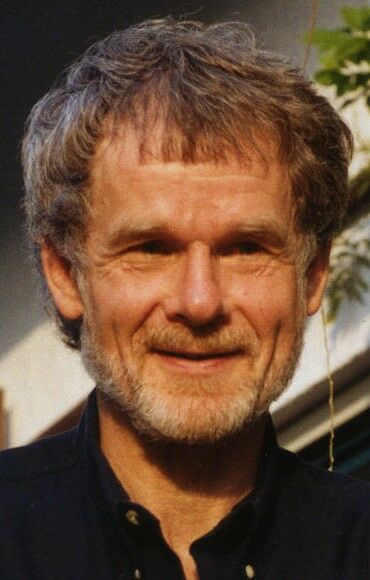 Hermann Kolanoski合作论文数Humboldt-Universität zu Berlin;Deutsches Elektronen-Synchrotron314
 G. S. Japaridze合作论文数Oskar Klein Ctr, Stockholm Univ312
 David Seckel合作论文数Department of Physics and Astronomy, College of Arts & Sciences, University of Delaware312
 Erik Blaufuss合作论文数Department of Physics, University of Maryland312Klaus Helbing合作论文数311
 Teresa Montaruli合作论文数Wisconsin Icecube Particle Astrophysics Center, University of Wisconsin - Madison;Département de Physique Nucléaire et Corpusculaire, Faculté des Sciences, Université de Genève;Gran Sasso Science Institute311
 Carsten Rott合作论文数College of Science, Sungkyunkwan University;Department of Physics & Astronomy, University of Utah310
 Paul Evenson合作论文数310T. Stanev合作论文数308S. Seunarine合作论文数308
 A. R. Fazely合作论文数308K. Hultqvist合作论文数307C. Wendt合作论文数307
 Spencer R. Klein合作论文数University of California, Berkeley;Nuclear Science Division, Lawrence Berkeley National Laboratory306M. Kowalski合作论文数305
 Segev BenZvi合作论文数Department of Physics and Astronomy, School of Arts & Sciences, University of Rochester305
 Alexander Kappes合作论文数303
 Kara Hoffman合作论文数Department of Physics, University of Maryland302
 Nick Van Eijndhoven合作论文数301
 Kelly Ann Meagher合作论文数300




