Embeddings of word structures into matrix semigroups provide a natural bridge between combinatorics on words and linear algebra. However, low-dimensional matrix semigroups impose strong structural restrictions on possible embeddings. Certain finitely generated groups admit faithful representations in SL (2,ℂ) and other similar matrix groups. On the other hand, it is known that the product of two free semigroups on two generators cannot be embedded into the 2× 2 complex matrices. In this paper we study embeddings of word structures into low-dimensional matrix semigroups over the complex numbers and develop new techniques for constructing word representations of the Euclidean Bianchi groups. These representations provide a symbolic framework and a natural first step towards analysing fundamental decision problems in 2× 2 matrix semigroups.
Integer vector addition systems with states ( ℤ -VASSs) are vector addition systems with states, where the configurations are from ℤ^d . Two-player games on ℤ -VASS are known to be undecidable when played on two-dimensional ℤ -VAS(S)s. Here, we study a restricted variant of the game, where one of the players, Adam, can play k non-zero moves from his move set. Adam’s (safety) goal is to ensure that the other player, Eve, cannot reach a particular point in the space. We show that, for any dimension, deciding whether Eve has a winning strategy is in and is -hard if k is part of the input. Additionally, we extend the safety objective from a single point to a hyperplane and prove that the complexity does not increase. We also study the dual variant (reachability), where Eve’s resources are limited and show that deciding whether Eve has a winning strategy is also in . On the other hand, if k is fixed, safety in k-control games is -complete, while reachability is in .
Imagine a polygon-shaped platform $P$ and only one static spotlight outside $P$; which direction should the spotlight face to light most of $P$? This problem occurs in maximising the visibility, as well as in limiting the uncertainty in localisation problems. More formally, we define the following maximum cover problem: ''Given a convex polygon $P$ and a Field Of View (FOV) with a given centre and inner angle $\phi$; find the direction (an angle of rotation $\theta$) of the FOV such that the intersection between the FOV and $P$ has the maximum area''. In this paper, we provide the theoretical foundation for the analysis of the maximum cover with a rotating field of view. The main challenge is that the function of the area $A_{\phi}(\theta)$, with the angle of rotation $\theta$ and the fixed inner angle $\phi$, cannot be approximated directly. We found an alternative way to express it by various compositions of a function $A_{\theta}(\phi)$ (with a restricted inner angle $\phi$ and a fixed direction $\theta$). We show that $A_{\theta}(\phi)$ has an analytical solution in the special case of a two-sector intersection and later provides a constrictive solution for the original problem. Since the optimal solution is a real number, we develop an algorithm that approximates the direction of the field of view, with precision $\varepsilon$, and complexity $\mathcal{O}(n(\log{n}+(\log{\varepsilon})/\phi))$.
Imagine a polygon-shaped platform P and only one static spotlight outside P; which direction should the spotlight face to light most of P? This problem occurs in maximising the visibility, as well as in limiting the uncertainty in localisation problems. More formally, we define the following maximum cover problem: “Given a convex polygon P and a Field Of View (FOV) with a given centre and inner angle ϕ ; find the direction (an angle of rotation θ ) of the FOV such that the intersection between the FOV and P has the maximum area”. In this paper, we provide the theoretical foundation for the analysis of the maximum cover with a rotating field of view. Since the optimal solution is a real number, we develop an algorithm that approximates the direction of the field of view, with precision ε , and complexity 𝒪(n(logn+(logε)/ϕ )) .
We study the zero-visibility cops and robbers game, where the robber is invisible to the cops until they are caught. This differs from the classic game where full information about the robber's location is known at any time. A previously known solution for capturing a robber in the zero-visibility case is based on the pathwidth decomposition. We provide an alternative solution based on a separation hierarchy, improving capture time and space complexity without asymptotically increasing the zero-visibility cop number in most cases. In addition, we provide a better bound on the approximate zero-visibility cop number for various classes of graphs, where approximate refers to the restriction to polynomial time computable strategies.
In this paper, we address the problem of scheduling a set of robots to complete tasks in a laboratory environment, modelled as a graph, while avoiding collisions. We analyze the dynamic programming algorithm (PA) introduced in arXiv:2402.12019 and present three baselines for comparison: an integer programming approach (IP) that always yields an optimal solution, a greedy algorithm (GA), and a simple randomized algorithm (RA). We show that for a path graph, PA, GA, and RA find solutions several orders of magnitude faster than IP (the optimal baseline), with PA returning optimal results in the vast majority of cases. Our scaled experiments comparing non-optimal algorithms show that the average schedule timespan produced by PA is less than half that of RA and GA. This outperformance is consistent across varying path lengths, task durations and distributions, number and allocations of tasks and robots, and task-to-robot ratios. This work serves two purposes. First, we present three algorithms for scheduling on line graphs, including a novel integer programming formulation for finding optimal solutions. Second, we demonstrate that PA produces near-optimal schedules that outperform all non-optimal baselines while maintaining a comparable runtime. Code is available at https://github.com/sea26-robots/code.
Crystal Structure Prediction (CSP) is a fundamental computational problem in materials science. Basin-hopping is a prominent CSP method that combines global Monte Carlo sampling to search over candidate trial structures with local energy minimisation of these candidates. The sampling uses a stochastic policy to randomly choose which action (such as a swap of atoms) will be used to transform the current structure into the next. Typically hand-tuned for a specific system before the run starts, such a policy is simply a fixed discrete probability distribution of possible actions, which does not depend on the current structure and does not adapt during a CSP run. We show that reinforcement learning (RL) can generate a dynamic policy that both depends on the current structure and improves on the fly during the CSP run. We demonstrate the efficacy of our approach on two CSP codes, FUSE and MC-EMMA. Specifically, we show that, when applied to the autonomous exploration of a phase field to identify the accessible crystal structures, RL can save up to 46% of the computation time.
We show that the problem of determining if the identity matrix belongs to a finitely generated semigroup of 2×2 matrices from the General Linear Group GL2(Z) is solvable in NP. We extend this to prove that the membership problem is decidable in NP for GL2(Z) and for any arbitrary regular expression over matrices from the Special Linear group SL2(Z). We show that determining if a given finite set of matrices from SL2(Z) or the modular group PSL2(Z) generates a group or a free semigroup are decidable in NP. Previous algorithms, shown in 2005 by Choffrut and Karhumäki, were in EXPSPACE. Our algorithm is based on new techniques allowing us to operate on compressed word representations of matrices without explicit expansions. When combined with known NP-hard lower bounds, this proves that the membership problem over GL2(Z) is NP-complete, and the group problem and the non-freeness problem in SL2(Z) are NP-complete. 1
Robots are becoming an increasingly common part of scientific work within laboratory environments. In this paper, we investigate the problem of designing schedules for completing a set of tasks at fixed locations with multiple robots in a laboratory. We represent the laboratory as a graph with tasks placed on fixed vertices and robots represented as agents, with the constraint that no two robots may occupy the same vertex, or traverse the same edge, at the same time. Each schedule is partitioned into a set of timesteps, corresponding to a walk through the graph (allowing for a robot to wait at a vertex to complete a task), with each timestep taking time equal to the time for a robot to move from one vertex to another and each task taking some given number of timesteps during the completion of which a robot must stay at the vertex containing the task. The goal is to determine a set of schedules, with one schedule for each robot, minimising the number of timesteps taken by the schedule taking the greatest number of timesteps within the set of schedules. We show that the problem of finding a task-fulfilling schedule in at most L timesteps is NP-complete for many simple classes of graphs. Explicitly, we provide this result for complete graphs, bipartite graphs, star graphs, and planar graphs. Finally, we provide positive results for line graphs, showing that we can find an optimal set of schedules for k robots completing m tasks of equal length of a path of length n in O(kmn) time, and a k-approximation when the length of the tasks is unbounded.
In this paper, we study the graph induced by the $\textit{2-swap}$ permutation on words with a fixed Parikh vector. A $2$-swap is defined as a pair of positions $s = (i, j)$ where the word $w$ induced by the swap $s$ on $v$ is $v[1] v[2] \dots v[i - 1] v[j] v[i+1] \dots v[j - 1] v[i] v[j + 1] \dots v[n]$. With these permutations, we define the $\textit{Configuration Graph}$, $G(P)$ defined over a given Parikh vector. Each vertex in $G(P)$ corresponds to a unique word with the Parikh vector $P$, with an edge between any pair of words $v$ and $w$ if there exists a swap $s$ such that $v \circ s = w$. We provide several key combinatorial properties of this graph, including the exact diameter of this graph, the clique number of the graph, and the relationships between subgraphs within this graph. Additionally, we show that for every vertex in the graph, there exists a Hamiltonian path starting at this vertex. Finally, we provide an algorithm enumerating these paths from a given input word of length $n$ with a delay of at most $O(\log n)$ between outputting edges, requiring $O(n \log n)$ preprocessing.
Abstract. We consider membership problems for rational subsets of the semigroup of [Formula: see text] matrices over [Formula: see text]. For a semigroup [Formula: see text], the rational subsets [Formula: see text] are defined as the sets accepted by nondeterministic finite automatons whose transitions are labeled by elements of [Formula: see text]. In general, it is undecidable on inputs [Formula: see text] and [Formula: see text] whether [Formula: see text] belongs to [Formula: see text]. Therefore, we restrict our attention to the family [Formula: see text] of flat rational subsets of [Formula: see text] over [Formula: see text], where [Formula: see text] is a subsemigroup of [Formula: see text]. It consists of finite unions of the form [Formula: see text], where [Formula: see text] and [Formula: see text]. Assuming that the membership for [Formula: see text] is decidable, we prove various results when the membership for [Formula: see text] is decidable. If [Formula: see text] is a subgroup of a group [Formula: see text], then we provide a rather general condition when [Formula: see text] is an (effective) relative Boolean algebra. This leads to one of our main results that the emptiness problem for Boolean combinations of sets in [Formula: see text] is decidable. It is possible that such a strong decidability result cannot be pushed any further for groups sitting between [Formula: see text] and [Formula: see text]. To support this possibility, we prove the following dichotomy: If [Formula: see text] is a finitely generated group such that [Formula: see text], then either [Formula: see text] or [Formula: see text] contains an extension of the Baumslag–Solitar group [Formula: see text] of infinite index. It is open whether the membership for rational subsets is decidable in the latter case. For singular matrices, we will show that the membership problem for [Formula: see text] is decidable in doubly exponential time, where [Formula: see text] is the monoid generated by [Formula: see text].
In this paper, we investigate the problem of designing schedules for completing a set of tasks at fixed locations with multiple robots in a laboratory. We represent the laboratory as a graph with tasks placed on fixed vertices and robots represented as agents, with the constraint that no two robots may occupy the same vertex at any given timestep. Each schedule is partitioned into a set of timesteps, corresponding to a walk through the graph (allowing for a robot to wait at a vertex to complete a task), with each timestep taking time equal to the time for a robot to move from one vertex to another and each task taking some given number of timesteps during the completion of which a robot must stay at the vertex containing the task. The goal is to determine a set of schedules, with one schedule for each robot, minimising the number of timesteps taken by the schedule taking the greatest number of timesteps within the set of schedules. We show that this problem is NP-complete for both star graphs (for k ≥ 2 robots), and planar graphs (for any number of robots). Finally, we provide positive results for path, cycle, and tadpole graphs, showing that we can find an optimal set of schedules for k robots completing m tasks of equal duration of a path of length n in O(kmn), O(k m n^2) time, and O(k^3 m^4 n) time respectively.
This paper studies the linear recurrence automata model in which multiple linear recurrences can be used to generate sequences of numbers. We parameterised the model by varying several structural properties to identify under which constraints or extensions the reachability problems become computationally hard and undecidable. We show first the reduction of classical matrix semigroup problems to reachability in linear recurrence automata and then analyse several variants of the model restricting the state structures, the number and the depth of recurrences.
We consider membership problems for rational subsets of the semigroup of 2x2 matrices over Q. For a semigroup M, the rational subsets Rat(M) are defined as the sets accepted by nondeterministic finite automatons whose transitions are labeled by elements of M. In general, it is undecidable on inputs m is an element of M and R is an element of Rat(M) whether m belongs to R. Therefore, we restrict our attention to the family FRat(M,S) of flat rational subsets of M over S, where S is a subsemigroup of M. It consists of finite unions of the form g0L1g1 & ctdot;Ltgt, where Li is an element of Rat(S) and gi is an element of M. Assuming that the membership for Rat(S) is decidable, we prove various results when the membership for FRat(M,S) is decidable. If H is a subgroup of a group G, then we provide a rather general condition when FRat(G,H) is an (effective) relative Boolean algebra. This leads to one of our main results that the emptiness problem for Boolean combinations of sets in FRat(GL(2,Q),GL(2,Z)) is decidable. It is possible that such a strong decidability result cannot be pushed any further for groups sitting between GL(2,Z) and GL(2,Q). To support this possibility, we prove the following dichotomy: If G is a finitely generated group such that GL(2,Z)1}boolean OR{0,((10)00)}.
Crystalline materials enable essential technologies, and their properties are determined by their structures. Crystal structure prediction can thus play a central part in the design of new functional materials(1,2). Researchers have developed efficient heuristics to identify structural minima on the potential energy surface(3-5). Although these methods can often access all configurations in principle, there is no guarantee that the lowest energy structure has been found. Here we show that the structure of a crystalline material can be predicted with energy guarantees by an algorithm that finds all the unknown atomic positions within a unit cell by combining combinatorial and continuous optimization. We encode the combinatorial task of finding the lowest energy periodic allocation of all atoms on a lattice as a mathematical optimization problem of integer programming(6,7), enabling guaranteed identification of the global optimum using well-developed algorithms. A single subsequent local minimization of the resulting atom allocations then reaches the correct structures of key inorganic materials directly, proving their energetic optimality under clear assumptions. This formulation of crystal structure prediction establishes a connection to the theory of algorithms and provides the absolute energetic status of observed or predicted materials. It provides the ground truth for heuristic or data-driven structure prediction methods and is uniquely suitable for quantum annealers(8-10), opening a path to overcome the combinatorial explosion of atomic configurations.
The problem of finding k uniformly spaced points (centres) within a metric space is well known as the k-centre selection problem. In this paper, we introduce the challenge of k-centre selection on a class of objects of exponential size and study it for the class of combinatorial necklaces, known as cyclic words. The interest in words under translational symmetry is motivated by various applications in algebra, coding theory, crystal structures and other physical models with periodic boundary conditions. We provide solutions for the centre selection problem for both one-dimensional necklaces and largely unexplored objects in combinatorics on words - multidimensional combinatorial necklaces. The problem is highly non-trivial as even verifying a solution to the k-centre problem for necklaces can not be done in polynomial time relative to the length of the cyclic words and the alphabet size unless $$P = NP$$ . Despite this challenge, we develop a technique of centre selection for a class of necklaces based on de-Bruijn Sequences and provide the first polynomial $$O(k \cdot n)$$ time approximation algorithm for selecting k centres in the set of 1D necklaces of length n over an alphabet of size q with an approximation factor of $$O\left( 1 + \frac{\log _q(k \cdot n)}{n - \log _q(k \cdot n)}\right) $$ . For the set of multidimensional necklaces of size $$n_1 \times n_2 \times \ldots \times n_d$$ we develop an $$O(k \cdot N^2)$$ time algorithm with an approximation factor of $$O\left( 1 + \frac{\log _q(k \cdot N)}{N - \log _q(k \cdot N)}\right) $$ in $$O(k \cdot N^2)$$ time, where $$N = n_1 \cdot n_2 \cdot \ldots \cdot n_d$$ by approximating de Bruijn hypertori technique.
Reinforcement learning accelerates crystal structure prediction by learning a dynamic policy to maximise the reward for exploring new crystal structures.
We study the Identity Problem, the problem of determining if a finitely generated semigroup of matrices contains the identity matrix; see Problem 3 (Chapter 10.3) in ``Unsolved Problems in Mathematical Systems and Control Theory'' by Blondel and Megretski (2004). This fundamental problem is known to be undecidable for $\mathbb{Z}^{4 \times 4}$ and decidable for $\mathbb{Z}^{2 \times 2}$. The Identity Problem has been recently shown to be in polynomial time by Dong for the Heisenberg group over complex numbers in any fixed dimension with the use of Lie algebra and the Baker-Campbell-Hausdorff formula. We develop alternative proof techniques for the problem making a step forward towards more general problems such as the Membership Problem. We extend our techniques to show that the fundamental problem of determining if a given set of Heisenberg matrices generates a group, can also be decided in polynomial time.
A temporal graph is a dynamic graph where every edge is assigned a set of integer time labels that indicate at which discrete time step the edge is available. In this paper, we study how changes of the time labels, corresponding to delays on the availability of the edges, affect the reachability sets from given sources. The questions about reachability sets are motivated by numerous applications of temporal graphs in network epidemiology and scheduling problems in supply networks in manufacturing. We introduce control mechanisms for reachability sets that are based on two natural operations of delaying time events. The first operation, termed merging, is global and batches together consecutive time labels in the whole network simultaneously. This corresponds to postponing all events until a particular time. The second, imposes independent delays on the time labels of every edge of the graph. We provide a thorough investigation of the computational complexity of different objectives related to reachability sets when these operations are used. For the merging operation, we prove NP-hardness results for several minimization and maximization reachability objectives, even for very simple graph structures. For the second operation, we prove that the minimization problems are NP-hard when the number of allowed delays is bounded. We complement this with a polynomial-time algorithm for the case of unbounded delays.
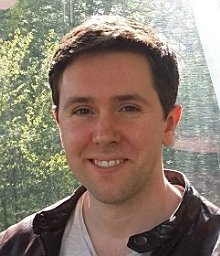 Paul C. Bell合作论文数School of Physical Sciences, The University18
 Duncan Adamson合作论文数Leverhulme Res Ctr Funct Mat Design12
 Reino Niskanen合作论文数Department of Computer Science, University of Oxford12
 Oleksiy Kurganskyy合作论文数Laboratory of Discrete Mathematics and Applied Algebra, Department of Theory Control Systems, National Academy of Sciences of Ukraine;Department of Computer Technologies, Donetsk University10
 Vladimir V. Gusev合作论文数Department of Mathematics;Ural State University;Department of Mathematics, Ural State University10
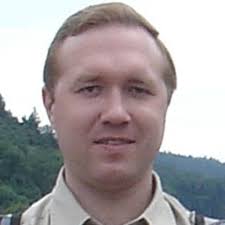 Pavel Semukhin合作论文数Department of Computer Science, Liverpool John Moores University;School of Computing and Mathematical Sciences, Liverpool John Moores University10
 Argyrios Deligkas合作论文数Centre for Reliable Machine Learning, Department of Computer Science, Royal Holloway University of London;Centre for Intelligent Systems, Department of Computer Science, Royal Holloway University of London9
 Vesa Halava合作论文数Department of Mathematics and Turku Centre for Computer Science, University of Turku8
 Paul Spirakis合作论文数Department of Computer Engineering & Informatics, School of Engineering, University of Patras7
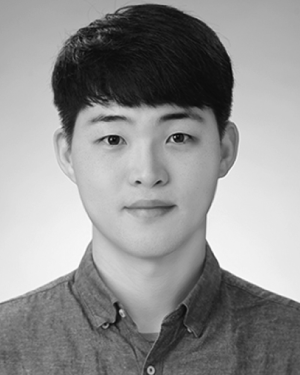 Sang-Ki Ko合作论文数6Alexei Lisitsa合作论文数Department of Computer Science;University of Liverpool6
 Leszek Antoni Gąsieniec合作论文数Department of Computer Science, School of Electrical Engineering, Electronics and Computer Science, Faculty of Science and Engineering, University of Liverpool6
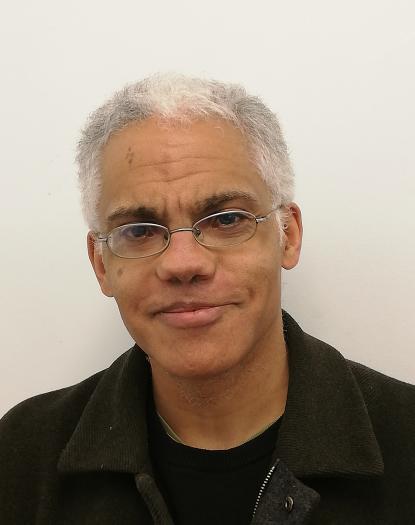 James Worrell合作论文数Green Templeton College, University of Oxford;Department of Computer Science, University of Oxford5Nathan Flaherty合作论文数4
 Mika Hirvensalo合作论文数university of turku4
 Tero Harju合作论文数Department of Mathematics
University of Turku4
Tero Harju合作论文数Department of Mathematics
University of Turku4 Antonin Kucera合作论文数Department of Computer Science, Faculty of Informatics, Masaryk University4
 Othon Michail合作论文数Research Academic;RACTI ), Computer Technology Institute;RACTI, Computer Technology Institute4Abdullah Almethen合作论文数3Theofilos Triommatis合作论文数Dept Comp Sci, Univ Liverpool3
 Olivier Bournez合作论文数LORIA & INRIA Lorraine3Thomas Nickson合作论文数3Christopher Collins合作论文数3
 Agata Ciabattoni合作论文数Vienna University of Technology3
 Stefan Szeider合作论文数Faculty of Informatics, Technische Universitat Wien;Vienna Center for Logic and Algorithms, Technische Universitat Wien3
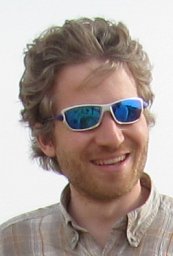 Jérôme Leroux合作论文数Laboratoire Spécification et Vérification, CNRS UMR 8643 & ENS de Cachan3
 Matthew Rosseinsky合作论文数School of Physical Sciences, Faculty of Science and Engineering, University of Liverpool;Department of Chemistry, University of Liverpool3
 Matthew Dyer合作论文数Department of Chemistry, School of Physical Sciences, Faculty of Science and Engineering, University of Liverpool3Rafiq Saleh合作论文数3
 Dmytro Antypov合作论文数Department of Materials Science and Metallurgy3
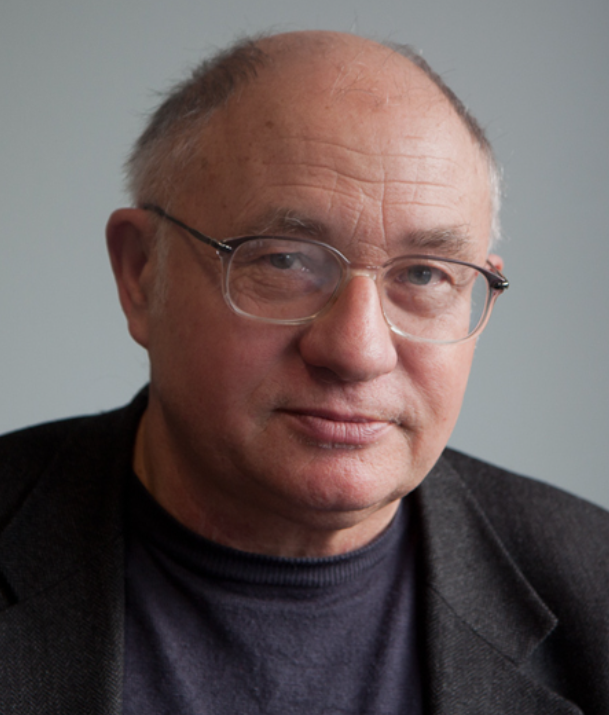 Wojciech Rytter合作论文数Institute of Informatics, Department of Mathematics, Warsaw University;Faculty of Mathematics, Informatics and Mechanics, University of Warsaw3George Darling合作论文数3
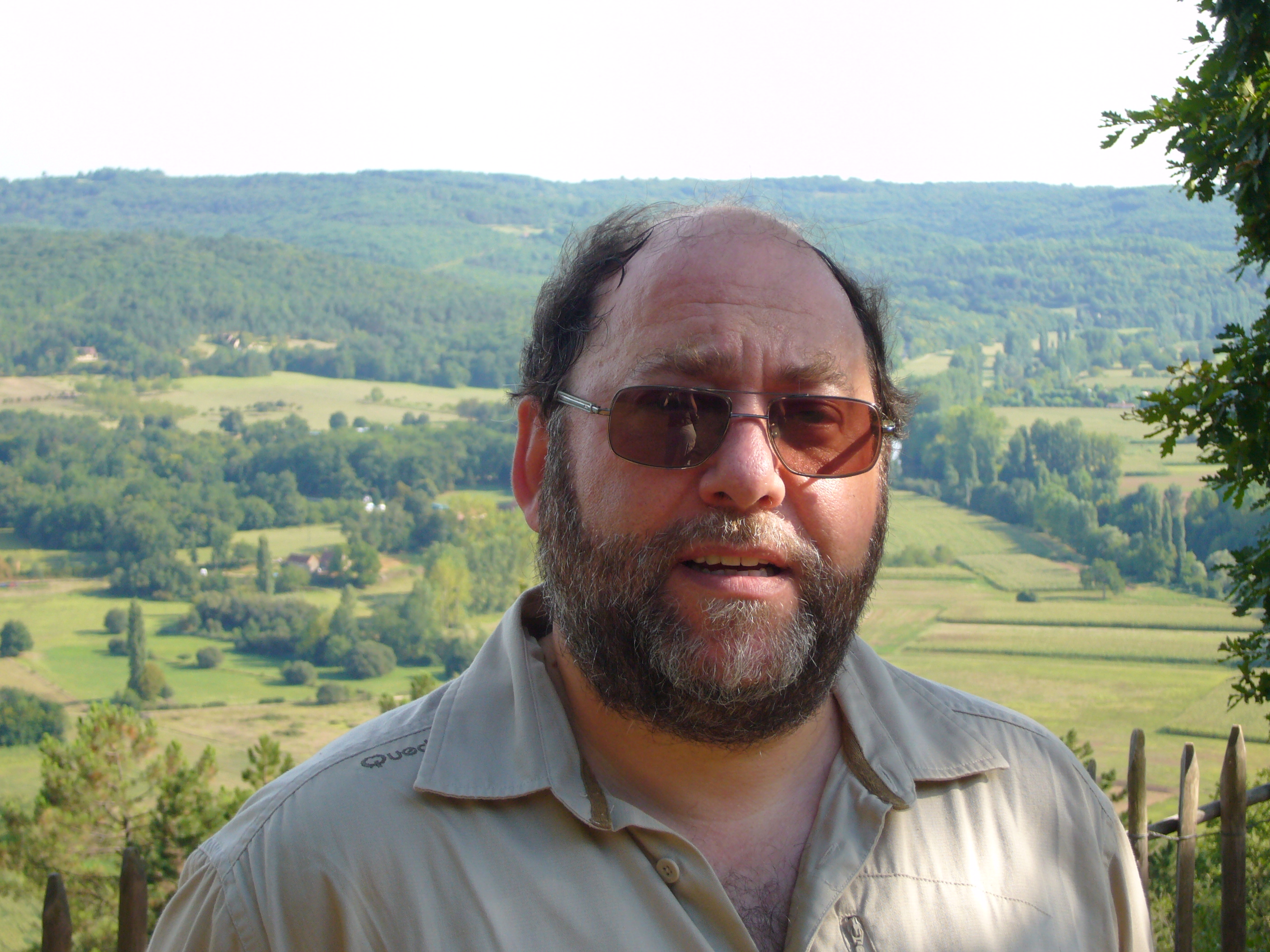 A. Finkel合作论文数Laboratoire Sp??cification et V??rification3
 Rusins Martins Freivalds合作论文数Division of Discrete Mathematics, Faculty of Physics and Mathematics, University of Latvia3Igor Grunsky合作论文数3
 Qin Xin合作论文数2
 Matthew Hague合作论文数Department of Computer Science Royal Holloway,University of London2
 Juhani Karhumäki合作论文数Department of Mathematics, University of Turku2Aris T. Pagourtzis合作论文数Department of Computer Science;National Technical University of Athens (NTUA);School of Electrical and Computer Engineering2Fernando Sancho-Caparrini合作论文数2
 Rahul Savani合作论文数Department of Computer Science, University of Liverpool2
 Aris Pagourtzis合作论文数Department of Computer Science;National Technical University of Athens (NTUA);School of Electrical and Computer Engineering2Roman Kolpakov合作论文数2
 Jason F. Ralph合作论文数Department of Electrical and Electronic Engineering;Liverpool University;Department of Electrical and Electronic Engineering, Liverpool University2Julien Reichert合作论文数2
 Stephane Demri合作论文数Laboratoire Méthodes Formelles, CNRS2
 Pierre-Alain Reynier合作论文数Computer Science Department, Faculty of Science, Aix-Marseille University2
 Volker Diekert合作论文数Institute of Formal Methods of Computer Science, Faculty of Computer Science, Electrical Engineering and Information Technology, University of Stuttgart2




