A Kelvin-Helmholtz instability is formed when two fluids of different densities exert a shear on one another at their interface when flowing in opposite directions. This paper presents a step-by-step guide for the design of a low-cost, small-scale, experimental tilt tube apparatus and a corresponding computational fluid dynamics (CFD) model that can be used to introduce the Kelvin-Helmholtz instability to undergraduate mechanical engineering students in several courses. A thermal-fluids laboratory course is taken by our fourth-year mechanical engineering students, and the overall variety of experiments has been limited by the cost of commercial teaching equipment. The tilt tube apparatus allows students to induce and record the Kelvin-Helmholtz instability, and no ongoing costs are involved in incorporating this experiment into the course. In our introductory CFD course, students perform CFD simulations as part of the design and analysis process. Developing a two-dimensional (2D) CFD model with two different fluids is well within their capabilities after completing initial software and simulation tutorial exercises and homework. Representative experiments were conducted with fresh water and salt water of different densities, and results showed that both the amplitude of the waves and the amount of time the instability was visible decreased with increasing salt water salinity. Results from a 2D CFD model developed in Ansys Fluent exhibited the same trends as the experimental data.
A MATLAB tool that combines computational fluid dynamics with uncertainty quantification (UQ) applied to a two-dimensional FLUENT computational model to predict the heat transfer and the maximum temperature inside a spent fuel assembly is presented in this technical note. The tool is used to establish a connection between MATLAB and ANSYS-FLUENT for the purpose of UQ using the Sandia National Laboratory's UQ Toolkit. This tool allows users to adapt the UQ methodology to existing ANSYS-FLUENT models in order to automate the quadrature-based simulation process. The novelty of the tool presented in this technical note is its ability to generate results covering a continuous range of input parameters by using polynomial chaos expansions for the representation of random variables and the propagation of uncertainty in computational models.
We present three-dimensional numerical simulations to quantify the design specifications of a directed thermoplate expanded channel heat exchanger, also called dimpleplate. Parametric thermofluidic simulations were performed independently varying the number of spot welds, the diameter of the spot welds, and the thickness of the fluid channel within the laminar flow regime. Results from computational fluid dynamics simulations show an improvement in heat transfer is achieved under a variety of conditions: when the thermoplate has a relatively large cross-sectional area normal to the flow, a ratio of spot weld spacing to channel length of 0.2, and a ratio of the spot weld diameter with respect to channel width of 0.3. Experimental results performed to validate the model are also presented. (C) 2018 Elsevier Ltd. All rights reserved.
A three-dimensional ANSYS-FLUENT Computational Fluid Dynamics (CFD) model of the central receiver in a compact hybrid solar-thermal collector is presented. The small scale cavity receiver is conical in shape, laser welded from Inconel 625 with a 38 mm entrance aperture, and uses pressurized water as the Heat Transfer Fluid (HTF) within a thermoplate serpentine flowpath. The coupled thermofluidic CFD model examines a simplified unrolled version of this dimpleplate heat exchanger, representing the laminar flow within 10 x 1 mm expanded flowpath serpentine channels complete with intrachannel spot welds and non-uniform concentrated solar irradiance heating. The computational model is validated against experimental results with the receiver at the focus of a 2.7 m(2) parabolic dish, two-axis tracking rooftop solar collector. For steady state conditions with the outlet HTF reaching temperatures in excess of 200 degrees C, the HTF temperature rise predicted by the computational model is in agreement with the experimental data. In order to accurately capture the heat losses from the heat exchanger to its surrounding, we present an additional three-dimensional CFD model including the heat exchanger and surrounding thermal insulation. Contours of temperature and velocity at the midplane of the dimpleplate receiver heat exchanger are presented. (C) 2018 Elsevier Ltd. All rights reserved.
A novel method that incorporates uncertainty quantification (UQ) into numerical simulations of heat transfer for a 9 × 9 square array of spent nuclear fuel (SNF) assemblies in a boiling water reactor (BWR) is presented in this paper. The results predict the maximum mean temperature at the center of the 9 × 9 BWR fuel assembly to be 462 K using a range of fuel burn-up power. Current related modeling techniques used to predict the heat transfer and the maximum temperature inside SNF assemblies rely on commercial codes and address the uncertainty in the input parameters by running separate simulations for different input parameters. The utility of leveraging polynomial chaos expansion (PCE) to develop a surrogate model that permits the efficient evaluation of the distribution of temperature and heat transfer while accounting for all uncertain input parameters to the model is explored and validated for a complex case of heat transfer that could be substituted with other problems of intricacy. UQ computational methods generated results that are encompassing continuous ranges of variable parameters that also served to conduct sensitivity analysis on heat transfer simulations of SNF assemblies with respect to physically relevant parameters. A two-dimensional (2D) model is used to describe the physical processes within the fuel assembly, and a second-order PCE is used to characterize the dependence of center temperature on ten input parameters.
Experimental and numerical studies are reported on the structure of supersonic free-jet expansions of supercritical CO2 impacting on a flat plate. Numerical calculations for the axisymmetric, two-dimensional (2-D) expansion use a time-dependent finite difference method known as the two-step Lax-Wendroff technique, incorporating the Redlich-Kwong equation of state to model CO2. The numerical results are compared with experimental optical shadowgraph measurements of the jet and shock wave structure, impact pressure and temperature measurements along the plate, and a thermocouple probe of the expansion. Approximations based on ideal gases and quasi-1-D flow analysis, often used by researchers, are found to be useful for these supercritical fluid flows. © 2004 American Institute of Chemical Engineers AIChE J, 50: 2697–2704, 2004
How can we educate current students to be the most effective engineers when they graduate? Many leaders, researchers, and educators have been calling for the need to move from educating engineers in a way that reinforces that engineering is a purely technical endeavor to one that recognizes it as socio-technical. However, how does an engineering educator do this in required engineering courses? As part of an NSF-funded project, our engineering program is exploring such issues. In this paper, we present examples of how a heat transfer instructor has integrated such content. Heat transfer is a fundamental course in mechanical engineering which includes key concepts that are useful in wide range of applications. Contemporary heat transfer textbooks highlight real-world applications but often struggle to integrate societal concerns. In this paper, we will describe details of two modules, their use with students in a required senior level heat transfer class, and evaluation. Recognizing that instructors have many demands on their time, our modules are designed to be easy to use and include activities for class, homework, and projects. Instructors could choose some or all to incorporate in their heat transfer classes. The first module is designed to be included in the design of electrical water heaters for residential applications. This topic is covered when teaching conduction and convection heat transfer. Current water heaters in the US run constantly so hot water is available 24 hours a day. Water heater are usually insulated and located inside the garage or a closet inside the house. Despite improved insulation, heat is lost by conduction within the insulation and by convection to surrounding air. The cost of heat loss due to running the water heater constantly is calculated as a class activity. A new problem changes the focus from the US to developing countries, like Lebanon, where electrical energy is not abundant. In these countries, water heaters are typically kept off and turned on half an hour prior to taking a shower. In this case, students must grapple with different constraints as they explore the feasibility of having a water heater running in a global context where electricity is not always available. The second module is designed for use in the Heat Exchanger section of the course. This is framed around a successful student-faculty project at our university which was implemented in the Dominican Republic designed to provide affordable water heating for rural communities. In class, students are presented with a picture of the thermosiphon solar water heater and challenged to develop the model based on the heat exchanger equations learned in class. An open-ended design project involving modeling of similar heat exchangers is assigned where students use simulation software to calculate system performance and efficiency. Students can directly see the relevance of their heat transfer knowledge in a humanitarian context. We hope that these examples might help other instructors incorporate these important themes into their heat transfer courses enabling more engineering students to include broader considerations in their engineering practice.
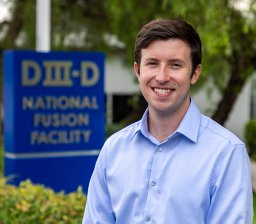 Quinn Pratt合作论文数Univ Calif Los Angeles5
 Christopher Spitler合作论文数2
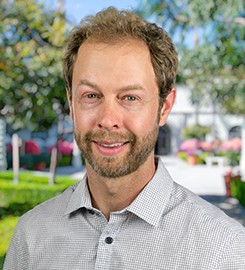 Daniel Codd合作论文数Shiley-Marcos School of Engineering, University of San Diego2Harrison Schmachtenberger合作论文数1Breanne Przestrzelski合作论文数1
 Elizabeth Reddy合作论文数1David R Miller合作论文数1
 Melissa Marie Gibbons合作论文数Department of Mechanical and Aerospace Engineering, University of California, Los Angeles1David R. Miller合作论文数1
 Roger Georges Ghanem合作论文数Viterbi School of Engineering, University of Southern California;Sonny Astani Department of Civil and Environmental Engineering, University of Southern California1
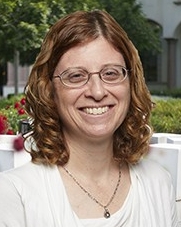 Susan Lord合作论文数Shiley-Marcos School of Engineering, University of San Diego1




