Design activities are increasingly used in science, technology, engineering and mathematics (STEM) education. Guiding students during these activities can be challenging for STEM teachers, who may be inexperienced in the field of design. In this study, we focused on a case of three chemistry teachers who implemented design projects in their classrooms. During the lessons, the students designed a self-heating or self-cooling cup, in which the energy effect of chemical reactions causes a heating or cooling effect on the cup’s contents. Through an in-depth analysis of the conversations between the teachers and student groups, we aim to understand how teachers verbally support students and any factors that may influence this. We used concepts from scaffolding theory to analyze the support. By organizing the data into segments based on these scaffolding concepts, we were able to characterize the different approaches taken by the teachers. The types of support varied; for example, the teacher might take control of the process or stimulate the students’ reasoning. The support appears to be adapted to the students, the lessons and the topics of the conversations. These are possible factors that may influence the way in which teachers support the students during design activities.
Design activities are gaining interest as rich contexts for learning science, technology, engineering, and mathematics (STEM) subjects. STEM teachers may find this challenging however, as designing requires support that they are not used to providing. In a subject like chemistry, teachers would have to balance creativity and responsibility for the students with concept learning and safety in the classroom. In a case study, we analyzed the verbal interactions of three teachers with their students during design activities in the classroom, with the aim of understanding what teachers and students talk about and how chemistry teachers support the students with their designs. During the lesson, students worked on the design of a self-heating or self-cooling cup, while also performing chemistry experiments to learn about the energy effects of reactions. Such a lesson reflects what design activities in the chemistry classroom could look like. We described the topics that teachers and students talk about, revealing that teachers support students through several types of feedback and questions. We also found that teachers support design tasks in a more open, constructive, and encouraging way than is used for experiments and chemistry concepts, which are supported in a closed, clarifying, and steering manner.
Design-based learning is considered a powerful way to help students apply and develop understanding of science concepts, but research has shown that the success of this approach is not a given. Examining students' understanding of science concepts in various design-based learning contexts has thus continued to be an important field of research. To help advance such work, we explored the affordances of a novel analytic approach for studying data gathered in design-based learning classrooms. We used the "chemical thinking framework," specifically its "conceptual sophistication" dimension, to analyze 10th-grade, chemistry students' design talk and drawings. We gathered this data during small-group design planning and drawing activities in the classrooms of two teachers whose students were designing a product that harnesses chemical energy to change the temperature of a beverage or snack. The findings demonstrate that this analytic approach was able to reveal that students (implicitly) drew on their understanding of several chemistry concepts while designing. Moreover, it showed that students could use everyday as well as more sophisticated understandings regarding a given chemistry concept while designing. This study furthermore unveiled differences in what and how students' design talk and drawings may reveal use of conceptual understanding, and it showed that different student teams may use a unique combination of understandings during design planning and drawing. We describe how this study's analytic approach complements existing approaches in design-based learning research, and how our findings provide implications for research and practice.
This paper investigates the developing pedagogical content knowledge (PCK) of nine experienced science teachers in their first few years of teaching a new science syllabus in the Dutch secondary education system. We aimed to identify the content and structure of the PCK for a specific topic in the new syllabus, ‘Models of the Solar System and the Universe’, describing the PCK development in terms of relations between four different aspects: knowledge about instructional strategies; knowledge about students’ understanding; knowledge about assessment of students; and knowledge about goals and objectives of the topic in the curriculum. Semi‐structured interviews were conducted in three subsequent academic years. From the analysis of the data, two qualitatively different types of PCK emerged. Type A can be described as oriented towards model content, while Type B can be typified as oriented towards model content, model production, and thinking about the nature of models. The results also indicate that these two types of PCK developed in qualitatively different ways.
Bringing design practices to chemistry education is gaining interest with recent science curriculum reforms emphasising design, and calls for integrated STEM education. Design is a central practice in the chemistry discipline, and could foster meaningful chemistry education. Although chemistry teachers are key in bringing design to chemistry classrooms, and in realising design's potential for learning, little is known about their views on teaching and learning regarding design. To reduce this gap in literature, we explored chemistry teachers' pedagogical ideas in the context of a Dutch professional learning community on design in chemistry education. We elicited teachers' ideas through semi-structured interviews and lesson forms which teachers kept while implementing a design project. Multiple patterns emerged through analysing teachers' ideas. We found that the teachers did not see teaching design as a goal of chemistry education. Instead, teachers valued design as a teaching approach to engage students in applying chemistry concepts, in developing soft skills, and in applying or developing research practices. In this paper, we present more patterns in teachers' ideas, and discuss possible explanations of these findings in depth. Finally, we give suggestions for future research, and teacher professional development that may help support a change to bring design into chemistry education.
Science teachers’ pedagogical content knowledge (PCK) has been researched in many studies, yet little empirical evidence has been found to determine how this knowledge actually informs teachers’ actions in the classroom. To complement previous quantitative studies, there is a need for more qualitative studies to investigate the relationship between teacher knowledge (as formulated by the teacher) and classroom practice, especially in the context of an educational innovation. In this study we explored a possible way to investigate this relationship in an in-depth and systematic fashion. To this end, we conducted a case study with a chemistry teacher in the context of the implementation of a context-based science curriculum in The Netherlands. The teacher’s PCK was captured using the Content Representation form by Loughran, Mulhall, and Berry. We used an observation table to monitor classroom interactions in such a way that the observations could be related to specific elements of teachers’ PCK. Thus, we were able to give a detailed characterization of the correspondences and differences between the teacher’s personal PCK and classroom practice. Such an elaborate description turned out to be a useful basis for discussing mechanisms explaining the relationship between teachers’ knowledge and teachers’ actions.
The aim of this study was to explore how the design of this chemistry lesson for citizenship influences students’ use of different perspectives in decision-making about ‘the use and sale of laughing gas’. In this study, ‘the use and sale of laughing gas among youth’ was chosen as a socio-scientific issue. This chemistry lesson for citizenship was designed according to the 5E instructional approach, and activating pedagogical methods and tools (i.e., group discussion, reading the information cards, taking notes, watching instructional videos) were used. Both the types of perspectives used and the effectiveness of the pedagogies implemented were explored. Twenty-three students from two classes participated in the study. The data were collected through five tools (four worksheets and a questionnaire). The students mainly used ‘scientist’ perspective by focusing on what research says about the possible consequences of inhaling laughing gas. The students also focused on ‘health’; principally, they referred to the relation between the amount of laughing gas used and the damage it may cause. As to the influential pedagogical elements of the lesson, the ‘videos’ were found to be the most effective and informative. In addition, the ‘group discussion’ was also found to be an influential activity of the lesson on making decisions about the use and sale of laughing gas. Therefore, our results suggest that the lesson design supported the students to recognize and use different perspectives to make informed decisions about the sale and use of laughing gas.
Professionele ontwerpers maken tijdens een ontwerpproces voortdurend tussenproducten zoals schema’s, visualisaties en presentaties. In dit door NRO gesubsidieerde project ontdekten de onderzoekers dat zulke authentieke tussenproducten van leerlingen zichtbaar kunnen maken wat zij aan vakkennis opdoen tijdens het werken aan een ontwerpopdracht. Cruciale voorwaarden daarbij zijn de juiste timing, een strak format en een docent die over de juiste ontwerpkennis en vakdidactische kennis beschikt.
The purpose of this study is to provide insight into short-term professionalization of teachers regarding teaching socioscientific issues (SSI). The study aimed to capture the development of science teachers' pedagogical content knowledge (PCK) for SSI teaching by enacting specially designed SSI curriculum materials. The study also explores indicators of stronger and weaker development of PCK for SSI teaching. Thirty teachers from four countries (Cyprus, Israel, Norway, and Spain) used one module (30-60min lesson) of SSI materials. The data were collected through: (a) lesson preparation form (PCK-before), (b) lesson reflection form (PCK-after), (c) lesson observation table (PCK-in-action). The data analysis was based on the PCK model of Magnusson, Krajcik, and Borko (1999). Strong development of PCK for SSI teaching includes "Strong interconnections between the PCK components," "Understanding of students' difficulties in SSI learning," "Suggesting appropriate instructional strategies," and "Focusing equally on science content and SSI skills." Our findings point to the importance of these aspects of PCK development for SSI teaching. We argue that when professional development programs and curriculum materials focus on developing these aspects, they will contribute to strong PCK development for SSI teaching. The findings regarding the development in the components of PCK for SSI provide compelling evidence that science teachers can develop aspects of their PCK for SSI with the use of a single module. Most of the teachers developed their knowledge about students' understanding of science and instructional strategies. The recognition of student difficulties made the teacher consider specific teaching strategies which are in line with the learning objectives. There is an evident link between the development of PCK in instructional strategies and students' understanding of science for SSI teaching.
This chapter describes an approach to stem education that focuses on connecting research and design as core practices across the stem disciplines. In this approach, school-industry partnerships provide students with opportunities to acquire real world stem experiences. Collaboration between teachers, within and across schools, and with stem professionals working in local industries are an essential element in the implementation of this innovation. Consequently, schools and teachers are empowered to develop and implement a version of stem education that fits their local context, student population and resources. Research is needed to investigate the impact of this approach on the attitudes and behaviours of students, teachers and stem professionals.
The goal of this study is to investigate changes in PCK (Pedagogical Content Knowledge) of Dutch primary and secondary computer science teachers participating in a MOOC about Scratch programming. We captured the teachers' PCK using identical pre- and post-questionnaires and conducted a qualitative deductive-inductive content analysis to identify changes in the PCK of the MOOC attendees. We relate the observed differences between PCK before and after the MOOC to Clarke and Hollingsworth's model of teacher professional growth and Van Driel and Henze's model of PCK development. Our analysis gives rise to four design principles meant to inform the pedagogical design of such MOOCs and improve their pedagogical affordances with regard to PCK development of their attendees.
In design-based education, students use scientific concepts to inform their artifact-making endeavors. On the other hand, artifact-making activities are meant to deepen students' conceptual understanding. However, no strategy has been described that explicitly links conceptual development and artifact-making endeavors in computer science design projects in an authentic way. To fill this gap, in this 'work in progress' study, we developed an instructional model for fusion designing and conceptual learning in CS education. A key component of the model is the 'intermediate design products' which play a critical role in connecting designing and conceptual learning. The model served to develop exemplary lesson materials meant to enhance students' algorithmic thinking. The materials were implemented and evaluated in four classes. The results suggest the model provides opportunities to improve students' algorithmic thinking. Furthermore, intermediate products turn out to be promising inputs for (formative) assessment of conceptual development in design projects by capturing and revealing students' misconceptions about basic CS concepts.
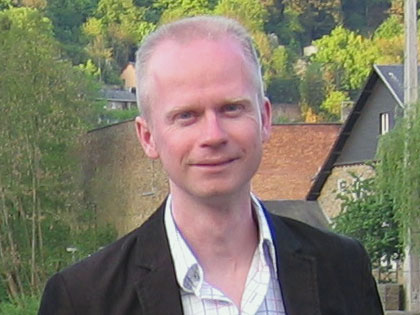 Erik Barendsen合作论文数Institute for Computing and Information Sciences, Radboud Universiteit Nijmegen21
 Jan Van Driel合作论文数Melbourne Graduate School of Education, The University of Melbourne9
 Dury Bayram Jacobs合作论文数8
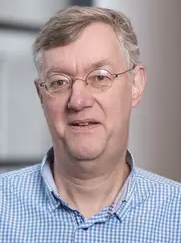 M. (Marc) de Vries合作论文数Department of Values, Technology and Innovation, Faculty of Technology, Policy and Management, Delft University of Technology;KTH Royal Institute of Technology;Eindhoven University of Technology7
 Hanna Stammes合作论文数6Nico Verloop合作论文数ICLON Graduate School of Education, Leiden University6
 Silvia Alcaraz-Dominguez合作论文数Fac Educ, Univ Barcelona2
 Durdane Bayram-Jacobs合作论文数Eindhoven Sch Educ, Eindhoven Univ Technol2
 Maria Evagorou合作论文数School of Education, University of Nicosia (UNic),2Yael Shwartz合作论文数Weizmann Institute of Science2
 Mario Barajas Frutos合作论文数Departament de Didàctica i Organització Educativa, Facultat de Pedagogia, Universitat de Barcelona2DB Jacobs合作论文数1nathalie vermeersch合作论文数1
 Dirk Janssens合作论文数1
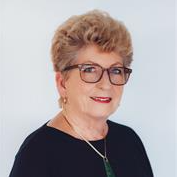 Anne Hume合作论文数Te Kura Toi Tangata School of Education, The University of Waikato1
 Amanda Berry合作论文数School of Curriculum, Teaching and Inclusive Education, Faculty of Education, Monash University1
 Fred J. J. M. Janssen合作论文数1
 Joke Torbeyns合作论文数GROEP T – Leuven Education College1
 Felienne Hermans合作论文数Delft University of Technology, Delft, Netherlands1
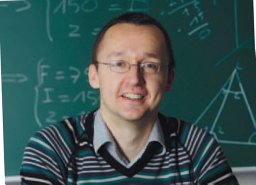 Wim Van Dooren合作论文数University of Leuven Center for Instructional Psychology and Technology (CIP&T) Vesaliusstraat 2 B-3000 Leuven Belgium Vesaliusstraat 2 B-3000 Leuven Belgium1
 Fien Depaepe合作论文数Faculty of Psychology and Educational Sciences, KU Leuven1
 Lieven Verschaffel合作论文数Faculty of Psychology and Educational Sciences, Katholieke Universiteit Leuven1Marc J. De Vries合作论文数1
 Geert Kelchtermans合作论文数Faculty of Psychology and Educational Sciences, KU Leuven;Centre for Innovation and the Development of Teacher and School, KU Leuven1




