Meadows-commutative rings equipped with a total inversion operation-can be axiomatized by purely equational means. We study subvarieties of the variety of meadows obtained by extending the equational theory and expanding the signature.
Univariate fractions can be transformed to mixed fractions in the equational theory of meadows of characteristic zero.
A meadow is a commutative ring with a total inverse operator satisfying 0 = 0. We show that the class of finite meadows is the closure of the class of Galois fields under finite products. As a corollary, we obtain a unique representation of minimal finite meadows in terms of finite prime fields.
$\mathbb{Q}_0$ - the involutive meadow of the rational numbers - is the field of the rational numbers where the multiplicative inverse operation is made total by imposing $0^{-1}=0$. In this note, we prove that $\mathbb{Q}_0$ cannot be specified by the usual axioms for meadows augmented by a finite set of axioms of the form $(1+ \cdots +1+x^2)\cdot (1+ \cdots +1 +x^2)^{-1}=1$.
We apply a paraconsistent strategy to reasoning about fractions.
A meadow is a commutative ring with a total inverse operator satisfying 0−1=0. We show that the class of finite meadows is the closure of the class of Galois fields under finite products. As a corollary, we obtain a unique representation of minimal finite meadows in terms of finite prime fields.
We consider the signatures Σm=(0,1,−,+,⋅,−1) of meadows and (Σm,s) of signed meadows. We give two complete axiomatizations of the equational theories of the real numbers with respect to these signatures. In the first case, we extend the axiomatization of zero-totalized fields by a single axiom scheme expressing formal realness; the second axiomatization presupposes an ordering. We apply these completeness results in order to obtain complete axiomatizations of the complex numbers.
We consider the signatures Σm = (0, 1,−,+, ·, ) of meadows and (Σm, s) of signed meadows. We give two complete axiomatizations of the equational theories of the real numbers with respect to these signatures. In the first case, we extend the axiomatization of zero-totalized fields by a single axiom scheme expressing formal realness; the second axiomatization presupposes an ordering. We apply these completeness results in order to obtain complete axiomatizations of the complex numbers.
We apply a paraconsistent logic to reason about fractions.
Let Q_0 denote the rational numbers expanded to a "meadow", that is, after taking its zero-totalized form (0^{-1}=0) as the preferred interpretation. In this paper we consider "cancellation meadows", i.e., meadows without proper zero divisors, such as $Q_0$ and prove a generic completeness result. We apply this result to cancellation meadows expanded with differentiation operators, the sign function, and with floor, ceiling and a signed variant of the square root, respectively. We give an equational axiomatization of these operators and thus obtain a finite basis for various expanded cancellation meadows.
We investigate the expressiveness of backward jumps in a frame work of formalized sequential programming called program algebra and characterize established non-uniform complexity classes in terms of instruction sequences, backward jumps and auxiliary registers.
A combination of program algebra with the theory of meadows is designed leading to a theory of computation in algebraic structures. It is proven that total functions on cancellation meadows can be computed by straight-line programs using at most five auxiliary variables. A similar result is obtained for signed meadows.
AbstractAmeadowis a commutative ring with an inverse operator satisfying 0−1= 0. We determine the initial algebra of the meadows of characteristic 0 and prove a normal form theorem for it. As an immediate consequence we obtain the decidability of the closed term problem for meadows and the computability of their initial object.
Adapting a claim of Kracht (Theor Comput Sci 354:131–141, 2006), we establish a characterization of the typable partial applicative structures.
Let Q_0 denote the rational numbers expanded to a meadow by totalizing inversion such that 0^{-1}=0. Q_0 can be expanded by a total sign function s that extracts the sign of a rational number. In this paper we discuss an extension Q_0(s ,\sqrt) of the signed rationals in which every number has a unique square root.
Adapting a claim of M. Kracht, we establish a characterization of the typable partial applicative algebras.
A meadow is a commutative ring with an inverse operator satisfying 0 = 0. We determine the initial algebra of the meadows of characteristic 0 and show that its word problem is decidable.
The aim of this note is to describe the structure of finite meadows. We will show that the class of finite meadows is the closure of the class of finite fields under finite products. As a corollary, we obtain a unique representation of minimal meadows in terms of prime fields.
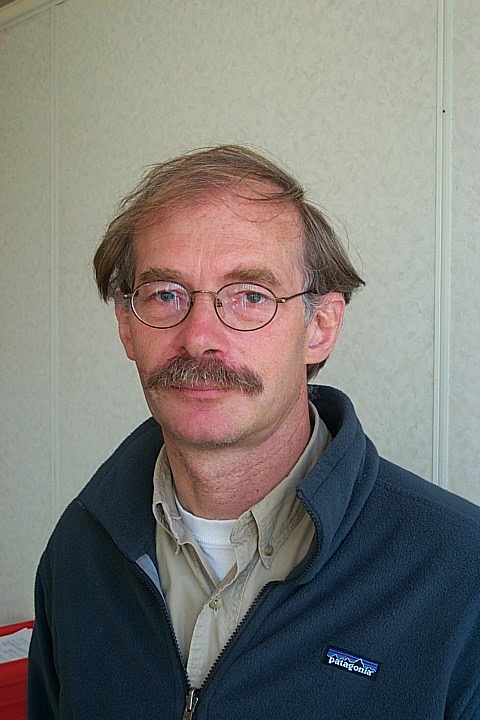 J.A. (Jan) Bergstra合作论文数Informatics Institute, Faculty of Science, University of Amsterdam29
 Alban Ponse合作论文数Informatics Institute, University of Amsterdam13
 Piet Rodenburg合作论文数Research Group Faculty of Science University of Amsterdam Kruislaan 40311
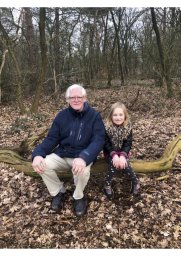 Jan Willem Klop合作论文数Department of Theoretical Computer Science, Vrije Universiteit3
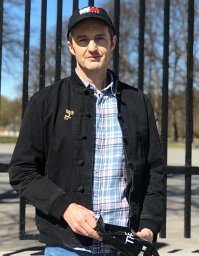 Mark Burgess合作论文数College, Oslo University1Jose M. Lagerberg合作论文数1Marijke Loots合作论文数1
 Andy D Pimentel合作论文数Computer Systems Architecture group;University of Amsterdam;Informatics Institute1
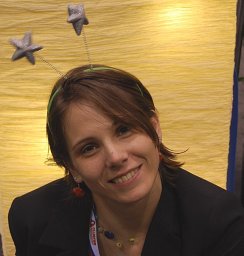 Ana Lucia Varbanescu合作论文数University of Amsterdam1
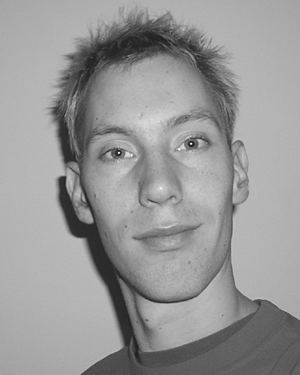 Simon Polstra合作论文数1
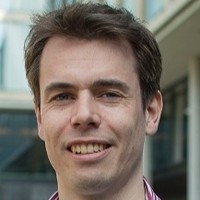 Magiel Bruntink合作论文数Software Improvement Group1Roel C. De Vrijer合作论文数Department of Theoretical Computer Science
Vrije Universiteit1
Magiel Bruntink合作论文数Software Improvement Group1Roel C. De Vrijer合作论文数Department of Theoretical Computer Science
Vrije Universiteit1 Arnoud Visser合作论文数Intelligent Robotics Lab.1Roeland Douma合作论文数1Arjen Sevenster合作论文数1
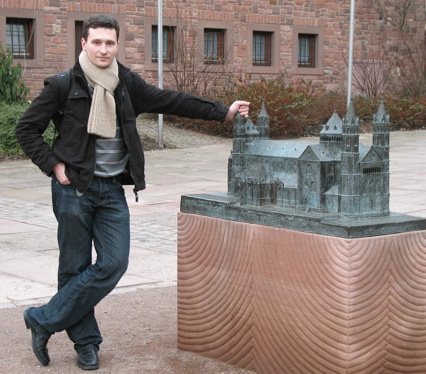 Vadim Zaytsev合作论文数Software Analysis & Transformation (SWAT),
Centrum Wiskunde & Informatica (CWI)1Roy Bakker合作论文数1
Vadim Zaytsev合作论文数Software Analysis & Transformation (SWAT),
Centrum Wiskunde & Informatica (CWI)1Roy Bakker合作论文数1 Dimitri Hendriks合作论文数Department of Computer Science, Vrije Universiteit Amsterdam1G. Dick Van Albada合作论文数Institute of Informatics, University of Amsterdam1
 Raphael Poss合作论文数EPITA Research and Development Laboratory1
 Robert G. Belleman合作论文数Computational Science, Section;Laboratory for Computing;Faculty of Science;Section Computational Science|Laboratory for Computing|Faculty of Science1




