This chapter describes the most common methods that do not rely on the combination of liquid chromatography and mass spectrometry. In general, 2D SDS-PAGE gel quantification is based on the signal intensity of the spot in which the protein has been found. A widely used technique to avoid the typical low reproducibility between different gels is the fluorescence-based differential in-gel electrophoresis (DIGE) approach. Another often-used method for discovery oriented protein quantification is provided by protein arrays. Where 2D gel electrophoresis and protein arrays provide discovery oriented methods used to detect and quantify as many proteins as possible in a sample,Western blotting provides a targeted means to quantify a single protein in a sample. Another popular means of targeted protein quantification is offered by enzyme-linked immunosorbent assay (ELISA). ELISA is often used in clinical assays, and the development of an ELISA is therefore often the endpoint of a biomarker discovery pipeline. Controlled Vocabulary Terms Computational statistics; Inferential statistics
Post-translational modifications (PTMs) are crucial for the heterogeneity of proteins. PTMs are often used to regulate how proteins will act in eukaryotic organisms; disregulation of PTMs is important in many diseases. Examining how the extent of modifications varies over different situations is therefore interesting from both a basic biological as well as from a clinical perspective. Although mass spectrometry has been applied to the quantification of PTMs for more than ten years, there are essentially no general methods available that can analyze all types of modifications. Absolute modification degrees have to be calculated from the observed abundances. Relative modification degree can be calculated from absolute modification degrees. The chapter also discusses discovery based modification stoichiometry. Controlled Vocabulary Terms Computational statistics Inferential statistics
Label based quantification by MS spectra consists of two main steps: Quantification by MS spectra and identification by MS/MS spectra. The main principle for the quantification is straightforward: (i) the samples to be compared are modified using labels that have the same chromatographic characteristics, thus ensuring that the different versions of a peptide occur in the same MS spectra; (ii) the masses of the labels and the charge of the peptide are then used to locate variants of the same peptide in an MS spectrum. This chapter discusses various labeling techniques such as: metabolic labeling — SILAC (Stable Isotope Labeling with Amino acids in Cell culture), chemical labeling and enzymatic labeling. The peaks that can be used for quantification depend largely on the peaks that are selected for MS/MS processing. The chapter describes label based quantification by MS spectra based on how this procedure is handled by MaxQuant. Controlled Vocabulary Terms Computational statistics; Inferential statistics
This chapter contains sections titled: Units of Structure Descriptions Coordinates Distance Matrices Torsion Angles Coarse Level Description Identifying the SSEs Structure Comparison Framework for Pairwise Structure Comparison Exercises Bibliographic notes
 Lennart Martens合作论文数Department of
Biochemistry, Faculty of Medicine and Health Sciences, Ghent
University, Ghent, Belgium 42
Lennart Martens合作论文数Department of
Biochemistry, Faculty of Medicine and Health Sciences, Ghent
University, Ghent, Belgium 42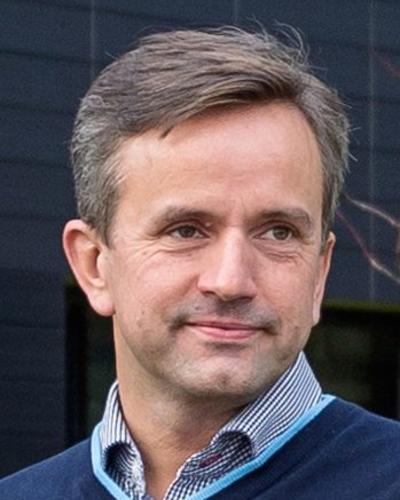 Inge Jonassen合作论文数Department of Informatics, University of Bergen31
 Harald Barsnes合作论文数Department of Informatics, University of Bergen30
 William R Taylor合作论文数National Institute for Medical Research22Svein-Ole Mikalsen合作论文数20Kristian Flikka合作论文数Bergen Center for Computational Science, UNIFOB/UiB20
 Geir Egil Eide合作论文数16Harald B. Jensen合作论文数6Johan R. Lillehaug合作论文数5
 Nils-Kare Birkeland合作论文数Department of Biological Sciences, University of Bergen4
 Jonathan A. Eisen合作论文数Department of Evolution and Ecology, College of Biological Sciences, University of California4
 Steven L. Salzberg合作论文数Department of Biomedical Engineering, Whiting School of Engineering, Johns Hopkins University;Center for Computational Biology, Johns Hopkins University;Institute for Computational Medicine, Johns Hopkins University4
 Anthony Scott Durkin合作论文数4
 Claire M. Fraser合作论文数School of Medicine, University of Maryland4Torleiv Lien合作论文数3Karlsen Odd A合作论文数Department of Molecular Biology, University of Bergen2
 Josef Pánek合作论文数Laboratory of Bioinformatics2
 Richard J. Cote合作论文数Division of Anatomic & Molecular Pathology, Department of Pathology & Immunology, School of Medicine, Washington University in St. Louis;Barnes-Jewish Hospital2
 Rein Aasland合作论文数2
 David Gilbert合作论文数Bioinformatics Research Centre|Department of Computing Science|University of Glasgow2
 Kris Gevaert合作论文数Department of Biomolecular Medicine, Faculty of Medicine and Health Sciences, Ghent University;VIB-UGent Center for Medical Biotechnology2
 Frode S Berven合作论文数2
 Alvis Brazma合作论文数European Bioinformatics Institute, EMBL-EBI2David R. Gilbert合作论文数Chicagoland2
 Juan Antonio Vizcaíno合作论文数EMBL-European Bioinformatics Institute2William C Nelson合作论文数1Véronique Cruciani合作论文数1H. Khouri合作论文数The Institute for Genomic Research1T. Utterback合作论文数1
 George Dimitrov合作论文数Walter Reed Army Inst Res, Geneva Fdn1
 Matt J. Lewis合作论文数Sch Ocean Sci, Bangor Univ1John F Heidelberg合作论文数1Straume Anne Hege合作论文数1
 Jacques Ravel合作论文数Institute for Genome Sciences, School of Medicine, University of Maryland1
 Murrell JC合作论文数School of Environmental Sciences, Faculty of Science, University of East Anglia1Larsen Oivind合作论文数1Darrell Conklin合作论文数Department of Computer Science and Artificial Intelligence, Universidad del País Vasco/Euskal Herriko Unibertsitatea1
 Marianne Brattas合作论文数1Bjørneklett Silje合作论文数1
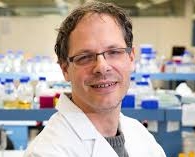 Ian Paulsen合作论文数School of Natural Sciences, Macquarie University;ARC Centre of Excellence in Synthetic Biology1
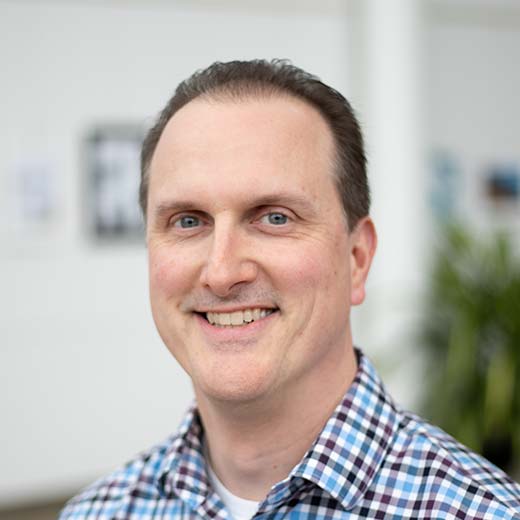 Derrick E. Fouts合作论文数J. Craig Venter Institute1Holt Ingeborg合作论文数1
 Albert Sickmann合作论文数Rudolf-Virchow-Center for Experimental Biomedicine, Universitaet Wuerzburg1
 Anders Goksøyr合作论文数Department of Biological Sciences, University of Bergen1
 Joël Vandekerckhove合作论文数Department of Medical Protein Research, Ghent University;Flanders Institute of Biotechnology1Rekha Seshadri合作论文数Joint Genome Institute1
 Karen E. Nelson合作论文数Thermo Fisher Scientific1
 Barbara Methe合作论文数1




