This study proposes a novel and computationally efficient framework for real-time weapon detection based on fractional-order Legendre polynomials (FLPs). The method integrates a multi-scale analysis strategy, where cascade classifiers first identify candidate regions in video frames, followed by FLP-based feature extraction at three fractional scales ( α = 0.5, 1.0, 1.5 ). This study focuses on handguns. Extending the approach to rifles, knives, and improvized weapons is planned as future work. Unlike earlier hand crafted features or deep models that often need large memory or GPU support, there is still no compact and scale aware shape descriptor that runs well on small CPU-only devices. Our main idea is to use fractional-order Legendre polynomials to encode multi-scale weapon shape and then verify candidates with a light classifier, which gives strong accuracy with a very small feature budget. Classification was performed using a Support Vector Machine (SVM) with a radial basis function (RBF) kernel, achieving 98.57
Accurate detection of blood in CCTV surveillance footage is critical for timely response to medical emergencies, violent incidents, and public safety threats. This study proposes a real-time deep learning framework that combines the InceptionV3 architecture with Convolutional Block Attention Modules to enhance spatial and channel-level feature discrimination. The model is further optimized through a proposed attention module that intensifies attention to small and minute blood-related patterns, even under challenging conditions such as occlusions, motion blur, and low visibility. A dedicated benchmark dataset comprising over 9500 manually annotated CCTV images captured under diverse lighting and environmental scenarios is developed for model training and evaluation. It achieves a detection accuracy of 94.5%, with precision, recall, and F1-scores all exceeding 94%, outperforming baseline methods. These results demonstrate the effectiveness in accurately identifying blood traces in real-world surveillance footage, offering a practical and scalable solution for enhancing public health and safety monitoring. All code and data are available at https://github.com/irshadkhalil23/bloodNet_model .
The challenge of accurately estimating effort for software development projects is critical for project managers (PM) and researchers. A common issue they encounter is missing data values in datasets, which complicates effort estimation (EE). While several models have been introduced to address this issue, none have proven entirely effective. The Analogy-Based Effort Estimation (ABEE) model is the most widely used approach, relying on historical data for estimation. However, the common practice of deleting cases or cells with missing observations results in a reduction of statistical power and negatively impacts the performance of ABEE, leading to inefficiencies and biases. This study employs the Multiple Imputation (MI) technique to address missing data by filling in incomplete cases. A comparison is conducted between the original and imputed ISBSG datasets for both small- and large-scale projects, using six other imputation techniques to identify the most effective method for ABEE. The results demonstrate that the MI technique enhances effort estimation, providing more accurate and efficient outcomes while preserving valuable information throughout the project estimation process.
Cataracts are a leading cause of blindness in Pakistan, contributing to more than 54% of cases due to poor living condition, nutritional deficiencies, and limited healthcare access. Early detection is critical to avoid invasive treatments,but current diagnostic approaches often identify cataracts at advanced stages. This paper presents an advanced,automated cataract detection system using deep learning specifically the ResNet-50 architecture, to address this gap. The model processes fundus retinal images curated from diverse datasets, classified by ophthalmologic experts through a rigorous three-stage process. By leveraging the ResNet-50 model, cataracts are categorized into normal,moderate,and severe, achieving an accuracy of 97.56% on full images. Notably, the system performs well even on partial images with 70% visibility, maintaining an accuracy of 95.23%, thus minimizing the need for extensive images restoration. The dataset was augmented to include 17,500 images,ensuring robust training. The model's ability to detect cataracts with high precision in images with varying visibility(70% ,80%,85% and beyond) demonstrate its flexibility and reliability, consistently achieving accuracy above 95.50%. This research offers a non-invasive, efficient solution particularly suited for remote areas, addressing the limitations of the late-stage diagnoses. It represent a significant advancement in cataract detection and has the potential to revolutionize global cataracts identification through early, accurate intervention.
Today is the age of superconductivity where each object connects in a cascading manner to other objects, allowing for seamless integration of real-world objects into the digital domain of the Internet of Things (IoT). These objects collaborate to deliver ubiquitous services based on the user mode and context. For more real-time applications, IoT is integrated with quantum computing technologies and tools for enhancing the conventional structure into more different aspects, revolutionizing the processing speed, enhancing communication, and increasing security features. All these objects are equipped with sensors that collect real-time data from their surroundings and share it with neighboring objects. This data is then broadcast into the environment, enabling users to access services without understanding the underlying complex and hybrid IoT infrastructure of heterogeneous devices. These minute and plugable sensors are capable of data collection and are always busy handling data management. However, these sensors often have limited resources, creating significant issues when dealing with massive and repetitive operations. Most of the time, these low-energy sensors are busy with excessive sensing and broadcasting, resulting in overhearing and passive listening. These factors not only create congestion on communication channels but also increase delays in data transmission and adversely affect system performance. To assess the network traffic for securing the IoT resources in the quantum computing environment, in this research work, we have proposed a novel scheme called “Self-Adaptive and Content-Based Scheduling (CACS) for Reducing Idle Listening and Overhearing in Securing the Quantum IoT Sensors”. This scheme reduces idle listening and minimizes overhearing by adaptively configuring network conditions according to the contents of sensed data packets. It minimizes extensive sensing, decreases over-cost processing, and reduces frequent communication that lessens the overall system traffic and secures the resources from being overwhelmed. The simulation results demonstrate a 0.80% increase in delay across various baud rates, resulting in a general increase of 0.44 s. Moreover, it ensures a notable 22.23% reduction in BER and lowers energy consumption by approximately 20%, which is actual energy enhancement in the connected system.
Flying Ad-hoc Network (FANET) is a new class of Mobile Ad-hoc Network in which the nodes move in three-dimensional (3-D) ways in the air simultaneously. These nodes are known as Unmanned Aerial Vehicles (UAVs) that are operated live remotely or by the pre-defined mechanism which involves no human personnel. Due to the high mobility of nodes and dynamic topology, link stability is a research challenge in FANET. From this viewpoint, recent research has focused on link stability with the highest threshold value by maximizing Packet Delivery Ratio and minimizing End-to-End Delay. In this paper, a hybrid scheme named Delay and Link Stability Aware (DLSA) routing scheme has been proposed with the contrast of Distributed Priority Tree-based Routing and Link Stability Estimation-based Routing FANET’s existing routing schemes. Unlike existing schemes, the proposed scheme possesses the features of collaborative data forwarding and link stability. The simulation results have shown the improved performance of the proposed DLSA routing protocol in contrast to the selected existing ones DPTR and LEPR in terms of E2ED, PDR, Network Lifetime, and Transmission Loss. The Average E2ED in milliseconds of DLSA was measured 0.457 while DPTR was 1.492 and LEPR was 1.006. Similarly, the Average PDR in %age of DLSA measured 3.106 while DPTR was 2.303 and LEPR was 0.682. The average Network Lifetime of DLSA measured 62.141 while DPTR was 23.026 and LEPR was 27.298. At finally, the Average Transmission Loss in dBm of DLSA measured 0.975 while DPTR was 1.053 and LEPR was 1.227.
Emergency incidents and events of fires can be dangerous and required quick and accurate decision-making need quick and correct decision-making. The use of computer vision for fire detection can provide a efficient solution to deal with these situations. These systems handle the usual data, provide an automated solution, and discard non-relevant information without discarding relevant content. Researchers developed many techniques for fire detection in videos and still images by using different color-based models. However, for videos, these methods are unsuitable because of high false-positive results. These methods use few parameters with little physical meaning, which makes fire detection more difficult. To deal with this, we have proposed a novel fire detection method based on Red Green Blue and CIE L * a * b color models, by combining motion detection with tracking fire objects. We have eliminated the moving region and calculate the growth rate of the fire to reduce false-alarm and calculate the risk. The proposed method operates on a reduced number of parameters compared to the existing methods. Experimental results demonstrate the effectiveness of our method of reducing false positives while keeping their precision compatible with the existing methods.
This paper presents an efficient algorithm for classifying the ECG beats to the main four types. These types are normal beat (normal), Left Bundle Branch Block beats (LBBB), Right Bundle Branch Block beats (RBBB), Atrial Premature Contraction (APC). Feature extraction is performed from each type using Legendre moments as a tool for characterizing the signal beats. A Multiclass Support Vector Machine (multiclass SVM) is used for the classification on process with Legendre polynomial coefficients as inputs. A comparison study is presented between the proposed and some existing approaches. Simulation results reveal that the proposed approach gives 97.7% accuracy levels compared to 95.7447%, 95.88%, 95.03% , 93.40%, 96.02%, 95.95%, 96.24% achieved with Discrete wavelet (DWT), Haar wavelet and principle component analysis (PCA) as feature extractors and ANN, Simple Logic Random Forest, LibSVM and J48 as classifiers.
Mobile Ad-hoc Networks (MANETs) could be setup frequently without the need of pre-established infrastructure. The nodes in MANETs are free to move and they can join as well as leave the network. Due to the dynamic nature of nodes in MANETs, routing protocols in MANET are extremely vulnerable to different security attacks. Like other different security attacks, Jellyfish attack is one of the most dangerous attacks in MANETs environment and it degrades the overall performance. In such type of attack, the packets reached its destination but take more time and hence it is difficult to detect such attack. In this research paper, we have analyzed the performance of Dynamic Source Routing (DSR) routing protocol in the presence of Jellyfish attack. To evaluate the performance we have created different scenarios having various number of Jellyfish attacks in MANETs environment. From the simulation result, it has been observed that Jellyfish attack significantly degrades the performance of DSR protocol in terms of end to end delay, throughput and packet delivery ratio. Moreover it has also been observed that when the number of Jellyfish attacks increases in the network then the performance is further degraded. In this research OPNET Modeler 14.5 simulator has been used in order to assess the performance of Jellyfish attack in MANETs environment.
 Adnan Khalil合作论文数4
 Tariq Hussain合作论文数3
 Inam Ullah合作论文数3
 Iqtidar Ali合作论文数2Wajahat Akbar合作论文数2
 Fakhre Alam合作论文数Dir Lower, Univ Malakand2Habib Khan合作论文数1Abdullah Alwabli合作论文数1Iftikhar Ahmad合作论文数1
 Khalid Saeed合作论文数COMSATS Univ1
 Dilawar Shah合作论文数Dept Comp Sci, Bacha Khan Univ1
 Abdullah Soomro合作论文数1
 Ijaz Khan合作论文数Harbin Institute of Technology1
 Muhammad Inam Ul Haq合作论文数1
 Shujaat Ali合作论文数1
 Altaf Hussain合作论文数Inst Comp Sci & Informat Technol, Univ Agr1TAO Yuning (陶玉宁)合作论文数1
 Abdu Salam合作论文数Abdul Wali Khan University1Muhammad Nawaz Khan合作论文数1
 Farhad Ali合作论文数Computer Science, University of Swabi1
 Sushil Kumar Singh合作论文数Seoul Natl Univ Sci & Technol SeoulTech, Dept Comp Sci & Engn, Seoul 01811, South Korea1
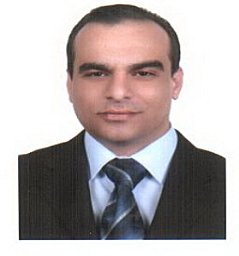 Mahmoud Ahmad Al-Khasawneh合作论文数Faculty of Computer & Information Technology, Al-Madinah International University1
 Shahzad Ashraf合作论文数Hohai Univ, Coll Internet Things Engn, Changzhou, Jiangsu, Peoples R China1
 Shah Nazir合作论文数1
 Fathi E. Abd El-Samie合作论文数Department of Electronics and Communication Engineering, Faculty of Electronic Engineering, Menoufia University1
 Habib Ullah Khan合作论文数Department of Surgery;Combined Military Hospital;Department of Surgery, Combined Military Hospital1
 Ayman El-Sayed合作论文数Asso. Prof. Dr. Eng. Ayman EL-SAYED,
IEEE Senior Member (#41446996), ACM Professional Member (#7852183), and IAENG Member (#118671)1
Ayman El-Sayed合作论文数Asso. Prof. Dr. Eng. Ayman EL-SAYED,
IEEE Senior Member (#41446996), ACM Professional Member (#7852183), and IAENG Member (#118671)1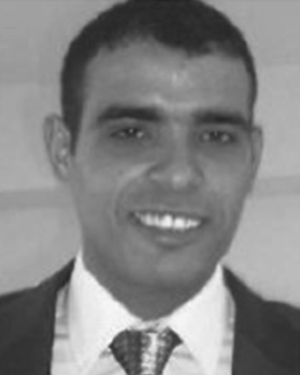 S. Dhahbi合作论文数Laboratoire Cristal, ícole Nationale des Sciences de l'Informatique1
 Sami Ur Rahman合作论文数Interactive Graphics Systems Group, Darmstadt, Germany1
 Faisal Farooq合作论文数Qatar Computing Research Institute1
 Arbab Waseem Abbas合作论文数1




