Student engagement is critical for effective learning in software modelling, yet fostering motivation and inclusivity remains a challenge. While existing research has focused on modelling tools, notations, and assessment, little attention has been given to how the choice of problem domains and the diversity, relatability, and cultural perspectives they bring shape students' learning experiences. This study explores how problem domains and teaching methods influence motivation, engagement, inclusiveness, and feedback in modelling education. To investigate these dimensions, we conducted parallel surveys with 90 students and 22 educators. Our findings reveal disconnects between educator assumptions and student preferences: Students show greatest motivation for socially relevant domains and prefer choice in selection, while educators overestimate interest in study-related domains. The study identifies how minor design choices can exclude students. Students perceive feedback as meaningful when visibly acted upon. These findings suggest inclusive domain selection is central to student motivation; thus, we recommend student-centred domain selection.
The first generation of students is learning to program alongside GenAI (Generative Artificial Intelligence) tools, raising questions about how young learners critically engage with them and perceive ethical responsibilities. While prior research has focused on university students or developers, little is known about secondary school novices, who represent the next cohort of software engineers. To address this gap, we conducted an exploratory study with 84 German secondary school students aged 16-19 attending software development workshops. We examined their critical thinking practices in AI-assisted programming, perceptions of AI ethics and responsibility, and gender-related differences in their views. Our results reveal an AI paradox: students demonstrate strong ethical reasoning and awareness about AI, yet many report integrating AI-generated code without a thorough understanding of it. The majority of our cohort attributed significant responsibility for AI practices to politics and corporations, potentially reflecting Germany's cultural context, with its strict regulations and data privacy discourse. Boys reported more frequent and experimental use of AI-assisted programming, whereas girls expressed greater scepticism and emphasised peer collaboration over GenAI assistance. Our findings highlight the importance of culturally responsive software engineering education that strengthens critical AI literacy in AI-assisted programming by linking ethics to concrete code artefacts and preparing young learners for this AI-driven software landscape.
When software is designed by people from diverse identities and experiences, it is more likely to be inclusive and address a broader range of user needs. However, for transgender and non-binary students in software engineering, the path to becoming such creators may be marked by unique challenges. While existing research explores gender minorities in professional software engineering, limited attention has been given to their educational journey, a key phase for ensuring equal opportunities and preventing exclusion in the tech workforce. This study aims to address this gap by investigating the experiences of transgender and non-binary students in software engineering, with a particular focus on their motivations for entering the field, the obstacles they encounter, and potential strategies for fostering greater inclusivity within their academic environments. Based on 13 semi-structured interviews with transgender and non-binary students across the globe, we found that gender identity plays an indirect role in their decision to pursue software engineering. Key factors include the appeal of remote work and a personal desire to create more inclusive technologies. Although the participants did not report direct discrimination within their universities, many described experiencing verbal insults, judgment, intolerance, and hostility, all of which negatively impacted their mental health. These challenges often stem from socio-cultural norms and a lack of representation. Despite these obstacles, the students remain committed to their choice of study but call for greater institutional support, structural changes, and increased representation. From these findings, we suggest concrete steps to support students, regardless of gender identity.
Creative approaches to attract students to software engineering at an early age are emerging, yet their differential impact on gender remains unclear. This study investigates whether design thinking's empathy-driven approach addresses the documented gender gap in interest in software engineering. In a 10-week curriculum-integrated design thinking software development course with 55 secondary school students aged 13-15 from two schools in Canada, we examined gendered differences in perceived gains in knowledge and interest, as well as in social-emotional experiences. Our results show that both girls and boys gained perceived knowledge in software development. However, girls showed significant improvements in self-efficacy, interest, engagement with sustainability topics, and well-being, including optimism, sense of usefulness, and social connectedness. Positive emotions were strongest during creative, collaborative phases, while technical tasks led to some boredom, especially among boys, though they still benefited overall. This suggests that human-centred design thinking might be one effective way to address gender equity challenges, though we need more differentiated technical implementations.
Block-based programming environments like Scratch have become widely adopted in Computer Science Education, but the mouse-based drag-and-drop interface can challenge users with disabilities. While prior work has provided solutions supporting children with visual impairment, these solutions tend to focus on making content perceivable and do not address the physical interaction barriers faced by users with motor disabilities. To bridge this gap, we introduce MeowCrophone, an approach that uses voice control to allow editing code in Scratch. MeowCrophone supports clicking elements, placing blocks, and navigating the workspace via a multi-modal voice user interface that uses numerical overlays and label reading to bypass physical input entirely. As imperfect speech recognition is common in classrooms and for children with dysarthria, MeowCrophone employs a multi-stage matching pipeline using regular expressions, phonetic matching, and a custom grammar. Evaluation shows that while free speech recognition systems achieved a baseline success rate of only 46.4
Software testing is often perceived as monotonous, which can negatively influence students' emotional engagement with testing. While prior work suggests that humor can increase engagement in professional software development contexts, we know little about humor's effect in software testing education. This paper explores how humorous elements in software testing assignments affect students' emotional engagement, sense of belonging, and creative thinking. We introduced humor in introductory software testing courses at universities in Canada and Germany, and conducted a mixed-methods study with students. Our results show that humor had a strong positive influence on students' experiences of software testing. Students perceived testing as more engaging and less monotonous, felt more comfortable and accepted in class, and reported increased creative thinking about testing tasks. These effects were particularly strong for female students, especially with respect to sense of belonging. Our findings suggest that humor represents a low-threshold pedagogical approach which is beneficial for students, and has the potential to create a more welcoming learning environment.
Integrating programming into the arts has been proposed as a promising strategy to engage young novice learners in computer science by showcasing that programming can be a creative subject, even in a traditionally male dominated field. However, empirical evidence on whether such interdisciplinary approaches can effectively challenge gender stereotypes in programming so far remains limited. In this paper, we aim to shed light on this question by exploring the impact of a creative programming course that integrates basic programming concepts into the existing art curriculum at secondary school level. The course focuses on the creation of generative art, allowing students to engage with programming through artistic expression. Evaluation with 53 girls and 21 boys aged 14 to 16 reveals that, while both girls and boys learn and improve successfully, particularly girls demonstrated a significant reduction in stereotypes, with programming being perceived as less difficult, more creative, and more closely aligned with art. Moreover, girls reported increased self-efficacy and a greater interest in programming. Despite these positive shifts, girls' post-course attitudes were still generally lower than those of boys. However, the potential of creative programming demonstrated by the study suggests that longer-term, more targeted interventions of this type may help to provide further support for girls in computer science.
Queer students often encounter discrimination and a lack of belonging in their academic environments. This may be especially true in heteronormative male-dominated fields like software engineering, which already faces a diversity crisis. In contrast, disciplines like humanities have a higher proportion of queer students, suggesting a more diverse academic culture. While prior research has explored queer students' challenges in STEM fields, limited attention has been given to how experiences differ between the sociotechnical, yet highly heteronormative, field of software engineering and the socioculturally inclusive humanities. This study addresses that gap by comparing 165 queer software engineering and 119 queer humanities students experiences. Our findings reveal that queer students in software engineering are less likely to be open about their sexuality, report a significantly lower sense of belonging, and encounter more academic challenges compared to their peers in the humanities. Despite these challenges, queer software engineering students show greater determination to continue their studies. These insights suggest that software engineering could enhance inclusivity by adopting practices commonly seen in the humanities, such as integrating inclusive policies in classrooms, to create a more welcoming environment where queer students can thrive.
Gender stereotypes in introductory programming courses often go unnoticed, yet they can negatively influence young learners' interest and learning, particularly under-represented groups such as girls. Popular tutorials on block-based programming with Scratch may unintentionally reinforce biases through character choices, narrative framing, or activity types. Educators currently lack support in identifying and addressing such bias. With large language models (LLMs) increasingly used to generate teaching materials, this problem is potentially exacerbated by LLMs trained on biased datasets. However, LLMs also offer an opportunity to address this issue. In this paper, we explore the use of LLMs for automatically identifying gender-stereotypical elements in Scratch tutorials, thus offering feedback on how to improve teaching content. We develop a framework for assessing gender bias considering characters, content, instructions, and programming concepts. Analogous to how code analysis tools provide feedback on code in terms of code smells, we operationalise this framework using an automated tool chain that identifies *gender stereotype smells*. Evaluation on 73 popular Scratch tutorials from leading educational platforms demonstrates that stereotype smells are common in practice. LLMs are not effective at detecting them, but our gender bias evaluation framework can guide LLMs in generating tutorials with fewer stereotype smells.
Digital and computing literacy are essential skills in our modern society, but children with emotional and behavioral disorders are often left out, especially during their treatment in a clinic for child and adolescent psychiatry. This paper explores addressing this exclusionary gap by introducing children with emotional and behavioral disorders to programming at an early age, using the popular programming environments Scratch and Sonic Pi. The primary aim of this initiative is to provide children with such disorders an opportunity to develop critical skills through programming, ultimately promoting their affections and empowering them. Overall, our programming courses demonstrate that it is feasible to successfully teach children with emotional and behavioral disorders basic programming skills while having fun and significantly increasing their self-efficacy. There are, however, unique challenges in running such courses. Based on our experiences, we therefore provide recommendations for educators and researchers working with children with emotional and behavioral disorders in programming education.
One of the greatest challenges in early programming education is to achieve learning success while also creating initial interest. This is particularly difficult for girls, who continue to be affected by persistent societal stereotypes and negative perceptions, inhibiting their long-term interest in programming. A promising approach to address this challenge and to increase motivation for girls is to use programming as a vehicle to express creativity rather than focusing on technical aspects, for example by teaching basic programming concepts through music composition. While music programming has been confirmed to appeal to young learners in general, the question of whether the gender-specific differences on the perceptions and effects known from other programming approaches persist for music programming. To shed light on this question, we conducted an introductory programming course using the popular music programming environment Sonic Pi with a total of 134 students aged 13 to 16, collecting data on students' affections and stereotypical beliefs towards programming, their contributions during lessons, as well as basic comprehension. While we find that music programming leads to similar comprehension and contributions between genders, we observe a significant increase of interest and self-efficacy among girls, and a significant deconstruction of stereotypical attributes associated with programmers.
Computer science related topics are increasingly introduced at elementary school level, aiming not only to establish basic knowledge, but also to foster affective aspects such as motivation or self-efficacy. While corrective feedback is helpful to achieve the former, it may negatively impact the latter. This raises the question on how to provide feedback in an encouraging way that makes learners feel competent but also autonomous. To shed light on this question, we conducted a robotics course with 45 children aged nine to eleven years, in which we studied their preferences when given a choice of either solving a problem themselves (with only a hint from the tutor) or being given the solution directly.We find that children like the freedom of choice and slightly prefer solving their problems themselves, which in turn is significantly correlated with a higher improvement in self-efficacy for building and programming robots. Interestingly, however, only girls exhibit a significant correlation with resulting knowledge on building, and only eleven year old children with resulting knowledge on programming. These insights allow us to provide concrete recommendations on how to give feedback and involve elementary school children and their preferences to promote both knowledge and self-efficacy.
Software modelling and model-driven engineering (MDE) is traditionally studied from a technical perspective. However, one of the core motivations behind the use of software models is inherently human-centred. Models aim to enable practitioners to communicate about software designs, make software understandable, or make software easier to write through domain-specific modelling languages. Several recent studies challenge the idea that these aims can always be reached and indicate that human factors play a role in the success of MDE. However, there is an under-representation of research focusing on human factors in modelling. During a GI-Dagstuhl seminar, topics related to human factors in modelling were discussed by 26 expert participants from research and industry. In breakout groups, five topics were covered in depth, namely modelling human aspects, factors of modeller experience, diversity and inclusion in MDE, collaboration and MDE, and teaching human-aware MDE. We summarise our insights gained during the discussions on the five topics. We formulate research goals, questions, and propositions that support directing future initiatives towards an MDE community that is aware of and supportive of human factors and values.
Pair programming is considered a very beneficial method for software development and is gaining increased attention in computer science education. Both partners in a programming pair should be equal and active participants, alternating on the roles of driver and navigator, but how pairs are formed in educational settings and how the resulting level of equity influences the outcomes of pair programming in classrooms remain open questions. To answer these questions, we conducted a survey involving 250 students and 100 teachers with prior pair programming experience, along with 147 students and teachers lacking such experience. We identify the currently common and preferred pair formation processes by teachers and students. We evaluate the outcomes of pair programming, as indicated by attitudes and perceived learnings, while we assess equity through behavioural patterns such as dominance, role compliance, and acknowledgment. Consequently, we investigate the relationship between outcomes and equity. Our results reveal a misalignment in pairing practices between teachers, who pair students based on diverse digital skills, and students, who express a preference for pairings aligned with similar skills. Despite this disparity, all participants think of pair programming as a method supporting equity. High acknowledgment between partners emerges as a significant factor of equity for positive attitudes and learnings, while role violations are identified as a common problem and a sign for lack of equity. These findings confirm that educators should take equity into account in pair programming classes.
Diversity is becoming an increasingly relevant topic in software engineering. A higher diversity rate in professional software teams has been shown to positively influence communication, innovation, and performance. Understanding whether similar effects exist in software development teams at an educational level would be important to identify potential challenges and opportunities that might affect students at later professional stages. Therefore, in this paper we investigate the impact of diversity on key teamwork skills such as communication, collaboration, and productivity in student software development teams. In particular, we conducted several surveys on project work progress throughout an introductory software engineering course with students and their tutors regarding these teamwork metrics. We investigate how the self-assessments and the project outcomes relate to seven aspects of diversity, and find correlations between teamwork satisfaction and team diversity. We see deteriorations in certain teamwork metrics over the project timeline—independently of the team diversity. Our findings suggest that the impact of diversity on student teams may be more complex than on professional teams: diversity minorities in teams may feel frustrated more easily. Consequently, it is important to ensure that software development courses maintain motivation and decrease possible frustrations regarding teamwork.
Young learners are increasingly introduced to programming, and one of the main challenges for educators is to achieve learning success while also creating enthusiasm. As it is particularly difficult to achieve this enthusiasm initially in young females, prior work has identified gender-specific differences in the programming behavior of young learners. Since pair programming, which turns programming into a more sociable activity, has been proposed as an approach to support programming education, in this paper we aim to investigate whether similar gender-specific characteristics can also be observed during pair programming. Therefore, we designed a gender-neutral introductory SCRATCH programming course tailored for integrating pair programming principles, and conducted it with a total of 139 students aged between 8 and 14 years. To identify gender-dependent differences and similarities, we measure the attitude towards programming and the course setting, observe the behavior of the students while programming, and analyze the code of the programs for different gender-combinations. Overall, our study demonstrates that pair programming is well suited for young learners and results in a positive attitude. While the resulting programs are similar in quality and complexity independent of gender, differences are evident when it comes to the compliance to pair programming roles, the exploration of code, and the creative customization of programs. These findings contribute to an in-depth understanding of social and technical gender specifics of pair programming, and provide educators with resources and guidance for implementing gender-sensitive pair programming in the classroom.
Software development teams have to face stress caused by deadlines, staff turnover, or individual differences in commitment, expertise, and time zones. While students are typically taught the theory of software project management, their exposure to such stress factors is usually limited. However, preparing students for the stress they will have to endure once they work in project teams is important for their own sake, as well as for the sake of team performance in the face of stress. Team performance has been linked to the diversity of software development teams, but little is known about how diversity influences the stress experienced in teams. In order to shed light on this aspect, we provided students with the opportunity to self-experience the basics of project management in self-organizing teams, and studied the impact of six diversity dimensions on team performance, coping with stressors, and positive perceived learning effects. Three controlled experiments at two universities with a total of 65 participants suggest that the social background impacts the perceived stressors the most, while age and work experience have the highest impact on perceived learnings. Most diversity dimensions have a medium correlation with the quality of work, yet no significant relation to the team performance. This lays the foundation to improve students' training for software engineering teamwork based on their diversity-related needs and to create diversity-sensitive awareness among educators, employers and researchers.
Computer science (CS) and especially software engineering (SE) are still predominantly male-dominated domains at all levels— education, academia and industry [4] , [6] , [7] . The impact of this very homogeneous group, involved in development and decision-making processes in CS, has become increasingly apparent. Consequently, reports of discrimination against females and other underrepresented groups in the field of CS as well as biases in algorithms have recently received public and research attention [9] , [26] , [40] . In contrast, research shows that SE benefits from diversity since diverse teams have a higher performance and collaboration as well as being more creative and innovative [8] , [10] , [37] .
 Gordon Fraser合作论文数Faculty of Computer Science and Mathematics, University of Passau19
 Luisa Greifenstein合作论文数3
 Ute Heuer合作论文数2
 Grischa Liebel合作论文数2
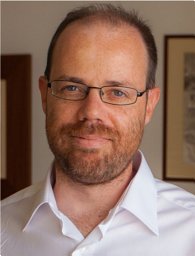 Miguel Goulão合作论文数Universidade Nova de Lisboa2
 Shalini Chakraborty合作论文数1Ines Nunes合作论文数1
 Reyhaneh Kalantari合作论文数1Benedikt Fein合作论文数1Kai Marquardt合作论文数1Joeri Exelmans合作论文数University of Antwerp - Flanders Make Middelheimlaan 11
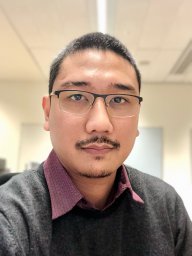 Satrio Adi Rukmono合作论文数Corresponding author.1
 Marc Herrmann合作论文数Software Engineering Group, Leibniz University Hannover1
 Sandra Greiner合作论文数University of Bayreuth1
 Stefan Trieflinger合作论文数Department of Computer Science, Reutlingen University1
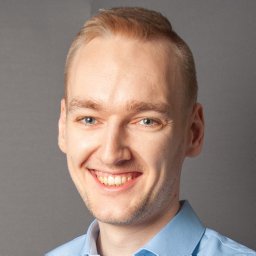 Marvin Wyrich合作论文数Univ Stuttgart, Inst Software Technol, Stuttgart, Germany1Katharina Juhnke合作论文数Daimler AG, Grp Res & MBC Dev, Ulm, Germany1
 Katharina Geldreich合作论文数TECHNICAL UNIVERSITY OF MUNICH.1
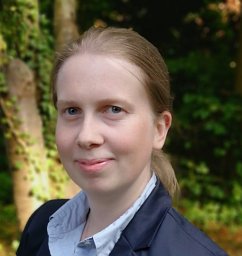 Jil Klunder合作论文数Leibniz Univ Hannover, Software Engn Grp, Welfengarten 1, D-30167 Hannover, Germany1
 Lucas Gren合作论文数1
 Benoit Baudry合作论文数Division of Software and Computer Systems, Department of Computer Science, School of Electrical Engineering and Computer Science, KTH Royal Institute of Technology1
 Rebekka Wohlrab合作论文数1
 Vasco Amaral合作论文数LIP Coimbra, LIP-Coimbra1
 Marco Kuhrmann合作论文数Fakultät für Informatik, Technische Universität München1
 Matthias Tichy合作论文数Software Engineering Group;University of Paderborn;Software Engineering Group, University of Paderborn1
 Regina Hebig合作论文数Hasso Plattner Institute, University of Potsdam1
 Kurt Schneider合作论文数Software Engineering Group, Leibniz Universitat Hannover, Hannover, Germany1
 Stephan Krusche合作论文数Technische Universitaet Muenchen1Lucia Happe合作论文数Karlsruhe Institute of Technology (KIT)1
 Jan-Philipp Steghofer合作论文数Lehrstuhl für Softwaretechnik und Programmiersprachen, Universität Augsburg1
 Daniela Damian合作论文数Department of Computer Science, Faculty of Engineering, University of Victoria;Inspire1
 Silvia Abrahão合作论文数Departamento de Sistemas Informáticos y Computación, Universitat Politècnica de València;Instituto Universitario Mixto Tecnológico de Informática, Universitat Politècnica de València1
 Robert Heinrich合作论文数University of Heidelberg1




