The marine plankton record offers a unique archive of deep-time ecological and evolutionary dynamics in the open ocean. With distinct biomineral compositions, trophic modes and other diverse ecological and geographic preferences, fossilized marine unicellular plankton groups (diatoms, calcareous nannofossils/coccolithophores, radiolarians, planktonic foraminifera and dinoflagellates) allow for the identification of traits affecting extinction risk over millions of years. Here, we demonstrate that over the Cenozoic era, trophic mode, classified as either autotrophic, mixotrophic or heterotrophic, is highly influential on the long-term biodiversity dynamics of marine plankton. This trophic distinction is associated with up to a 38% lower Cenozoic extinction rate in autotrophs than in other trophic groups. Correspondingly, autotrophs tend to persist longer and exhibit less volatile extinction dynamics. These patterns hold across multiple levels of comparison: between fully autotrophic and fully heterotrophic groups, within dinoflagellates that include both strategies, and in composite groupings based on trophic mode or biomineral composition. By identifying trophic mode as a key determinant of extinction risk, our results provide a deep-time context for predicting plankton responses to ongoing ocean change.
Geographic range has long been acknowledged as an important determinant of extinction risk. The trajectory of geographic range through time, however, has not received as much scientific attention. Here, we test the role of change in geographic range – assessed by a measure of proportional occupancy of grid cells – in determining the extinction risk in four major microplankton groups over the last 66×106 years: foraminifera, calcareous nannofossils, radiolarians, and diatoms. Logistic regression was used to assess the importance of standing occupancy and occupancy change in the extinction risk of species. We find that, while standing occupancy is a major determinant of extinction risk in all microplankton groups, the change in occupancy accounts for an average of 41 % of the explanatory power shared by the two analyzed variables, with a maximum value of 77 %. We also find that, as temporal resolution decreases, the predictive ability of these variables increases. Our results highlight the importance of incorporating both geographic range and its change through time into extinction models. The ability of occupancy trajectory to help predict extinction risk underlines the necessity of paleontological data in modern conservation efforts.
Aim The modern latitudinal diversity gradient of planktonic foraminifera is bimodal with a distinct depression near the equator, surrounded by mid-latitude diversity peaks. This pattern emerged after the Last Glacial Maximum, but it is unclear how species’ spatial dynamics contributed to its formation. Here, we investigate how species range dynamics, i.e., trailing-edge contractions (extirpations) and leading-edge expansions (colonisations), shaped the modern bimodal pattern, and how global biodiversity patterns arise from local patterns. Location Global open ocean, with basin-specific analyses in the Atlantic and Pacific Oceans. Time period Last Glacial Maximum (19 - 23 ka) (LGM) and the Pre-Industrial (modern) Major taxa studied Planktonic foraminifera (unicellular eukaryotes) Methods We analysed taxonomically standardized LGM and modern foraminiferal assemblage datasets to characterize changes in species richness at multiple spatial scales: global ocean, basin-wide, and within basin. We quantified species’ range shifts by comparing their trailing- and leading-edge movements. We estimated temporal turnover locally, and the net imbalance between colonisations and extirpations (NICE) within sites, and tested whether species’ thermal preferences correlate with their extirpation risk. Results We found no evidence of systematic trailing edge contractions, indicating that equatorial extirpations did not drive the bimodal LDG pattern. In the Atlantic, leading-edge expansions generated a coherent increase in species richness in the mid-latitudes, whereas the Pacific exhibited highly spatially heterogeneous responses, including extirpation hotspots in the western tropical Pacific and colonisation zones in the eastern and southern Pacific. Species’ thermal optima weakly predicted extirpations, with species adapted to lower temperatures more at risk of extirpation, consistent with the general warming trend since the last ice age. Main conclusions The modern bimodal LDG of planktonic foraminifera arises primarily from mid-latitude colonisations rather than equatorial extirpations. Colonisations were particularly frequent in the North Atlantic. Localized extirpations in the western Pacific highlight small-scale patches of vulnerability, that spatially aggregated richness metrics mask. Our results underscore the need to distinguish between trailing and leading processes in climate-induced range shifts, and to consider spatial variability in monitoring and protection of marine biodiversity. ### Competing Interest Statement The authors have declared no competing interest. German Federal Ministry of Research, Technology and Space, FKZ 03F0974D, 01LP2308A German Research Foundation (DFG), EXC 2077; grant no. 390741603 Volkswagen Foundation, Paleosynthesis Project
Conservation paleobiology has coalesced over the last two decades since its formal coining, united by the goal of applying geohistorical records to inform the conservation, management, and restoration of biodiversity and ecosystem services. Yet, the field is still attempting to form an identity distinct from its academic roots. Here, we ask a deceptively simple question: What is conservation paleobiology? To track its development as a field, we synthesize complementary perspectives from a survey of the scientific community that is familiar with conservation paleobiology and a systematic literature review of publications that use the term. We present an overview of conservation paleobiology’s research scope and compare survey participants’ perceptions of what it is and what it should be as a field. We find that conservation paleobiologists use a variety of geohistorical data in their work, although research is typified by near-time records of marine molluscs and terrestrial mammals collected over local to regional spatial scales. Our results also confirm the field’s broad disciplinary basis: survey participants indicated that conservation paleobiology can incorporate information from a wide range of disciplines spanning conservation biology, ecology, historical ecology, paleontology, and archaeology. Finally, we show that conservation paleobiologists have yet to reach a consensus on how applied the field should be in practice. The survey revealed that many participants thought the field should be more applied but that most do not currently engage with conservation practice. Reflecting on how conservation paleobiology has developed over the last two decades, we discuss opportunities to promote community cohesion, strengthen collaborations within conservation science, and align training priorities with the field’s identity as it continues to crystallize.
Survey and literature review data supporting the manuscript: Dillon et a (in review) What is conservation paleobiology? Tracking 20 years of development, Frontiers in Ecology and Evolution.
 Kristína Kocáková合作论文数2
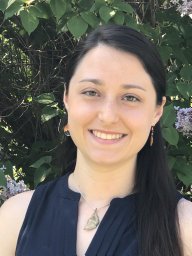 Jaleigh Q. Pier合作论文数2Omar Rafael Regalado Fernandez合作论文数2
 Danijela Dimitrijević合作论文数GeoZentrum Nordbayern, Friedrich Alexander Univ Erlangen Nurnberg2
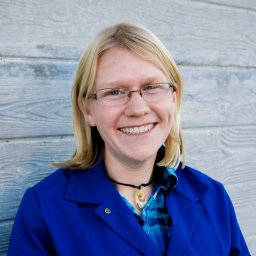 Erin M Dillon合作论文数Smithsonian Trop Res Inst, POB 0843-03092, Balboa, Panama2
 Nussaïbah B Raja合作论文数GeoZentrum Nordbayern, Friedrich-Alexander Universität2
 Adam T. Kocsis合作论文数GeoZentrum Nordbayern2
 Jonathan D Cybulski合作论文数Smithsonian Trop Res Inst2
 Chien-Hsiang Lin合作论文数Biodivers Res Ctr, Acad Sinica2
 Wolfgang Kießling合作论文数Department Geographie und Geowissenschaften, Naturwissenschaftliche Fakultat, Friedrich-Alexander-Universitat2
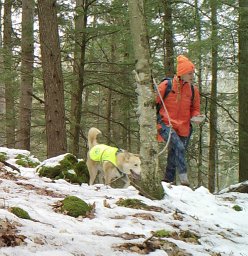 Alexis M Mychajliw合作论文数Department of Biology, Stanford University2
 Stephen Durham合作论文数London2
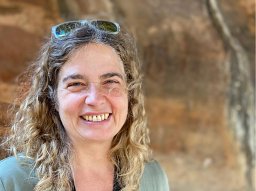 Ilaria Mazzini合作论文数8 Lachie Griffen Rise2
 Catalina Pimiento合作论文数Department of Biology, University of Florida2
 Gregory P. Dietl合作论文数Department of Zoology, North Carolina State University2Carolin M. Grether合作论文数1
 Himadri Sekhar Haldar合作论文数Friedrich Alexander Univ Erlangen Nurnberg1
 Amanda Godbold合作论文数Univ Southern Calif1
 Jansen A. Smith合作论文数Paleontological Research Institution1
 Tasnuva Ming Khan合作论文数Dept Zool, Univ Cambridge1
 Marina C. Rillo合作论文数MARUM Ctr Marine Environm Sci, Univ Bremen1
 Lukas Jonkers合作论文数Center for Marine Environmental Sciences, University of Bremen1




