Percentage of cells expressing archetype 5 gastrointestinal gene signatures across intestinal, stomach, and gallbladder epithelial cell types from the CELLxGENE reference atlas
Expression and histological evidence of lipid metabolism in peritoneal metastases, showing up-regulation of lipid anabolism and oxidative stress pathways in archetype 2 cancer cells
Metastasis is the leading cause of cancer deaths. To develop strategies for intercepting metastatic progression, a better understanding of how tumor cells adapt to vastly different organ contexts is needed. To investigate this question, a single-cell transcriptomic atlas of primary tumor and diverse metastatic samples (liver, omentum, peritoneum, stomach wall, lymph node, and diaphragm) from a patient with pancreatic ductal adenocarcinoma who underwent rapid autopsy was generated. Using unsupervised archetype analysis, both shared and site-specific gene programs were identified, including lipid metabolism and gastrointestinal programs prevalent in peritoneal and stomach wall lesions, respectively. We developed PICASSO as a probabilistic approach for inferring clonal phylogeny from single-cell and matched whole-exome sequencing data. Comparison of PICASSO-generated clonal structure with phenotypic signatures revealed that pancreatic cancer cells adapted to local environments with minimal contribution from clonal genotype. Our results suggest a paradigm whereby strong environmental effects are imposed on highly plastic cancer cells during metastatic dissemination.
Summary of genomic and sequencing statistics for the single-nucleus RNA-seq samples analyzed in the main rapid autopsy patient
Validation of lipid metabolic rewiring in peritoneal metastases using single-nucleus RNA-seq from an independent rapid-autopsy patient and phylogenetic analysis revealing lipid anabolism up-regulation in peritoneal lesions and archetype 2 clones across distant clades
Analysis of PDAC cells showing KRAS pathway activity, copy number alterations, and mutational profiles across metastatic tumor sites
MOTIVATION:Sequence simulations along phylogenetic trees play an important role in numerous molecular evolution studies such as benchmarking algorithms for ancestral sequence reconstruction, multiple sequence alignment, and phylogeny inference. They are also used in phylogenetic model-selection tasks, including the inference of selective forces. Recently, Approximate Bayesian Computation (ABC)-based approaches have been developed for inferring parameters of complex evolutionary models, which rely on massive generation of simulated data. For all these applications, computationally efficient sequence simulators are essential. RESULTS:In this study, we investigate fast algorithms for simulating sequences along a phylogenetic tree, focusing on accelerating the speed-limiting component of the simulation process: handling insertion and deletion (indel) events. We demonstrate that data structures which efficiently store indel events along a tree can substantially accelerate the simulation process compared to a naive approach. To illustrate the utility of this efficient simulator, we integrated it into an ABC-based algorithm for inferring indel model parameters and applied it to study indel dynamics within Chiroptera. AVAILABILITY AND IMPLEMENTATION:The source code for the different simulation algorithms, alongside the data used, is available at: https://github.com/nimrodSerokTAU/evo-sim. The simulator has also been integrated into SpartaABC, a website for the inference of indel parameters, accessible at: https://spartaabc.tau.ac.il/.
Reconstructing jets, which provide vital insights into the properties and histories of subatomic particles produced in high-energy collisions, is a main problem in data analyses in collider physics. This intricate task deals with estimating the latent structure of a jet (binary tree) and involves parameters such as particle energy, momentum, and types. While Bayesian methods offer a natural approach for handling uncertainty and leveraging prior knowledge, they face significant challenges due to the super-exponential growth of potential jet topologies as the number of observed particles increases. To address this, we introduce a Combinatorial Sequential Monte Carlo approach for inferring jet latent structures. As a second contribution, we leverage the resulting estimator to develop a variational inference algorithm for parameter learning. Building on this, we introduce a variational family using a pseudo-marginal framework for a fully Bayesian treatment of all variables, unifying the generative model with the inference process. We illustrate our method's effectiveness through experiments using data generated with a collider physics generative model, highlighting superior speed and accuracy across a range of tasks.
Learned representations are often invariant to rotational transformations, leaving individual dimensions non-identifiable and interchangeable. We study how Matryoshka Representation Learning (MRL) induces a task-aligned privileged basis distinct from variance-based or regularizer-induced orderings. In the linear setting, we prove that full-prefix MRL recovers the ordered principal directions, and can be computed efficiently using shared statistics. Empirically, we demonstrate that MRL yields consistent per-dimension structure aligned with task signal, where coordinate magnitude reflects informativeness.
Comprehensive gene set enrichment analysis (GSEA) results showing full enrichment scores for all archetype cluster gene programs
Overview of the archetype analysis framework and its application to single-cell transcriptomes from metastatic organ sites in the rapid autopsy PDAC dataset
Performance benchmarking of PICASSO showing improved phylogenetic accuracy, computational efficiency, reproducibility, and robustness compared to neighbor-joining approaches
Analysis of archetype 5 cells suggesting possible reseeding of the primary pancreas tumor from the stomach metastasis, integrating expression programs, clonal assignments, and copy-number alterations
Differentially expressed and modular genes for each archetype cluster, including upregulated genes (log₂ fold change > 1, p < 0.05) and Hotspot-identified informative genes with significant autocorrelation (FDR < 0.05)
Lipid metabolic rewiring is a prominent feature of peritoneal metastases. A, UMAP embedding, colored by tissue site (left), and sample distribution and composition (right) of all AC2 cells. B, AC2 hotspot analysis, highlighting lipid metabolism and oxidative stress and detoxification modules. C, Digital pathology of H&E-stained primary and peritoneal metastasis tissue, showing the expansion of adipose tissue in the peritoneum. D, Quantification of adipose and fibrotic tissue in sections in C. E, Cancer clone phylogeny, indicating AC2-enriched clones (purple triangles), fractional tumor site composition for each clone (stacked bars), and the proportion of cells in each clone assigned to AC2 (outer circle).
Profile of a cancer ecosystem from a single patient with PDAC. A, Top, maximal diameter of primary and liver tumors, based on CT measurements at the indicated time points from diagnosis (day 0). Black bar marks the period of mFOLFIRINOX treatment. Bottom, levels of CA19-9 tumor marker in blood, based on indicated measurement days. Baseline at diagnosis (day 0) is 13,000 U/mL, and the upper physiologic limit is 37 U/mL (red line). B, Representative CT scans. Primary and liver metastatic tumors are overdrawn with colored ellipses. L, left; R, right; A, anterior; P, posterior. C, Anatomic location of collected biospecimens used to generate matched snRNA-seq, WES, and H&E data. Circle diameter indicates relative tumor size. D, FDL of cancer cell transcriptomes (45,134 nuclei), colored by sample (Materials and Methods). Stomach refers to stomach wall metastasis.
Assessment of archetype robustness and biological significance, showing consistent archetype gene programs across downsampling tests, their association with MYC, lipid metabolism, and gastrointestinal programs, and comparison with clustering analysis
Overview and benchmarking of IntegrateCNV and PICASSO methods for inferring single-cell copy number alterations and reconstructing subclonal phylogenies in metastatic PDAC
Gene set enrichment analysis (GSEA) scores for Leiden cluster gene programs that were significantly enriched at FDR < 0.05
 Dana Pe'er合作论文数Phyiology, Biophysics & Systems Biology, Weill Cornell Graduate School of Medical Sciences, Cornell University32
 Tal Nawy合作论文数Department of Biology, New York University;Tel: + 1 212 998 3961 Fax + 1 212 995 4204;Department of Biology, New York University30
 Ronan Chaligne合作论文数29
 Sitara Persad合作论文数Memorial Sloan Kettering Cancer Center29Ignas Masilionis合作论文数Memorial Sloan Kettering Cancer Center, Sloan Kettering Institute29Roshan Sharma合作论文数Memorial Sloan Kettering Cancer Center, Sloan Kettering Institute29Yubin Xie合作论文数29
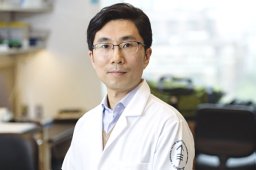 Jungeui Hong合作论文数Department of Pathology and Laboratory Medicine, Memorial Sloan Kettering Cancer Center28
 Alejandro Jiménez-Sánchez合作论文数Mem Sloan Kettering Canc Ctr, Sloan Kettering Inst28
 Tinyi Chu合作论文数Cornell Univ, Coll Vet Med, Baker Inst Anim Hlth, Ithaca, NY 14853 USA28
 Eileen O'Reilly合作论文数David M Rubenstein Ctr Pancreat Canc, MSK28
 Umeda Shigeaki合作论文数28Hayashi Akimasa合作论文数28
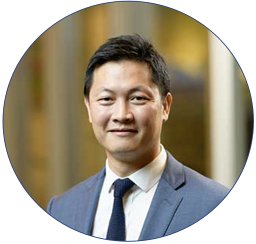 Wungki Park合作论文数Yonsei University, Yonsei University28
 Linas Mažutis合作论文数Life Sciences Center, Vilnius University28Todd Lencz合作论文数27
 Mehta Arnav合作论文数Division of Biology and Biological Engineering, California Institute of Technology24
 Ariel Darvasi合作论文数22
 Mark Daly合作论文数Analytic and Translational Genetics Unit, Mass General Research Institute, Massachusetts General Hospital;Center for Genomic Medicine, Massachusetts General Hospital;Division of Medical Sciences, Harvard Medical School;Broad Institute21
 Ron Shamir合作论文数The Blavatnik School of Computer Science, Tel Aviv University15
 Alexander Gusev合作论文数Dana-Farber Cancer Institute;Division of Medical Sciences, Harvard Griffin Graduate School of Arts and Sciences, Harvard University14
 Anil K. Malhotra合作论文数Institute of Behavioral Science, Feinstein Institutes for Medical Research, Northwell Health;Division of Psychiatry Research, Zucker Hillside Hospital, Northwell Health;Department of Psychiatry, Donald and Barbara Zucker School of Medicine at Hofstra/Northwell14
 Shai Carmi合作论文数Minerva Center;Dept . of Physics;Bar-Ilan University;Minerva Center, Bar-Ilan University14
 Gil Atzmon合作论文数Department of Medicine, Albert Einstein College of Medicine14
 Raiyan Khan合作论文数Columbia University12
 David Altshuler合作论文数Vertex Pharmaceuticals;Harvard Medical School;Massachusetts General Hospital12
 Philippe Chlenski合作论文数Department of Computer Science, Columbia University11
 Judy H Cho合作论文数The Charles Bronfman Institute for Personalized Medicine, Icahn School of Medicine at Mount Sinai11Tyler A Joseph合作论文数Columbia Univ, Dept Comp Sci, New York, NY 10027 USA10
 Inga Peter合作论文数10
 Saurav Guha合作论文数New York Genome Ctr9
 Jin Yu合作论文数9
 Antonio Moretti合作论文数Division of Comprehensive Oral Health, Adams School of Dentistry, The University of North Carolina at Chapel Hill9
 Yufeng Shen合作论文数Columbia University9
 Harry Ostrer合作论文数Department of Pediatrics, Albert Einstein College of Medicine, Yeshiva University;Department of Pathology, Albert Einstein College of Medicine, Yeshiva University9
 Peter K. Gregersen合作论文数Center for Genomics & Human Genetics, The Feinstein Institute for Medical Research9
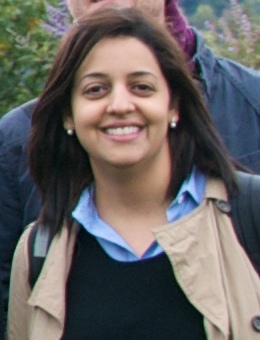 Ansaf Salleb Aouissi合作论文数Department of Computer Science, Fu Foundation School of Engineering and Applied Science, Columbia University8
 Qi Yan合作论文数8
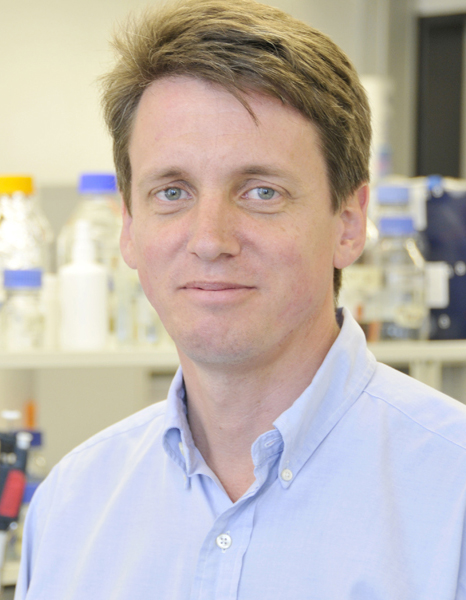 Markus Stoffel合作论文数Institute of Molecular Health Sciences, Department of Biology, Eidgenössische Technische Hochschule Zürich8
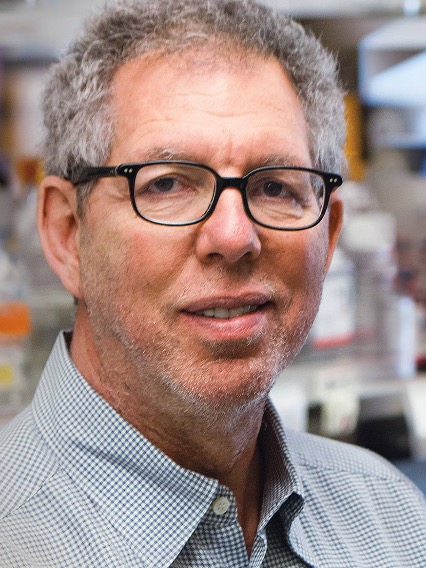 Jeffrey M. Friedman合作论文数Laboratory of Molecular Genetics, The Rockefeller University;Howard Hughes Medical Institute8Jennifer K. Lowe合作论文数8Jan Breslow合作论文数7
 Semanti Mukherjee合作论文数Department of Medicine, Memorial Sloan Kettering Cancer Center;Weill Cornell Medical College, Cornell University7
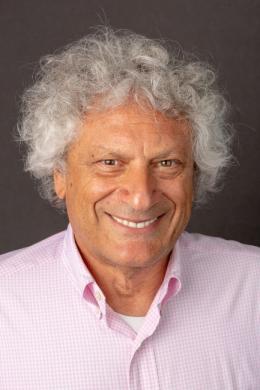 Ronald J. Wapner合作论文数Department of Obstetrics and Gynecology, Columbia University Irving Medical Center7
 Tal Pupko合作论文数The Shmunis School of Biomedicine and Cancer Research, George S. Wise Faculty of Life Sciences, Tel Aviv University;The Center for Al & Data Science, Tel Aviv University7
 Nir Barzilai合作论文数Diabetes Research Center, Albert Einstein College of Medicine7Julian B. Maller合作论文数Department of Statistics, University of Oxford7
 Lorraine N Clark合作论文数7
 David W Haas合作论文数Division of Infectious Diseases, Department of Medicine, Vanderbilt University Medical Center;Department of Pathology, Microbiology and Immunology, Vanderbilt University School of Medicine;Meharry Medical College7




