Designing accelerators for resource- and power-constrained applications is a daunting task. High-level Synthesis (HLS) addresses these constraints through resource sharing, an optimization at the HLS binding stage that maps multiple operations to the same functional unit. However, resource sharing is often limited to reusing instructions within a basic block. Instead of searching globally for the best control and dataflow graphs (CDFGs) to combine, it is constrained by existing instruction mappings and schedules. Coarse-grained function merging (CGFM) at the intermediate representation (IR) level can reuse control and dataflow patterns without dealing with the post-scheduling complexity of mapping operations onto functional units, wires, and registers. The merged functions produced by CGFM can be translated to RTL by HLS, yielding Coarse Grained Merged Accelerators (CGMAs). CGMAs are especially profitable across applications with similar data- and control-flow patterns. Prior work has used CGFM to generate CGMAs without regard for which CGFM algorithms best optimize area, power, and energy costs. We propose Guac, an energy-aware and SSA-based (static single assignment) CGMA generation methodology. Guac implements a novel ensemble of cost models for efficient CGMA generation. We also show that CGFM algorithms using SSA form to merge control- and dataflow graphs outperform prior non-SSA CGFM designs. We demonstrate significant area, power, and energy savings with respect to the state of the art. In particular, Guac more than doubles energy savings with respect to the closest related work while using a strong resource-sharing baseline.
The design of heterogeneous systems that include domain specific accelerators is a challenging and time-consuming process. While taking into account area constraints, designers must decide which parts of an application to accelerate in hardware and which to leave in software. Moreover, applications in domains such as Extended Reality (XR) offer opportunities for various forms of parallel execution, including loop level, task level and pipeline parallelism. To assist the design process and expose every possible level of parallelism, we present Trireme, a fully automated tool-chain that explores multiple levels of parallelism and produces domain specific accelerator designs and configurations that maximize performance, given an area budget. Experiments on demanding benchmarks from the XR domain revealed a speedup of up to 20x, as well as a speedup of up to 37x for smaller applications, compared to software-only implementations.
Post-Moore’s law area-constrained systems rely on accelerators to deliver performance enhancements. Coarse-grained accelerators can offer substantial domain acceleration, but manual, ad hoc identification of code to accelerate is prohibitively expensive. Because cycle-accurate simulators and high-level synthesis (HLS) flows are so time-consuming, the manual creation of high-utilization accelerators that exploit control and data flow patterns at optimal granularities is rarely successful. To address these challenges, we present AccelMerger, the first automated methodology to create coarse-grained, control- and data-flow-rich merged accelerators. AccelMerger uses sequence alignment matching to recognize similar function call-graphs and loops, and neural networks to quickly evaluate their post-HLS characteristics. It accurately identifies which functions to accelerate, and it merges accelerators to respect an area budget and to accommodate system communication characteristics like latency and bandwidth. Merging two accelerators can save as much as 99% of the area of one. The space saved is used by a globally optimal integer linear program to allocate more accelerators for increased performance. We demonstrate AccelMerger’s effectiveness using HLS flows without any manual effort to fine-tune the resulting designs. On FPGA-based systems, AccelMerger yields application performance improvements of up to 16.7× over software implementations, and 1.91× on average with respect to state-of-the-art early-stage design space exploration tools.
Computational efficiency is a critical constraint for a variety of cutting-edge real-time applications. In this work, we identify an opportunity to speed up the end-to-end runtime of two such compute bound applications by incorporating approximate linear algebra techniques. Particularly, we apply approximate matrix multiplication to artificial Neural Networks (NNs) for image classification and to the robotics problem of Distributed Simultaneous Localization and Mapping (DSLAM). Expanding upon recent sampling-based Monte Carlo approximation strategies for matrix multiplication, we develop updated theoretical bounds, and an adaptive error prediction strategy. We then apply these techniques in the context of NNs and DSLAM increasing the speed of both applications by 15-20% while maintaining a 97% classification accuracy for NNs running on the MNIST dataset and keeping the average robot position error under 1 meter (vs 0.32 meters for the exact solution). However, both applications experience variance in their results. This suggests that Monte Carlo matrix multiplication may be an effective technique to reduce the memory and computational burden of certain algorithms when used carefully, but more research is needed before these techniques can be widely used in practice.
Redundant computations appear during the execution of real programs. Multiple factors contribute to these unnecessary computations, such as repetitive inputs and patterns, calling functions with the same parameters or bad programming habits. Compilers minimize non useful code with static analysis. However, redundant execution might be dynamic and there are no current approaches to reduce these inefficiencies. Additionally, many algorithms can be computed with different levels of accuracy. Approximate computing exploits this fact to reduce execution time at the cost of slightly less accurate results. In this case, expert developers determine the desired tradeoff between performance and accuracy for each application. In this paper, we present Approximate Task Memoization (ATM), a novel approach in the runtime system that transparently exploits both dynamic redundancy and approximation at the task granularity of a parallel application. Memoization of previous task executions allows predicting the results of future tasks without having to execute them and without losing accuracy. To further increase performance improvements, the runtime system can memoize similar tasks, which leads to task approximate computing. By defining how to measure task similarity and correctness, we present an adaptive algorithm in the runtime system that automatically decides if task approximation is beneficial or not. When evaluated on a real 8-core processor with applications from different domains (financial analysis, stencil-computation, machine-learning and linear-algebra), ATM achieves a 1.4x average speedup when only applying memoization techniques. When adding task approximation, ATM achieves a 2.5x average speedup with an average 0.7% accuracy loss (maximum of 3.2%).
In a multi-core era, parallel programming allows further performance improvements, but with an important programmability cost. We envision that the best approach to parallel programming that can exceed the programability, parallelism, power, memory and reliability walls in Computer Architecture is a run-time approach. Many traditional computer architecture concepts can be revisited and applied at the runtime layer in a completely transparent way to the programmer. The goal of this work is taking the computer architecture value prediction and data-prefetching concepts inside a runtime environment like OmpSs.
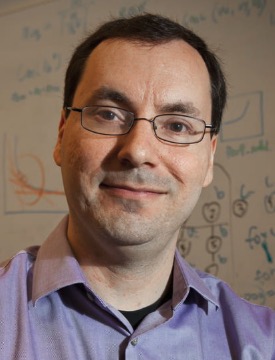 David Brooks合作论文数John. A. Paulson School of Engineering and Applied Sciences, Harvard University4
 Georgios Zacharopoulos合作论文数Harvard University2
 Saketh Rama合作论文数Harvard University2
 Gu-Yeon Wei合作论文数John A. Paulson School of Engineering and Applied Sciences, Harvard University2
 Miquel Moretó Planas合作论文数1
 Jeremy Intan合作论文数1
 Miguel Moreto合作论文数1Adel Ejjeh合作论文数University of Illinois at Urbana-Champaign, Urbana, IL, USA1
 Camelia D Brumar合作论文数University of Maryland, College Park, USA1
 Muhammad Huzaifa合作论文数University of Illinois at Urbana-Champaign1
 Ying Jing合作论文数University of Illinois at Urbana-Champaign1
 Lillian Pentecost合作论文数Harvard University1
 Brian Plancher合作论文数Harvard University1
 En-Yu Yang合作论文数Google1
 Marc Casas合作论文数Barcelona Supercomputing Center1
 Tianyu Jia (贾天宇)合作论文数Department of Integrated Circuit Design, School of Integrated Circuits, Peking University1
 Mateo Valero合作论文数Department of Computer Architecture, Universitat Politecnica de Catalunya;Barcelona Supercomputing Center, Centro Nacional de Supercomputación1
 Yuan Yao (姚远)合作论文数School of Computer Science, Northwestern Polytechnical University1
 Vikram S. Adve合作论文数Department of Computer Science, Grainger College of Engineering, University of Illinois at Urbana-Champaign;Center for Digital Agriculture, University of Illinois at Urbana-Champaign1
 Sarita Adve合作论文数Department of Computer Science, The Grainger College of Engineering, University of Illinois at Urbana-Champaign1
 Gurindar S. Sohi合作论文数Department of Electrical & Computer Engineering, College of Engineering, University of Wisconsin–Madison;Department of Computer Sciences, School of Computer, Data & Information Sciences, University of Wisconsin–Madison1




