Electrochemical motion sensors are widely used in the creation of seismology devices. The key element of an electrochemical motion sensor is a miniature electrochemical cell with platinum electrodes, the current, in which changes under the action of external mechanical signals. This work explores the possibility of replacing platinum with much cheaper carbon. Two types of configurations of the converting element have been studied, in one of which the electrodes are located on the walls of a narrow channel, in which liquid flows under the influence of an external signal. In the second configuration, electrodes are made on the sides of the plate, and microscopic holes are made in the plate to transfer fluid between the electrodes. Comparison of the sensitivity of sensors with platinum and carbon electrodes showed the similarity of their characteristics, provided that the electrode systems are similar in their geometry.
This is the text of the eulogy to Prof. Richard Goldstein that was published in the International Journal of Heat and Mass Transfer and made available to this journal.
The paper presents modeling of the convective noise produced in a planar sensitive element of electrochemical motion sensors. The electrodes in such a sensitive element are a system of parallel conductive strips placed on a flat surface of a channel where liquid flows under the action of a mechanical disturbance. The theoretical model uses equations of hydrodynamics and active ions transfer in the system. The electrode current noise is calculated in case of the vortex-type stochastic hydrodynamic motion modeled by the Langevin method applied to equations of hydrodynamics. At high frequencies, the solution of the equations has been simplified and the dependence of the noise current on the channel thickness, the distance between the electrodes and the electrodes size have been studied. The modeling results have been compared to the experimental results published earlier
The Arctic seas are now of particular interest due to their prospects in terms of hydrocarbon extraction, development of marine transport routes, etc. Thus, various geohazards, including those related to seismicity, require detailed studies, especially by instrumental methods. This paper is devoted to the ocean-bottom seismographs (OBS) based on broadband molecular–electronic transfer (MET) sensors and a deployment case study in the Laptev Sea. The purpose of the study is to introduce the architecture of several modifications of OBS and to demonstrate their applicability in solving different tasks in the framework of seismic hazard assessment for the Arctic seas. To do this, we used the first results of several pilot deployments of the OBS developed by Shirshov Institute of Oceanology of the Russian Academy of Sciences (IO RAS) and IP Ilyinskiy A.D. in the Laptev Sea that took place in 2018–2020. We highlighted various seismological applications of OBS based on broadband MET sensors CME-4311 (60 s) and CME-4111 (120 s), including the analysis of ambient seismic noise, registering the signals of large remote earthquakes and weak local microearthquakes, and the instrumental approach of the site response assessment. The main characteristics of the broadband MET sensors and OBS architectures turned out to be suitable for obtaining high-quality OBS records under the Arctic conditions to solve seismological problems. In addition, the obtained case study results showed the prospects in a broader context, such as the possible influence of the seismotectonic factor on the bottom-up thawing of subsea permafrost and massive methane release, probably from decaying hydrates and deep geological sources. The described OBS will be actively used in further Arctic expeditions.
Molecular electronic transfer (MET) technology offers an alternative approach for the development of accelerometers with high dynamic range and low self-noise. The best performance is achieved by using a force-balancing feedback. However, the operating principles of the feedback sensors has not been reporting yet, also, there is not any comprehensive theoretical model describing sensor noise in the complete operating frequency range. This paper reports on the development of the feedback system for an MET seismic accelerometer, a feedback stability analysis, and an optimization of the signal conditioning feedback electronics to get the highest dynamic range. Also, both the theoretical model and experimental results of such sensors self-noise are presented in the range of 0.1-120 Hz. According to the model and the experimental observation, there are two major contributors into self-noise: convective processes in the electrolyte and electronic noise of the signal operational amplifiers. The research results give better understanding of the molecular electronic accelerometers noise nature and suggest ways to reduce it.
Interest to angular motion seismic sensors is generated by an expectation that direct measurement of the rotations, associated with seismic signals, would allow obtaining more detailed and accurate information from them. Due to the seismic signals low intensity a self-noise of the sensors is one of the most crucial parameters, characterizing their performance. In seismic applications the molecular-electronic transfer (MET) technology is considered as one of the most promising technologies for the rotations measurements. In this researchwe have developed a noise model for the MET angular sensors. The experimental part of the research which fully agrees with theoretical data includes the instrument self-noise measurement in quite locations. Based on the modelling we have revealed the directions of further research to improve the MET angular sensors performance.
The results of analysis of the output parameters of small-sized seismic motion sensors based on molecular electronics are presented. These devices feature a molecular-electronic transducer with negative feedback the introduction of which makes it possible to improve the sensor performance (specifically, to broaden the frequency range, reduce the amplitude-frequency characteristic (AFC) unevenness, and reduce the nonlinear distortion factor (NDF) value). The operating principle of these devices is outlined. The basic characteristics such as AFC, NDF, and the inherent noise level are determined experimentally, and the methods of their determination are described. The obtained data are analyzed and compared to the data on similar foreign devices. Principal lines of further research aimed not only at improving the technical characteristics but also at establishing a serial production process are specified.
The results of experimental and numerical investigation of the temperature factor influence on the heat transfer in the base area of a blunt body, representing a schematic space vehicle model, are presented. The model simulates a thermal shield in the form of a spherically blunt cone and a cylindrical payload reservoir, located in its base area, with a diameter approximately two times smaller than the cone base diameter. The investigations were carried out at the free-stream Mach number 11.46, Reynolds numbers 1.7−3 × 10⁵ within the range of the temperature factor variation ∼0.13−0.36. The heat flux distributions over the front and back surfaces of the model were obtained. Fulfilled on the basis of the numerical calculations was the analysis of changes in the characteristic parameters of the separation area behind the model while changing temperature factor.
Two-dimensional direct numerical simulation (DNS) of receptivity to acoustic disturbances radiating onto a flat plate with a sharp leading edge in the Mach 6 free stream is carried out. Different angles of incidence of fast and slow acoustic waves are considered. DNS results are compared with theoretical modeling of leading-edge receptivity and downstream propagation of boundary-layer disturbances.
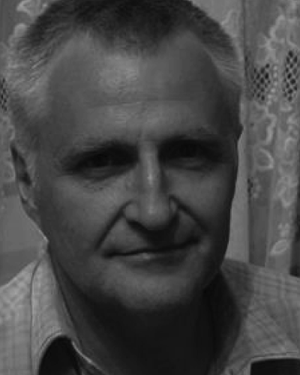 Vadim Agafonov合作论文数6
 A. S. Shabalina合作论文数1
 Artem Krylov合作论文数1Oleg Yu. Ganzha合作论文数1Faruk Arinc合作论文数1
 Daria Rukavishnikova合作论文数1Dmitry A. Ilinskiy合作论文数1boris viktorovich prusov合作论文数1Oleg Konstantinovich Kudin合作论文数1A. S. Bugaev合作论文数1Georgy K. Timashkevich合作论文数1Konstantin A. Roginskiy合作论文数1Shigenao Maruyama合作论文数1Victoria Aleksandrovna Agafonova合作论文数1Maurizio Cumo合作论文数1M. E. Kulikov合作论文数Russian Acad Sci, Shirshov Inst Oceanol1Elena A. Radiuk合作论文数1
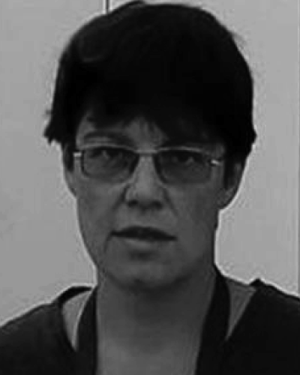 Anna Shabalina合作论文数1
 Umesh Madanan合作论文数Corresponding author.1
 E. Egorov合作论文数Moscow Inst Phys & Technol, Ctr Mol Elect, Moscow 117303, Russia1
 Tianshou Zhao (赵天寿)合作论文数Department of Mechanical and Energy Engineering, College of Engineering, Southern University of Science and Technology1
 Alexander Fedorov合作论文数Department of Aeromechanics and Flying Engineering, Moscow Institute of Physics and Technology1
 Kemal Hanjalic合作论文数Laboratory of Energy Process Modeling, NSU1
 Alexander Neeshpapa合作论文数1
 Igor Medvedev合作论文数Shirshov Institute of Oceanology, Russian Academy of Sciences1
 Thomas H. Kuehn合作论文数Department of Mechanical Engineering, University of Minnesota1
 John R. Howell合作论文数Nuclear and Radiation Engineering Program, Walker Department of Mechanical Engineering, Cockrell School of Engineering, University of Texas at Austin1
 Jane H. Davidson合作论文数College of Science and Engineering, University of Minnesota1
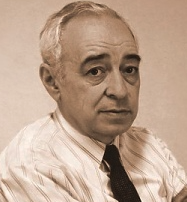 Leonid A. Dombrovsky合作论文数Joint Institute for High Temperatures of the Russian Academy of Science1
 Yogesh Jaluria合作论文数Department of Mechanical and Aerospace Engineering, School of Engineering, Rutgers, The State University of New Jersey1
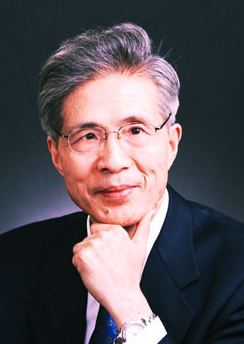 Wenquan Tao (陶文铨)合作论文数MOE Key Laboratory of Thermo-Fluid Science and Engineering, School of Energy and Power Engineering, Xi'an Jiaotong University;Xi’an Jiaotong-Liverpool University1
 Peter Stephan合作论文数Chair of Technical Thermodynamics, Darmstadt University of Technology1
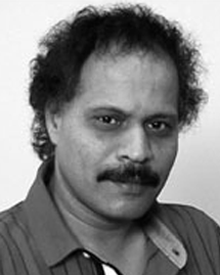 Kumar K. Tamma合作论文数Institute of Technology, University of Minnesota1
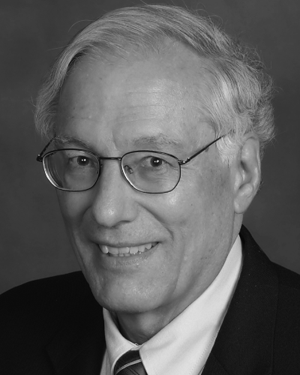 Terrence W. Simon合作论文数1
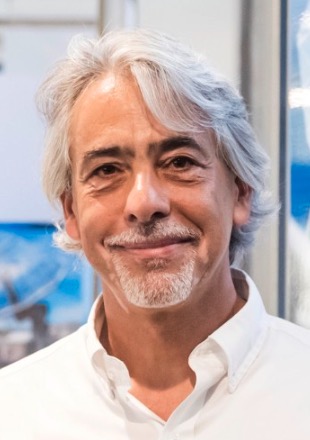 Aldo Steinfeld合作论文数Department of Mechanical and Process Engineering, Eidgenössische Technische Hochschule Zürich1S. A. Kovachev合作论文数1
 Gennady Ziskind合作论文数Department of Mechanical Engineering, Ben-Gurion University of the Negev1
 Paolo Di Marco合作论文数1
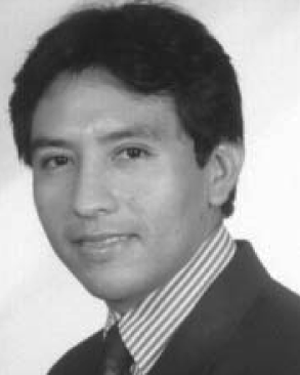 Abel Hernandez-Guerrero合作论文数Dept Mech Engn, Univ Guanajuato1
 Siaka Dembele合作论文数Faculty of Engineering, Kingston University1
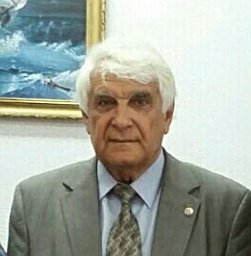 A. A. Khalatov合作论文数Institute of Engineering Thermophysics, National Academy of Sciences of Ukraine1
 Renato Machado Cotta合作论文数Nanoengineering Department, Federal University of Rio de Janeiro1
 Victoria Timchenko合作论文数School of Mechanical and Manufacturing Engineering, The University of New South Wales1
 Vladimir Ivanov合作论文数1Hideo Yoshida合作论文数1
 M. Pinar Menguc合作论文数Department of Mechanical Engineering, University of Kentucky1
 John Bischof合作论文数Department of Mechanical Engineering, College of Science and Engineering, University of Minnesota;ATP-Bio, University of Minnesota;Institute for Engineering in Medicine, University of Minnesota1
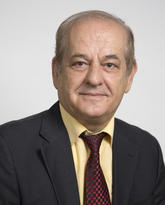 Abdulmajeed A. Mohamad合作论文数Department of Mechanical and Manufacturing Engineering, University of Calgary1
 William Worek合作论文数Department of Mechanical Engineering, University of Illinois at Chicago1




