Intelligence is the most studied construct in psychology and cognitive neuroscience. In Brazil, the administration of intelligence tests is needed for a number of social rights, including driving privileges. Such requirements have led to a large testing industry but the vast majority of intelligence tests require extended administration times and language skills. In this study, we sought to investigate the psychometric properties and normative results of a new non-verbal intelligence test, the General Matrix of Intelligence (GMI). The GMI is comprised of 28 matrix-based items and can be administered in as little as six-minutes. In this initial pilot test, the GMI was administered to 1,326 participants, ages 15-64 years old (M = 25.65 years, SD = 9.6 years), from all regions in Brazil. These data were analyzed using a 2PL Item Response Theory model, regression analyses were conducted to determine the role of sociodemographic factors, and preliminary norms were computed. Results indicated a unidimensional solution that reproduced the g factor theory, invariance across genders, evidence that cognitively demanding items involving movement or three-dimensional shapes were more difficult than items with less cognitive load, a normal distribution for results, and an interaction between education level and age group in predicting performance. Implications of these findings for research and practice are discussed and all data and codes are provided at https://osf.io/kvu42/
O estresse é um estado psicofisiológico de desgaste central no campo da saúde e da psicopatologia. Sintomas de diversos transtornos mentais, incluindo ansiedade e depressão, integram-se aos quadros clínicos de estresse de maneira complexa. Este estudo tem por propósito analisar os sintomas de estresse com base no método da Análise de Redes (AdR) utilizando para isso os dados da pesquisa de revisão dos índices de validade, precisão e atualização de normas do Inventário de Sintomas de Stress para adultos de Lipp. Foram analisados dados de 4.500 participantes da população brasileira para estabelecer a topografia da rede, seus índices de centralidade e de estabilidade. Os resultados indicaram uma rede estável, com correlações moderadas entre os 53 sintomas em 3 categorias, conforme previsto, sem apresentar clusters isolados de sintomas. Em termos de centralidade, um grupo de cinco nodos parecem indicar os sintomas decisivos para um diagnóstico de estresse. O índice de estabilidade dos vértices da rede indicou uma rede bastante estável (0.75/1). O que foi confirmado pelos índices de Correlação, Sensibilidade e Escassez (todos > 0.8/1); e pela estabilidade dos índices de centralidade que se mantêm bons mesmo com apenas 40% da amostra utilizada. Os resultados indicam um padrão estável de sintomas de estresse aplicál para uma avaliação psicológica com maior validade psicométrica.
Este artigo tem como objetivo realizar a análise de conteúdo para levantamento de evidências de validade na pesquisa de construção da Escala de Autoeficácia Socioemocional - EAESE. Para isso contou com itens elaborados, na forma de assertivas que descrevem atitudes, crenças e sentimentos, sobretudo, dentro do contexto de situações associadas aos aspectos socioemocionais. Na pesquisa foram tabulados e verificado o Coeficiente de Validade de Conteúdo (CVC). Foram avaliados dois aspectos da Validade de Conteúdo: Pertinência e Clareza. Os resultados contribuíram para a seleção dos 60 itens, com CVC geral da escala de 0,97; enquanto separadamente, as médias dos resultados de IVC também foram de 0,97 para Clareza e de 0,97 para Pertinência. Neste sentido, foram alcançados bons índices de concordância entre os juízes na elaboração dos itens da Escala.
Short-term memory is a dynamic psychological process that operates within a network in which non-verbal intelligence and attentional domains are connected. However, no consensus has been reached about which process has the greatest effect on this memory ability, which was the main objective of the present study. A sample of 1448 Brazilian participants (mean age = 26.62 years, standard deviation = 9.97 years; 53.9% females) were collectively tested on pen-and-paper standardized and validated measures of selective (ROTAS-C), alternating (ROTAS-A), and divided (ROTAS-D) attention. They also performed the R1 Non-verbal Intelligence Test and a visual short-term memory test (Memória Visual de Curto Prazo [MEMORE] test). The statistical analyses consisted of a data mining procedure, in which exhaustive automatic selection screening was performed. The results were compared with Corrected Akaike Information Criteria. The linear model met the classic assumptions of ordinary least squares and only included main effects of selective attention (standardized β = 0.39) and non-verbal intelligence (standardized β = 0.37) as main predictors (F2,39 = 7.01, p < 0.01, adjusted R2 = 24%). The results are discussed within a cognitive psychology framework.
The psychological and dedication in bodybuilding has a significant impact in these athlete’s lives, supporting self-control and individual’s social realization. Moreover, their motivation is an important key during the pre competition period, when high levels of self-control contribute to achieving goals and performing under pressure. Purpose : the aim of this research is to study the differences between the locus of control of overweight women and bodybuilding athletes.Methods : The current study was designed to compare two groups (n=18); female bodybuilders (n=10) and overweight women (n=8). Data were collected by survey monkey URL link, composed of 12 questions involving nutrition and training lifestyle, each with 3 possible columns with answers: relying on reward / relying on others/ relying on me. Participants were requested to answer by classifying how the sources of control affect each item with ratings from 1 to 5. The average result of each question and column was calculated with comparison purposes.Results : The column “relying on me” had the same average rating 4.9/5 rating for bodybuilders and overweight women. For “relying on others” the athletes’ average rating was 1.2/5 and for non-athletes 1.4/5. The major difference was regarding “relying on a reward” with an average rating of 2.7/5 for the group of bodybuilders and 1.9/5 for non-athletes.Conclusions : We concluded that a source of reward is much more significant to athletes, which can refer to either intrinsic or extrinsic motivation. keywords: bodybuilding, motivation, locus of control
Avaliacoes neuropsicologicas sao frequentemente iniciadas em funcao de condicoes mnemicas. Nesse sentido, a memoria visual de curto prazo (MVCP) e um tipo de memoria que envolve o armazenamento provisorio de informacoes visuais e sua avaliacao apresenta importante destaque clinico. O objetivo do presente trabalho foi o de apresentar evidencias de validade da interpretacao dos resultados obtidos por um instrumento psicometrico (MEMORE), desenvolvido para avaliar a MVCP tanto no contexto da neuropsicologia clinica como para processos de avaliacao psicologica em geral. A partir de uma amostra de 1793 individuos, localizados na regiao sul, sudeste e nordeste, 53,9% (n = 778) mulheres, idade media de 26,6 anos (DP = 9,9), estudos psicometricos e estatisticos foram conduzidos. Os resultados apontaram para fidedignidade da medida (Alfa de Cronbach = 0,76; Confiabilidade Composta = 0,78, correlacao entre o valor total obtido entre ambas as aplicacoes = 0,81), estrutura suficientemente unidimensional (X2(252) = 1255.530, p < 0.01, RMSEA = 0,048 [BC Bootstrap IC 95% = 0,046-0,0484], SRMR = 0.093, GFI = 0,860 [BC Bootstrap IC 95% = 0,859 - 0,870], MIREAL = 0,287 [BC Bootstrap IC 95% = 0,259 - 0,299]) e invariância metrica entre homens e mulheres (χ2(24) = 29.677, p = 0,196). Nao houve diferenca significativa na performance em funcao do sexo, mas uma interacao significativa entre escolaridade e faixa etaria (F(8, 1419) = 2,49, p = 0,01, ηp² = 0,01). E possivel concluir sobre a adequacao psicometrica do MEMORE, bem como consolidar evidencias sobre a associacao entre medidas cognitivas e efeitos sociodemograficos na performance mnemica. Esse estudo oferece um novo instrumento para utilizacao em neuropsicologia e avaliacao psicologica. Palavras-chave: memoria, memoria visual, neuropsicologia, psicometria, avaliacao.
Resumo -Considerando as vantagens decorrentes da prática esportiva para o desenvolvimento de valores individuais e sociais, faz-se notar a necessidade de construção e adaptação de instrumentos capazes de avaliar a relação do esporte e educação, assim como, de valores olímpicos e humanitários, conforme proposto nestes estudos.O objetivo deste artigo é apresentar as etapas de construção da Escala de Educação e Valores Olímpicos (EEVO), destacando os estudos realizados para estimar as evidências de validade da estrutura interna, comparação entre grupos e estudos de precisão.Os resultados destas pesquisas corroboraram para uma estrutura interna composta por três fatores, interpretados como Respeito, Excelência e Amizade.Os fatores apresentaram índices classificados como adequados nos estudos apresentados
Bodybuilders are well known by their addiction to the perfect physique, requiring not only a strong body, but also a strong mind. This potential psychological, motivational, emotional and dedication in bodybuilding has significant impact in athletes’ lives, supporting self-control, confidence, individual’s social realization and mood. Moreover, their motivation and self-control are important skills for a competition. On the other hand, most part of the population doesn’t have this strong motivation, struggling a bit more with nutrition and training programs. In nutritional studies, the “triangle” defined by trigger, behavior and reward really influence how people stick to a diet plan and their actions facing a goal related to losing or gaining weight. PURPOSE: The aim of this research is to study how the strong mind, dedication of bodybuilders, associated with intrinsic and extrinsic motivation, affect their success through a nutritional program, in comparison to non-athletes. Furthermore, we also want to understand the relevance of behavior and locus of control differences between these two groups. METHODS: The current study was designed to compare two groups (n=18); bodybuilders women (n=10) and overweight women (n=8). The data were collected by survey monkey link, composed by 12 sentences about nutrition and training lifestyle with 3 column each: depend on myself, depend on a reward and depend on others. Participants were requested to answer by classifying how the sources of control affect each item with scales from 1 to 5 (1- very low influence, 5- very high influence). The average of each question and column were calculated for comparison. RESULTS: According to the protocol, the column “depend on myself” had the same average 4.9/5 for bodybuilders and overweight women. For “depend on others” the athletes average was 1.2/5 and for non-athletes 1.4/5. The major difference was regarding “depend on a reward” with an average of 2.7/5 for the bodybuilders group and 1.9/5 for non-athletes. CONCLUSIONS: When discussing about motivation in fitness and nutrition goals, we concluded that a source of reward is much more significant to athletes.
Olympic education is closely related to the assumptions and values of Olympism. Olympic values are a theme dear to Olympic education, which seeks to rescue the relationship between sport and the presuppositions and pedagogical values present in the Olympic Movement. Olympic Values serve as a code of conduct for the Olympic Movement, and strive to guide the attitudes and actions of all those involved in Olympic activities, be they competitive, administrative, or voluntary work. One tries to combine sport, education and culture, using the harmony between body and mind, excellence of oneself, integrity in actions, mutual respect, and joy found in effort. Thus, the objective of this research was to measure the self-perception of teachers and students in an educational program for sports, from the state of São Paulo (Brazil). The results showed differences between the groups of teachers and the one of students, as well as differences concerning the variables of gender and age, and the knowledge and education of the participants regarding Olympic values and Olympic education within the premises of good performance in sports and the judgment of their own behaviors regarding humanitarian values.
A capacidade de imaginar diferencia os humanos de qualquer outro ser animado. Analisar o passado, planejar o futuro e atuar no presente a partir de experiências vividas é uma prerrogativa humana que permitiu à espécie chegar ao nível de desenvolvimento conhecido até o momento. As questões relacionadas ao Olimpismo têm mobilizado a sociedade e a comunidade acadêmica. Assim, considerando-se as características particulares de atletas olímpicos, neste trabalho é apresentado um estudo preliminar da relação entre traços de personalidade e padrões de textos extraídos de entrevistas transcritas. São apresentadas análises conjuntas entre os resultados de um teste psicológico de traços de personalidade e uma análise exploratória do texto de uma entrevista realizada com um atleta olímpico. Tal análise do texto é realizada com o apoio de métodos de processamento automático de textos. Acredita-se que os resultados corroboram para o estudo de associações entre o conteúdo mais frequentemente presente em narrativas e o cruzamento de dados com luz às teorias psicológicas de traços de personalidade.
A segurança pública é uma das grandes preocupações da sociedade, criando-se expectativas sobre os responsáveis por esta segurança. Espera-se que os policiais tenham competências para promover a segurança da população. Esta pesquisa investigou métodos de mensuração de atenção, memória e inteligência aplicados em 105 policiais militares e 113 universitários. Foram realizados os testes estatísticos Test T, ANOVA, correlações e estudos de precisão. Observou-se que na inteligência geral, memória de curto prazo, atenção concentrada e dividida o grupo de policiais apresentou resultados mais elevados que os universitários. Constituindo-se em uma questão fundamental para a qualidade dos serviços de segurança pública, os resultados desta pesquisa contribuem para o entendimento do uso de testes de avaliação da cognição em policiais militares, sobretudo em razão de estarem expostos a riscos diversos e terem o porte de arma de fogo, aspectos associados a uma cognição satisfatória para o exercício profissional torna-se relevante.
A dor pode ser definida como “experiência sensoriale emocional desagradável, associada a lesões teciduais reaisou potenciais”. Dessa maneira, percebe-se que a associaçãoestabelecida entre lesão-estímulo doloroso envolve razõesbiológicas e um importante componente subjetivo. Estetrabalho tem como objetivo avaliar como os atletas convivem,encaram e controlam os episódios dolorosos, sua capacidadeem discriminar os diferentes tipos de dor, bem como suasensibilidade em responder aos sinais e limites, condiçõesessenciais na busca pelo melhor resultado para a equipe epara si próprio. Para tanto foram utilizados Inventário daDor para o Esporte e relatos em formato de histórias de dorem 32 atletas participantes dos Jogos Abertos Brasileiros de2009. Os dados apontam que as representações sobre a dorvariam conforme a faixa etária e o gênero, o que reforça ocomponente subjetivo implicado nessa percepção, exigindocuidados dos profissionais que irão lidar com os pacientesnessas condições.
acadêmicas têm apresentado a respeito da mineração de textos sobre personalidade e aspectos emocionais, presentes em pesquisas associadas a atletas ou no contexto esportivo.
In the school environment, human values manifest in daily routine, and measuring them is a challenge and a dilemma. However, the new guiding document for education in Brazil, the “Base Nacional Comum Curricular (BNCC)†demands that social emotional skills be considered in the teaching and learning process. There are few instruments capable of assessing the relationship between sport, education and Olympic values, which are, at the limit, human values. The aim of this study was to observe students' responses regarding human values and to estimate evidence of validity and accuracy of the Education and Olympic Values Scale (EEVO-15). 138 students aged 7 to 14 years (10 ± 1.23), 68 girls (49.3%) and 70 boys (50.7%), with regular physical education classes, participated in this study. Greater Sao Paulo, Brazil. Confirmatory Factor Analysis showed the internal structure composed of three factors, with Cronbach's alpha of 0.70 and 0.64 and 0.67, respectively. Only in factor F1, associated with friendship, there was a statistically significant difference with the variable gender, however, in the other factors girls also presented, on average, higher responses. In the group of girls, it was found that with increasing age, the score on friendship increases and the average score on the self-management factor of emotions decreases. EEVO-15 presented satisfactory initial psychometric results, but adjustments and further studies are suggested. In the end, it is considered that the evaluation can be a relevant instrument for the teacher to follow new ways of acting with students, besides the need to measure the reach achieved with activities that stimulate the values in sports actions. References 1 Brasil. Base Nacional Comum Curricular – BNCC (2017). Documento homologado pela Portaria n° 1.570, publicada no D.O.U. de 21/12/2017, Seção 1, Pág. 146. BrasÃlia, 21 de dezembro de 2017. http://basenacionalcomum.mec.gov.br/ 2 Rabelo IS, Rubio K. Etapa do projeto de construção de uma medida para apoio no programa “Rumo ao Pódio OlÃmpicoâ€. Projeto em parceria com a Secretaria de Educação do MunicÃpio de São Paulo. 2008. 3 Castro NR, Rabelo IS, Rubio K. Estudos de análise fatorial com a Escala de Educação e Valores OlÃmpicos (EEVO). VI Congresso Brasileiro de Avaliação Psicológica – IBAP; 4-7 julho 2013, Maceió, AL. Anais. 4 Rabelo IS, Rubio K, Ambiel RM. Estudos iniciais de construção de uma escala de educação e valores olÃmpicos. Trabalho apresentado no VI Congresso Brasileiro de Avaliação Psicológica – IBAP; 4-7 julho 2013, Maceió, AL. Anais. 5 Rabelo IS, Peixoto EM, Nakano TC, Rubio K. Avaliação de valores OlÃmpicos e humanitários na educação: Proposta de um instrumento de medida. Revista Brasileira de Psicologia do Esporte. 2016; 6: 26-41. 6 Timmerman ME, Lorenzo-Seva U. Dimensionality assessment of ordered Polytomous items with parallel analysis. Psychological Methods. 2011; 16(2): 209-220. 7 Borsboom D, Milfont TL, Fisher R. Testing measurement invariance across groups: Applications in cross-cultural research. International Journal of Psychological Research. 2010; 3 (1): 111-121. 8 Dória C, Tubino MJG. (2006). Avaliação da Busca da Cidadania pelo Projeto OlÃmpico da Mangueira. Ensaio: Avaliação e PolÃticas Públicas em Educação. 2006; 14 (50): 77-90. 9 Kohe GZ. Disrupting the rhetoric of the rings: a critique of olympic idealism in physical education. Sport, Education & Society. 2010; 15(4): 479-494. 10 Aroni A. Teaching human rights through Olympic Education in the Intercultural Lyceum of Athens: a case study. Intercultural Education. 2013; 24(5): 489-492. 11 Binder DL. Olympic values education: evolution of a pedagogy. Educational Review. 2012; 64(3): 275-302. 12 Rubio K. Esporte, educação e valores olÃmpicos. São Paulo: Casa do Psicólogo; 2009 13 Hair JF, Anderson R, Tatham R, Black W. Multivariate data analysis with readings. New Jersey, USA: Pearson; 1987. 14 Kaiser HF, Rice J. Little Jiffy, mark IV. Educational and Psychological Measurement. 1977; 34(1): 111-117. 15 Piaget J. O juÃzo moral na criança. São Paulo: Summus; 1994. 16 Kohlberg L. The philosophy of moral development: Moral stages and the idea of justice. San Francisco: Harper & Row; 1981. 17 Kohlberg L, Higgins A, Power FC. Kohlberg’s approach to moral education. New York: University Press; 1989. 18 Rabelo IS. Investigação de traços de personalidade em atletas brasileiros: análise da adequação de uma ferramenta de avaliação psicológica [tese]. São Paulo: Universidade de São Paulo; 2013 19 Marchioni A. Ética: a arte do bom. Petrópolis, RJ: Vozes; 2010 20 Goergen P. Educação e valores no mundo contemporâneo. Educ. Soc., Campinas. 2005; 26(92): 983-1011. 21 Silva AMB, Foch GFL, Guimarães CA, Enumo SRF. Instrumentos aplicados em estudos brasileiros em psicologia do esporte. Estudos Interdisciplinares em Psicologia. 2014; 5(2):77-95.
Dentre as metas de destaque do Movimento Olímpicoestá a disseminação de valores humanitários que orientemo comportamento das pessoas e da sociedade. Entre essesvalores estão o respeito a si mesmo e ao outro, bem comorespeito aos regulamentos, e ao meio ambiente esportivo. Oobjetivo desta pesquisa foi estimar as primeiras evidênciasde validade da estrutura interna e precisão da Escala deEducação e Valores Olímpicos (EEVO-36). A amostra foicomposta por 567 participantes com idades que variavamentre 9 e 62 anos (18,6±11,78; 53,4% mulheres). A validaçãocruzada, realizada por meio da Análise Fatorial Exploratória eAnálise Fatorial Confirmatória Categórica, revelou estruturainterna composta por três fatores, invariantes entre homense mulheres, interpretados como Trabalho em Equipe,Excelência e Autocontrole. Todos os fatores apresentaramíndices classificados como excelentes. Conclui-se que a EEVO-36 apresenta boas qualidades psicométricas para avaliaçãode valores olímpicos e humanitários.
Diverse evaluative methodologies may strengthen more complex investigations of cognitive and emotional characteristics of athletes and actors present in the sporting context. The set of procedures that may contain interviews, scales and questionnaires, tests, observations, among other tools, are among the psychological evaluation techniques used in many different contexts. In sports, great emphasis has been given to research of psychological characteristics that contribute to high-performance sports practice, even though other areas can also be benefited such as physical activities and leisure, education for sports, sports training, among others. This study will highlight the use of psychological assessment in a selection process of candidates to a high-performance athlete development program, in which participants were submitted to a Neuroticism subscale of the Bateria Fatorial de Personalidade (BFP) (Personality Factor Battery). The results showed personality traits that differentiate the manual sample from the group of athletes. In addition, it was sensitive to the difference between the total sample collected from athletes and the group of candidates classified in the selection process. Other studies that investigated personality traits in the sporting context and discussions on the sport psychologist's role in relation to the psychological evaluation will also be presented.
Aggression is a constant feature in an athlete's life.This is because training and too many competitions require a proactive attitude to these demands, hence the importance to distinguish aggression and violence.The same demands that generate aggressiveness also cause pain and injury due to excessive training and competitions.The influences and guidance experienced in the early formation of an athlete's career are related to other aspects of personality like aggression, perception of pain and effort developed during an athlete's history and his interaction with the environment.This study evaluated 87 adolescent athletes from the base team of a large professional soccer club in the city of São Paulo through the application of psychological assessment tests.The results showed differences among different subgroups of adolescent athletes, as well as differences between these results and normative data described in the manuals of instruments used.When comparing the results from groups of the Brazilian sample of this research with the results of subjects included in the original German manual, the results show much higher average scores in the sporting context.
One topic of great interest in the context of high performance sport is the quest for understanding the personality of an athlete. In sports, the personality instruments adapted to this reality regarding Brazilian population are scarce, but specific measures to the situation of the sport can help with more specific measures of personality in sport context. This study aims to analyse the personality profile of the athlete in a specific sport, and especially explore the adjustment of personality test used for this research in sport context. The instrument used was the Personality Factorial Battery Bateria Fatorial de Personalidade (BFP) which covers the Big Five Factor Model of personality in 17 athletes of the Brazilian table tennis. The results indicate the need for more comparative studies between standardization samples in characteristic sport groups, considering the existence of sub-factors of the big five factors of personality that have variations in results when the context is changed.
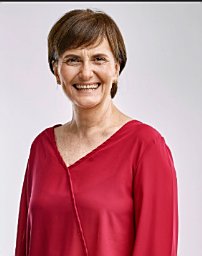 Katia Rubio合作论文数Escola de Educação Física e Esporte15
 Sílvia Verônica Pacanaro合作论文数11Ingo Bernd Güntert合作论文数5gisele aparecida da silva alves合作论文数4
 Rodolfo Augusto Matteo Ambiel合作论文数4
 Luis Anunciacao合作论文数Department of Psychology, Pontifical Catholic University of Rio de Janeiro4
 Edla Grisard合作论文数Universidade Federal de Santa Catarina4Elisa Martins da Silva合作论文数3milena oliveira rossetti合作论文数3
 Gabriela de C. M. Goncalves合作论文数3
 Anna Carolina Portugal合作论文数Univ Fed Rio de Janeiro3
 Roberto Moraes Cruz合作论文数Departamento de Psicologia;Universidade Federal de Santa Catarina;Departamento de Psicologia, Universidade Federal de Santa Catarina3
 J. Landeira-Fernandez合作论文数Laboratório de Psicologia Comparada, Universidade Estácio de Sá3Milena Oliveira Rosseti合作论文数3Paulo C. Muzy合作论文数2Henry Chan合作论文数2Paula H. D. Kanas合作论文数2nelimar ribeiro de castro合作论文数2
 Maria Alice Alice Zimmermann合作论文数University of São Paulo2
 Antonio H Lancha Jr合作论文数2
 Luciana Oquendo Pereira合作论文数Biology Institute, Campinas State University2
 Louise Marques合作论文数1
 Andrea Da Silva Mazariolli合作论文数1silesia m veneroso delphino tosi合作论文数1Roberta C. Muzy合作论文数1
 Juliana Marconi合作论文数1Camila Marchi Güntert合作论文数1Carlos Perez合作论文数1
 Carlos R. Perez合作论文数1
 Alessandro vieira dos reis合作论文数1
 Rafael Campos Veloso合作论文数Universidade de São Paulo (USP),1Evandro Morais Peixoto合作论文数University of São Francisco1
 Roberta Akemi Sinoara合作论文数1
 Nakano Tatiana de Cássia合作论文数Pontificia Universidade Católica de Campinas1
 Christopher J.L. Murray合作论文数School of Public Health, University of Washington;Department of Health Metrics Sciences, School of Medicine, University of Washington;Institute for Health Metrics and Evaluation, University of Washington1
 Marilda Emmanuel Novaes Lipp合作论文数1
 Mara Cristina Souza De Lucia合作论文数Centro de Estudos Psico-Cirúrgicos;Departamento de Neurologia, Faculdade de Medicina, Universidade de São Paulo1
 Natalia Kohatsu Quintilio合作论文数1
 Juliana Oliveira Gomes合作论文数1
 Solange Oliveira Rezende合作论文数Department of Computer Science, Instituto de Ciências Matemáticas e de Computação, Universidade de São Paulo1
 Eliane C Miotto合作论文数university of sao paulo1




