While causal reasoning is a core facet of our cognitive abilities, its time-course has not received proper attention. As the duration of reasoning might prove crucial in understanding the underlying cognitive processes, we asked participants in two experiments to make probabilistic causal inferences while manipulating time pressure. We found that participants are less accurate under time pressure, a speed-accuracy-tradeoff, and that they respond more conservatively. Surprisingly, two other persistent reasoning errors—Markov violations and failures to explain away—appeared insensitive to time pressure. These observations seem related to confidence: Conservative inferences were associated with low confidence, whereas Markov violations and failures to explain were not. These findings challenge existing theories that predict an association between time pressure and all causal reasoning errors including conservatism. Our findings suggest that these errors should not be attributed to a single cognitive mechanism and emphasize that causal judgements are the result of multiple processes.
Most theories of causal reasoning aim to explain the central tendency of causal judgments. However, experimental studies show that causal judgments are quite variable. In this article, we report the results of an experiment using a novel repeated measures design that demonstrate the existence of meaningful (i.e., not noise-related) within-participant variability. Next, we introduce and assess multiple computational cognitive models that serve as potential accounts of the sources of variability and fit those models to the new empirical data. We find that the Bayesian Mutation Sampler has the best fit to the data and is able to account for a number of unusual features of the response distributions (e.g., bi-modality), supporting the view that the stochastic sampling mechanism it posits reflects the cognitive processes via which people draw causal inferences. Additionally, our findings suggest that incorporating ‘non-reasoning’ processes, such as rounding and guessing, can improve the ability of models of causal reasoning to account for the observed response distributions. Overall, the study highlights the potential of computational modeling of full response distributions to shed light on the underlying mechanisms of human causal reasoning and identifies promising directions for future research.
Causal cognition is a core aspect of how we deal with the world; however, existing psychological theories tend not to target intuitive causal engagement that is done in daily life. To fill this gap, we propose an Ecological-Enactive (E-E) affordance-based account of situated causal engagement, that is, causal judgments and perceptions. We develop this account to improve our understanding of this way of dealing with the world, which includes making progress on the causal selection problem, and to extend the scope of embodied cognitive science to causal cognition. We characterize identifying causes as selectively attending to the relevant ecological information to engage with relevant affordances, where these affordances are dependent on individual abilities. Based on this we construe causal engagement as based on a learned skill. Moreover, we argue that to understand judgments of causation as we make them in our daily lives, we need to see them as situated in sociocultural practices. Practices are about doing, and so this view helps us understand why people make these judgments so ubiquitously: to get things done, to provide an effective path to intervening in the world. Ultimately this view on causal engagement allows us to account for individual differences in causal perceptions, judgments, and selections by appealing to differences in learned skills and sociocultural practices.
One consistent finding in the causal reasoning literature is that causal judgments are rather variable. In particular, distributions of probabilistic causal judgments tend not to be normal and are often not centered on the normative response. As an explanation for these response distributions, we propose that people engage in 'mutation sampling' when confronted with a causal query and integrate this information with prior information about that query. The Mutation Sampler model (Davis & Rehder, 2020) posits that we approximate probabilities using a sampling process, explaining the average responses of participants on a wide variety of tasks. Careful analysis, however, shows that its predicted response distributions do not match empirical distributions. We develop the Bayesian Mutation Sampler (BMS) which extends the original model by incorporating the use of generic prior distributions. We fit the BMS to experimental data and find that, in addition to average responses, the BMS explains multiple distributional phenomena including the moderate conservatism of the bulk of responses, the lack of extreme responses, and spikes of responses at 50%.
Author(s): Kolvoort, Ivar R; van Maanen, Leendert | Abstract: While research indicates that people are skilled causal reasoners, systematic deviations from the normative causal Bayesian network model have been observed. These include Markov violations, failures to ‘explain away’, and conservative responding. Different processes have been posited to account for these violations: sampling, associative reasoning, and heuristics. These processes entail effects of response time. To test the relationships between these theories, normative violations, and reasoning time we conducted a causal reasoning study employing time pressure manipulations and response time measurements. Our results show that time pressure decreases overall accuracy. Crucially, we find that time pressure does not affect the magnitude Markov independence violations. This is not what many existing explanations would predict. We find evidence that participants’ responses result from two separate cognitive processes and that time pressure modulates their relative contribution to responses. Hence we provide an explanation of non-normative reasoning patterns based on a mixture of cognitive processes.
Author(s): Kolvoort, Ivar R; Davis, Zachary J; van Maanen, Leendert; Rehder, Bob | Abstract: People’s causal judgments exhibit substantial variability, but the processes that lead to this variability are not currently understood. In this paper, we use a repeated-measures design to study the within-participant variability of conditional probability judgments in common-cause networks. We establish that these judgments indeed exhibit substantial within-participant variability. This variability differs by inference type and is related to the extent to which participants commit Markov violations. The consistency and systematicity of this variability suggest that it may be an important source of evidence for the cognitive processes that lead to causal judgments. The systematic study of both within- and between-person variability broadens the scope of behavior that can be studied in causal cognition and promotes the evaluation of formal models of the underlying process. The data and methods provided in this paper provide tools to enable the further study of within-participant variability in causal judgment.
The self is a multifaceted phenomenon that integrates information and experience across multiple time scales. How temporal integration on the psychological level of the self is related to temporal integration on the neuronal level remains unclear. To investigate temporal integration on the psychological level, we modified a well-established self-matching paradigm by inserting temporal delays. On the neuronal level, we indexed temporal integration in resting-state EEG by two related measures of scale-free dynamics, the power law exponent and autocorrelation window. We hypothesized that the previously established self-prioritization effect, measured as decreased response times or increased accuracy for self-related stimuli, would change with the insertion of different temporal delays between the paired stimuli, and that these changes would be related to temporal integration on the neuronal level. We found a significant self-prioritization effect on accuracy in all conditions with delays, indicating stronger temporal integration of self-related stimuli. Further, we observed a relationship between temporal integration on psychological and neuronal levels: higher degrees of neuronal integration, that is, higher power-law exponent and longer autocorrelation window, during resting-state EEG were related to a stronger increase in the self-prioritization effect across longer temporal delays. We conclude that temporal integration on the neuronal level serves as a template for temporal integration of the self on the psychological level. Temporal integration can thus be conceived as the "common currency" of neuronal and psychological levels of self.
 Leendert Van Maanen合作论文数Artificial Intelligence;University of Groningen;Artificial Intelligence, University of Groningen5
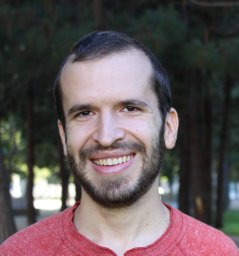 Zachary Davis合作论文数Herbert Wertheim College of Medicine, Florida International University2
 Katrin Schulz合作论文数2
 Erik Rietveld合作论文数Department of Philosophy, Harvard University2
 Bob Rehder合作论文数Institute of Cognitive Science, University of Colorado2
 Elizabeth L. Fisher合作论文数1Nina Temme合作论文数1Soren Wainio-Theberge合作论文数Douglas Mental Hlth Univ Inst1
 Annemarie Wolff合作论文数Institute of Mental Health Research, University of Ottawa1
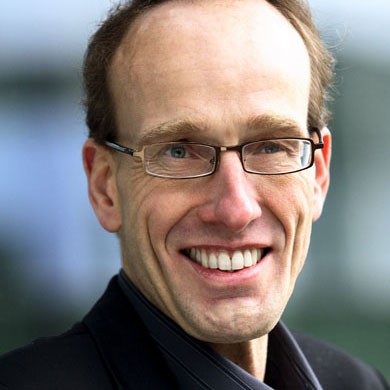 Georg Northoff合作论文数Department of Psychiatry, University of Ottawa;Royal Ottawa Mental Health Centre, Institute of Mental Health Research, University of Ottawa;Hangzhou Normal University1
 Robert Van Rooij合作论文数Department of Philosophy, Faculteit Der Geesteswetenschappen, Universiteit Van Amsterdam;Faculteit Der Natuurwetenschappen, Wiskunde en Informatica, Universiteit Van Amsterdam1




