New mass spectrometer technologies and methods of water analysis are being investigated at the Jet Propulsion Laboratory. A water sampling module was recently developed that incorporates precise split-splitless control, high-temperature volatilization, and on-column injection and allows virtually any gas chromatograph mass spectrometer (GCMS) to sample microliter volumes of water and analyze for volatile organics. This approach works remarkably well for detecting light organics; however the reliance on GC columns makes it ill-suited for analysis of low-volatility organics, and incapable of analyzing for inorganics. Alternative detectors and mass spectrometer designs are being explored for improved water analysis. New sampling and ionization approaches are also being explored to investigate the feasibility of performing water analysis without the need for any chromatography. The results of these studies are presented herein.
We report on progress made in developing a water sampling system for detection and analysis of volatile organic compounds in water with a gas chromatograph mass spectrometer (GCMS). Two approaches are described herein. The first approach uses a custom water pre-concentrator for performing trap and purge of VOCs from water. The second approach uses a custom micro-volume, split-splitless injector that is compatible with air and water. These water sampling systems will enable a single GC-based instrument to analyze air and water samples for VOC content. As reduced mass, volume, and power is crucial for long-duration, manned space-exploration, these water sampling systems will demonstrate the ability of a GCMS to monitor both air and water quality of the astronaut environment, thereby reducing the amount of required instrumentation for long duration habitation. Laboratory prototypes of these water sampling systems have been constructed and tested with a quadrupole ion trap mass spectrometer as well as a thermal conductivity detector. Presented herein are details of these water sampling system with preliminary test results.
Molecular effects involving highly charged ions, atoms, and dust grains are present in, for example, the solar wind-comet interaction, circumstellar and protostellar clouds, and the interstellar medium. The relevant astrophysical objects are presented and recent results given for charge exchange and X-ray emission; and atom-surface collisions leading to formation of larger molecules. This latter work is motivated by recent observations from the Herschel Space Telescope, including its detection of water in a wide range of astronomical regions.
We report on trace gas and major atmospheric constituents results obtained by the Vehicle Cabin Atmosphere Monitor (VCAM) following almost two years of operation aboard the International Space Station (ISS). VCAM is an autonomous environmental monitor based on a highly compact gas chromatograph/quadrupole ion trap mass spectrometer. It was flown to the International Space Station (ISS) on shuttle mission STS-131 and commenced operations on June 2010. VCAM is capable of providing measurements of both parts-per-billion (ppb) levels of volatile trace-gas constituents, and of the atmospheric major constituents (nitrogen, oxygen, argon, and carbon dioxide) in a space vehicle or station. It is designed to operate autonomously and maintenance-free, approximately once per day, with a self-contained gas supply sufficient for a one-year lifetime. VCAM’s performance is sufficient to detect and identify 90% of the target compounds at their 180-day Spacecraft Maximum Allowable Concentration levels.
To satisfy the Major Constituents Analysis (MCA) requirements for the Vehicle Cabin Atmosphere Monitor (VCAM), this software analyzes the relative abundance ratios for N2, O2, Ar, and CO2 as a function of time and constructs their best-estimate mean. A histogram is first built of all abundance ratios for each of the species vs time. The abundance peaks corresponding to the intended measurement and any obfuscating background are then separated via standard peak-finding techniques in histogram space. A voting scheme is then used to include/exclude this particular time sample in the final average based on its membership to the intended measurement or the background population. This results in a robust and reasonable estimate of the abundance of trace components such as CO2 and Ar even in the presence of obfuscating backgrounds internal to the VCAM device. VCAM can provide a means for monitoring the air within the enclosed environments, such as the ISS (International Space Station), Crew Exploration Vehicle (CEV), a Lunar Habitat, or another vehicle traveling to Mars. Its miniature pre-concentrator, gas chromatograph (GC), and mass spectrometer can provide unbiased detection of a large number of organic species as well as MCA analysis. VCAM s software can identify the concentration of trace chemicals and whether the chemicals are on a targeted list of hazardous compounds. This innovation s performance and reliability on orbit, along with the ground team s assessment of its raw data and analysis results, will validate its technology for future use and development.
Attempts at improving the quality of mass spectra obtained from a Paul trap mass spectrometer prompted an investigation of the effects of additional fields to supplement the primary rf quadrupole trapping field. Reported here are the results of the first in a series of tests that focuses on the application of a single dipole field to augment the trapping and subsequent ejections of ions stored within a Paul trap. Measurements are presented for a fixed quadrupole frequency with varying dipole frequencies. The presence of the dipole field during the quadrupole trapping phase causes ion ejections of single m/z species at discrete dipole frequencies. During the mass analysis phase, the varying dipole frequency produces a complex set of resonant structures that impact ejection time (mass range), as well as mass spectral peak intensity and width.
The wavelength range and high resolution of the space instruments Chandra, Newton, SOHO, Suzaku, Herschel, Spitzer, and the upcoming ASTRO-H and James Webb Space Telescope have increased the need for laboratory collision-physics measurements to interpret astrophysical phenomena. A review will be given of charge exchange of highly-charged ions with neutral comet and planet atmospheres; and the formation of complex molecules in stellar regions. These space observations are linked to laboratory measurements of absolute charge-exchange cross sections; and molecular formation of species such as CO2, CH3OH, and CH3CH2OH involving fast H- and O-atom collisions with abundant interstellar molecules adsorbed on dust-grain analogues.
Preliminary results are presented for the use of an auxiliary radiofrequency (rf) excitation voltage in combination with a high purity, high voltage rf generator to perform dipole excitation within a high precision Paul ion trap. These results show the effects of the auxiliary excitation frequency over a continuous frequency range on the resultant mass spectra from the Paul trap with particular emphasis on ion ejection times, ion signal intensity, and peak shapes. Ion ejection times are found to decrease continuously with variations in dipole frequency about several resonant values and show remarkable symmetries. Signal intensities vary in a complex fashion with numerous resonant features and are driven to zero at specific frequency values. Observed intensity variations depict dipole excitations that target ions of all masses as well as individual masses. Substantial increases in mass resolution are obtained with resolving powers for nitrogen increasing from 114 to 325.
We report on trace gas and major atmospheric constituents results obtained by the Vehicle Cabin Atmosphere Monitor (VCAM) during operations aboard the International Space Station (ISS). VCAM is an autonomous environmental monitor based on a miniature gas chromatograph/mass spectrometer. It was flown to the ISS on shuttle mission STS-131 and commenced operations on 6/10/10. VCAM provides measurements of ppb-to-ppm levels of volatile trace-gas constituents, and of the atmospheric major constituents (nitrogen, oxygen, argon, and carbon dioxide) in a space vehicle or station. It is designed to operate autonomously and maintenance-free, approximately once per day, with a self-contained gas supply sufficient for a one-year lifetime. VCAM is designed to detect and identify 90% of the target compounds at their 180-day Spacecraft Maximum Allowable Concentration levels.
Carbon dioxide (CO2), methanol (CH3OH), ethanol (CH3CH2OH), and formic acid (HCOOH) have been formed in collisions of a superthermal, 9 eV beam of O(3P) atoms with CH4 molecules, with an over coat of CO molecules, adsorbed on a gold surface at 4.8 K. The products are detected using temperature programmed-desorption and quadrupole mass spectrometry. Identification of the species is carried out through use of the Metropolis random walk algorithm as constrained by the fractionation patterns of the detected species. Relative formation yields are reported and reaction sequences are given to account for possible formation routes.
We report on the results from validation testing the Vehicle Cabin Atmosphere Monitor (VCAM). VCAM is an autonomous environmental monitor based on a miniature gas chromatograph/mass spectrometer and is scheduled to be flown to the International Space Station (ISS) on shuttle mission STS-131. VCAM is capable of providing measurements of both ppb levels of volatile constituents and the atmospheric major constituents (nitrogen, oxygen, and carbon dioxide) in a space vehicle or station. It is designed to operate autonomously and maintenance free, approximately once per day, with a self-contained gas supply sufficient for a one-year lifetime. VCAM performance is sufficient to detect and identify 90% of the target compounds specified at the 24-hour Spacecraft Maximum Allowable Concentration level. This paper presents a summary of the pre-flight validation test results for VCAM.
We report measured absolute single and multiple charge-exchange cross sections for Feq+ ions colliding with CO, CO2 and H2O. A retarding-field method is used in two different approaches for charge-state analysis of the ion beam after traversing the stationary target gas cell. The projectile energy is 7q keV. This corresponds to a range of ion velocities of 350 km s−1 for q = 5, to 560 km s−1 for q = 13. This is comparable to solar wind velocities for understanding charge exchange of solar wind ions with cometary neutrals, leading to X-ray emission from the ions.
 Ara Chutjian合作论文数Jet Propulsion Laboratory, California Institute of Technology27
 Madzunkov, Stojan合作论文数10
 S. Madzunkov合作论文数8S. M. Madzunkov合作论文数8Jolanta Domysławska合作论文数Instytut Fizyki, Uniwersytet Mikołaja Kopernika7
 Lukas Mandrake合作论文数Jet Propulsion Laboratory, California Institute of Technology7B. J. Shortt合作论文数6R. T. Schaefer合作论文数6N. Toomarian合作论文数6Marvin Darrach合作论文数6M. R. Darrach合作论文数6W. Kedzierski合作论文数6
 Pascale Ehrenfreund合作论文数Space Policy Institute, Elliott School of International Affairs, George Washington University5V. Garkanian合作论文数5
 Jurij Simcic合作论文数Jožef Stefan Institute5
 Benjamin Bornstein合作论文数5Arvid Croonquist合作论文数5
 J. William Mcconkey合作论文数Department of Physics,University of Windsor5W. M. Heinrichs合作论文数4
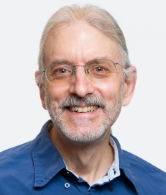 Steven J. Smith合作论文数Joint Global Change Research Institute, Pacific Northwest National Laboratory4J William Mcconkey合作论文数4Nada Djuric合作论文数4R. J. Mawhorter合作论文数3D. Karmon合作论文数3J. L. Thomas合作论文数3V. R. Haemmerle合作论文数3igor bray合作论文数3
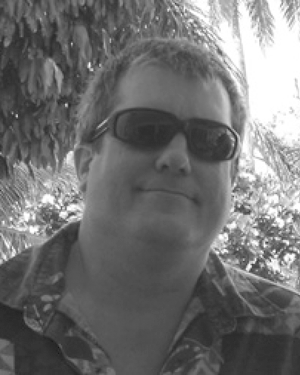 Mielke, R.E.合作论文数3Kidd Richard D合作论文数3
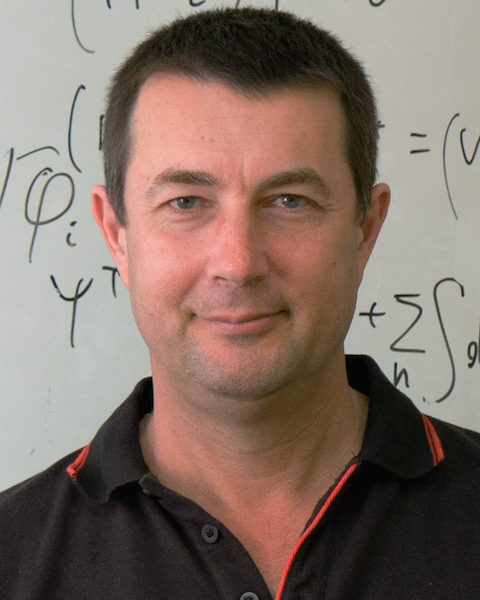 Igor Bray合作论文数School of Electrical Engineering, Computing and Mathematical Sciences, Faculty of Science and Engineering, Curtin University3Richard J. Mawhorter合作论文数3Ben Bornstein合作论文数2R. Vanholden合作论文数2D. Demonbrun合作论文数2T. M. Rust合作论文数2M. A. Girard合作论文数2E. Edgu-Fry合作论文数2w kedzierski合作论文数2
 Darrach, Murray合作论文数2Kidd Richard合作论文数2
 Seungwon Lee合作论文数NASA Jet Propulsion Laboratory, California Institute of Technology2
 Benjamin Brunner合作论文数Max Planck Institute for Marine Microbiology, Bremen, Germany2Thomas N. Corso合作论文数2Edem Tsikata合作论文数Dept Phys, Harvard Univ2Gianfranco Vidali合作论文数2wladyslaw kedzierski合作论文数1D. P. Seccombe合作论文数1C Mcgrath合作论文数1A. Dawson合作论文数1




