The authors present a patient who initially underwent anterior approach atrioventricular (AV) nodal modification for treatment of typical AV junctional reentrant tachycardia (AVJRT) and subsequently developed clinical episodes of a previously undocumented type of supraventricular tachycardia. Findings during electrophysiologic studies suggest that this tachycardia is due to both anterograde and retrograde conduction in a slow AV nodal pathway. A "slow pathway" potential was identified and dissociated from the local atrial and ventricular depolarizations. Posterior approach AV nodal modification was successfully used to ablate this tachycardia. These findings suggest that atypical AVJRT occurring after AV nodal modification may be "slow-slow" AVJRT.
Catheter ablation has been used to treat atrioventricular node reentrant and atrioventricular reentrant tachycardias with extremely high success rates. The suitability of catheter ablation for treatment of atrial tachycardia, a much less common type of supraventricular tachycardia, has not been well addressed. Fifteen patients (8 females) ranging from 10 to 83 years (mean 38 +/- 22) were referred for catheter ablation of supraventricular tachycardia. The diagnosis of atrial tachycardia was established by standard electrophysiologic techniques. A combination of activation and pace mapping was used to identify a suitable site for radiofrequency current catheter ablation. Medical therapy was unsuccessful in all but 1 patient. Two patients had surgically corrected congenital heart disease, 2 had coronary artery disease and 1 had dilated cardiomyopathy. Seven patients had depressed left ventricular function. Six patients had incessant tachycardias. Presumed tachycardia mechanism was automatic in 11 patients and reentrant in 4. Mean tachycardia cycle length was 372 +/- 74 ms. Catheter ablation was acutely successful in 12 patients (80%) with application of 11.1 +/- 6.6 lesions at a mean voltage of 60 +/- 9 V. In the other 3 patients, 16 to 38 lesions were applied. At a mean follow-up of 18.5 +/- 6.5 months, 2 patients have had recurrences with different P-wave morphologies and underwent a second successful catheter ablation procedure. An additional 2 patients had recurrences with the same P-wave morphology and 1 underwent a second successful catheter ablation procedure. Thus, radiofrequency ablation can be used in a diverse population of patients with atrial tachycardia with an acute success rate of 80% and a long-term success rate of 73%.
Adaptive techniques are considered for the estimation of the magnitude-squared coherence spectrum of two simultaneous intracardiac signals. Estimators based on single- and multiple-pass algorithms are proposed. Adaptive estimates of the magnitude-squared coherence spectrum are shown to effectively separate fibrillatory from several nonfibrillatory rhythms on the basis of 5 s of data. The significance of this work for sophisticated antitachyarrhythmia devices is indicated. >
The magnitude-squared coherence (MSC) spectrum is introduced as a dimensionless frequency-domain measure of rhythm organization from pairs of intracardiac and/or epicardial leads. The MS spectrum is simply defined as the magnitude of the complex cross-power-spectrum normalized to the product of the two individual auto-power-spectra. In this way, two linearly related signals (in the absence of uncorrelated additive noise) will have MSC values of unity at all signal frequencies present in both signals in any amount. Mean MSC values are shown to discriminate fibrillatory from nonfibrillatory rhythms. Speed/accuracy tradeoffs in estimation of the MSC are considered
Fibrillatory rhythms are poorly characterized by traditional time-domain measures, such as rate. The authors describe two measures not commonly applied in intracardiac signal processing; the median frequency (MF) in the 2 to 9 Hz region of the power spectrum, and the magnitude-squared coherence (MSC) function. These two measures are formally defined. The MF is a robust measure of drug-induced changes in atrial fibrillation, and the MSC is a measure of the degree of organization of atrial and ventricular cardiac rhythms.<>
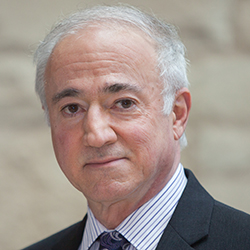 Alan V. Sahakian合作论文数Department of Electrical and Computer Engineering, McCormick School of Engineering, Northwestern University;Department of Medicine, Evanston Hospital4
 Kristina M. Ropella合作论文数Department of Biomedical Engineering, Marquette University4
 Steven Swiryn合作论文数Abraham Lincoln School of Medicine, University of Illinois College of Medicine4Jeffrey Goldberger合作论文数2Frederick A. Ehlert合作论文数2Alan Kadish合作论文数2D Wilber合作论文数1B Deal合作论文数1
 Brian Olshansky合作论文数Internal Medicine-Cardiovascular Medicine, Department of Internal Medicine, Carver College of Medicine, University of Iowa Health Care1D. Woodrow Benson合作论文数1Douglas Kopp合作论文数1John G. Kall合作论文数1Haris J. Sih合作论文数1




