We present the cosmological implications from final measurements of clustering using galaxies, quasars, and Ly alpha forests from the completed Sloan Digital Sky Survey (SDSS) lineage of experiments in large-scale structure. These experiments, composed of data from SDSS, SDSS-II, BOSS, and eBOSS, offer independent measurements of baryon acoustic oscillation (BAO) measurements of angular-diameter distances and Hubble distances relative to the sound horizon, r(d), from eight different samples and six measurements of the growth rate parameter, f sigma(g), from redshift-space distortions (RSD). This composite sample is the most constraining of its kind and allows us to perform a comprehensive assessment of the cosmological model after two decades of dedicated spectroscopic observation. We show that the BAO data alone are able to rule out dark-energy-free models at more than eight standard deviations in an extension to the flat, Lambda CDM model that allows for curvature. When combined with Planck Cosmic Microwave Background (CMB) measurements of temperature and polarization, under the same model, the BAO data provide nearly an order of magnitude improvement on curvature constraints relative to primary CMB constraints alone. Independent of distance measurements, the SDSS RSD data complement weak lensing measurements from the Dark Energy Survey (DES) in demonstrating a preference for a flat Lambda CDM cosmological model when combined with Planck measurements. The combined BAO and RSD measurements indicate a sigma(g) = 0.85 +/- 0.03, implying a growth rate that is consistent with predictions from Planck temperature and polarization data and with General Relativity. When combining the results of SDSS BAO and RSD, Planck, Pantheon Type Ia supernovae (SNe Ia), and DES weak lensing and clustering measurements, all multiple-parameter extensions remain consistent with a Lambda CDM model. Regardless of cosmological model, the precision on each of the three parameters, Omega(Lambda), H-0, and sigma(g), remains at roughly 1%, showing changes of less than 0.6% in the central values between models. In a model that allows for free curvature and a time-evolving equation of state for dark energy, the combined samples produce a constraint Omega(k) = -0.0022 +/- 0.0022. The dark energy constraints lead to w(0) = -0.909 +/- 0.081 and w(a) = -049(-0.30)(+0.35), corresponding to an equation of state of w(p) = -1.018 +/- 0.032 at a pivot redshift z(p) = 0.29 and a Dark Energy Task Force Figure of Merit of 94. The inverse distance ladder measurement under this model yields H-0 = 68.18 +/- 0.79 km s(-1) Mpc(-1) , remaining in tension with several direct determination methods; the BAO data allow Hubble constant estimates that are robust against the assumption of the cosmological model. In addition, the BAO data allow estimates of H-0 that are independent of the CMB data, with similar central values and precision under a Lambda CDM model. Our most constraining combination of data gives the upper limit on the sum of neutrino masses at Sigma m(v) < 0.115 eV (95% confidence). Finally, we consider the improvements in cosmology constraints over the last decade by comparing our results to a sample representative of the period 2000-2010. We compute the relative gain across the five dimensions spanned by w, Omega(k) , Sigma m(v),H-0, and sigma(g) and find that the SDSS BAO and RSD data reduce the total posterior volume by a factor of 40 relative to the previous generation. Adding again the Planck, DES, and Pantheon SN Ia samples leads to an overall contraction in the five-dimensional posterior volume of 3 orders of magnitude.
ABSTRACT We measure the anisotropic clustering of the quasar sample from Data Release 16 (DR16) of the Sloan Digital Sky Survey IV extended Baryon Oscillation Spectroscopic Survey (eBOSS). A sample of 343 708 spectroscopically confirmed quasars between redshift 0.8 < z < 2.2 are used as tracers of the underlying dark matter field. In comparison with DR14 sample, the final sample doubles the number of objects as well as the survey area. In this paper, we present the analysis in configuration space by measuring the two-point correlation function and decomposing it using the Legendre polynomials. For the full-shape analysis of the Legendre multipole moments, we measure the baryon acoustic oscillation (BAO) distance and the growth rate of the cosmic structure. At an effective redshift of zeff = 1.48, we measure the comoving angular diameter distance DM(zeff)/rdrag = 30.66 ± 0.88, the Hubble distance DH(zeff)/rdrag = 13.11 ± 0.52, and the product of the linear growth rate and the rms linear mass fluctuation on scales of $8 \, h^{-1}\, {\rm Mpc}$, fσ8(zeff) = 0.439 ± 0.048. The accuracy of these measurements is confirmed using an extensive set of mock simulations developed for the quasar sample. The uncertainties on the distance and growth rate measurements have been reduced substantially (∼45 and ∼30 per cent) with respect to the DR14 results. We also perform a BAO-only analysis to cross check the robustness of the methodology of the full-shape analysis. Combining our analysis with the Fourier-space analysis, we arrive at $D^{{\bf c}}_{\rm M}(z_{\rm eff})/r_{\rm drag} = 30.21 \pm 0.79$, $D^{{\bf c}}_{\rm H}(z_{\rm eff})/r_{\rm drag} = 13.23 \pm 0.47$, and $f\sigma _8^{{\bf c}}(z_{\rm eff}) = 0.462 \pm 0.045$.
ABSTRACT We present the Emission Line Galaxy (ELG) sample of the extended Baryon Oscillation Spectroscopic Survey from the Sloan Digital Sky Survey IV Data Release 16. We describe the observations and redshift measurement for the 269 243 observed ELG spectra, and then present the large-scale structure catalogues, used for the cosmological analysis, and made of 173 736 reliable spectroscopic redshifts between 0.6 and 1.1. We perform a spherically averaged baryon acoustic oscillations (BAO) measurement in configuration space, with density field reconstruction: the data two-point correlation function shows a feature consistent with that of the BAO, the BAO model being only weakly preferred over a model without BAO (Δχ2 < 1). Fitting a model constrained to have a BAO feature provides a 3.2 per cent measurement of the spherically averaged BAO distance DV(zeff)/rdrag = 18.23 ± 0.58 at the effective redshift zeff = 0.845.
We present the final Sloan Digital Sky Survey IV (SDSS-IV) quasar catalog from Data Release 16 of the extended Baryon Oscillation Spectroscopic Survey (eBOSS). This catalog comprises the largest selection of spectroscopically confirmed quasars to date. The full catalog includes two sub-catalogs: a "superset" of all SDSS-IV/eBOSS objects targeted as quasars containing 1,440,615 observations and a quasar-only catalog containing 750,414 quasars, including 225,082 new quasars appearing in an SDSS data release for the first time, as well as known quasars from SDSS-I/II/III. We present automated identification and redshift information for these quasars alongside data from visual inspections for 320,161 spectra. The quasar-only catalog is estimated to be 99.8% complete with 0.3% to 1.3% contamination. Automated and visual inspection redshifts are supplemented by redshifts derived via principal component analysis and emission lines. We include emission line redshifts for H$\alpha$, H$\beta$, Mg II, C III], C IV, and Ly$\alpha$. Identification and key characteristics generated by automated algorithms are presented for 99,856 Broad Absorption Line quasars and 35,686 Damped Lyman Alpha quasars. In addition to SDSS photometric data, we also present multi-wavelength data for quasars from GALEX, UKIDSS, WISE, FIRST, ROSAT/2RXS, XMM-Newton, and Gaia. Calibrated digital optical spectra for these quasars can be obtained from the SDSS Science Archive Server.
We present large-scale structure catalogues from the completed extended Baryon Oscillation Spectroscopic Survey (eBOSS). Derived from Sloan Digital Sky Survey (SDSS) IV Data Release 16 (DR16), these catalogues provide the data samples, corrected for observational systematics, and random positions sampling the survey selection function. Combined, they allow large-scale clustering measurements suitable for testing cosmological models. We describe the methods used to create these catalogues for the eBOSS DR16 Luminous Red Galaxy (LRG) and Quasar samples. The quasar catalogue contains 343 708 redshifts with 0.8 < z < 2.2 over 4808 deg 2 . We combine 174 816 eBOSS LRG redshifts over 4242 deg 2 in the redshift interval 0.6 < z < 1.0 with SDSS-III BOSS LRGs in the same redshift range to produce a combined sample of 377 458 galaxy redshifts distributed over 9493 deg 2 . Improved algorithms for estimating redshifts allow that 98 per cent of LRG observations result in a successful redshift, with less than one per cent catastrophic failures (Δz > 1000 km s −1 ). For quasars, these rates are 95 and 2 per cent (with Δz > 3000 km s −1 ). We apply corrections for trends between the number densities of our samples and the properties of the imaging and spectroscopic data. For example, the quasar catalogue obtains a χ 2 /DoF = 776/10 for a null test against imaging depth before corrections and a χ 2 /DoF= 6/8 after. The catalogues, combined with careful consideration of the details of their construction found here-in, allow companion papers to present cosmological results with negligible impact from observational systematic uncertainties.
Gas interior to the bar of the Milky Way has recently been shown to be the closest example of a low-ionization (nuclear) emission region (LI(N)ER) in the universe. To better understand the nature of this gas, a sample of face-on galaxies with integral field spectroscopy is used to study the ionized gas conditions of 240 barred and 250 nonbarred galaxies, focusing on those that are most similar to the Milky Way. Strong optical line emission of [NII]lambda 6584, H alpha, [OIII]lambda 5007, and H beta are used to diagnose the dominant ionization mechanisms of gas across galaxies and the Galaxy via Baldwin-Phillips-Terlevich diagrams. Barred galaxies show a strong suppression of star formation and an increase in composite and LI(N)ER-like spectra in their inner regions when compared with similar nonbarred counterparts. This effect is lessened in galaxies of very low (log(10*)M(star)/M-circle dot) less than or similar to 10.4) or very high (log(10) (M-star/M-circle dot) greater than or similar to total stellar mass. Bar masks from Galaxy Zoo:3D show the bar's nonaxisymmetric effect on the ionized gas and help predict the face-on distribution of ionized gas conditions near the bar of the Milky Way.
ABSTRACT The growth rate and expansion history of the Universe can be measured from large galaxy redshift surveys using the Alcock–Paczynski effect. We validate the Redshift Space Distortion models used in the final analysis of the Sloan Digital Sky Survey (SDSS) extended Baryon Oscillation Spectroscopic Survey (eBOSS) Data Release 16 quasar clustering sample, in configuration and Fourier space, using a series of halo occupation distribution mock catalogues generated using the OuterRim N-body simulation. We test three models on a series of non-blind mocks, in the OuterRim cosmology, and blind mocks, which have been rescaled to new cosmologies, and investigate the effects of redshift smearing and catastrophic redshifts. We find that for the non-blind mocks, the models are able to recover fσ8 to within 3 per cent and α∥ and α⊥ to within 1 per cent. The scatter in the measurements is larger for the blind mocks, due to the assumption of an incorrect fiducial cosmology. From this mock challenge, we find that all three models perform well, with similar systematic errors on fσ8, α∥, and α⊥ at the level of $\sigma _{f\sigma _8}=0.013$, $\sigma _{\alpha _\parallel }=0.012$, and $\sigma _{\alpha _\bot }=0.008$. The systematic error on the combined consensus is $\sigma _{f\sigma _8}=0.011$, $\sigma _{\alpha _\parallel }=0.008$, and $\sigma _{\alpha _\bot }=0.005$, which is used in the final DR16 analysis. For baryon acoustic oscillation fits in configuration and Fourier space, we take conservative systematic errors of $\sigma _{\alpha _\parallel }=0.010$ and $\sigma _{\alpha _\bot }=0.007$.
This paper documents the 16th data release (DR16) from the Sloan Digital Sky Surveys (SDSS), the fourth and penultimate from the fourth phase (SDSS-IV). This is the first release of data from the Southern Hemisphere survey of the Apache Point Observatory Galactic Evolution Experiment 2 (APOGEE-2); new data from APOGEE-2 North are also included. DR16 is also notable as the final data release for the main cosmological program of the Extended Baryon Oscillation Spectroscopic Survey (eBOSS), and all raw and reduced spectra from that project are released here. DR16 also includes all the data from the Time Domain Spectroscopic Survey and new data from the SPectroscopic IDentification of ERosita Survey programs, both of which were co-observed on eBOSS plates. DR16 has no new data from the Mapping Nearby Galaxies at Apache Point Observatory (MaNGA) survey (or the MaNGA Stellar Library "MaStar"). We also preview future SDSS-V operations (due to start in 2020), and summarize plans for the final SDSS-IV data release (DR17).
ABSTRACT Our Milky Way provides a unique test case for galaxy evolution models because of our privileged position within the Milky Way’s disc. This position also complicates comparisons between the Milky Way and external galaxies, due to our inability to observe the Milky Way from an external point of view. Milky Way analogue galaxies offer us a chance to bridge this divide by providing the external perspective that we otherwise lack. However, overprecise definitions of ‘analogue’ yield little-to-no galaxies, so it is vital to understand which selection criteria produce the most meaningful analogue samples. To address this, we compare the properties of complementary samples of Milky Way analogues selected using different criteria. We find the Milky Way to be within 1σ of its analogues in terms of star formation rate and bulge-to-total ratio in most cases, but we find larger offsets between the Milky Way and its analogues in terms of disc scale length; this suggests that scale length must be included in analogue selections in addition to other criteria if the most accurate analogues are to be selected. We also apply our methodology to the neighbouring Andromeda galaxy. We find analogues selected on the basis of strong morphological features to display much higher star formation rates than Andromeda, and we also find analogues selected on Andromeda’s star formation rate to overpredict Andromeda’s bulge extent. This suggests both structure and star formation rate should be considered when selecting the most stringent Andromeda analogues.
The completed eBOSS catalogues contain redshifts of 344080 QSOs over 0.8<z<2.2 covering 4808 deg$^2$, 174816 LRGs over 0.6<z<1.0 covering 4242 deg$^2$ and 173736 ELGs over 0.6<z<1.1 covering 1170 deg$^2$ in order to constrain the expansion history of the Universe and the growth rate of structure through clustering measurements. Mechanical limitations of the fibre-fed spectrograph on the Sloan telescope prevent two fibres being placed closer than 62", the fibre-collision scale, in a single pass of the instrument on the sky. These `fibre collisions' strongly correlate with the intrinsic clustering of targets and can bias measurements of the two-point correlation function resulting in a systematic error on the inferred values of the cosmological parameters. We combine the new techniques of pairwise-inverse-probability weighting and the angular up-weighting to correct the clustering measurements for the effect of fibre collisions. Using mock catalogues we show that our corrections provide unbiased measurements, within data precision, of both the projected correlation function $w_p$ and the multipoles $\xi^l$ of the redshift-space correlation functions down to 0.1Mpc/h, regardless of the tracer type. We apply the corrections to the eBOSS DR16 catalogues. We find that, on scales greater than s~20Mpc/h for $\xi^l$, as used to make BAO and large-scale RSD measurements, approximate methods such as Nearest-Neighbour up-weighting are sufficiently accurate given the statistical errors of the data. Using the PIP method, for the first time for a spectroscopic program of the Sloan Digital Sky Survey we are able to successfully access the 1-halo term in the 3D clustering measurements down to ~0.1Mpc/h scales. Our results will therefore allow studies that use the small-scale clustering measurements to strengthen the constraints on both cosmological parameters and the halo-occupation distribution models.
We present a measurement of baryonic acoustic oscillations (BAOs) from Lya absorption and quasars at an effective redshift z = 2.33 using the complete extended Baryonic Oscillation Spectroscopic Survey (eBOSS). The 16th and final eBOSS data release (SDSS DR16) contains all data from eBOSS and its predecessor, the Baryonic Oscillation Spectroscopic Survey (BOSS), providing 210,005 quasars with z(q) > 2.10 that are used to measure Lya absorption. We measure the BAO scale both in the autocorrelation of Lya absorption and in its cross-correlation with 341,468 quasars with redshift z(q) > 1.77. Apart from the statistical gain from new quasars and deeper observations, the main improvements over previous work come from more accurate modeling of physical and instrumental correlations and the use of new sets of mock data. Combining the BAO measurement from the auto- and cross- correlation yields the constraints of the two ratios D-H (z = 2.33) r(d) = 8.99 +/- 0.19 and D-M (z = 2.33) r(d) = 37.5 +/- 1.1, where the error bars are statistical. These results are within 1.5s of the prediction of the flat-.CDM cosmology of Planck (2016). The analysis code, picca, the catalog of the flux transmission field measurements, and the Delta chi(2) surfaces are publicly available.
ABSTRACT We measure the clustering of quasars of the final data release (DR16) of eBOSS. The sample contains $343\, 708$ quasars between redshifts 0.8 ≤ z ≤ 2.2 over $4699\, \mathrm{deg}^2$. We calculate the Legendre multipoles (0,2,4) of the anisotropic power spectrum and perform a BAO and a Full-Shape (FS) analysis at the effective redshift zeff = 1.480. The errors include systematic errors that amount to 1/3 of the statistical error. The systematic errors comprise a modelling part studied using a blind N-body mock challenge and observational effects studied with approximate mocks to account for various types of redshift smearing and fibre collisions. For the BAO analysis, we measure the transverse comoving distance DM(zeff)/rdrag = 30.60 ± 0.90 and the Hubble distance DH(zeff)/rdrag = 13.34 ± 0.60. This agrees with the configuration space analysis, and the consensus yields: DM(zeff)/rdrag = 30.69 ± 0.80 and DH(zeff)/rdrag = 13.26 ± 0.55. In the FS analysis, we fit the power spectrum using a model based on Regularised Perturbation Theory, which includes redshift space distortions and the Alcock–Paczynski effect. The results are DM(zeff)/rdrag = 30.68 ± 0.90 and DH(zeff)/rdrag = 13.52 ± 0.51 and we constrain the linear growth rate of structure f(zeff)σ8(zeff) = 0.476 ± 0.047. Our results agree with the configuration space analysis. The consensus analysis of the eBOSS quasar sample yields: DM(zeff)/rdrag = 30.21 ± 0.79, DH(zeff)/rdrag = 3.23 ± 0.47, and f(zeff)σ8(zeff) = 0.462 ± 0.045 and is consistent with a flat ΛCDM cosmological model using Planck results.
Dust attenuation in star-forming spiral galaxies affects stars and gas in different ways due to local variations in dust geometry. We present spatially resolved measurements of dust attenuation for a sample of 232 such star-forming spiral galaxies, derived from spectra acquired by the SDSS-IV MaNGA survey. The dust attenuation affecting the stellar populations of these galaxies (obtained using full spectrum stellar population fitting methods) is compared with the dust attenuation in the gas (derived from the Balmer decrement). Both of these attenuation measures increase for local regions of galaxies with higher star formation rates; the dust attenuation affecting the stellar populations increases more so than the dust attenuation in the gas, causing the ratio of the dust attenuation affecting the stellar populations to the dust attenuation in the gas to decrease for local regions of galaxies with higher star formation rate densities. No systematic difference is discernible in any of these dust attenuation quantities between the spiral arm and inter-arm regions of the galaxies. While both the dust attenuation in the gas and the dust attenuation affecting the stellar populations decrease with galactocentric radius, the ratio of the two quantities does not vary with radius. This ratio does, however, decrease systematically as the stellar mass of the galaxy increases. Analysis of the radial profiles of the two dust attenuation measures suggests that there is a disproportionately high concentration of birth clouds (incorporating gas, young stars and clumpy dust) nearer to the centres of star-forming spiral galaxies.
This paper documents the sixteenth data release (DR16) from the Sloan Digital Sky surveys overall, and the fourth from the fourth phase (SDSS-IV). This is the last data release which contains data (spectra and redshifts) from the Extended Baryon Oscillation Spectroscopic Survey (eBOSS). DR16 also includes the first data from the Apache Point Observatory Galactic Evolution Explorer 2 (APOGEE-2) Southern Observing, as well as more data from APOGEE-2 in the North. There is also the final data from the Time Domain Spectroscopic Survey (TDSS) and new data from the 2 SDSS Collaboration SPectroscipic IDentification of ERosita (SPIDERS). There is no new data from the Mapping Nearby Galaxies at Apache Point Observatory (MaNGA) survey (or the MaNGA Stellar Library “MaStar”) in this data release. Subject headings: Atlases — Catalogs — Surveys
Max Tegmark, Michael A. Strauss, Michael R. Blanton, Kevork Abazajian, Scott Dodelson, Havard Sandvik, Xiaomin Wang, David H. Weinberg, Idit Zehavi, Neta A. Bahcall, Fiona Hoyle, David Schlegel, Roman Scoccimarro, Michael S. Vogeley, Andreas Berlind, Tamás Budavari, Andrew Connolly, Daniel J. Eisenstein, Douglas Finkbeiner, Joshua A. Frieman, James E. Gunn, Lam Hui, Bhuvnesh Jain, David Johnston, Stephen Kent, Huan Lin, Reiko Nakajima, Robert C. Nichol, Jeremiah P. Ostriker, Adrian Pope, Ryan Scranton, Uroš Seljak, Ravi K. Sheth, Albert Stebbins, Alexander S. Szalay, István Szapudi, Yongzhong Xu, James Annis, J. Brinkmann, Scott Burles, Francisco J. Castander, Istvan Csabai, Jon Loveday, Mamoru Doi, Masataka Fukugita, Bruce Gillespie, Greg Hennessy, David W. Hogg, Željko Ivezić, Gillian R. Knapp, Don Q. Lamb, Brian C. Lee, Robert H. Lupton, Timothy A. McKay, Peter Kunszt, Jeffrey A. Munn, Liam O’Connell, John Peoples, Jeffrey R. Pier, Michael Richmond, Constance Rockosi, Donald P. Schneider, Christopher Stoughton, Douglas L. Tucker, Daniel E. Vanden Berk, Brian Yanny, Donald G. York Department of Physics, University of Pennsylvania, Philadelphia, PA 19104, USA; Dept. of Physics, Massachusetts Institute of Technology, Cambridge, MA 02139; Center for Cosmology and Particle Physics, Department of Physics, New York University, 4 Washington Place, New York, NY 10003; Princeton University Observatory, Princeton, NJ 08544, USA; Department of Physics, Drexel University, Philadelphia, PA 19104, USA; Department of Astronomy, Ohio State University, Columbus, OH 43210, USA; Fermi National Accelerator Laboratory, P.O. Box 500, Batavia, IL 60510, USA; Center for Cosmological Physics and Department of Astronomy & Astrophysics, University of Chicago, Chicago, IL 60637, USA; Department of Physics and Astronomy, The Johns Hopkins University, 3701 San Martin Drive, Baltimore, MD 21218, USA; University of Pittsburgh, Department of Physics and Astronomy, 3941 O’Hara Street, Pittsburgh, PA 15260, USA; Department of Astronomy, University of Arizona, Tucson, AZ 85721, USA; Department of Physics, 5000 Forbes Avenue, Carnegie Mellon University, Pittsburgh, PA 15213, USA; Institute for Astronomy, University of Hawaii, 2680 Woodlawn Drive, Honolulu, HI 96822, USA; Apache Point Observatory, 2001 Apache Point Rd, Sunspot, NM 88349-0059, USA; Institut d’Estudis Espacials de Catalunya/CSIC, Gran Capita 2-4, 08034 Barcelona, Spain; Sussex Astronomy Centre, University of Sussex, Falmer, Brighton BN1 9QJ, UK; Institute of Astronomy, Univ. of Tokyo, Kashiwa 277-8582, Japan; U.S. Naval Observatory, Flagstaff Station, Flagstaff, AZ 86002-1149, USA; Dept. of Physics, Univ. of Michigan, Ann Arbor, MI 48109-1120, USA; Physics Dept., Rochester Inst. of Technology, 1 Lomb Memorial Dr, Rochester, NY 14623, USA; Dept. of Astronomy and Astrophysics, Pennsylvania State University, University Park, PA 16802, USA; Enrico Fermi Institute, University of Chicago, Chicago, IL 60637, USA; Theoretical Division, MS B285, Los Alamos National Laboratory, Los Alamos, New Mexico 87545, USA;
We determine the stellar population properties - age, metallicity, dust reddening, stellar mass and the star formation history - for all spectra classified as galaxies that were published by the Sloan Digital Sky Survey (SDSS data release 14) and by the DEEP2 (data release 4) galaxy surveys. We perform full spectral fitting on individual spectra, making use of high spectral resolution stellar population models. Calculations are carried out for several choices of the model input, including three stellar initial mass functions and three input stellar libraries to the models. We study the accuracy of parameter derivation, in particular the stellar mass, as a function of the signal-to-noise of the galaxy spectra. We find that at low redshift, a signal to noise ratio per pixel around 20 (5) allows a statistical accuracy on $\log_{10}(M^{*}/M_{\odot})$ of 0.2 (0.4) dex, for the Chabrier IMF. For the first time, we study DEEP2 galaxies selected by their \OII luminosity in the redshift range $0.83
Twenty years have passed since first light for the Sloan Digital Sky Survey (SDSS). Here, we release data taken by the fourth phase of SDSS (SDSS-IV) across its first three years of operation (July 2014-July 2017). This is the third data release for SDSS-IV, and the fifteenth from SDSS (Data Release Fifteen; DR15). New data come from MaNGA - we release 4824 datacubes, as well as the first stellar spectra in the MaNGA Stellar Library (MaStar), the first set of survey-supported analysis products (e.g. stellar and gas kinematics, emission line, and other maps) from the MaNGA Data Analysis Pipeline (DAP), and a new data visualisation and access tool we call "Marvin". The next data release, DR16, will include new data from both APOGEE-2 and eBOSS; those surveys release no new data here, but we document updates and corrections to their data processing pipelines. The release is cumulative; it also includes the most recent reductions and calibrations of all data taken by SDSS since first light. In this paper we describe the location and format of the data and tools and cite technical references describing how it was obtained and processed. The SDSS website (www.sdss.org) has also been updated, providing links to data downloads, tutorials and examples of data use. While SDSS-IV will continue to collect astronomical data until 2020, and will be followed by SDSS-V (2020-2025), we end this paper by describing plans to ensure the sustainability of the SDSS data archive for many years beyond the collection of data.
 Donald P. Schneider合作论文数Department of Astronomy and Astrophysics, Eberly College of Science, The Pennsylvania State University268
 David Schlegel合作论文数Lawrence Berkeley National Laboratory159
 Donald G. York合作论文数The Department of Astronomy and Astrophysics, The University of Chicago137
 Daniel Eisenstein合作论文数Center for Astrophysics, Harvard University;Department of Astronomy, Harvard University130
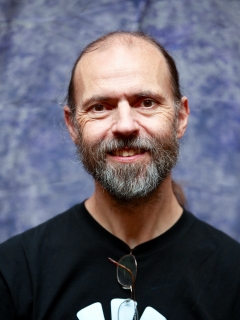 Robert Lupton合作论文数Department of Astrophysical Sciences, Princeton University119
 Željko Ivezić合作论文数Department of Astronomy, University of Washington119
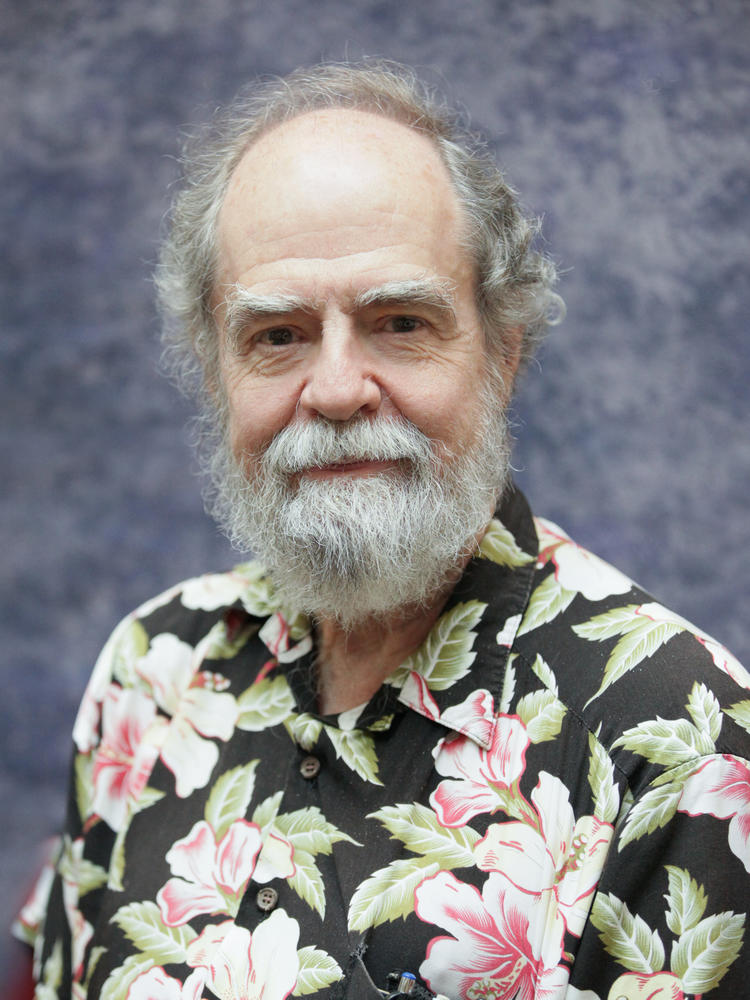 James Gunn合作论文数Department of Astrophysical Sciences, Princeton University112
 Michael Strauss合作论文数Department of Astrophysical Sciences, Princeton University110
 Michael Blanton合作论文数Center for Cosmology and Particle Physics, College of Arts and Science, New York University;Department of Physics, College of Arts and Science, New York University110
 Gillian Knapp合作论文数Department of Astrophysical Sciences, Princeton University105
 Neta A Bahcall合作论文数Department of Astrophysical Sciences, Princeton University99
 Masataka Fukugita (福来正孝)合作论文数Kavli Institute for the Physics and Mathematics of The Universe, The University of Tokyo96
 Gordon T. Richards合作论文数Department of Physics, College of Arts and Sciences, Drexel University92
 Donald Q. Lamb合作论文数Department of Astronomy and Astrophysics, The University of Chicago;Enrico Fermi Institute, The University of Chicago;Kavli Institute for Cosmological Physics, The University of Chicago90
 Scott Anderson合作论文数Department of Astronomy, College of Arts & Sciences, University of Washington87
 Istvan Csabai合作论文数Department of Physics of Complex Systems, Institute of Physics and Astronomy, Faculty of Science, Eötvös University;Fizikai és Csillagászati Intézet, Eötvös University84
 Xiaohui Fan合作论文数Department of Astronomy and Steward Observatory, College of Science, University of Arizona81
 David W. Hogg合作论文数Center for Cosmology and Particle Physics, Department of Physics, New York University;School of Arts & Science, New York University;Center for Computational Astrophysics, Flatiron Institute75
 Jeffrey A. Munn合作论文数U.S. Naval Observatory74
 Gregory S. Hennessy合作论文数University of California-Santa67
 Brian Yanny合作论文数Fermi National Accelerator Laboratory66
 Patrick B. Hall合作论文数Department of Physics and Astronomy, Faculty of Science, York University65
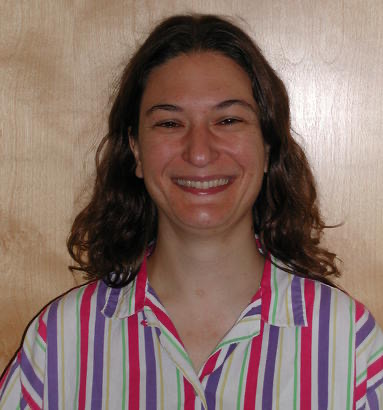 Connie Rockosi合作论文数Physical & Biological Sciences Division, Department of Astronomy and Astrophysics, University of California, Santa Cruz;University of California Observatories, University of California, Santa Cruz;Lick Observatory55
 Bob Nichol合作论文数School of Mathematics and Physics, Faculty of Engineering and Physical Sciences, University of Surrey54
 Joel R. Brownstein合作论文数Department of Physics And Astronomy, University of Utah;Sloan Digital Sky Survey54
 Alexander Szalay合作论文数Department of Physics and Astronomy, Krieger School of Arts and Sciences, Johns Hopkins University;Department of Computer Science, Whiting School of Engineering, Johns Hopkins University;Institute for Data Intensive Engineering and Science, Johns Hopkins University;Eötvös University53
 Joshua A. Frieman合作论文数Department of Astronomy and Astrophysics, University of Chicago53
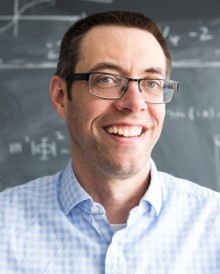 Will Percival合作论文数Department of Physics and Astronomy, Faculty of Science, University of Waterloo52James Annis合作论文数50
 Stephen Kent合作论文数Fermi National Accelerator Laboratory49
 Timothy A. McKay合作论文数Physics Department, College of Literature, Science, and the Arts, University of Michigan;Division of Undergraduate Education, College of Literature, Science, and the Arts, University of Michigan48
 Andrew Connolly合作论文数Department of Astronomy, University of Washington;Institute for Data Intensive Research in Astrophysics and Cosmology, University of Washington48
 Mamoru Doi (土居守)合作论文数Institute of Astronomy, School of Science, The University of Tokyo;National Astronomical Observatory of Japan, National Institutes of Natural Sciences47
 Ashley J. Ross合作论文数Center for Cosmology and AstroParticle Physics, College of Arts and Sciences, The Ohio State University46
 Dmitriy V. Bizyaev合作论文数Radio Astronomy Department, Sternberg Astronomical Institute;Department of Astronomy, New Mexico State University45SJ Kleinman合作论文数44Michael Harvanek合作论文数44Atsuko Nitta合作论文数44
 Jon Loveday合作论文数Department of Physics and Astronomy, School of Mathematical and Physical Sciences, University of Sussex;Astronomy Centre, University of Sussex44
 Adam D. Myers合作论文数Department of Physics & Astronomy, College of Engineering and Physical Sciences, University of Wyoming44
 Idit Zehavi合作论文数Case Western Reserve University, Case Western Reserve University44
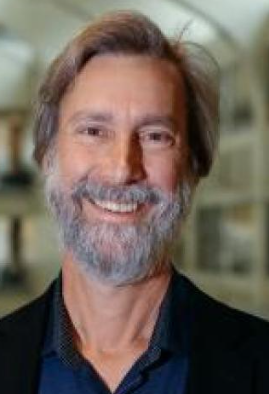 David H. Weinberg合作论文数Department of Astronomy, College of Arts and Sciences, The Ohio State University;Center for Cosmology and AstroParticle Physics, College of Arts and Sciences, The Ohio State University;Institut d’Astrophysique de Paris43
 Rita Tojeiro合作论文数School of Physics and Astronomy, University of St Andrews42
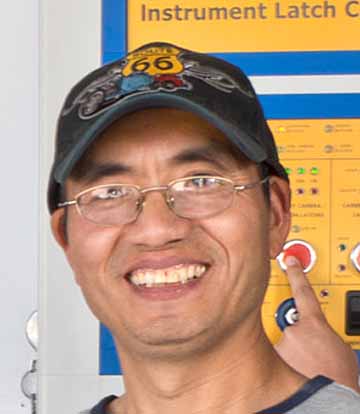 Kaike Pan合作论文数Apache Point Observatory;New Mexico State University42
 Timothy Heckman合作论文数William H. Miller III Department of Physics & Astronomy, Krieger School of Arts & Sciences, Johns Hopkins University41Jurek Krzesinski合作论文数41Jr Pier合作论文数40
 Kyle S. Dawson合作论文数Department of Physics and Astronomy, The University of Utah39
 Aniruddha R. Thakar合作论文数Department of Physics and Astronomy;Johns Hopkins University;Department of Physics and Astronomy, Johns Hopkins University39




