The adhesion molecule BEN/SC1/DM-GRASP (BEN) is a marker in the developing chicken nervous system that is also expressed on the surface of embryonic and adult hematopoietic cells such as immature thymocytes, myeloid progenitors, and erythroid progenitors. F84.1 and KG-CAM, two monoclonal antibodies to rat neuronal glycoproteins with similarity to BEN, cross-react with an antigen on rat hematopoietic progenitors, but F84.1 only also recognizes human blood cell progenitors. We have defined the antigen recognized by F84.1 as the hematopoietic cell antigen (HCA). HCA expression was detected on 40% to 70% of CD34+ fetal and adult bone marrow cells and mobilized peripheral blood cells. Precursor cell activity for long-term in vitro bone marrow cell culture was confined to the subset of CD34+ cells that coexpress HCA. HCA is expressed by the most primitive subsets of CD34+ cells, including all rhodamine 123(lo), Thy-1+, and CD38(-/lo) CD34+ adult bone marrow cells. HCA was also detected on myeloid progenitors but not on early B-cell progenitors. We also describe here the cloning and characterization of cDNAs encoding two variants of the human HCA antigen (huHCA-1 and huHCA-2) and of a cDNA clone encoding rat HCA (raHCA). The deduced amino acid sequences of huHCA and raHCA are homologous to that of chicken BEN. Recombinant proteins produced from either human or rat HCA cDNAs were recognized by F84.1, whereas rat HCA but not human HCA was recognized by antirat KG-CAM. Expression of either form of huHCA in CHO cells conferred homophilic adhesion that could be competed with soluble recombinant huHCA-Fc. The molecular cloning of HCA and the availability of recombinant HCA should permit further evaluation of its role in human and rodent hematopoiesis.
Human bone marrow (BM) CD34+ cells were stained with the vital dye, rhodamine 123 (Rh123), and analyzed for their biological properties based on the level of dye retention. Heterogeneous rhodamine staining is seen within the CD34+ population, and the staining patterns differ dramatically between fetal BM (FBM), adult BM (ABM) and mobilized peripheral blood (MPB). Kinetic analysis of the efflux of Rh123 from ABM CD34+ cells showed that efflux of Rh123 was most rapid from the most primitive Thy-1+ subset. The efflux of Rh123 could be inhibited by verapamil, suggesting that rhodamine efflux from primitive hematopoietic cells is primarily due to the P-glycoprotein (P-gp) pump or another intracellular transport system affected by verapamil. When four CD34+ subpopulations were plated onto SyS1 BM stromal cell cocultures after 1 to 2 weeks, only wells plated with CD34+ Thy-1+Rh123lo (low-level Rh123 retention) or CD34+Thy-1+Rh123mid (mid-level Rh123 retention) cells maintained greater than 50% of cells in an uncommitted CD34+33- stage. CD34+Lin- (lineage-negative) cells were fractionated based on Rh123 dye staining into Rh123hi (high-level Rh123 retention), Rh123mid, and Rh123lo and deposited as single cells into long-term SyS1 BM stromal cell cultures. The Rh123mid fraction had immense early proliferative activity in vitro, but lost the ability to form cobblestone areas after 5 to 6 weeks in culture. In contrast, the Rh123lo fraction proliferated more slowly but sustained long-term in vitro hematopoiesis as evidenced by continued cobblestone area-forming cells (CAFC) activity for at least 6 weeks. The Rh123hi fraction showed a plating efficiency similar to that of the Rh123lo or Rh1123mid fractions but did not extensively proliferative in vitro and did not show evidence of CAFC activity. We predicted from these in vitro results that the Rh123lo subsets possesses long-term engrafting potential. Indeed, on transplantation into the SCID-hu bone assay, all long-term engrafting potential and multilineage differentiation potential resided within the Rh123lo-mid but not Rh123hi subset. Furthermore, human marrow subpopulations derived from chimeric sheep after in utero transplantation with CD34+Thy-1+Lin- cells were reisolated based on Rh123 staining. Again, CD34+Lin- subsets showing Rh123lo-mid had long-term growth in culture, whereas Rh123hiCD34+Lin- cells did not. These results show that, after injection of CD34+Thy-1+Lin- cells into an in utero microenvironment, primitive CD34+ cells maintain a Rh123 phenotype that correlates with their in vitro CAFC activity. Thus, Rh123 staining is an effective way to define functional subsets of primitive hematopoietic cell populations.
Experimentation on human stem cells is hampered by the relative paucity of this population and by the lack of assays identifying multilineage differentiation, particularly along the lymphoid lineages. In our current study, phenotypic analysis of low-density fetal bone marrow cells showed two distinct populations of CD34+ cells: those expressing a high density of CD34 antigen on their surface (CD34hi) and those expressing an intermediate level of CD34 antigen (CD34lo). Multiple tissues were used to characterize the in vitro and in vivo potential of these subsets and showed that only CD34hi cells support long-term B lymphopoiesis and myelopoiesis in vitro and mediate T, B, and myeloid repopulation of human tissues implanted into SCID mice. CD34lo cells repeatedly failed to provide long-term hematopoietic activity in vivo or in vitro. These results indicate that a simple fractionation based on well-defined CD34 antigen levels can be used to reproducibly isolate cells highly enriched for in vivo long-term repopulating activity and for multipotent progenitors, including T- and B-cell precursors. Additionally, given the limited variability in the results and the high correlation between in vitro and in vivo hematopoietic potential, we propose that the CD34hi population contains virtually all of the stem cell activity in fetal bone marrow and therefore is the population of choice for future studies in hematopoietic stem cell development and gene therapy.
Purification of human hematopoietic stem cells (HSC) may be useful clinically for preparation of tumor-free grafts to be used for autologous transplantation and as targets for gene therapy, To analyze the phenotype of the human HSC, assays were used that measure the unique properties of stem cells, i.e., their long-term repopulating ability and their multilineage potential, These assays include: (1) an in vitro long-term hematopoietic culture system, using the murine bone marrow stromal cell line SyS1, which supports both B lymphopoiesis and myelopoiesis; (2) fetal human bone grafts implanted in SCID-hu mice, in which maintenance of CD34(+) cells and B and myeloid differentiative capacity of candidate stem cell populations may be measured; (3) fetal human thymus grafts in SCID-hu mice, which allow the analysis of in vivo T-cell potential of a candidate stem cell population, Stem cells in adult bone marrow (ABM) or cytokine-mobilized peripheral blood (MPB) are thought to express CD34 but lack expression of markers indicating lineage commitment, This CD34(+) Lineage(-) (Lin(-)) subpopulation has been isolated by fluorescence-activated cell sorting and tested for activity in the assays described here. CD34(+) Lin(-) cells from both ABM and MPB demonstrated long-term engraftment in the SCID-hu bone model, This CD34(+) Lin(-) population can be subfractionated further using an antibody to Thy-1. The Thy-(1+) subset of CD34(+) Lin(-) cells is enriched for both long-term culture-initiating cells (LTC-1C) and has the ability to engraft in vivo.
 A Tsukamoto合作论文数6A Conti合作论文数4Lesley J. Murray合作论文数3
 Shuaizhi Chen合作论文数Gulf Coast Vet Specialists2G Tricot合作论文数2N Uchida合作论文数2
 David Digiusto合作论文数Department of Hematology and Hematopoietic Cell Transplantation, City of Hope2Ronald Hoffman合作论文数2Esmail D. Zanjani合作论文数2AS TSUKAMOTO合作论文数1R DIGIUSTO合作论文数1D MANDICH合作论文数1V Bazil合作论文数1B P Chen合作论文数1
 Graca Almeida-Porada合作论文数1KR LEIBY合作论文数1S Webb合作论文数1S Tindle合作论文数1R Namikawa合作论文数1S Jagannath合作论文数1
 Sue Smith合作论文数Ctr SME Dev, Univ Cent Lancashire1Shirley Chen合作论文数1Hill B L合作论文数1
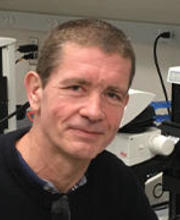 Olivier Pourquié合作论文数Department of Genetics, Harvard Medical School, Harvard University;Harvard Stem Cell Institute, Harvard University;Brigham and Women's Hospital1William B. Stallcup合作论文数1
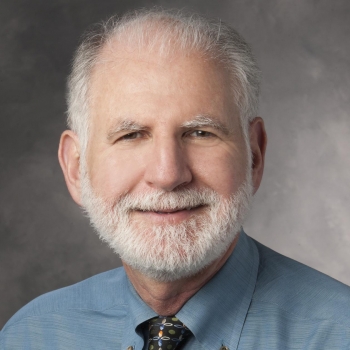 Robert Negrin合作论文数Blood & Marrow Transplantation & Cellular Therapy Division, School of Medicine, Stanford University1
 Bradley Chen合作论文数Department of Global Health and Population, Harvard School of Public Health1Bruno Peault合作论文数1Laurent Humeau合作论文数UCSF Cancer Research Center, University of California1Weddell G合作论文数1David P. Gearing合作论文数1Ramanathan R合作论文数1
 Domna Karagogeos合作论文数Dept Basic Sci, Univ Crete1
 Anne Galy合作论文数Experimental Cellular Therapy Group SyStemix Incorporated1




