Users of online social networks reside in social graphs, where any given user-pair may be connected or unconnected. These connections may be formal or inferred social links; and may be binary or weighted. We might expect that users who are connected by a social tie are more similar in what they write than unconnected users, and that more strongly connected pairs of users are more similar again than less-strongly connected users, but this has never been formally tested. This work describes a method for calculating the similarity between twitter social entities based on what they have written, before examining the similarity between twitter user-pairs as a function of how tightly connected they are. We show that the similarity between pairs of twitter users is indeed positively correlated with the strength of the tie between them.
To determine how genetic variations contribute the variations in drug response, we need to know the genes that are related to drugs of interest. But there are no publicly available databases of known gene-drug relationships, and it is time-consuming to search the literature for this information. We have developed a resource to support the storage, summarization, and dissemination of key gene-drug interactions of relevance to pharmacogenetics. Extracting all gene-drug relationships from the literature is a daunting task, so we distributed a tool to acquire this knowledge from the scientific community. We also developed a categorization scheme to classify gene-drug relationships according to the type of pharmacogenetic evidence that supports them. Our resource (http://www.pharmgkb.org/home/ project-community.jsp) can be queried by gene or drug, and it summarizes gene-drug relationships, categories of evidence, and supporting literature. This resource is growing, containing entries for 138 genes and 215 drugs of pharmacogenetics significance, and is a core component of PharmGKB, a pharmacogenetics knowledge base (http://www.pharmgkb.org).
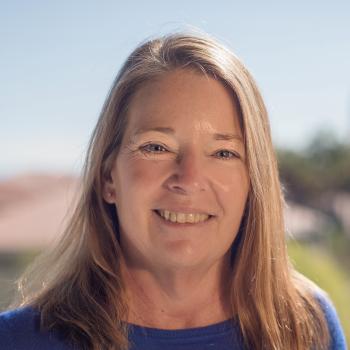 Teri Klein合作论文数Department of Biomedical Data Science, Stanford University;Department of Genetics, Stanford University;PharmGKB, Stanford University1
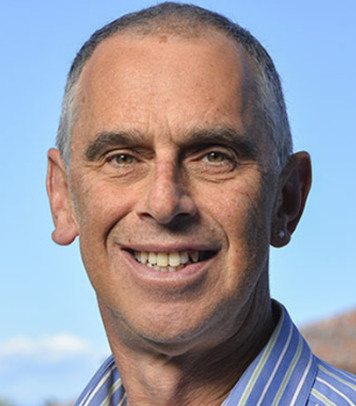 Russ B. Altman合作论文数Department of Bioengineering, Schools of Engineering & Medicine, Stanford University1
 Daniel Rubin合作论文数Department of Biomedical Data Science, School of Medicine, Stanford University1
 Josephine Griffith合作论文数Dept. of Information Technology, National University of Ireland1
 Mark Woon合作论文数1Colm O'Riordan合作论文数National University of Ireland, Galway,;Dept. of Information Technology,1
 Michelle Whirl-Carrillo合作论文数Department of Biomedical Data Science, School of Medicine, Stanford University;PharmGKB1




