We present experimental and calculated vibration–rotation spectra as a function of temperature for the methoxy species (–OCH3 and –OCD3) chemisorbed on an alumina surface. The axis of rotation is the C–O bond axis. The model for our calculations is that of free rotation, and we describe the methods employed here in full detail. The qualitative agreement between the calculated and experimental spectra suggests that the adsorbed methoxy species is undergoing free rotational motion about the C–O bond axis.
ADVERTISEMENT RETURN TO ISSUEPREVArticleNEXTDissociative chemisorption of carbon monoxide on nickel films promoted by aluminum: detection of a precursor state to carbon monoxide dissociation by Electron Energy Loss SpectroscopyJ. G. Chen, J. E. Crowell, L. Ng, P. Basu, and J. T. Yates Jr.Cite this: J. Phys. Chem. 1988, 92, 9, 2574–2579Publication Date (Print):May 1, 1988Publication History Published online1 May 2002Published inissue 1 May 1988https://pubs.acs.org/doi/10.1021/j100320a035https://doi.org/10.1021/j100320a035research-articleACS PublicationsRequest reuse permissionsArticle Views60Altmetric-Citations11LEARN ABOUT THESE METRICSArticle Views are the COUNTER-compliant sum of full text article downloads since November 2008 (both PDF and HTML) across all institutions and individuals. These metrics are regularly updated to reflect usage leading up to the last few days.Citations are the number of other articles citing this article, calculated by Crossref and updated daily. Find more information about Crossref citation counts.The Altmetric Attention Score is a quantitative measure of the attention that a research article has received online. Clicking on the donut icon will load a page at altmetric.com with additional details about the score and the social media presence for the given article. Find more information on the Altmetric Attention Score and how the score is calculated. Share Add toView InAdd Full Text with ReferenceAdd Description ExportRISCitationCitation and abstractCitation and referencesMore Options Share onFacebookTwitterWechatLinked InRedditEmail Other access options Get e-Alerts
ADVERTISEMENT RETURN TO ISSUEPREVArticleNEXTReaction of methyl chloride with alumina surfaces: a study of the methoxy surface species by transmission infrared spectroscopyThomas P. Beebe Jr., J. E. Crowell, and John T. Yates Jr.Cite this: J. Phys. Chem. 1988, 92, 5, 1296–1301Publication Date (Print):March 1, 1988Publication History Published online1 May 2002Published inissue 1 March 1988https://pubs.acs.org/doi/10.1021/j100316a056https://doi.org/10.1021/j100316a056research-articleACS PublicationsRequest reuse permissionsArticle Views325Altmetric-Citations57LEARN ABOUT THESE METRICSArticle Views are the COUNTER-compliant sum of full text article downloads since November 2008 (both PDF and HTML) across all institutions and individuals. These metrics are regularly updated to reflect usage leading up to the last few days.Citations are the number of other articles citing this article, calculated by Crossref and updated daily. Find more information about Crossref citation counts.The Altmetric Attention Score is a quantitative measure of the attention that a research article has received online. Clicking on the donut icon will load a page at altmetric.com with additional details about the score and the social media presence for the given article. Find more information on the Altmetric Attention Score and how the score is calculated. Share Add toView InAdd Full Text with ReferenceAdd Description ExportRISCitationCitation and abstractCitation and referencesMore Options Share onFacebookTwitterWechatLinked InRedditEmail Other access options Get e-Alerts
The physical adsorption of methyl chloride onto Al2O3 surfaces containing surface OH groups has been studied using transmission infrared spectroscopy. Methyl chloride reversibly bonds via hydrogen bonding to the surface hydroxyl groups with a spectroscopically measured heat of adsorption of −3.37±0.38 kcal mol−1. Physisorption of methyl chloride results in a significant reduction in the intensity of the rotational wings of the methyl chloride absorption bands relative to the gas phase, a small downward frequency shift in their band centers, and substantial effects on the ν(OH) region of the alumina spectrum due to hydrogen bonding of surface OH groups with methyl chloride. Fermi resonances are observed for adsorbed methyl chloride and result in the observation of the overtones of both the symmetric and asymmetric methyl deformation modes. It is postulated that the hydrogen-bonded CH3Cl species possess rotational (or other) degrees of freedom which lead to a high entropy in the adsorbed layer, compared to the liquid.
The adsorption of water on both clean and oxygen-predosed Al(111) has been studied by vibrational spectroscopy using electron energy loss spectroscopy (EELS). At 130 K, adsorption on either surface is competitively associative and dissociative. The dominant dissociation product is a hydroxyl species. On the clean surface, adsorption is predominantly molecular, while in the presence of oxygen, adsorption is predominantly dissociative. In contrast to the low temperature behavior, adsorption of water on clean Al(111) at 300 K is completely dissociative, resulting in oxygen adsorption and surface oxidation. Adsorbed hydroxyl species can be produced at 300 K by prolonged water exposure. Upon heating a low-temperature water layer adsorbed on either surface, molecular water desorption and further decomposition both occur. The production of adsorbed hydroxyl species from water reaches a maximum at 250 K on the clean surface and at 350 K on the oxygen-predosed surface. The hydroxyl species decompose above these temperatures to evolve hydrogen and further oxidize the Al(111) surface.
High-resolution electron energy loss spectroscopy (EELS) and Auger electron spectroscopy have been used to study the interaction of nickel with clean and oxidized Al(111) surfaces. At about 200 K, nickel deposition on Al2O3 forms three- dimensional nickel clusters. The nickel clusters are bonded directly to surface Al-O moieties as determined from the preferential influence of nickel on the Al2O3 surface phonon modes.
The behavior of Ni atoms deposited on well-characterized Al2O3 films, prepared by oxidizing an atomically clean Al(111) surface, has been studied using high-resolution electron energy loss spectroscopy (EELS) and Auger electron spectroscopy (AES). At 200 K, the deposited Ni forms three-dimensional Ni clusters on the Al2O3/Al(111) substrate. Interaction of these Ni metal clusters with surface Al-O species is directly detected by observation of the preferential modification of surface phonon mode frequencies and intensities in contrast to the behavior of a bulk phonon mode of the Al2O3 substrate. Heating the Ni/Al2O3 deposit above 200 K gives rise to two thermally induced processes: Process, I, smoothing (below ∼400 K) of the three-dimensional Ni clusters and Process II, diffusion (400–700 K) of the Ni overlayer through channels in the Al2O3 film. The metallic aluminum beneath the Al2O3 film is found to provide a major driving force for the inward diffusion of the Ni overlayer by Ni-Al alloy formation. This work represents the first application of EELS to the study of transport processes in a thin film system.
High-resolution electron-energy-loss spectroscopy (EELS) has been used to investigate the fundamental and multiple vibrational excitations of the \ensuremath{\nu}(Al-O) modes of an oxidized Al(111) surface. The intensities of the fundamental-excitation features are found to be proportional to ${d}_{{\mathrm{Al}}_{2}{o}_{3}}$, while those of the multiple-excitation features are found to be proportional to (${d}_{{\mathrm{Al}}_{2}{O}_{3}{)}^{2}}$, where d is the thickness of the surface ${\mathrm{Al}}_{2}$${\mathrm{O}}_{3}$ layer. Off-specular EELS mesurements indicate that bands caused by multiple-excitation events (both the double and combination losses) have a much more isotropic scattering distribution than that of the fundamental bands.
The interaction of CO molecules with a model catalyst, Ni/Al2O3/Al(111), has been investigated using electron energy loss spectroscopy (EELS), Auger electron spectroscopy (AES), and temperature programmed desorption (TPD) in the temperature range of 200–600K. The model supported Ni catalyst is produced by Ni evaporation onto a thin Al2O3 film supported on an Al(111) surface. The effect of the Al2O3/Al(111) substrate on the adsorption of CO on Ni clusters and the effect of the Ni particle size on the CO binding sites are discussed. The thermally induced desorption and decomposition of the adsorbed CO layer on Ni/Al2O3/Al(111) have also been investigated. The EELS technique is shown to be very powerful in this type of study, since its wide vibrational frequency range allows one to simultaneously study the interaction of the Ni particles with the Al2O3/Al(111) substrate and the adsorption of CO molecules on the supported Ni particles.
ADVERTISEMENT RETURN TO ISSUEPREVArticleNEXTBonding and thermal decomposition of propylene, propadiene, and methylacetylene on the rhodium(111) single-crystal surfaceB. E. Bent, C. M. Mate, J. E. Crowell, B. E. Koel, and G. A. SomorjaiCite this: J. Phys. Chem. 1987, 91, 6, 1493–1502Publication Date (Print):March 1, 1987Publication History Published online1 May 2002Published inissue 1 March 1987https://pubs.acs.org/doi/10.1021/j100290a042https://doi.org/10.1021/j100290a042research-articleACS PublicationsRequest reuse permissionsArticle Views302Altmetric-Citations72LEARN ABOUT THESE METRICSArticle Views are the COUNTER-compliant sum of full text article downloads since November 2008 (both PDF and HTML) across all institutions and individuals. These metrics are regularly updated to reflect usage leading up to the last few days.Citations are the number of other articles citing this article, calculated by Crossref and updated daily. Find more information about Crossref citation counts.The Altmetric Attention Score is a quantitative measure of the attention that a research article has received online. Clicking on the donut icon will load a page at altmetric.com with additional details about the score and the social media presence for the given article. Find more information on the Altmetric Attention Score and how the score is calculated. Share Add toView InAdd Full Text with ReferenceAdd Description ExportRISCitationCitation and abstractCitation and referencesMore Options Share onFacebookTwitterWechatLinked InRedditEmail Other access options Get e-Alerts
AbstractUsing high‐resolution electron energy loss spectroscopy (EELS), Auger electron spectroscopy (AES), and temp.‐programmed desorption it has been determined that MeI adsorbs on Al(111) both molecularly and dissociatively at 150 K; adsorbed MeI decomposes to CH(a) and I(a) in the temp. range of 250‐450 K. No surface reaction of MeCl or MeBr with clean or chemically modified Al(111) is observed, and areactive sticking coefficient of < 10‐5 is estimated in the temp. range of 135‐500 K (MeCl) and at 150 K (MeBr).
ADVERTISEMENT RETURN TO ISSUEPREVArticleNEXTReaction of atomically clean aluminum and chemically modified aluminum with alkyl halidesJ. G. Chen, T. P. Beebe Jr., J. E. Crowell, and J. T. Yates Jr.Cite this: J. Am. Chem. Soc. 1987, 109, 6, 1726–1729Publication Date (Print):March 1, 1987Publication History Published online1 May 2002Published inissue 1 March 1987https://pubs.acs.org/doi/10.1021/ja00240a021https://doi.org/10.1021/ja00240a021research-articleACS PublicationsRequest reuse permissionsArticle Views188Altmetric-Citations74LEARN ABOUT THESE METRICSArticle Views are the COUNTER-compliant sum of full text article downloads since November 2008 (both PDF and HTML) across all institutions and individuals. These metrics are regularly updated to reflect usage leading up to the last few days.Citations are the number of other articles citing this article, calculated by Crossref and updated daily. Find more information about Crossref citation counts.The Altmetric Attention Score is a quantitative measure of the attention that a research article has received online. Clicking on the donut icon will load a page at altmetric.com with additional details about the score and the social media presence for the given article. Find more information on the Altmetric Attention Score and how the score is calculated. Share Add toView InAdd Full Text with ReferenceAdd Description ExportRISCitationCitation and abstractCitation and referencesMore Options Share onFacebookTwitterWechatLinked InRedditEmail Other access optionsGet e-Alertsclose Get e-Alerts
The adsorption of water on a well-characterized Al2O3 film produced by oxidizing an Al(111) surface has been studied using electron energy loss spectroscopy (EELS). Water reacts with this oxide layer to form surface hydroxyl species characterized by a sharp O–H (O–D) stretching vibration at 3720 (2740) cm−1. The assignment of the three-peak vibrational spectrum of Al2O3 to surface and bulk Al–O modes is confirmed by chemical means based on the observation that the 625 cm−1 loss feature assigned to a surface Al–O stretching vibration is preferentially affected upon formation of surface hydroxyl groups. The remaining two bulk modes are uninfluenced by surface hydroxylation. The surface hydroxyl species can be quantitatively removed by electron stimulated desorption (ESD), reversing the spectroscopic changes observed upon exposure of Al2O3 to water, further substantiating the vibrational assignments.
ADVERTISEMENT RETURN TO ISSUEPREVArticleNEXTThermal decomposition of benzene on the rhodium(111) crystal surfaceB. E. Koel, J. E. Crowell, B. E. Bent, C. M. Mate, and G. A. SomorjaiCite this: J. Phys. Chem. 1986, 90, 13, 2949–2956Publication Date (Print):June 1, 1986Publication History Published online1 May 2002Published inissue 1 June 1986https://doi.org/10.1021/j100404a032RIGHTS & PERMISSIONSArticle Views359Altmetric-Citations87LEARN ABOUT THESE METRICSArticle Views are the COUNTER-compliant sum of full text article downloads since November 2008 (both PDF and HTML) across all institutions and individuals. These metrics are regularly updated to reflect usage leading up to the last few days.Citations are the number of other articles citing this article, calculated by Crossref and updated daily. Find more information about Crossref citation counts.The Altmetric Attention Score is a quantitative measure of the attention that a research article has received online. Clicking on the donut icon will load a page at altmetric.com with additional details about the score and the social media presence for the given article. Find more information on the Altmetric Attention Score and how the score is calculated. Share Add toView InAdd Full Text with ReferenceAdd Description ExportRISCitationCitation and abstractCitation and referencesMore Options Share onFacebookTwitterWechatLinked InReddit PDF (2 MB) Get e-Alerts
 John T. Yates合作论文数University of Pittsburgh;University of Virginia19
 Jingguang Chen合作论文数Columbia University in the City of New York;Brookhaven National Laboratory15
 Gabor A. Somorjai合作论文数Somorjai Lab, College of Chemistry, University of California Berkeley;Lawrence Berkeley National Laboratory, College of Chemistry, University of California, Berkeley15
 Cm Mate合作论文数7
 Bruce E. Koel合作论文数Department of Chemical and Biological Engineering, Princeton University5
 Thomas P. Beebe Jr.合作论文数Department of Chemistry and Biochemistry, College of Arts & Sciences, University of Delaware;Department of Chemistry, University of Utah5Eric Garfunkel合作论文数Departments of Chemistry and Physics and Laboratory for Surface Modification, Rutgers University4Brian E. Bent合作论文数3
 Yuen-Ron Shen (沈元壤)合作论文数Department of Physics, Fudan University;Department of Physics, University of California, Berkeley3HWK TOM合作论文数2
 Tony Heinz合作论文数Department of Applied Physics, Stanford University;Stanford Institute for Materials and Energy Sciences, Stanford University2W. H. Weinberg合作论文数1Rf Lin合作论文数1Ml Colaianni合作论文数1xiande zhu合作论文数1Ga Somorjai合作论文数1X.D. Zhu合作论文数1P. Basu合作论文数1
 Wilfred T. Tysoe合作论文数Department of Chemistry & Biochemistry, University of Wisconsin-Milwaukee1
 David Hercules合作论文数Vanderbilt University1T John Yates合作论文数1Richard Koestner合作论文数1
 Xiangdong Zhu合作论文数Department of Physics and Astronomy, University of California, Davis1
 Harry W Tom合作论文数Department of Physics and Astronomy, University of California, Riverside1
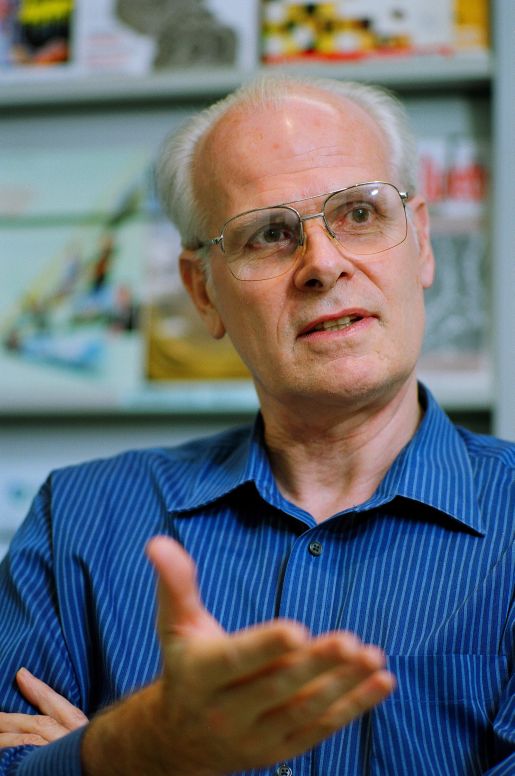 M.A. Van Hove合作论文数Institute of Computational and Theoretical Studies (Director) and Department of Physics (Acting Head) Hong Kong Baptist University1
 Paul W. Davies合作论文数School of Chemistry;Bristol University;School of Chemistry, Bristol University1Joseph E. Katz合作论文数1




