Soot produced by detonation or combustion events exhibits different chemical properties depending on the fuel, device construction, and environmental conditions in which the event occurs. These properties can be useful for defining relevant signatures for probabilistically identifying the different types of events that occurred, based on the soot that is produced from these events. However, it is rare to observe samples of soot from a detonation or combustion that are not contaminated by outside particles. In this paper, we present a method for resolving mixtures of soot to determine the contributions of sources that may be present in samples of recovered soot. We use Latent Dirichlet Allocation to describe the generative process for a sample of recovered soot, and use Variational Bayesian Inference to learn about the parameters associated with the generative model. We demonstrate the utility of this method by considering real samples of mixtures of soot under various frameworks to show that the model is able to identify the different components present in a sample of soot as well as their mixing proportions.
The detonation of high explosives produces a wide variety of particulate matter (PM) with distinct properties, not all of which are traditionally studied for chemical composition, formation processes, and forensic applications. We report particle-resolved measurements of Composition B detonation soot using soot particle aerosol mass spectrometry (SP-AMS), identifying carbonaceous species and metals not previously characterized on a single-particle basis. Results are combined with scanning electron microscopy with energy dispersive X-ray spectroscopy (SEM-EDS) to enhance source-dependent signatures. Black carbon, including graphitic carbon and detonation nanodiamonds, contributed 50.5-71.4
Anthropogenic aerosols influence marine cloud properties in coastal regions, but their impacts remain poorly understood due to the complexity of sources and aerosol-cloud interactions. To investigate how cloud processing affects aerosol composition, in situ measurements of aerosol properties were performed at Mt. Soledad in La Jolla, CA (251 m asl, 2 km from shore) as part of the Eastern Pacific Cloud Aerosol Precipitation Experiment Partitioning Thrust by Los Alamos National Laboratory from October to December 2023. A ground-based counterflow virtual impactor coupled with high-resolution aerosol mass spectrometry was used to directly measure the composition of cloud droplet residuals, which were compared to out of cloud aerosols. Cloud residuals showed a large enhancement of inorganic nitrate and chloride fractions, increasing by up to a factor of 2 and 5 times relative to the out-of-cloud periods, respectively, with nitrate mass fraction increasing with cloud liquid water content. Through positive matrix factorization analysis, we identified a factor associated with aqueous-phase reactions in clouds. The organic material within cloud residuals was not highly oxidized, weakly hygroscopic and showed a similar size distribution to the inorganic species, suggesting that internally mixed inorganic species related to anthropogenic emissions and aged sea salt control cloud condensation nuclei activity in this location. The increase in hygroscopic inorganic components and aerosol size during cloud events could increase the ability of particles to activate into droplets. These results help constrain the role of different aerosol sources and cloud processing in cloud-forming potential at a coastal site.
Africa is a critical source of biomass burning (BB) aerosols, and its importance is increasing. The African Combustion Aerosol Collaborative Intercomparison Analysis (ACACIA) Pilot Project set to optically characterize BB aerosol generated from sub-Saharan African fuels. We used a photoacoustic spectrometer as a reference instrument to determine the multiple-scattering correction factor C lambda for an AE33 aethalometer at three wavelengths, which produced weighted mean values of C370=3.69, C470=5.65, and C520=6.39. C lambda increased with wavelength and C370 was statistically independent of the others, suggesting a single C lambda is insufficient, especially in BB scenarios. While a dependence of C lambda on burning state was not found, C lambda was shown to strongly relate to particle single scattering albedo (SSA, omega). When C lambda was plotted against SSA, values slowly rose at low SSA values, followed by a sharp rise around an SSA of similar to 0.9; indicating a larger correction needed for less absorbing aerosol. A number of functions operating on either SSA or C lambda were explored and the best function was -C lambda/(1-C lambda)=A omega+B. This is an important parametrization of C lambda specifically geared towards BB aerosol from African fuels under different aging states, and is of particular importance for future field work in that continent. An & Aring;ngstr & ouml;m matrix plot shows that African BB aerosol can have values more akin to dust, which demonstrates that these fuels are distinct in their wavelength dependence from more typical BB aerosol. Lastly, we examined the mass extinction and absorbance cross sections for BB aerosol generated for the same fuels with two different tube furnace setups. Not only is this combustion method flexible, it was found to be reproducible between labs.
An aerosol container featuring a shared inlet system was deployed to Houston, Texas, in July 2022, enabling direct, high-time-resolution in situ measurements of aerosols and trace gases. The internal rack system and floorplan were designed for adaptable modularity to elucidate aerosol physicochemical processes at fine scales. The design allowed for the deployment of a core instrument suite and additional customized research grade instruments. A heterogeneous mixture of aerosols was observed during three regimes: 1) intermittent black carbon (BC) and diurnal variations in aerosol chemical composition, 2) observed particle growth associated with sulfur dioxide (SO2), and 3) transported supermicron dust. The high variability of observed particles and gases in high time resolution indicated a complex urban area with multiple local and regional sources and processes. Particle growth rates of 7-16 nm h(-1) were observed for submicron particles during periods when SO2 was >0.5 ppbv. Two periods of multiday long-range transport events of dust from the African Sahara were observed in the supermicron and submicron particle modes with total mass concentrations up to 30 mu g m(-3). Aerosol scattering & Aring;ngstr & ouml;m exponents and extinction coefficients B-ext increased with humidity as a function of particle composition. The measurements demonstrate collaborative capabilities that can be used to increase observations of aerosol processing, microphysical and optical properties, internal mixing state, and supermicron aerosol that are not parameterized or missing in global Earth energy system models.
Understanding the causes of past atmospheric methane (CH4) variability is important for characterizing the relationship between CH4, global climate and terrestrial biogeochemical cycling. Ice core records of atmospheric CH4 contain rapid variations linked to abrupt climate changes of the last glacial period known as Dansgaard-Oeschger (DO) events and Heinrich events (HE)1,2. The drivers of these CH4 variations remain unknown but can be constrained with ice core measurements of the stable isotopic composition of atmospheric CH4, which is sensitive to the strength of different isotopically distinguishable emission categories (microbial, pyrogenic and geologic)3-5. Here we present multi-decadal-scale measurements of δ13C-CH4 and δD-CH4 from the WAIS Divide and Talos Dome ice cores and identify abrupt 1‰ enrichments in δ13C-CH4 synchronous with HE CH4 pulses and 0.5‰ δ13C-CH4 enrichments synchronous with DO CH4 increases. δD-CH4 varied little across the abrupt CH4 changes. Using box models to interpret these isotopic shifts6 and assuming a constant δ13C-CH4 of microbial emissions, we propose that abrupt shifts in tropical rainfall associated with HEs and DO events enhanced 13C-enriched pyrogenic CH4 emissions, and by extension global wildfire extent, by 90-150%. Carbon cycle box modelling experiments7 suggest that the resulting released terrestrial carbon could have caused from one-third to all of the abrupt CO2 increases associated with HEs. These findings suggest that fire regimes and the terrestrial carbon cycle varied contemporaneously and substantially with past abrupt climate changes of the last glacial period.
Orphaned wells, meaning unplugged and non-producing wells lacking responsible owners, pose a significant and undersampled environmental challenge due to their vast number and unknown associated emissions. We propose, develop and test an alternative method for estimating emissions from orphaned wells using a forced advection sampling technique (FAST) that can overcome many of the limitations in current methods (cost, accuracy, safety). In contrast to existing ambient Gaussian plume methods, our approach uses a fan-generated flow to force advection between the emission source and a point methane (CH4) sensor. The fan flow field is characterized using a colocated sonic anemometer to measure the 3D wind profile generated by the fan. Using time-series measurements of CH4 concentration and wind, a simple estimate of the CH4 emission rate of the source can be inferred. The method was calibrated using outdoor controlled-release experiments and then tested on four orphaned wells in Lufkin, TX, and Osage County, OK. Our results suggest that the FAST method can provide a low-cost, portable, fast and safe alternative to existing methods with reasonable estimates of orphaned well emissions over a range of leak rates below 40 g h−1 and within certain geometric and atmospheric constraints.
During the transition from the Last Glacial Maximum (LGM) to the Holocene, the atmospheric N2O mole fraction increased by 80 nmol mol-1. Using ice core measurements of N2O isotopomer ratios, we show that this increase was driven by increases in both nitrification and denitrification, with the relative partitioning between both production pathways depending on the assumed isotopic end-member source signatures. Similarly, we also attribute a 35 nmol mol-1 N2O mole fraction increase during the Heinrich Stadial 4/Dansgaard Oeschger 8 (HS4/DO8) millennial-scale event to increases in both N2O production pathways. In contrast, the 25 nmol mol-1 N2O mole fraction decrease during the Younger Dryas was driven almost exclusively by a decrease in nitrification. The deglacial and HS4/DO8 increases in N2O production occurred in both marine and terrestrial environments, with the terrestrial source responding faster to warming by about two centuries. Constraints on changes in nitrification and denitrification emissions are robust and consistent with previous studies showing the sensitivity of N2O emissions to abrupt Northern Hemisphere warming. This study demonstrates for the first time the importance of both denitrification and nitrification pathways in driving source changes. Absolute emissions are more uncertain due to uncertainty about source isotopomer signatures. For instance, the contribution of denitrification to emissions at the LGM shifts from (65 +/- 10) % to (91 +/- 6) % when factoring in isotope enrichment due to partial reduction of N2O to N2 during denitrification. Reducing uncertainty in source signatures will increase the power of ice core N2O isotope records in deducing environmental change.
Annually, similar to 3.6 million abandoned oil and gas wells in the US emit a combined similar to 2.6 Tg methane (CH4), adversely affecting climate and regional air quality. However, these estimates depend on emission factors derived from measuring subpopulations of wells that vary by orders of magnitude due to very limited field sampling and poorly characterized distributions. Currently, US protocols to remediate orphaned wells lacks standardized quantification methods needed to both prioritize plugging and account for emission reductions. Therefore, sensitive, reliable, affordable, and scalable CH4 flux quantification methods are needed. We report the use of a simple Gaussian plume method where the dispersion parameters are constrained by in situ ground measurements of CH4 concentration at four locations 7.5-49 m downwind of the orphan well as well as local winds to estimate the leak rate from an orphan well. We derive a flux of 10.53 +/- 1.16 kg CH4 h-1 during a venting procedure in April 2023 that agrees with the directly measured volumetric flow rate of 9.00 +/- 0.25 kg CH4 h-1. This is 71 % greater than the 5.3 kg CH4 h-1 flux measured 7 months prior. Additionally, we discovered a secondary leak through the surface casing inferred as 0.43-0.67 kg CH4 h-1 both by our ground Gaussian analysis and by transecting the plume with an uncrewed aerial system (UAS). We show that in situ determination of the dispersion parameters used in our Gaussian inversions allows us to measure methane emissions to 15 % accuracy, significantly reducing errors when compared to the standard practice of assuming stability class. Our results help develop simpler methods and protocols for robust orphan well emission quantification that can be used for reporting.
Abstract. Methane (CH4) is a powerful greenhouse gas with a global warming potential 84 times higher than carbon dioxide (CO2) over 20 years. CH4 is produced from many natural and anthropogenic sources which can be further classified as biogenic or thermogenic in origin. The largest biogenic sources result from anaerobic decay such as wetlands, melting permafrost, or the breakdown of organic matter in the guts of ruminant animals. Thermogenic CH4 is generated during the breakdown of organic matter at high temperatures and pressure within the Earth's crust, a process which also produces more complex trace hydrocarbons such as ethane (C2H6) and propane (C3H8). Emissions of thermogenic CH4 are dominated by the fossil fuel energy sector, and the presence of elevated C2H6 along with CH4 can be used to distinguish oil and gas emissions from biogenic sources. This work outlines the development and deployment of an Unmanned Aerial System (UAS) outfitted with a fast (1 Hz) and sensitive (1–2 ppb s-1) CH4 & C2H6 sensor and ultrasonic anemometer. The UAV platform is a vertical-takeoff, hexarotor vehicle capable of vertical profiling to 120 m altitude and plume sampling across scales up to 1 km. This system has been used for direct quantification of point sources, as well as distributed emitters such as landfills, with source rates as low as 0.04 kg h-1 and up to 1500 kg h-1. Simultaneous measurements of CH4 and C2H6 mixing ratios, vector winds, and positional data allows for source classification (biogenic versus thermogenic), differentiation, and emission rates without the need for modeling or a priori assumptions about winds, vertical mixing, or other environmental conditions. The UAS has been deployed throughout the Southwest United States for system validation and targeted quantification of various sources emitting at or below the detection limits of other aircraft and satellite systems. This system offers a direct, repeatable method of horizontal and vertical profiling of emission plumes at scales that provide complementary information for regional aerial surveys as well as local ground-based monitoring.
A high-resolution soot particle aerosol mass spectrometer (SP-AMS) was used to selectively measure refractory black carbon (rBC) and its associated coating material using both the ensemble size-resolved mass spectral mode and the event trigger single particle (ETSP) mode in Houston, Texas, in summer 2022. This study was conducted as part of the Department of Energy Atmospheric Radiation Measurement (ARM) program's TRacking Aerosol Convection interactions ExpeRiment (TRACER) field campaign. The study revealed an average (±1σ) rBC concentration of 103 ± 176 ng m−3. Additionally, the coatings on the BC particles were primarily composed of organics (59 %; 219 ± 260 ng m−3) and sulfate (26 %; 94 ± 55 ng m−3). Positive matrix factorization (PMF) analysis of the ensemble mass spectra of BC-containing particles resolved four distinct types of soot aerosol, including an oxidized organic aerosol (OOABC,PMF) factor associated with processed primary organic aerosol, an inorganic sulfate factor (SO4,BC,PMF), an oxidized rBC factor (O-BCPMF), and a mixed mineral dust–biomass burning aerosol factor with significant contribution from potassium (K-BBBC,PMF). Additionally, K-means clustering analysis of the single-particle mass spectra identified eight different clusters, including soot particles enriched in hydrocarbon-like organic aerosol (HOABC,ETSP), sulfate (SO4,BC,ETSP), two types of rBC, OOA (OOABC,ETSP), chloride (ClBC,ETSP), and nitrate (NO3,BC,ETSP). The single-particle measurements demonstrate substantial variation in BC coating thickness with coating-to-rBC mass ratios ranging from 0.1 to 100. The mixing state index (χ), which denotes the degree of homogeneity of the soot aerosol, varied from 4 % to 94 % with a median of 40 %, indicating that the aerosol population lies in between internal and external mixing but has large temporal and source type variability. In addition, a significant fraction of BC-containing particles, a majority enriched with oxidized organics and sulfate, exhibit sufficiently high κ values and diameters conducive to activation as cloud nuclei under atmospherically relevant supersaturation conditions. This finding bears significance in comprehending the aging processes of rBC-containing particles and their activation into cloud droplets. Our analysis highlights the complex nature of soot aerosol and underscores the need to comprehend its variability across different environments for accurate assessment of climate change.
Constraining the causes of past atmospheric methane variability is important for understanding links between methane and climate. Abrupt methane changes during the last deglaciation have been intensely studied for this purpose, but the relative importance of high-latitude and tropical sources remains poorly constrained. The methane interpolar concentration difference reflects past geographic emission variability, but existing records suffered from subtle but considerable methane production during analysis. Here, we report an ice-core-derived interpolar difference record covering the Last Glacial Maximum and deglaciation, with substantially improved temporal resolution, chronology and a critical correction for methane production in samples from Greenland. Using box models to infer latitudinal source changes, we show that tropical sources dominated abrupt methane variability of the deglaciation, highlighting their sensitivity to abrupt climate change and rapidly shifting tropical rainfall patterns. Northern extratropical emissions began increasing ~16,000 years ago, probably through wetland expansion and/or permafrost degradation induced by high-latitude warming, and contributed at most 25 Tg yr −1 (45% of the total emission increase) to the abrupt methane rise that coincided with rapid northern warming at the onset of the Bølling–Allerød interval. These constraints on deglacial climate–methane cycle interactions can improve the understanding of possible present and future feedbacks.
Methane (CH4) is a powerful greenhouse gas that is produced by a diverse set of natural and anthropogenic emission sources. Biogenic methane sources generally involve anaerobic decay processes such as those occurring in wetlands, melting permafrost, or the digestion of organic matter in the guts of ruminant animals. Thermogenic CH4 sources originate from the breakdown of organic material at high temperatures and pressure within the Earth's crust, a process which also produces more complex trace hydrocarbons such as ethane (C2H6). Here, we present the development and deployment of an uncrewed aerial system (UAS) that employs a fast (1 Hz) and sensitive (1–0.5 ppb s−1) CH4 and C2H6 sensor and ultrasonic anemometer. The UAS platform is a vertical-takeoff, hexarotor drone (DJI Matrice 600 Pro, M600P) capable of vertical profiling to 120 m altitude and plume sampling across scales up to 1 km. Simultaneous measurements of CH4 and C2H6 concentrations, vector winds, and positional data allow for source classification (biogenic versus thermogenic), differentiation, and emission rates without the need for modeling or a priori assumptions about winds, vertical mixing, or other environmental conditions. The system has been used for direct quantification of methane point sources, such as orphan wells, and distributed emitters, such as landfills and wastewater treatment facilities. With detectable source rates as low as 0.04 and up to ∼ 1500 kg h−1, this UAS offers a direct and repeatable method of horizontal and vertical profiling of emission plumes at scales that are complementary to regional aerial surveys and localized ground-based monitoring.
Annually, ~ 3.6 million abandoned oil and gas wells in the U.S. emit a combined ~ 3.2 Tg methane (CH4), adversely affecting climate and regional air quality. However, these estimates depend on emission factors derived from inventorying sub-populations of wells, but which vary by orders of magnitude due to inadequate sampling numbers. This problem is exacerbated by regional differences requiring independent emission inventories and the recent identification of poorly characterized super-emitters that skew the distribution. Currently, U.S. funding to remediate orphaned wells lacks standardized quantification methods needed to both prioritize plugging and account for emission reductions. Sensitive, reliable, affordable, and scalable CH4 flux quantification methods are needed. We evaluate a simple Gaussian plume method constrained by in situ ground measurements of CH4 concentrations and winds to estimate the leak rate from an orphan well in the Permian basin. We derive a flux of 10.53 ± 1.16 kg CH4 h-1 during a venting procedure that agrees with the directly measured volumetric flow rate of 9.0 ± 0.25 kg CH4 h-1. This is 71% greater than the flux measured 7-months prior which induces a bias between bottom-up and top-down estimates. Additionally, we discovered a secondary leak through the surface-casing inferred as 0.43-0.67 kg CH4 h-1 by both our ground Gaussian analysis and by transecting the plume with an uncrewed aerial system (UAS). Our technique addresses operational needs by reducing sampling time of leak detection and quantification and good sensitivity to characterize wells emitting below the detection limit of satellites.
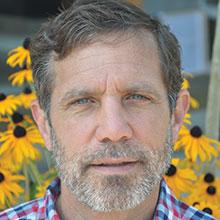 Ed Brook合作论文数College of Earth Ocean, and Atmospheric Sciences, Oregon State University24
 Manvendra Dubey合作论文数Los Alamos National Laboratory;Physics Department, New Mexico Institute of Mining and Technology15
 Gorkowski Kyle J合作论文数14
 Christo Buizert合作论文数College of Earth, Ocean, and Atmospheric Sciences, Oregon State University14
 Thomas Blunier合作论文数14
 Jeffrey Severinghaus合作论文数Geosciences Research Division, Scripps Institution of Oceanography, University of California, San Diego12Jon S. Edwards合作论文数8
 Michaela Muhl合作论文数7
 Benedict Katherine B合作论文数Department of Atmospheric Science, Colorado State University7
 Hubertus Fischer合作论文数Physics Institute, Faculty of Science, University of Bern7
 Allison C. Aiken合作论文数Center for Aerosol Forensic Experiments, Los Alamos National Laboratory;Earth & Environmental Sciences Division, Los Alamos National Laboratory7
 Jochen S Chmitt合作论文数7Mai Winstrup合作论文数7
 N. A.N. Bertler合作论文数Antarctic Research Centre, Victoria University of Wellington7A. C. Aiken合作论文数6Ryan Farley合作论文数Department of Environmental Toxicology, University of California6
 Elizabeth Keller合作论文数GNS Science6
 Howard Conway合作论文数College of the Environment, University of Washington6
 Paul Vallelonga合作论文数Niels Bohr Inst, Univ Copenhagen6
 Richard Hindmarsh合作论文数British Antarctic Survey;Department of Geography, Durham University6
 Dorthe Dahl-Jensen合作论文数Centre For Earth Observation Science, University of Manitoba;Clayton H. Riddell Faculty of Environment, Earth, and Resources, University of Manitoba;Niels Bohr Institute, University of Copenhagen6Zheng-Hua Li合作论文数5
 Katherine Beem Benedict合作论文数5
 Abu Sayeed Md Shawon合作论文数Dept Phys, Michigan Technol Univ5Daniel Baggenstos合作论文数Scripps Institution of Oceanography, University of California;Scripps Institution of Oceanography, University of California5Pyne Rebecca合作论文数5
 Paul Andrew Mayewski合作论文数Climate Change Institute, The University of Maine;School of Earth and Climate Sciences, The University of Maine;Victoria University of Wellington5
 W. Troy Baisden合作论文数National Isotope Centre, GNS Science5
 V. Gabriela Ciobanu合作论文数5Edwin D. Waddington合作论文数5Nevil Franco合作论文数4Manvendra Dueby合作论文数4julia rosen合作论文数4Aaron G. Meyer合作论文数4
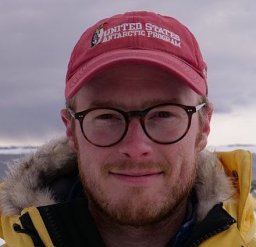 Peter D Neff合作论文数Antarctic Research Centre Victoria University of Wellington Wellington New Zealand4
 Helle Astrid Kjær合作论文数Niels Bohr Institute, University of Copenhagen4
 Lionel Carter合作论文数4
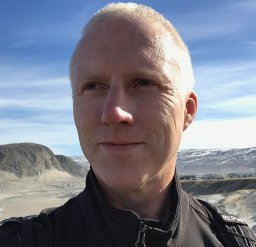 Ross Edwards合作论文数Division of Hydrologic Sciences, Desert Research Institute4Barbara Seth合作论文数4
 Thomas Keith Bauska合作论文数Department of Earth Sciences, University of Cambridge4T. J. Fudge合作论文数4
 Vasilii Petrenko合作论文数Ice Core and Atmospheric Chemistry Lab, Department of Earth and Environmental Sciences, School of Arts & Sciences, University of Rochester4Andrei V. Kurbatov合作论文数Department of Geology, SUNY4Abhijith Ulayottil Venugopal合作论文数3Lukas Eling合作论文数3Ben Riddell-Young合作论文数3andrea tuohy合作论文数3
 j a menking合作论文数3
 Katelyn Johnson合作论文数Antarctic Research Centre, Victoria University of Wellington;GNS Science;Antarctic Research Centre, Victoria University of Wellington3




